By Jesse Scott
The fashion and art worlds are inextricably linked, with designers and artists constantly referencing each other as they develop, translate, and update the same codes of beauty. But it’s rare to see a partnership as rich as that between Jonathan Anderson and Louisiana sculptor Lynda Benglis, one that defined Dior Haute Couture Spring/Summer 27. Anderson has injected a youthful joy into the maison since he took over as creative director a year ago, re-interpreting familiar forms through contemporary silhouettes, hosting grand shows defined by florals and bright colors, and designing some of the industry’s most playful accessories.
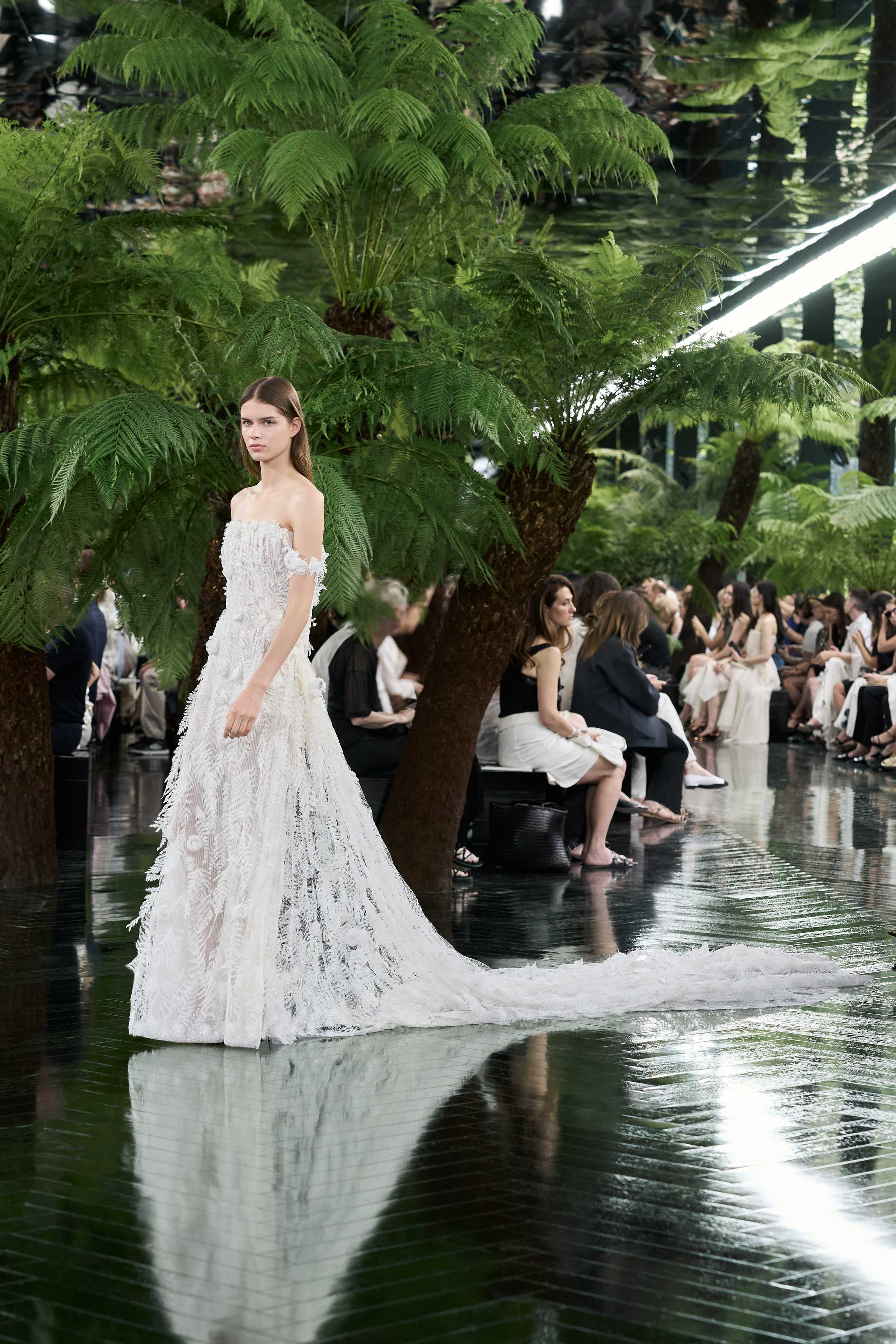
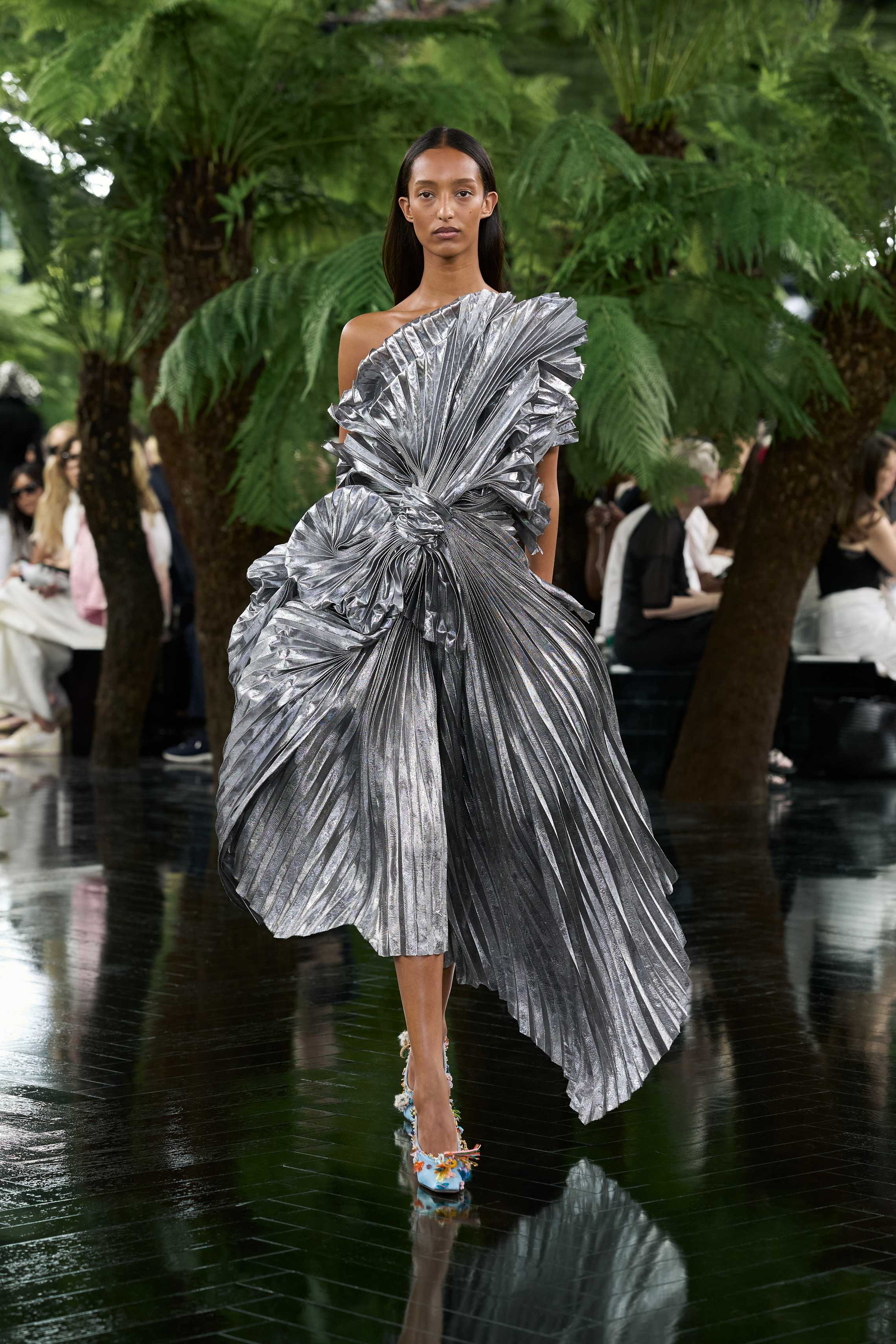
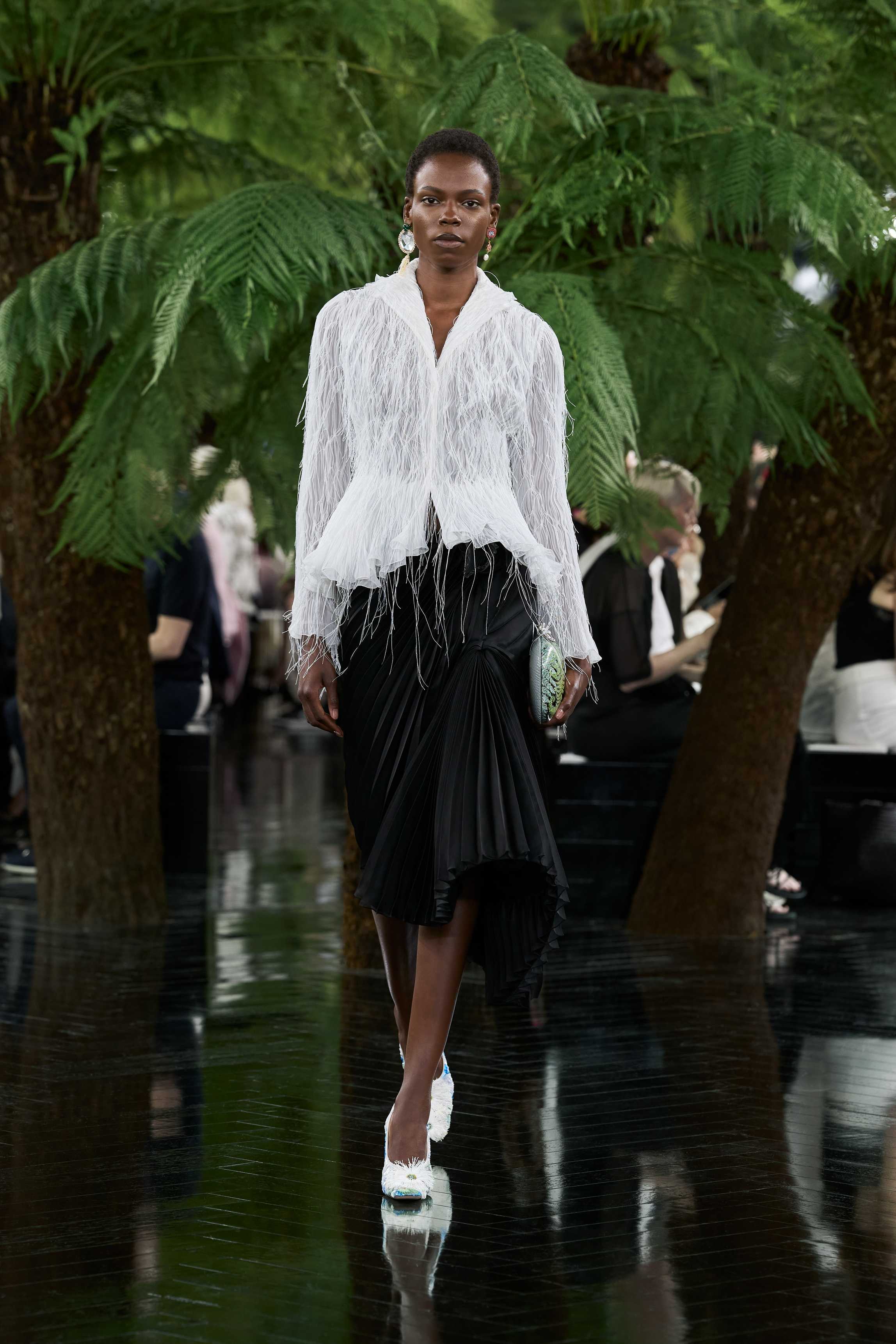
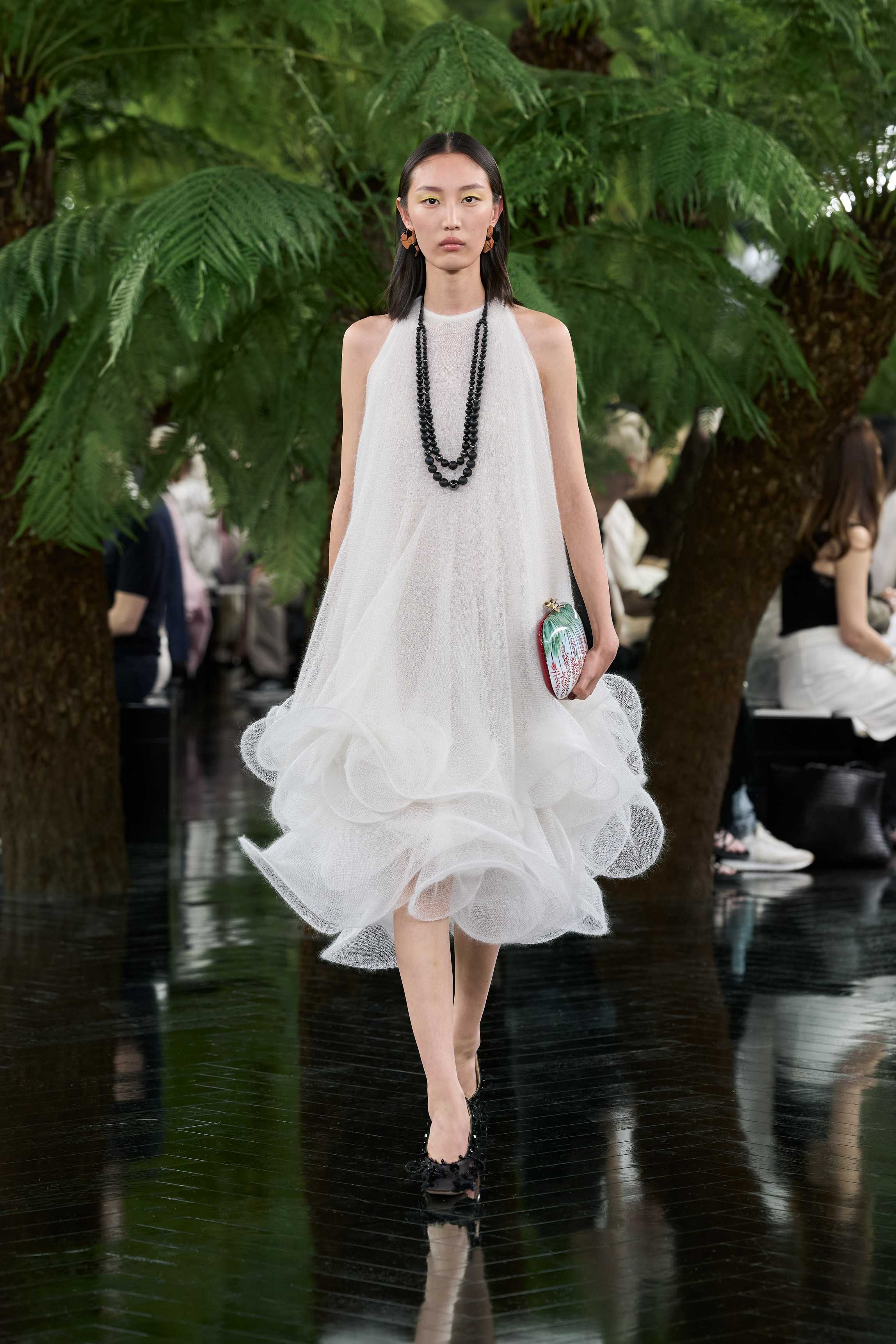
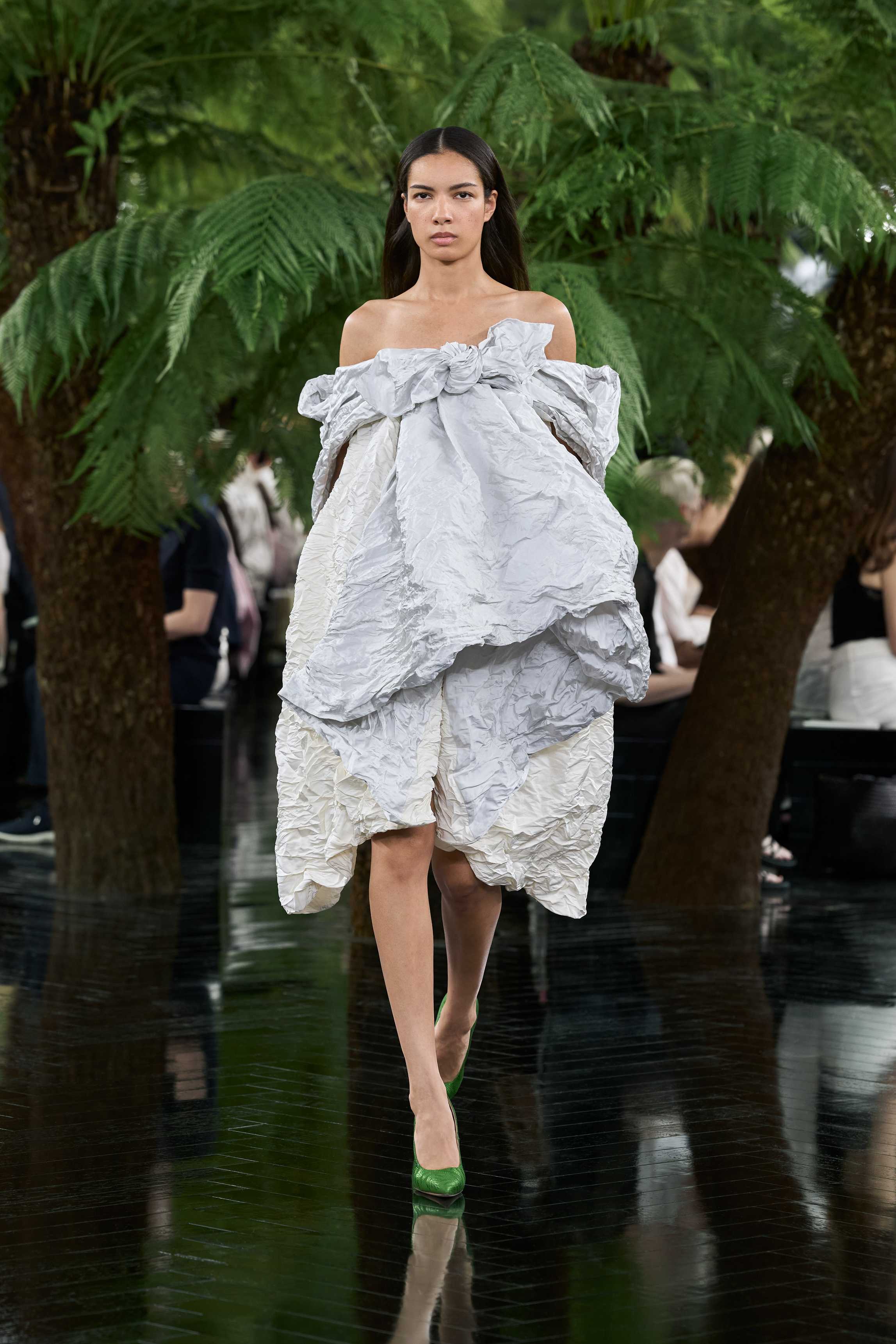
Simultaneously he has proven himself one of fashion history’s finest students, conversing with flashpoints such as 18th century France or Christian’s own “New Look” era in nuanced ways that never seem heavy-handed. Couture Fall/Winter 27 united both of these concepts. Some of Benglis’s most emblematic work, the Peacock series, was inspired by the cornucopia of color found on the birds and the buildings in Gujarat, India. This was a perfect foundation for Anderson’s new collection, with silhouettes such as Looks 9 and 38 recalling the colors and motifs that have made a new generation fall in love with Dior in recent seasons. Yet he also engaged intellectually with Benglis’s sculptural techniques to develop new types of trompe d’oeil and push the boundaries of patternmaking. Look no further than ensembles 51 and 52, which were inspired by Benglis’s method of laying paper onto chicken wire armatures and required the most delicate embroidery of shimmering strips of fabric.
As expected, a star-studded celebrity cast attended Anderson’s latest triumph. Grace Gummer, Farida Khelfa, and Marissa Long were among those who sat front row in the gardens of the Musée Rodin, which Anderson transformed with a sleek and strikingly modern jet-black runway. The construction echoed his work for Women’s Fall/Winter 26, which also saw him juxtapose the historical and contemporary by placing a lily pond and blindingly white catwalk in the center of the Tuileries.
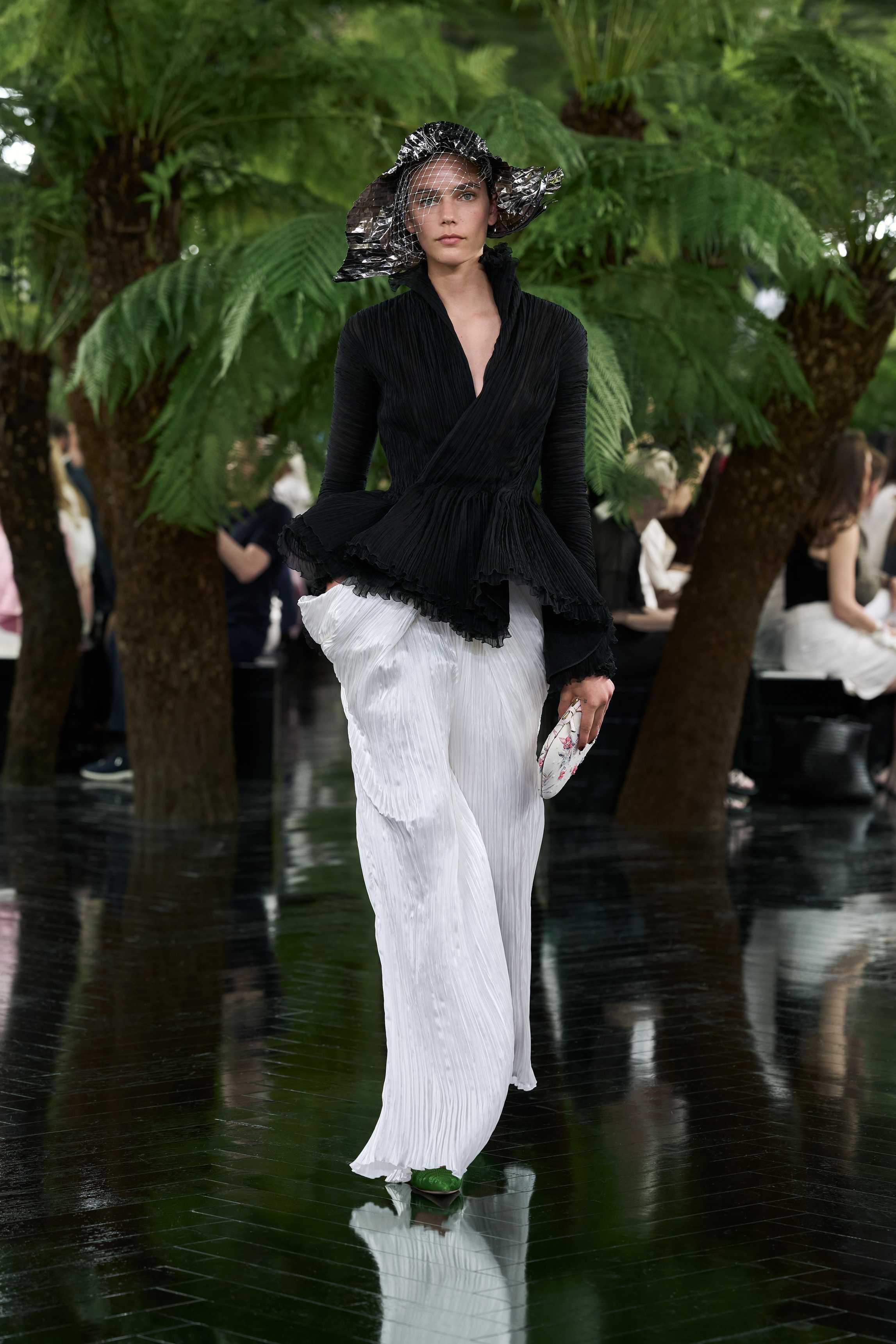
The first look represented the perfect synthesis of Anderson and Benglis. The trompe d’oeil “paper/chicken wire” technique appeared on a golden hat that stands as one of the season’s standout accessories; meanwhile the sculptural sweater and pleated black pants possessed an architectural sensibility. A personal favorite look was 11, which saw metallized satin creased and knotted to resemble paper in an allusion to Benglis’s 1970s Lagniappe sculptures. And the most distinctive pieces, the elaborately decorated fans in Looks 24 and 30, conversed with Benglis’s iconic Peacock Fan series.
Dior Couture Fall/Winter 2027 confirmed what we already knew: Anderson is at the pinnacle of the fashion world. But more than that, it pushed the relationship between fashion and art to new frontiers, blurring lines between two of the most interconnected creative fields and positioning Benglis as a true collaborator rather than simply an inspiration. It’s a philosophy, and a collection, to be highly commended.