
By Louise Daniel
Rei Kawakubo has long guarded a particular void in the world of fashion—a space where the uncompromising use of abstract disruption remains in its purest state of creation. Needless to say, her radical rejection of the conventional has paved the way for designers of all backgrounds to partake in this form of rebellion. As declared in her 1985 Interview magazine article: “The void is important.”
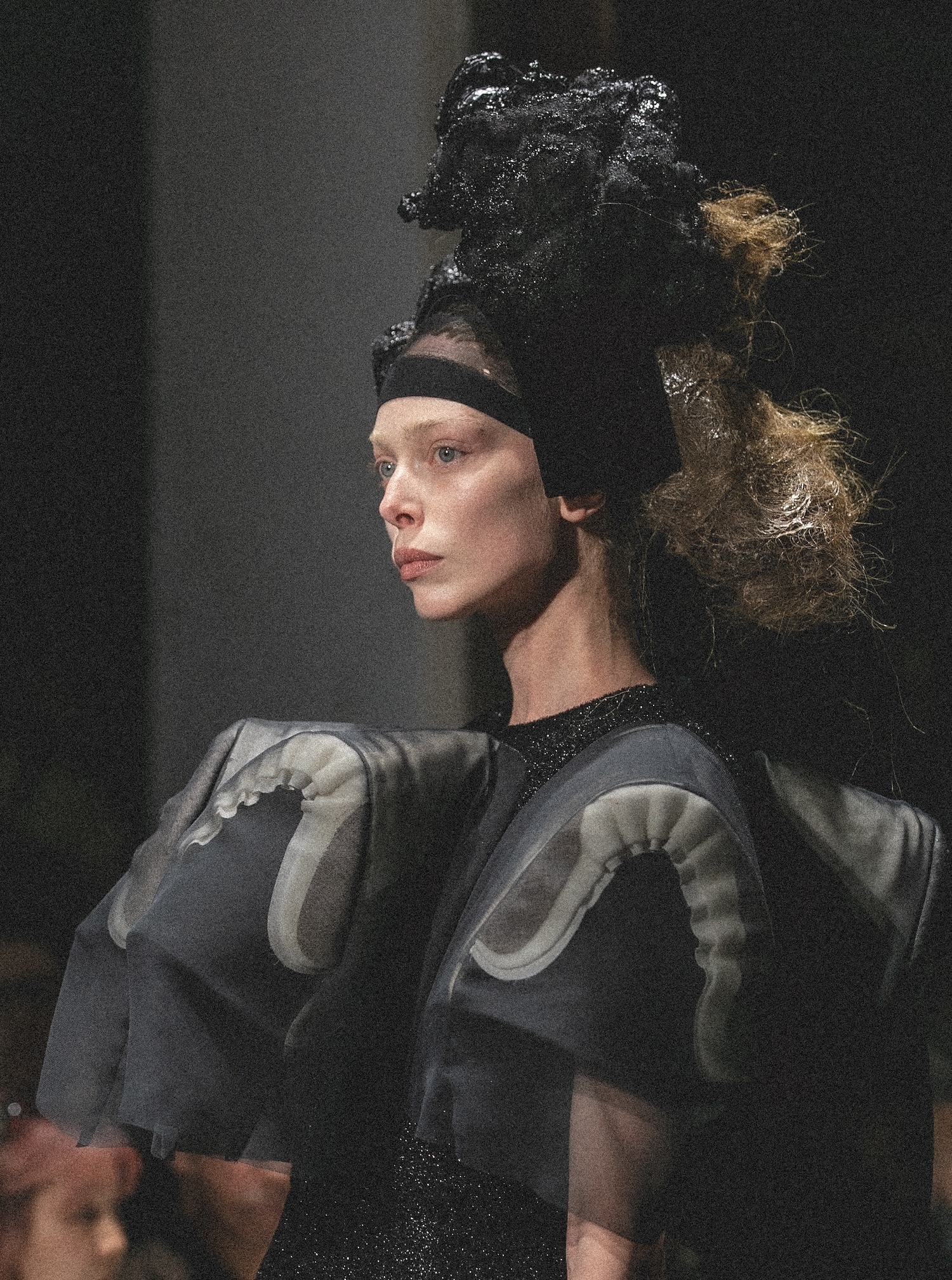
Since the early ’80s, every CDG runway has felt like its own visceral act of transcendence. Ultimately Black, a fitting title for Kawakubo-san’s most recent collection, continues her work of creating within that artistic void of space and emptiness. As enigmatic as the last, the collection featured sixteen Comme black ensembles before an intermission of striking pink broke out in silence. Each shocking pink look had a counterpart. For example: the densely gathered dresses from Look 2 and Look 17, the puffed and ruched dresses from Look 3 and Look 18, and the pleated round dresses from Look 13 and Look 22.
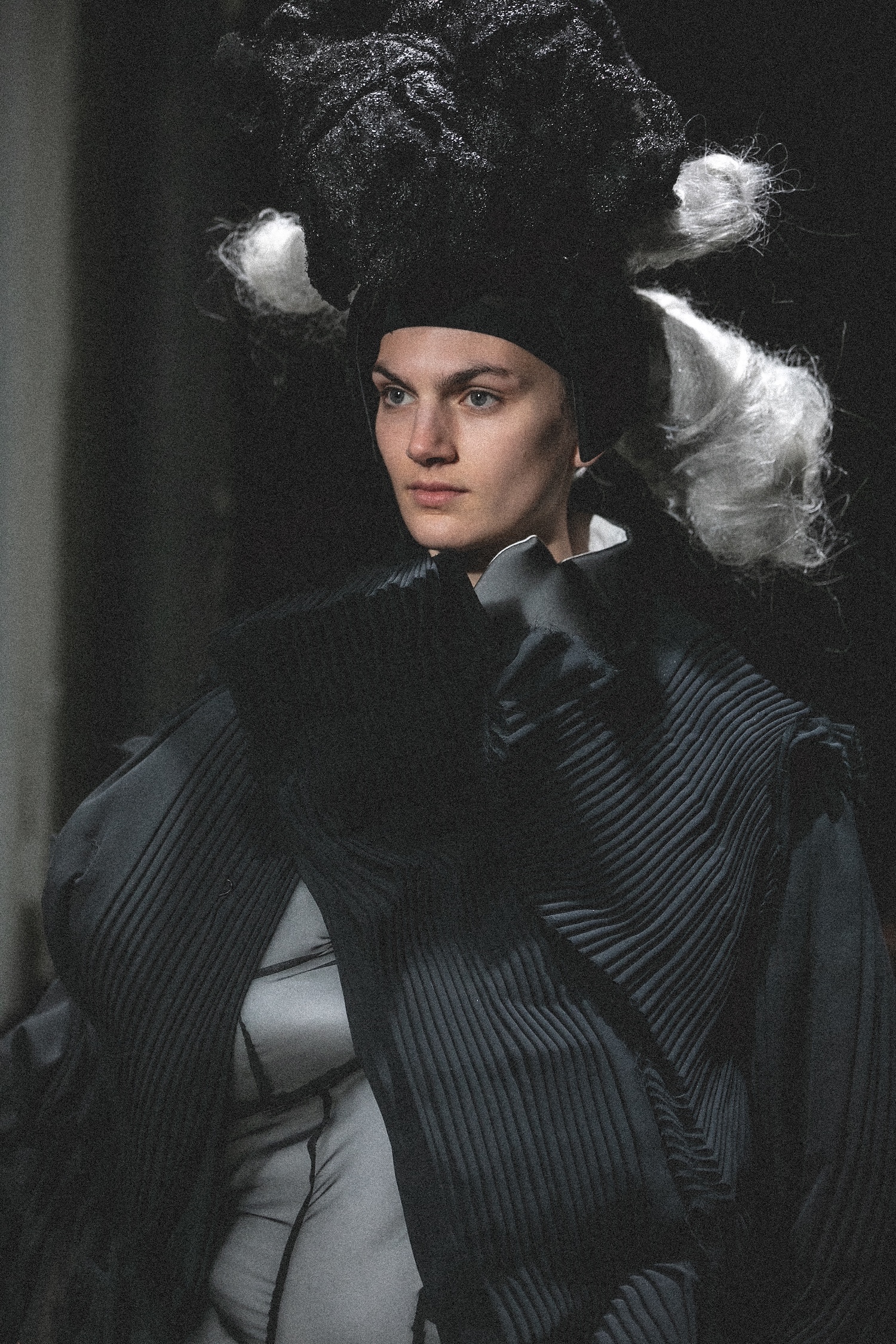
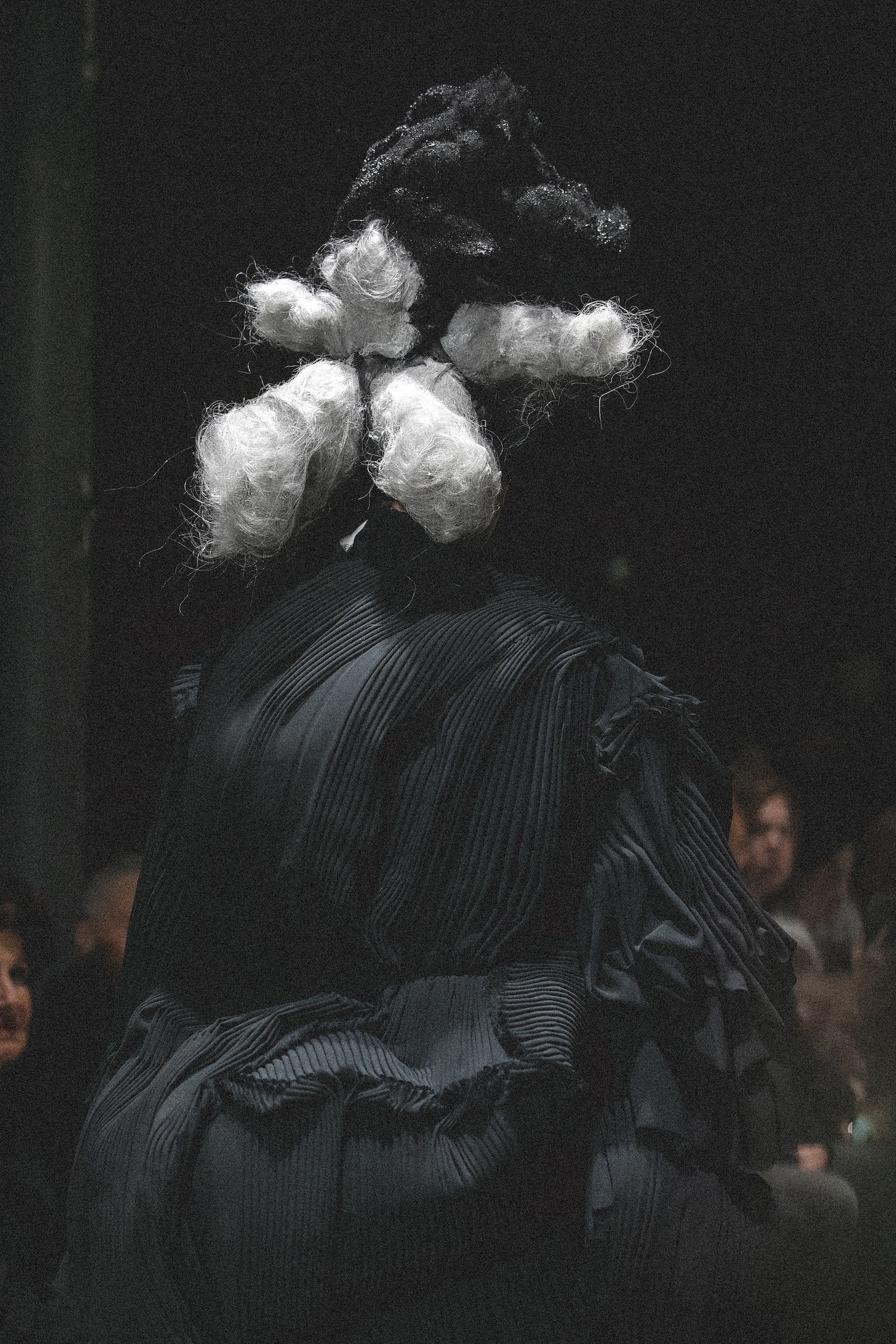
Comme des Garçons Fall/Winter 2026 (Imagery courtesy of Louise Daniel)
With Adagio in G Minor by Tomaso Albinoni slicing through the silence, five monstrous looks in Comme-core black became the fitting finale. Compared to their predecessors—which included hints of color within their structures—the final parade’s uncompromising use of black deeply resonated with Kawakubo-san’s note for the season:
“In the end, there is black. Ultimately Black. I have come to realize that, after all, black is the color for me. It’ s just the strongest, the best for creation, and the color that embodies the rebellious spirit. And has the biggest meaning: the Universe and the Black Hole.”
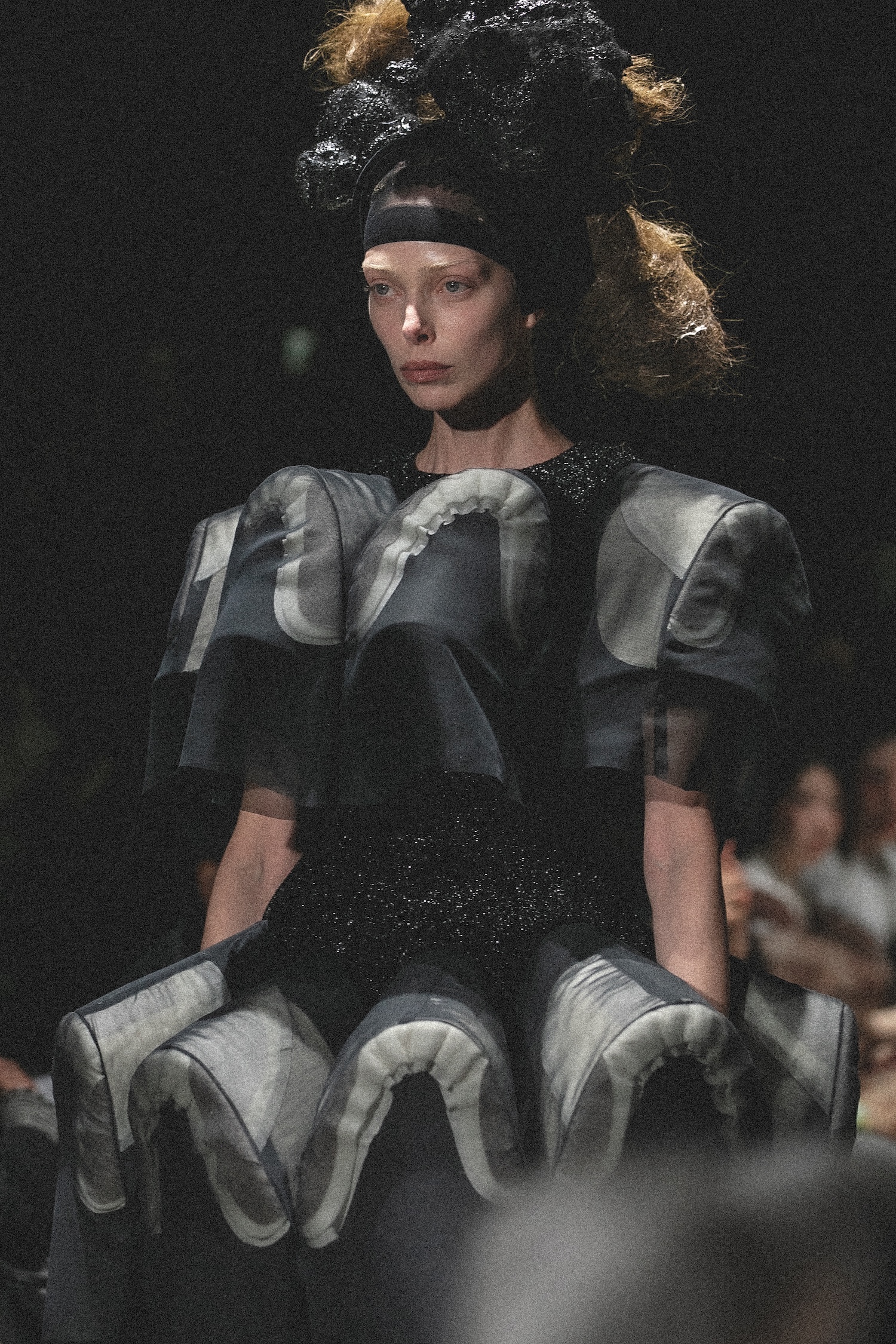
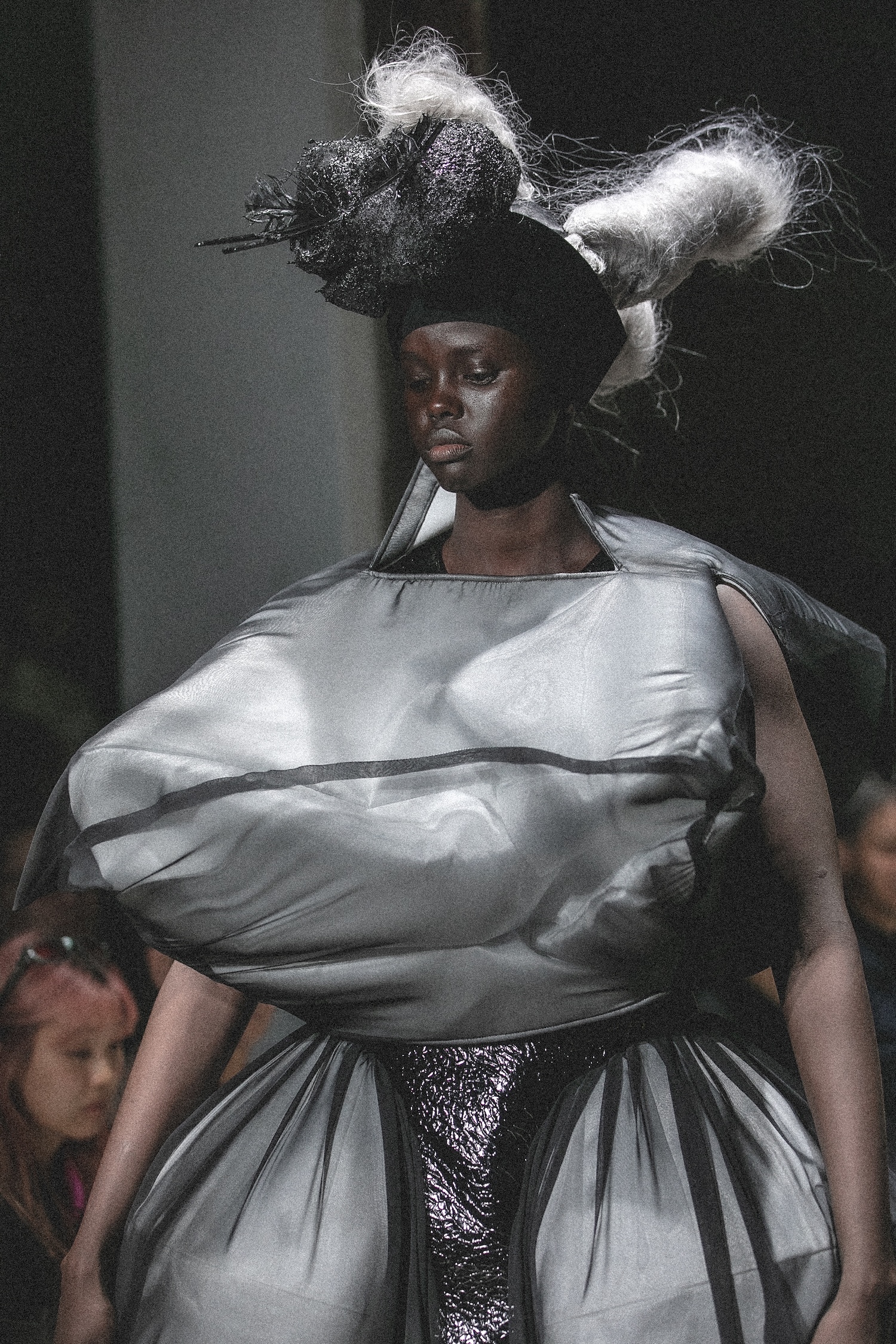
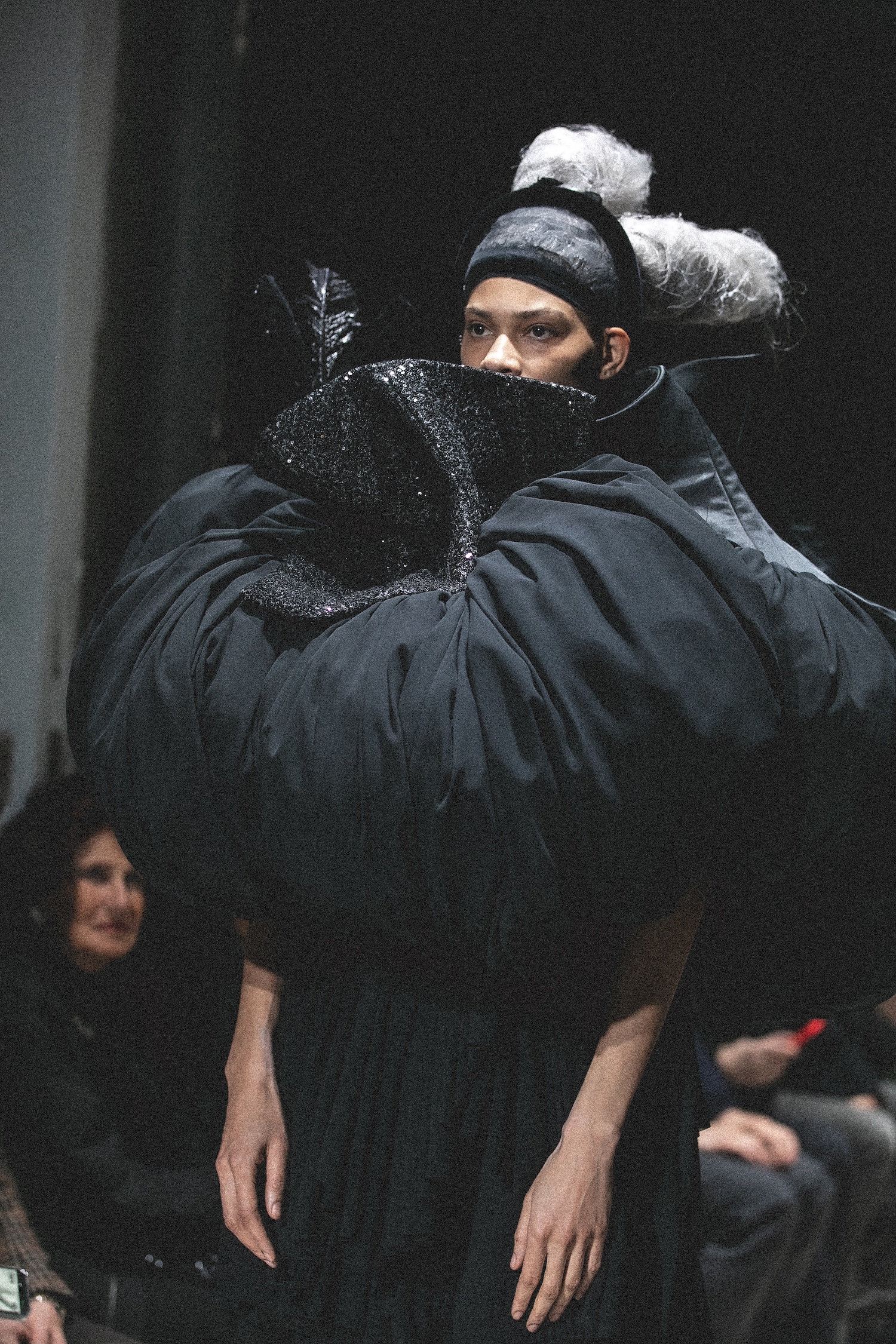
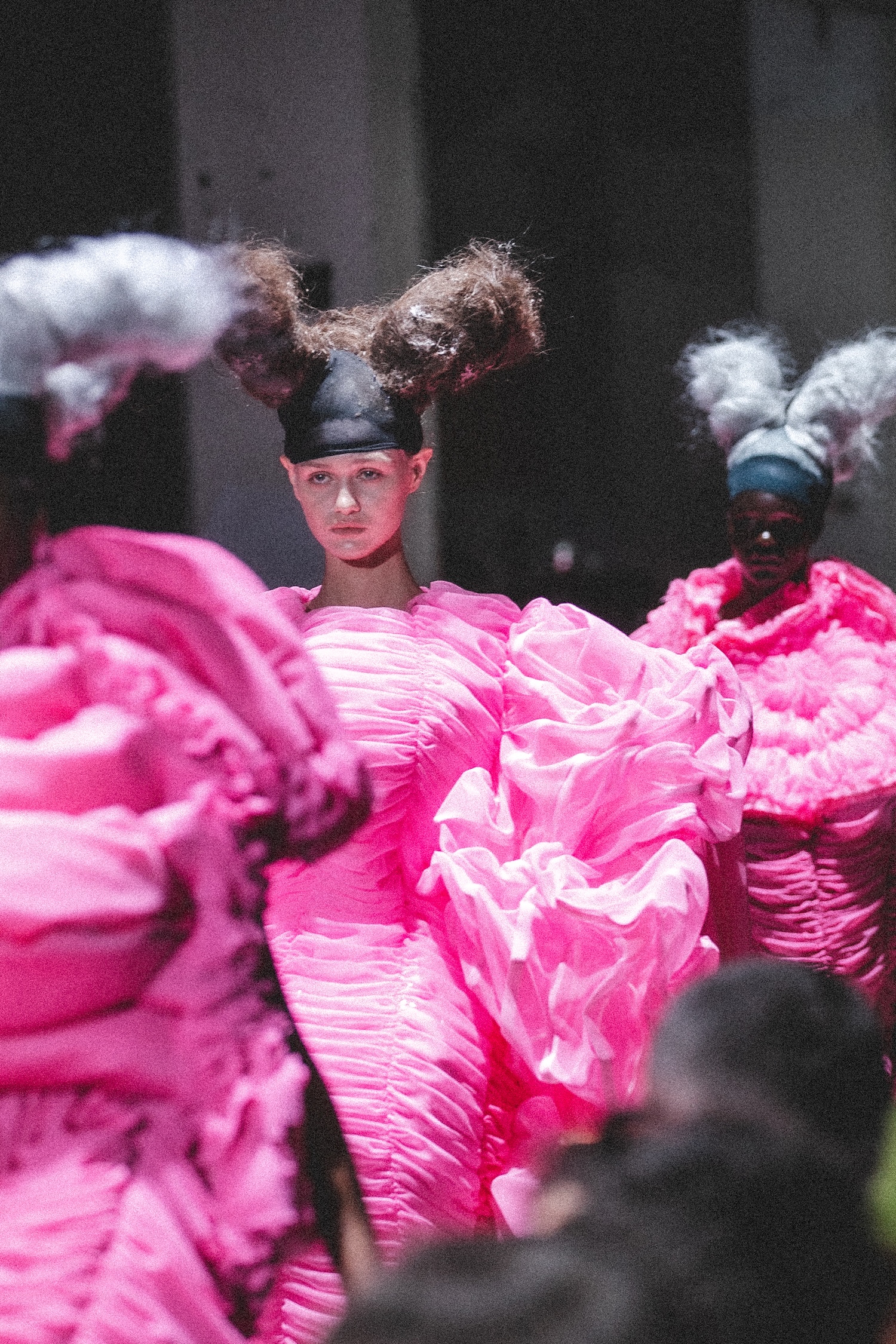
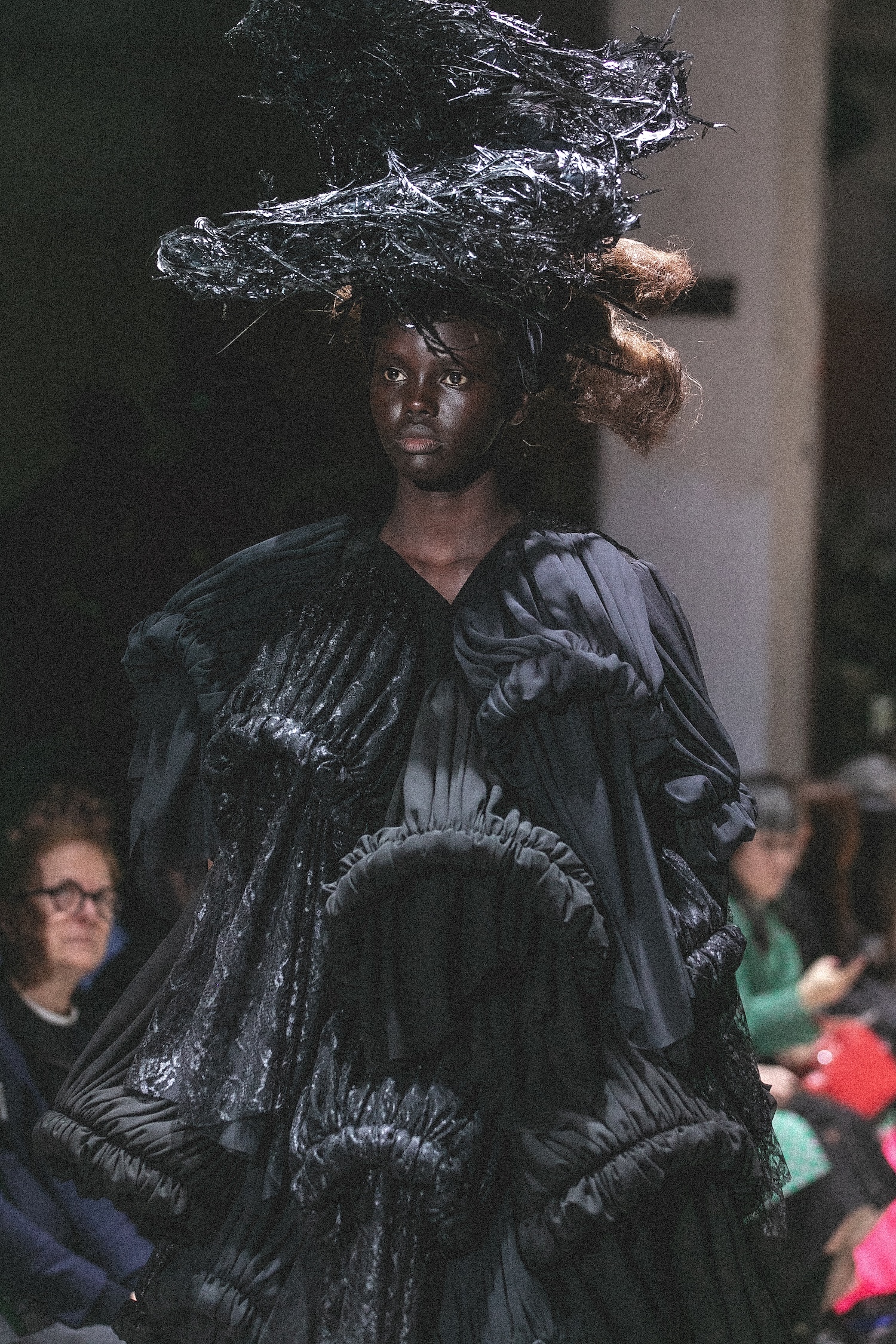
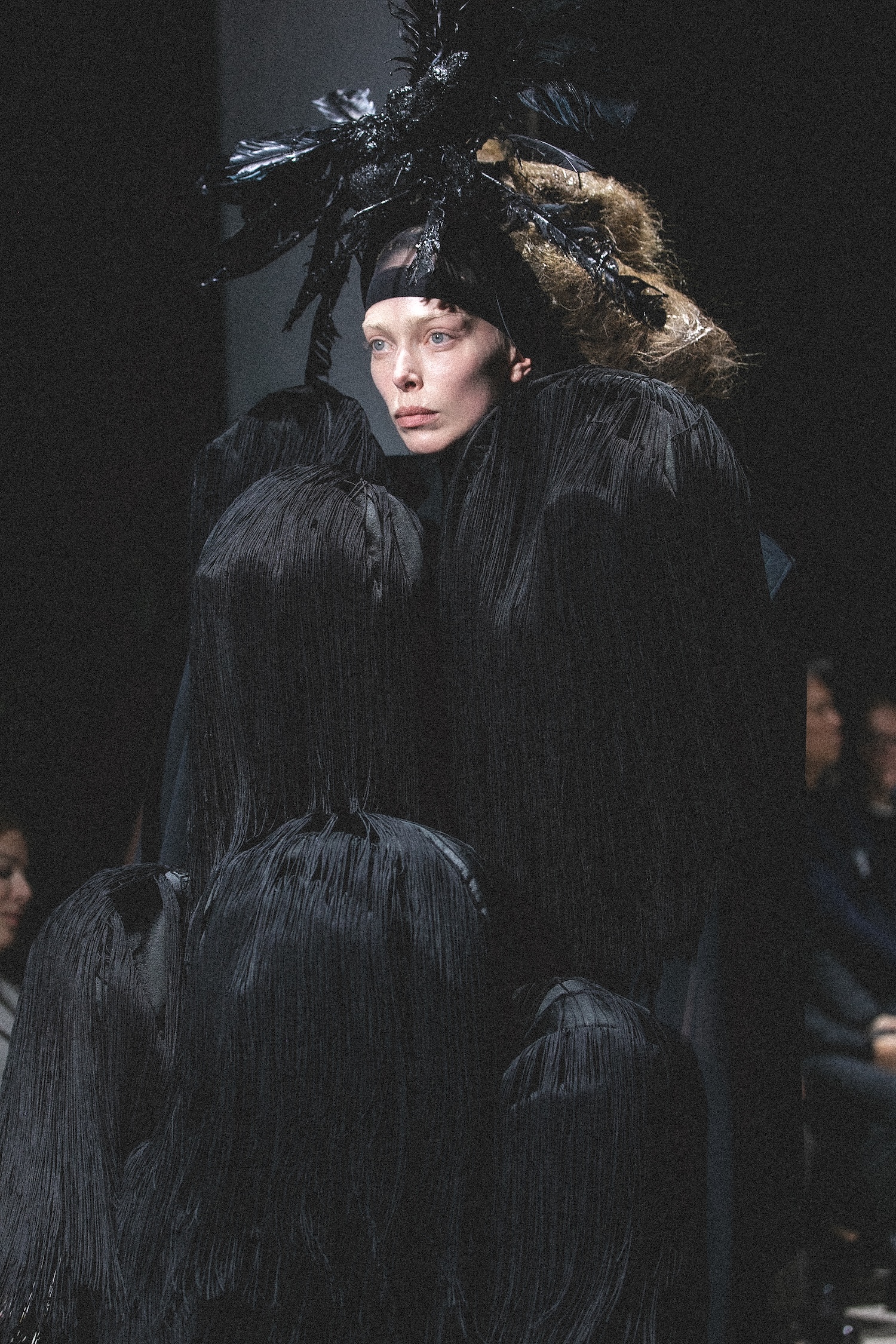
Commes des Garçons Fall/Winter 2026 (Imagery courtesy of Louise Daniel)
However, black has always been an integral part of Kawakubo-san’s philosophy. The CDG Homme Plus show last January 2026, titled Black Hole, was a resounding prequel to this conceptual return to her core principle—just as Spring/Summer 26’s lighter disposition served as a necessary detour. In recent years, we have seen this recurring exploration of the color black through collections such as Anger for Fall 2024 and the monochrome collection of Fall 2021, to name a few.
Ever since her groundbreaking Spring 1997 collection—popularly known as Lumps and Bumps—Kawakubo-san’s quest for newness has undergone radical evolution, season after season. Conventions of all kinds (silhouettes, beauty standards, tailoring rules, etc.) simply become the starting canvas for Kawakubo’s form of creation. However, the conceptual always follows a magnitude of disruptive techniques.
For Fall/Winter 2026, we can observe the hybridization of standard techniques such as ruching, draping, pleating, sheering, and gathering. Materiality, from lace and tulle to fringe and brocade, was layered into each look as their volume and intensity carried what feels like the weight of the world. However, the CDG universe does not exist in a vacuum. Collaborations with different artists keep its pulse and brevity alive. The distorted beauty looks were created by Takeo Arai and the headpieces by Nobuki Hizume. Continuing their previous collaboration, John Fluevog created the chunky wooden platform boots the models wore on the runway. Finality is never part of the Comme des Garçons language. It is this continuous evolution—this incessant questioning—that allows Kawakubo-san’s work to transcend the runway and remain one of fashion’s most radical creative forces.