
By Louise Daniel
Subversion often arrives in provocative forms, expressed through grit, confrontation, and severity. Black, for instance, has long become the visual shorthand of Comme des Garçons' perpetual rebellion, commanding looming silhouettes that fracture convention. Angsty, often confrontational fashion language has become synonymous with resistance. Yet with If the War Were to End.., Rei Kawakubo proposes a quieter antithesis—a more childlike form of rebellion. Rather than confronting conflict directly, she dismantles it to its semiotic core, asking what emotional, aesthetic, and philosophical possibilities might emerge once it no longer dictates the way we live. What happens to uniforms after war? What becomes of authority? What replaces aggression? How does clothing behave when it no longer serves conflict? These questions quietly unfold throughout a collection that restructures the very concepts of dress we have been trained—or perhaps conditioned—to understand.
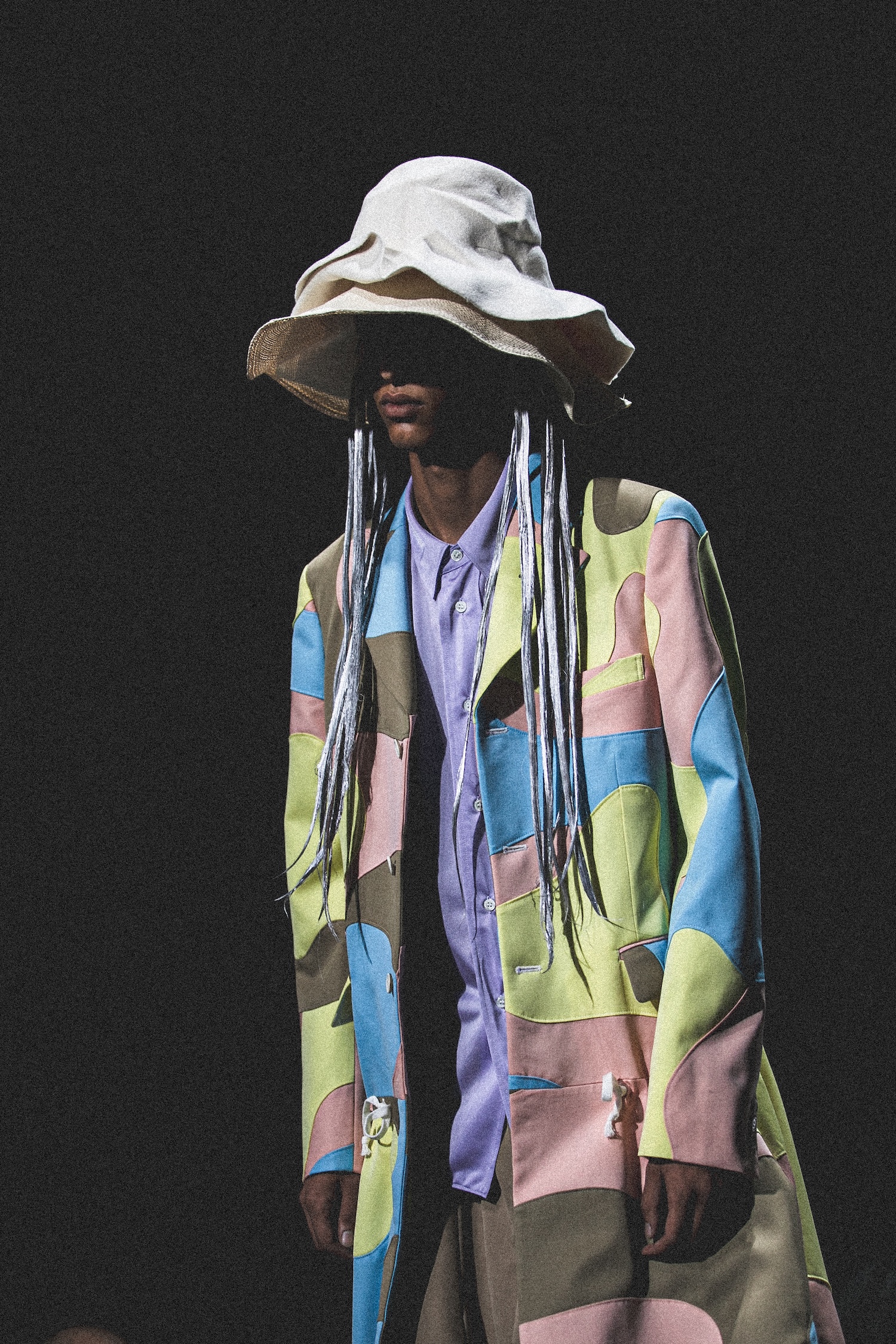
Commes des Garçons Homme Plus Spring/Summer 2027: Look 9. Courtesy Louise Daniel.
Subversion Through Lightness
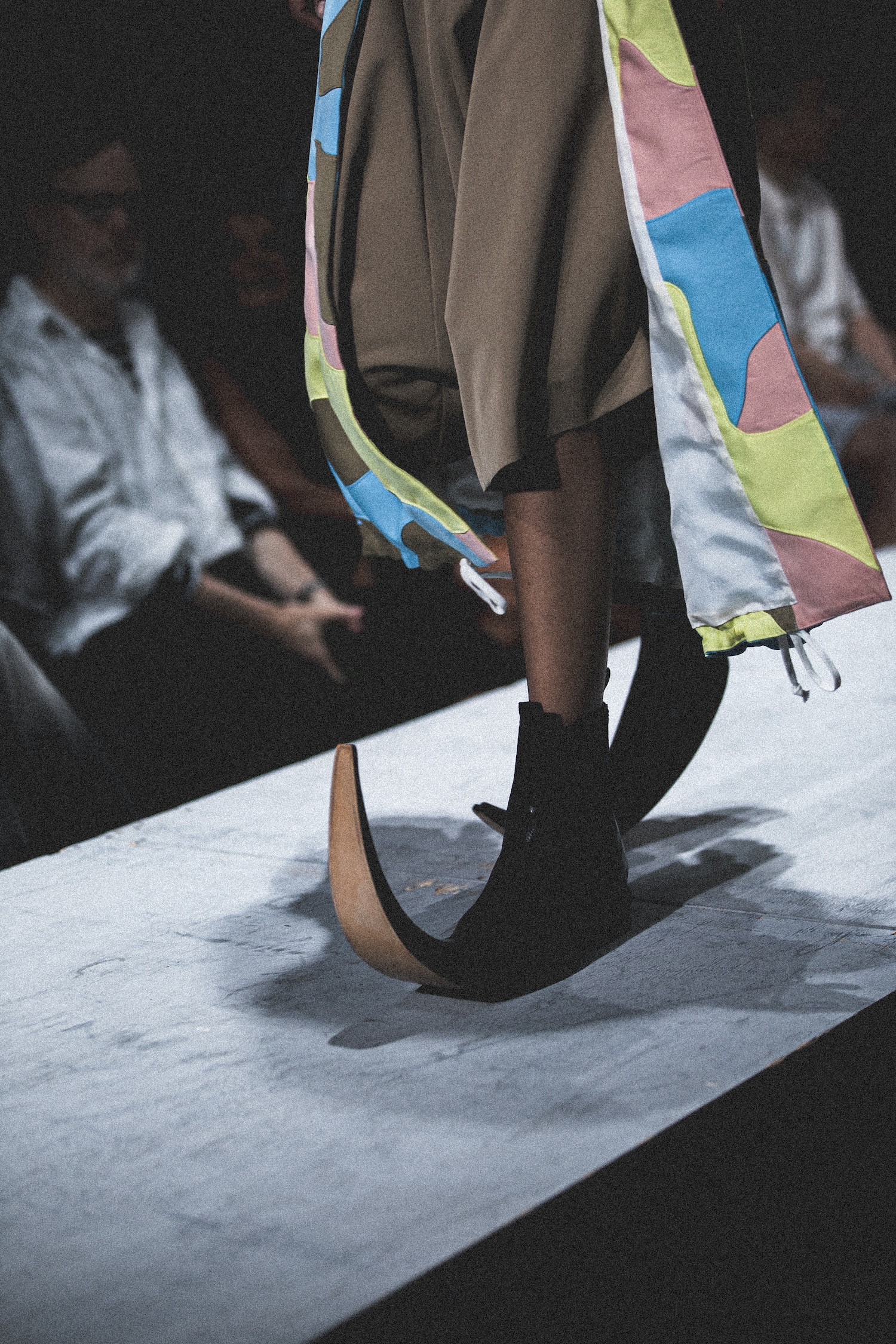
The opening notes of Les Cris de Paris, composed by Geoffroy Jourdain, accompanied the first procession of tailored ensembles constructed from shirting fabrics, pajama references, and what could only be described as "happy camouflage." Walking paradoxes, crowned with crumpled HIZUME headpieces, moved with an almost dreamlike lightness. Here, softness is communicated through the fabrication itself: airy cotton shirting, silk, lightweight jerseys, and breathable technical materials dissolve the rigidity typically associated with tailoring. Yet Kawakubo never abandons structure entirely. Comme des Garçons' mastery of tailoring—its ability to transform even the most unexpected materials into the language of suiting—remains present through relaxed outerwear and fluid trousers that retain an unmistakable sense of construction. This dialogue between softness and authority extends to the footwear. The return of the Mexicana x Comme des Garçons Homme Plus Extended Boots, revisiting the collaboration first introduced in Spring/Summer 2015, injects exaggerated masculinity into otherwise gentle silhouettes. The elongated boots elevate the ordinary, balancing utilitarian references with a distinctly surreal elegance while continuing Rei Kawakubo's ongoing conversation with her own archive.
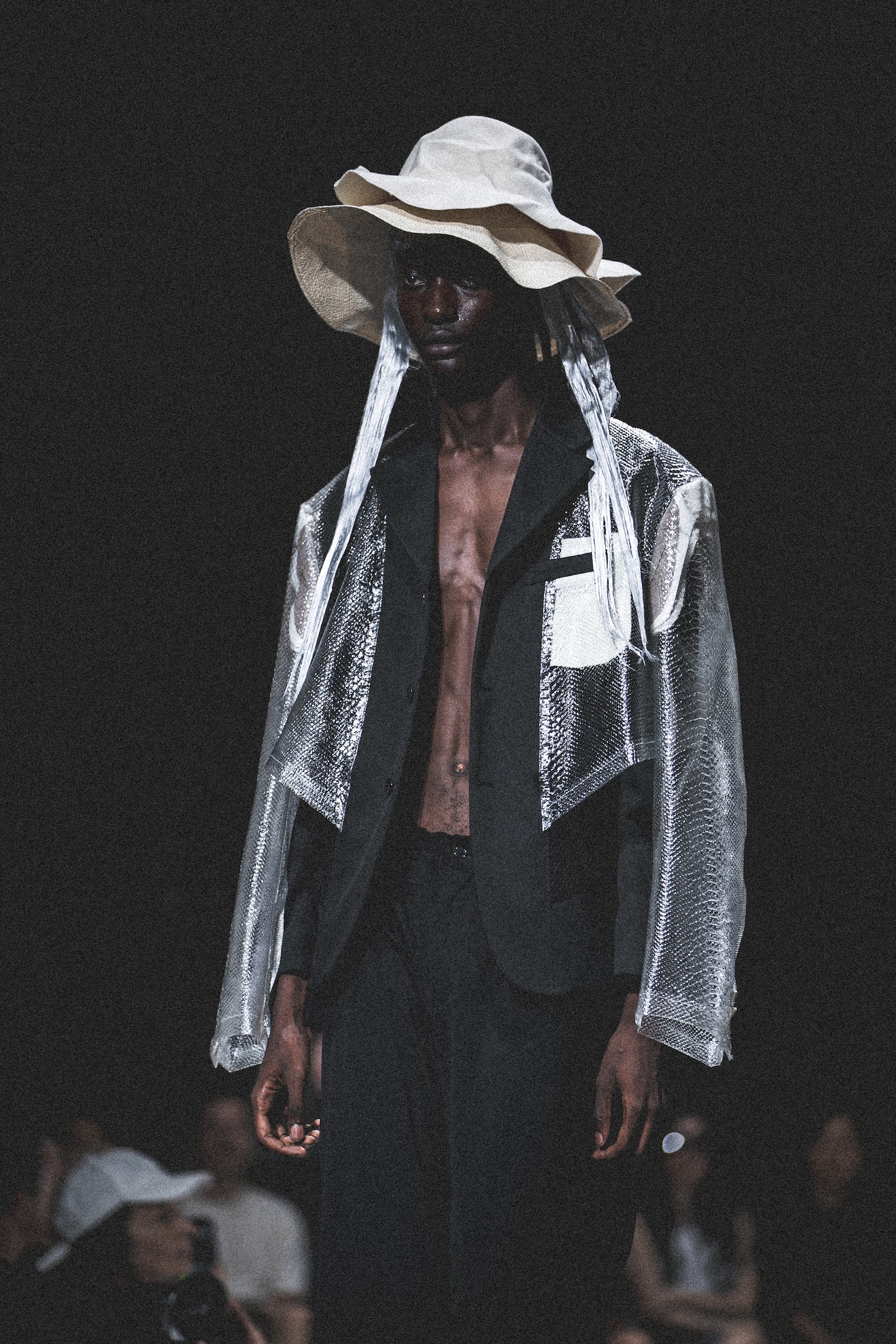
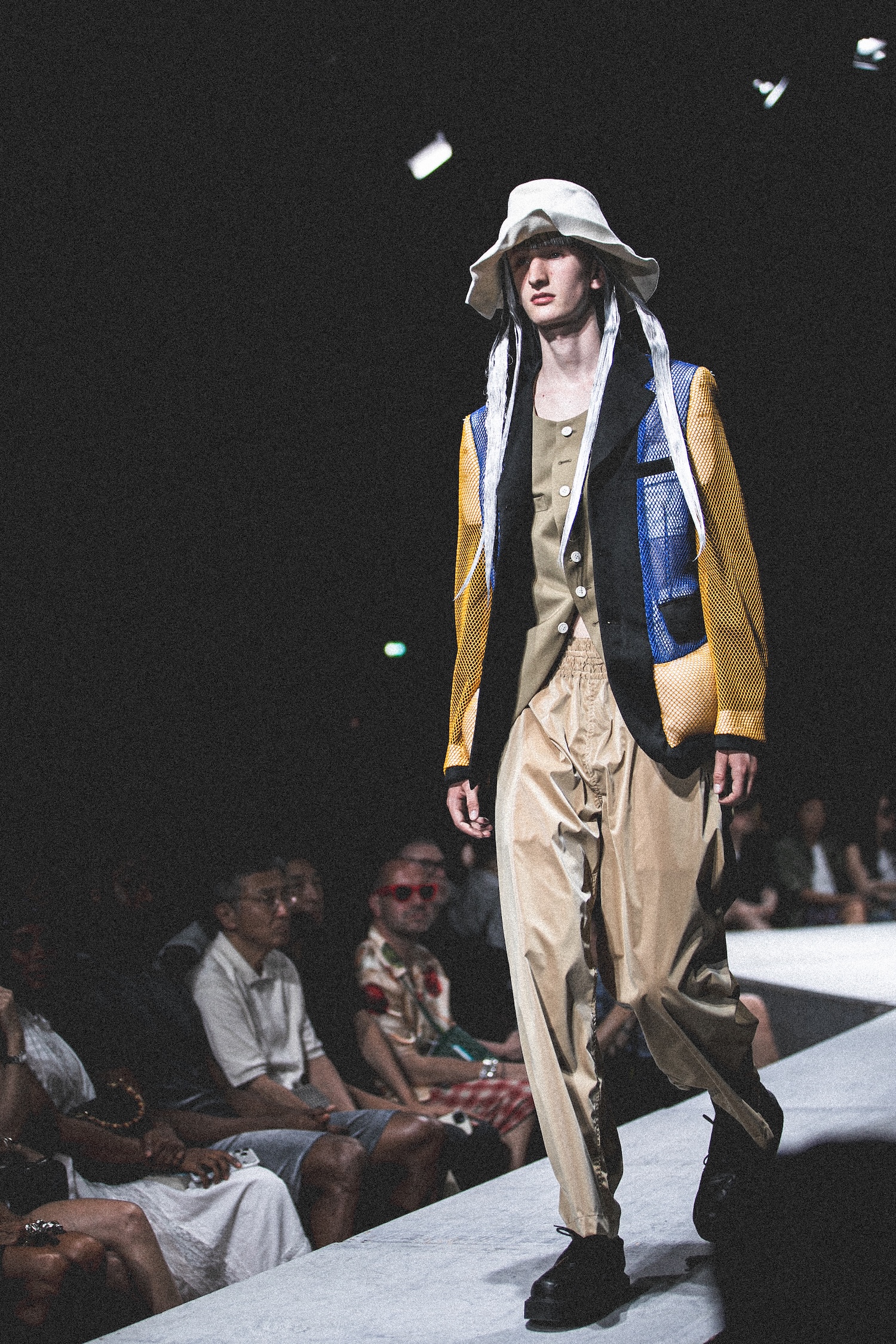
Comme des Garçons Homme Plus Spring/Summer 2027: Looks 31, 34. Courtesy of Louise Daniel.
Codes Rewritten: Kawakubo’s Utopia
As the collection progressed, the palette evolved from delicate shirting stripes into pastel camouflage, patchworked tartans, and increasingly saturated hues that bordered on the artificial. Familiar symbols of authority—military camouflage, uniforms, and tailoring were naturally rewritten. Conflict's visual language acquired another emotional register. The monochromatic looks that followed reintroduced darker notes without abandoning the collection's central optimism. Looks 31 and 32, featuring deconstructed blazers layered with PVC and open fish-knit constructions, continued Kawakubo's fascination with exposing the anatomy of tailoring. Visible suit paddings and protruding internal structures echoed ideas explored in previous Comme des Garçons collections, particularly the exposed tailoring seen in the women's Fall/Winter 2026 collection, establishing continuity within Rei's ever-expanding vocabulary.
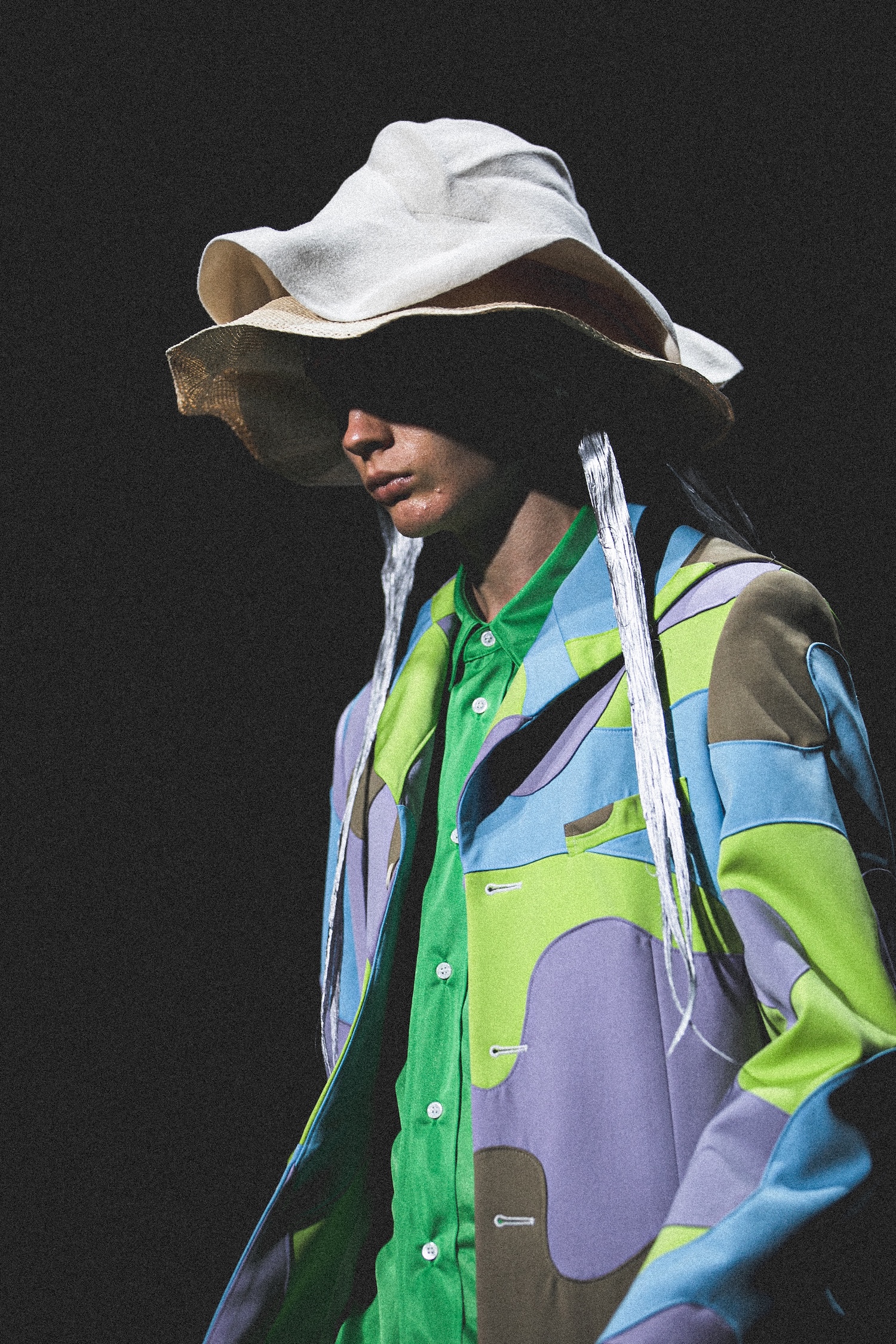
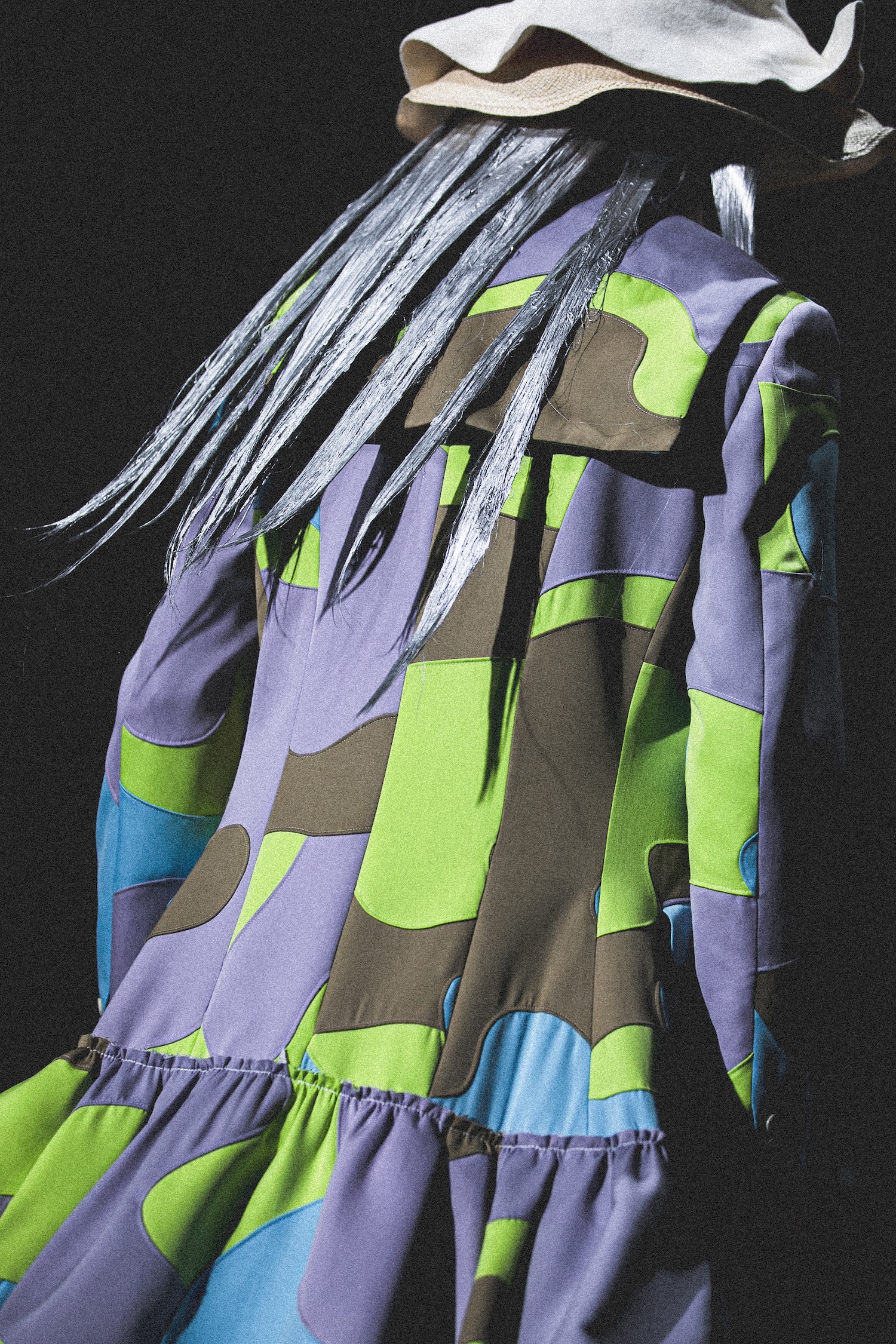
Comme des Garçons Homme Plus Spring/Summer 2027: Look 7. Courtesy of Louise Daniel.
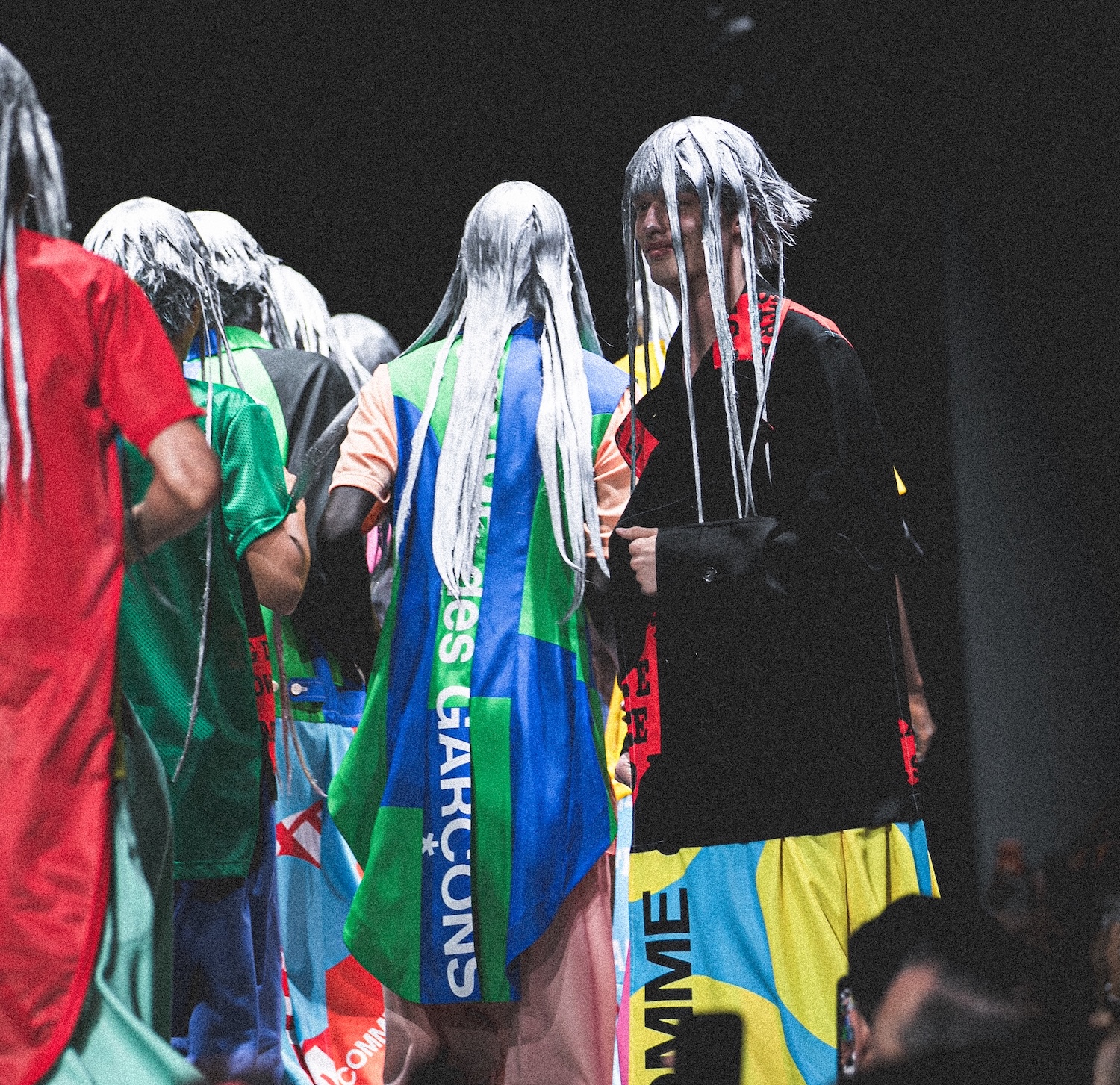
One particularly striking coat possessed a transformable quality: reversed inside out, it revealed an entirely black exterior, quietly suggesting that darkness still exists beneath the collection's optimism. The finale, underscored by You're So Good to Me by The Langley Schools Music Project—a recording celebrated for its children's voices and emotional sincerity—returned the collection to its purest form as giggling models ran across the runway in a parade of childlike innocence. Kawakubo's optimism is as profoundly conceptual as it is deeply human. Even the collection's second act unfolded in the courtyard of Dover Street Market Paris, where colored CDG flag installations extended the narrative beyond the runway.
If previous Comme des Garçons Homme Plus collections confronted the world through darkness, distortion, and monumental silhouettes, Kawakubo's Spring/Summer 2027 offering imagines another form of resistance. Military codes dissolve into softness, tailoring reveals its own vulnerability, and childlike wonder becomes a radical proposition. Rather than simply dreaming of a better world, If the War Were to End.. asks what forms of dress—and perhaps what forms of humanity—might emerge once fear no longer becomes the language through which we shape the world.