
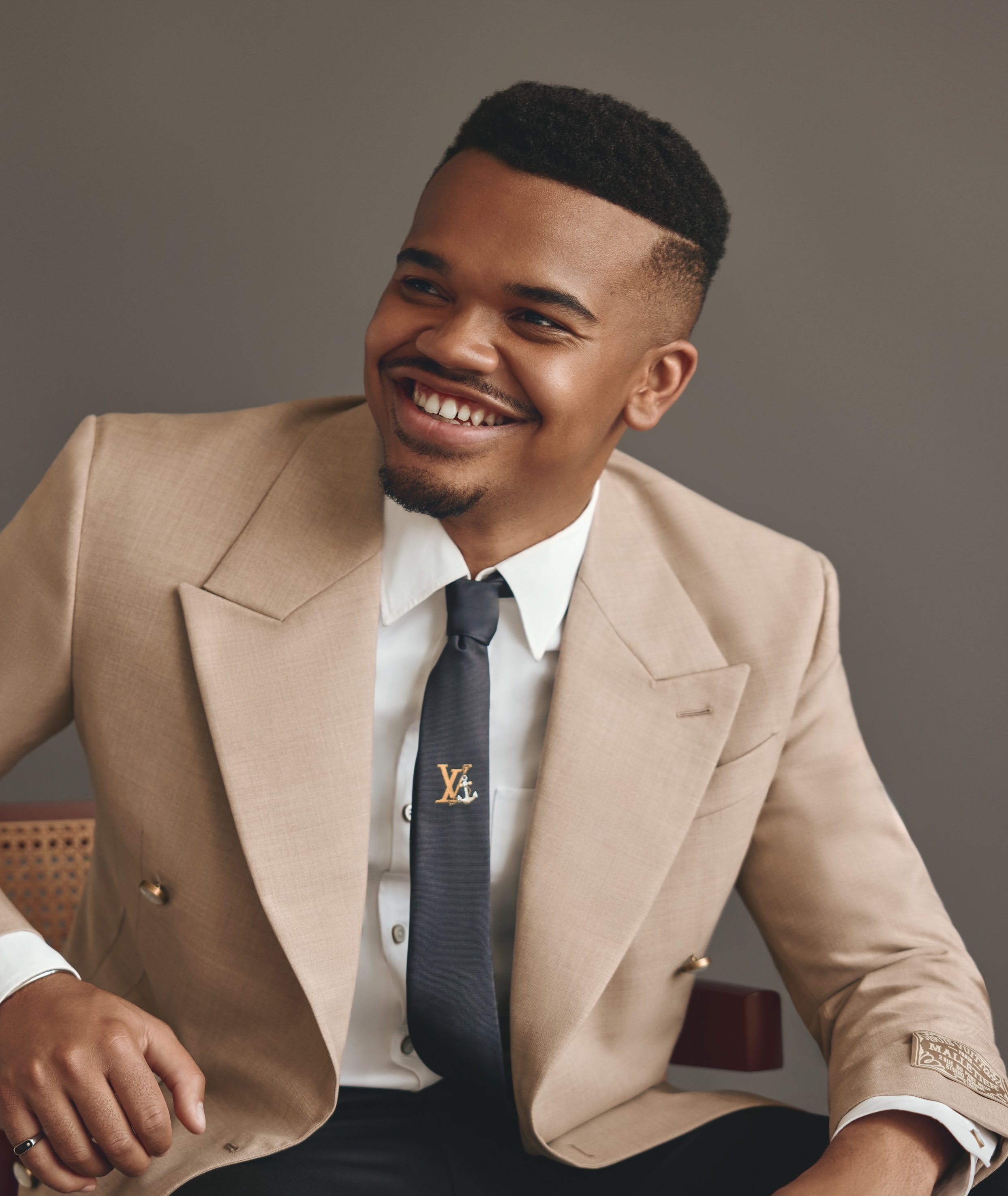
By Star Burleigh
Elijah Wright may have grown up around the spotlight. His parents, Jeffrey Wright and Carmen Ejogo, are both actors and Elijah is carving his own path with determination. Filled with a natural curiosity for art in all its forms, from architecture to music and fashion, Wright is shaping a career that reflects his multifaceted creativity. Fresh from a milestone year that included his first film screening at Cannes, he spoke with Rain about originality in Hollywood, the lessons he has learned from his father, and the importance of letting the work speak for itself.
**How did you first discover your passion for acting?
**
I started behind the camera. As a kid, between the age of eight or nine, I was making short films and directing my dad in them. That is where it all began. I have always loved movies, not just watching them, but seeing how much work goes into every production.
Since both of your parents are actors, was there ever another path you considered?
For sure. I have always loved art in general. When I was little, I filled sketchbooks with drawings and paintings. For a while, I wanted to be an architect, I was obsessed with Frank Lloyd Wright and would design houses and sketch interiors. Interior design interested me too. And music - I make some of my own. But being on sets so young had the biggest influence. That is when I knew storytelling was what I wanted to be part of the most.
Do you remember your first time on a film set?
The one I really remember is Cadillac Records. I was dressed in a little suit and bowler hat, watching the costumes, the sets, the props. That fascinated me as much as the acting. Walking off set and seeing the cameras, the crew it was magical. It is amazing to see how much work goes into a production on how every little detail is so important in storytelling.
If you could step into one of your father’s roles, which would it be?
Felix Leiter in James Bond. I would probably lean into some comedic elements, crack a few jokes with Bond and I would have loved to see Felix get more action scenes.
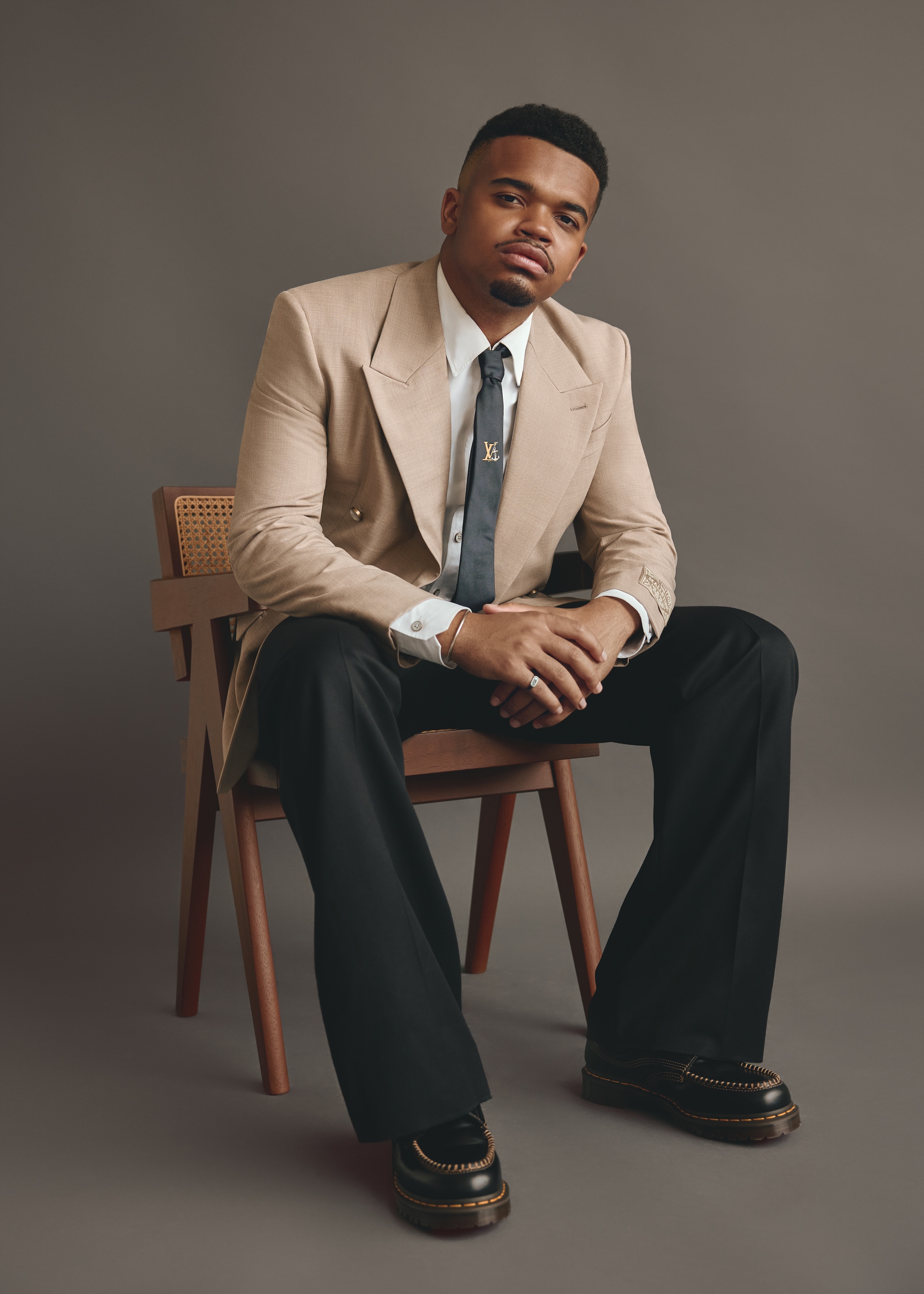
Elijah Wright, photographed by Tazaca for Rain Magazine
**Being the son of two established actors, do you feel pressure to prove yourself?
**
I am proud of my parents, and lucky to have grown up in such an artistic family. But yes, there’s sometimes pressure to prove myself. I want people to let the work speak for itself. At first people may say, “Oh, he only got this because of his parents,” but if you are not good, you will not last. For me, it is about performances that resonate. That is what allows me to stand on my own two feet.
**Your father has spoken very proudly of you. What is the best advice he has given?
**
“Under promise and over deliver.” That is something I think about all the time. It is so easy to want to announce everything right away, especially with social media. He reminds me to just focus on the work and let it speak for itself. On set, I stay off my phone and stay with the character. Promotion can come later but the craft must come first and has the most importance.
**How do you choose your roles right now?
**
I love building characters from the ground up, especially fictional ones. There is more freedom and less pressure to imitate someone real. But I am also drawn to stories with cultural and historical weight. On Godfather of Harlem, I play a young Black man during the Vietnam War era who is torn about whether to enlist. It is a fictional story but with historical roots. That balance is powerful. For me, telling Black stories, telling culturally meaningful stories that is my way of saying something impactful.
**You grew up in Brooklyn. How did New York shape you?
**
Brooklyn gave me everything. The diversity, the history, the people, you are surrounded by so many different worlds. I grew up in Fort Greene, went to school in Brooklyn Heights, and just walking those neighborhoods taught me curiosity. The curiosity about people, about different walks of life, feeds directly into my acting.
**Fashion also seems to be a big part of your self-expression.
**
Definitely. I love sharp suits, especially in tan tones. At Cannes I wore an Armani suit that made me feel really sophisticated. But I also love vintage references such as ‘fifties tank tops with jeans and a belt, or the classic tailoring of the ‘sixties. Fashion back then had such craftsmanship. From our shoot, I loved the Japanese knit, the tan LV suit, and the Alexander McQueen coat. I am getting more comfortable with photoshoots which is another kind of performance for me.
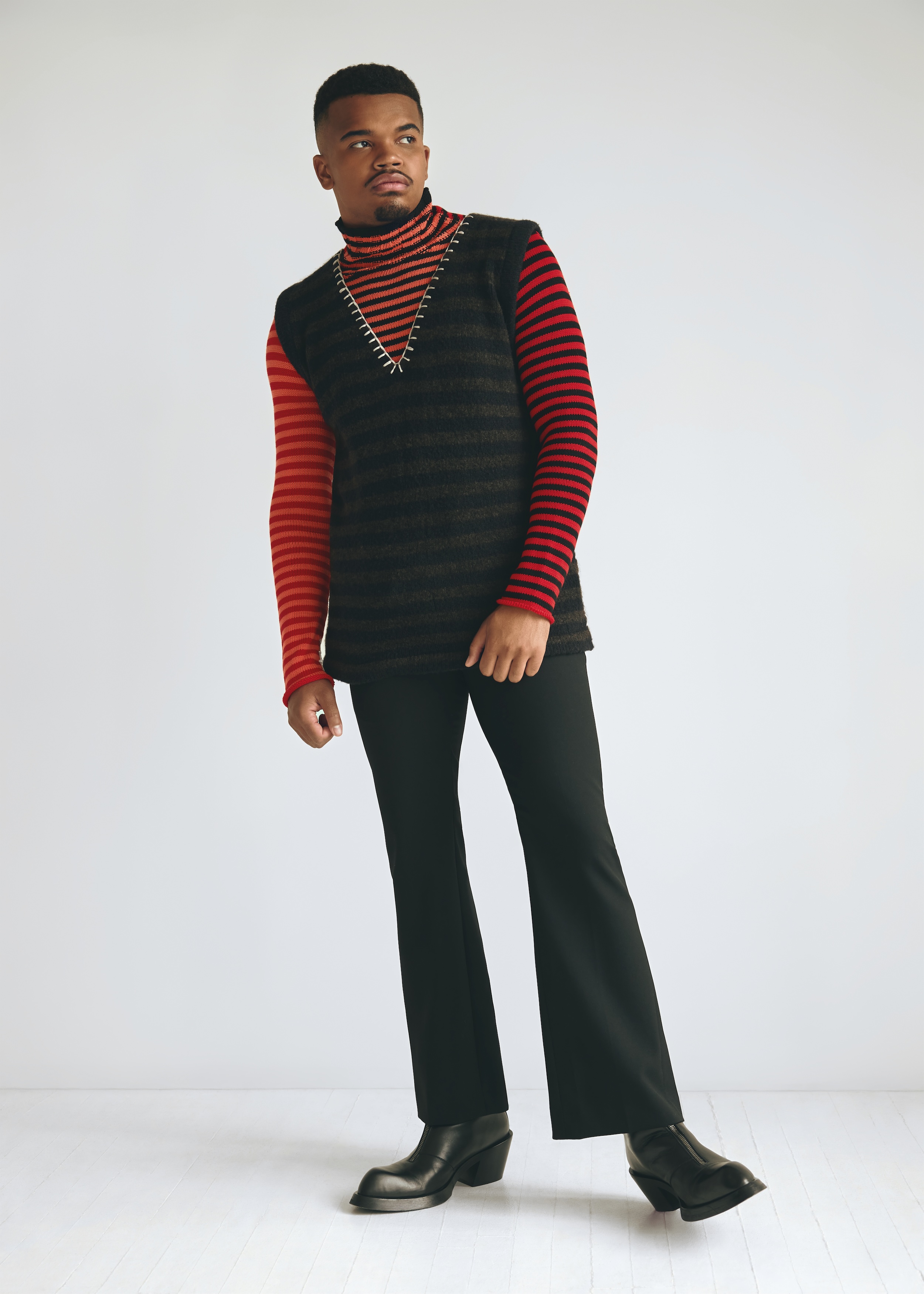
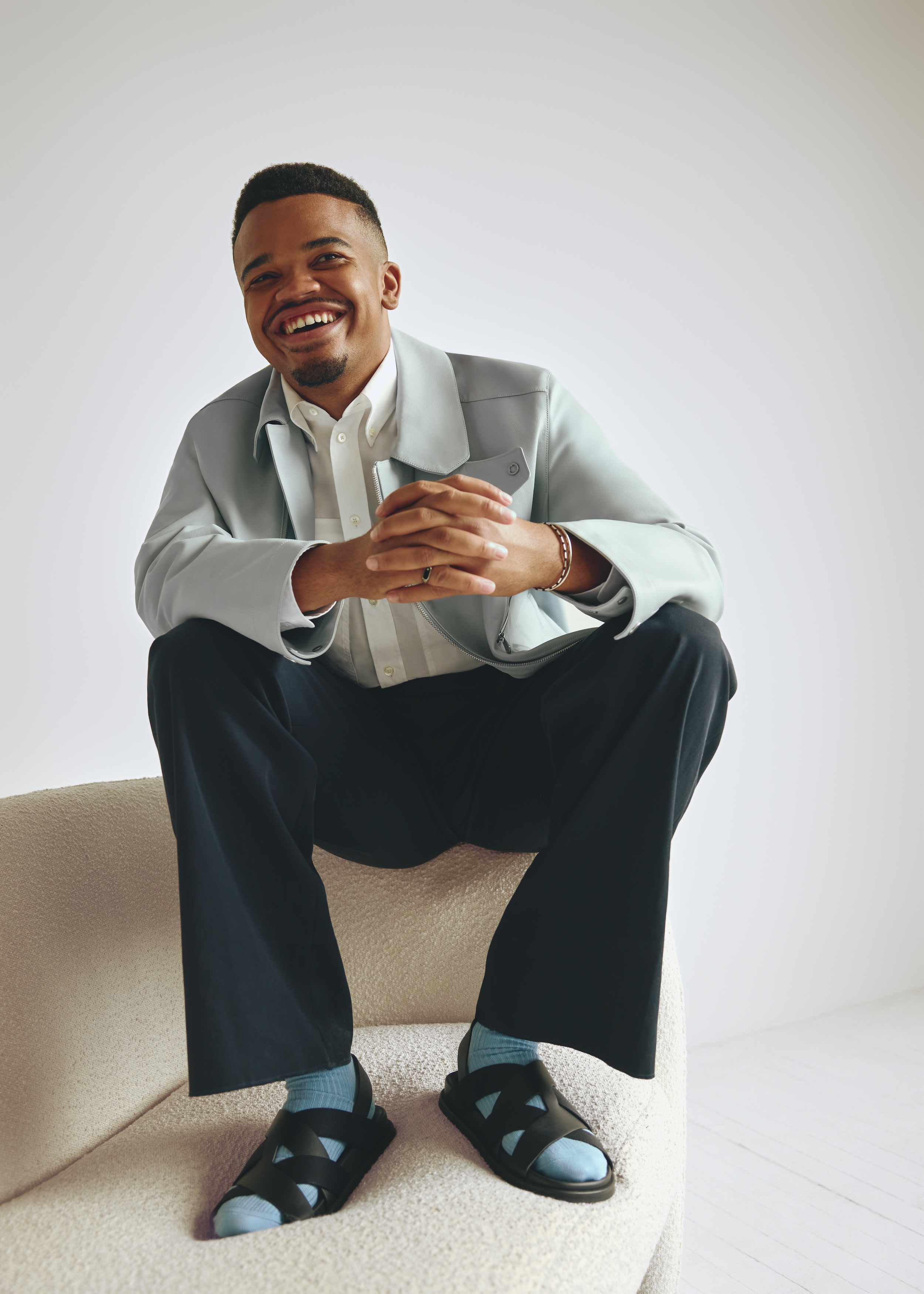
Elijah Wright, photographed by Tazaca for Rain Magazine
**This year was your first time at Cannes with your own film, Spike Lee's 'Highest 2 Lowest.' How was that experience?
**
Unforgettable. I went in 2023 as a guest with my dad, but this year I was there with my own project. Sitting in that theater, lights going down, surrounded by people from around the world who genuinely love cinema, that is a core memory for me. We shot in Fort Greene, Harlem, Brooklyn, and seeing it all come full circle at Cannes was surreal. I even brought a couple of friends with me, which made it even more special.
**Looking ahead, what do you hope the next 10 years bring?
**
I want to play as many meaningful roles as I can, across different genres. Collaborate with great directors. By my early thirties, I would love to direct and create opportunities for younger actors, like what Michael B. Jordan is currently doing. Eventually, I want to start my own production company as well. Right now, though, it is about creating, putting the work out there, and not waiting for permission.
**What is your take on AI in the film industry?
**
It is unsettling. At first it was just images, but now you see AI-generated characters speaking dialogue, doing scenes. It is eerie. If there was ever a year of only AI-generated media, I think people would realize quickly that it does not work; it lacks authenticity. Storytelling needs the human touch, the raw emotion. At the same time, AI has some useful applications, but we cannot lose sight of the importance of real human stories.
**What changes would you like to see in Hollywood?
**
We need more originality. The idea of scanning actors’ faces so studios can own their likeness forever; that feels soulless. I do not want a future of endless remakes and recycled stories. We need fresh voices, new perspectives, especially from people who have not always been represented. That is what keeps cinema alive.
Although Elijah Wright’s career is just starting, he already understands the importance of legacy, not just the one he comes from but the one he is building. Grounded in art, curiosity, and a determination to create work that lasts, Wright is proving that he is not just following in his parents’ footsteps, but he is forging a path entirely his own.
Photography | Tazaca
Styling | Amber Rana
Makeup and hair | Seiya Iibuchi using Circa 1970 Beauty and Rephr Brushes
Photo Assistant | Karen Mortenson
Styling Assistant | Ella Santomero