
By Louise Daniel
At Hermès, ease is never accidental. It is engineered through proportion, material, and an almost obsessive command of construction. For Spring/Summer 2027, the maison returned to this cultivated sense of nonchalance, proposing a wardrobe in which refinement was expressed through the quiet intelligence of each garment. The presentation felt noticeably more intimate than the expansive settings Hermès often stages. Yet the reduced scale ultimately worked in the collection’s favor, allowing greater attention to be paid to the craftsmanship and individuality of the pieces. Without an elaborate environment competing for attention, the clothes became the central argument: examined at close range, their apparent simplicity revealed itself as the result of considerable technical precision.
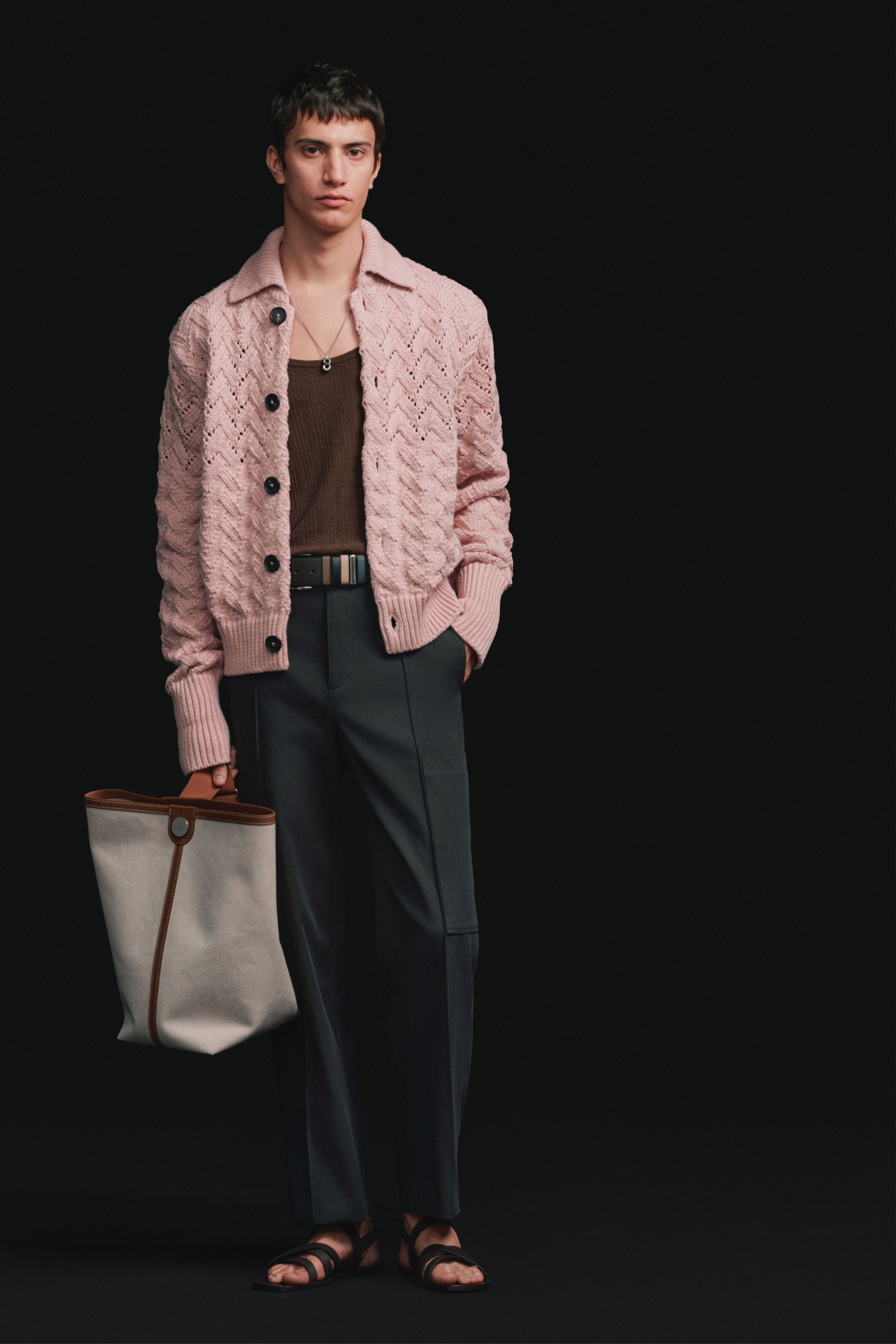
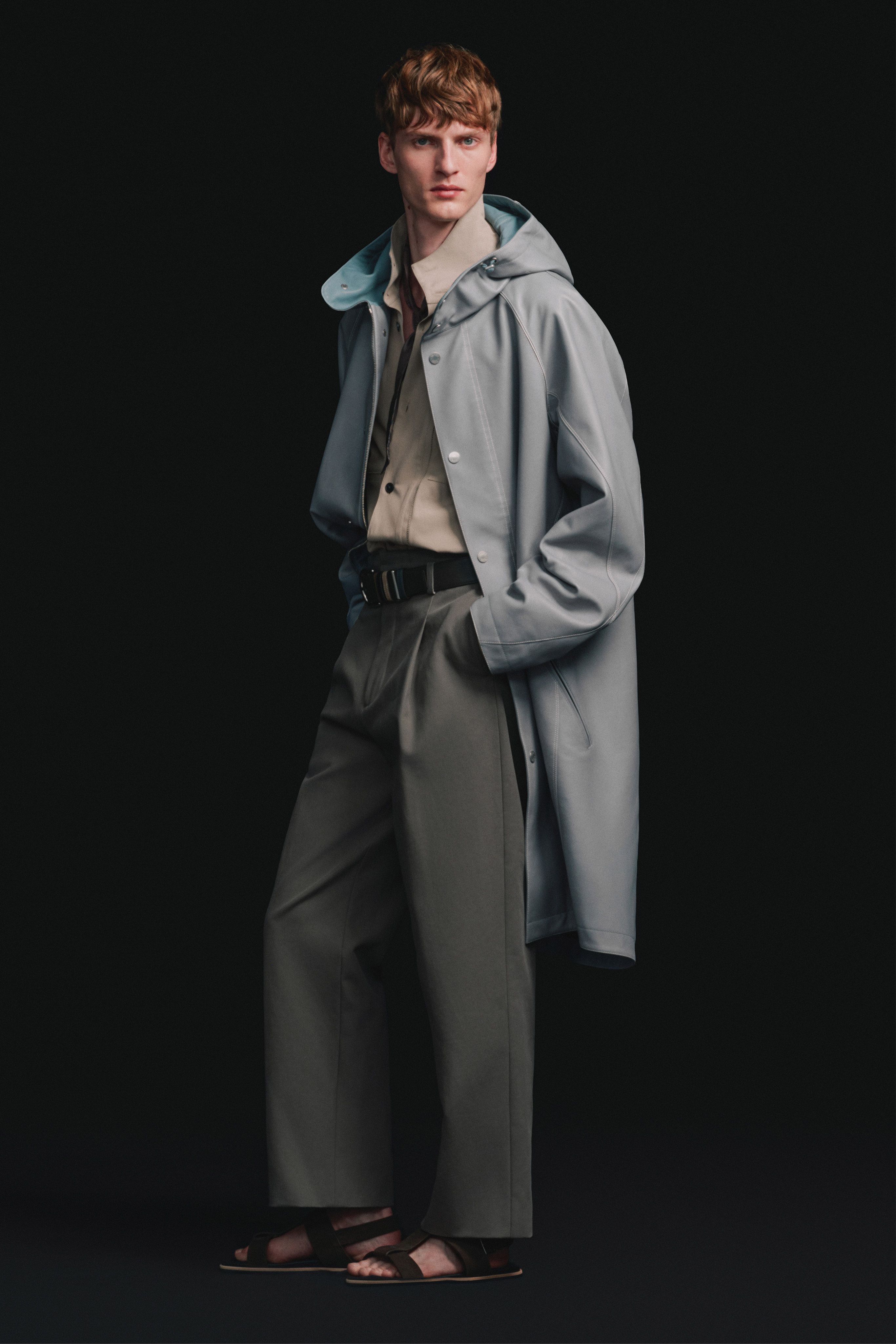
Hermès Men's Spring/Summer 2027 collection offers a refined assortment of materials and expressions for the season. Courtesy of Hermès.
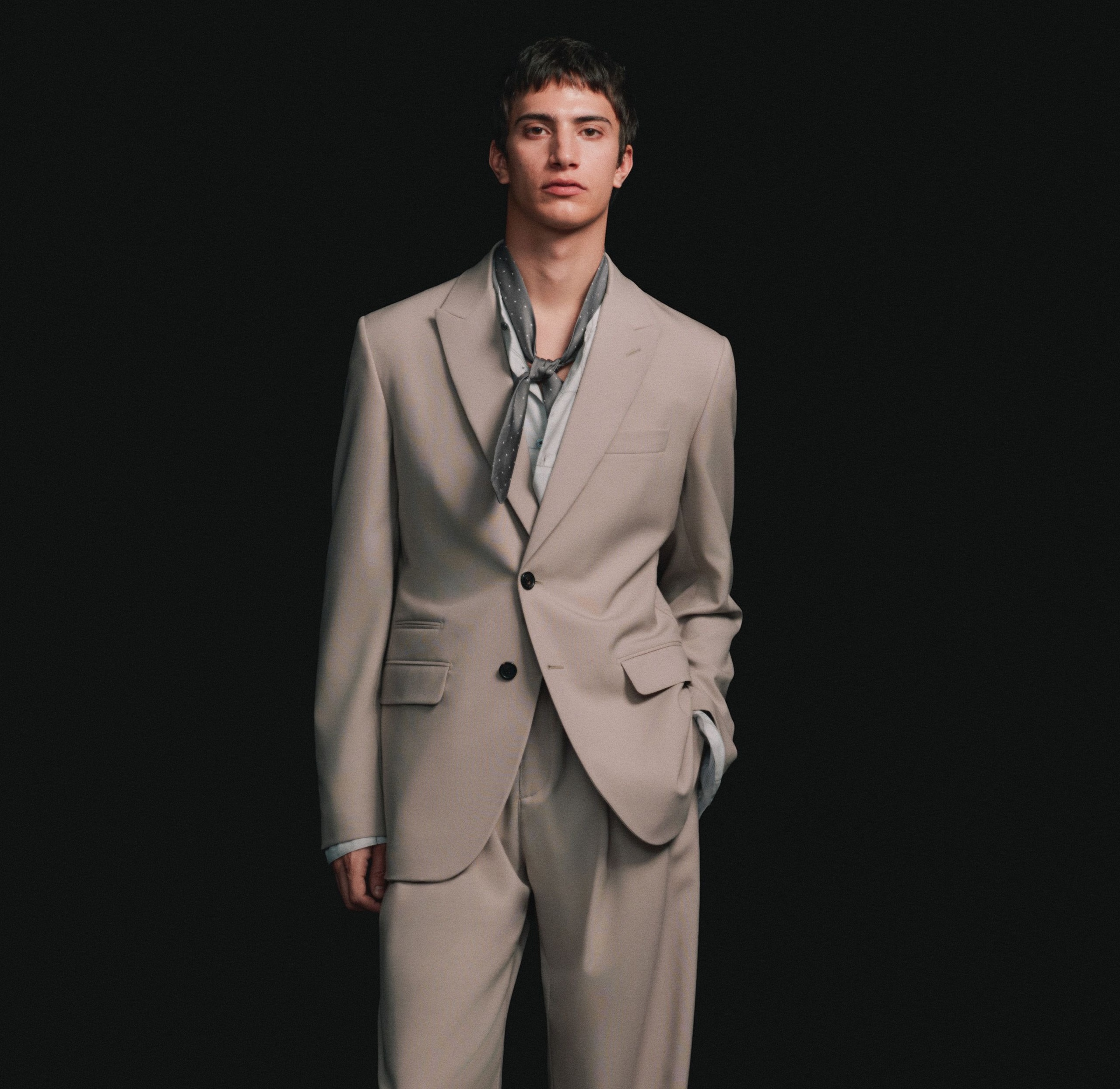
Rather than attempting to redefine the Hermès man, the collection further clarified the wardrobe the house has been developing over recent seasons. Familiar menswear archetypes—the parka, blouson, atelier shirt, tailored jacket and high-waisted trouser—were repeatedly revisited but softened through fabrication and styling. Formality remained present, although never rigid. Ties were narrow and loosely arranged, collarless shirts extended beneath jackets, while pleated trousers fell with an easy, elongated line. Even the more conventional suits seemed less concerned with corporate authority than with establishing a relaxed and instinctive way of dressing.
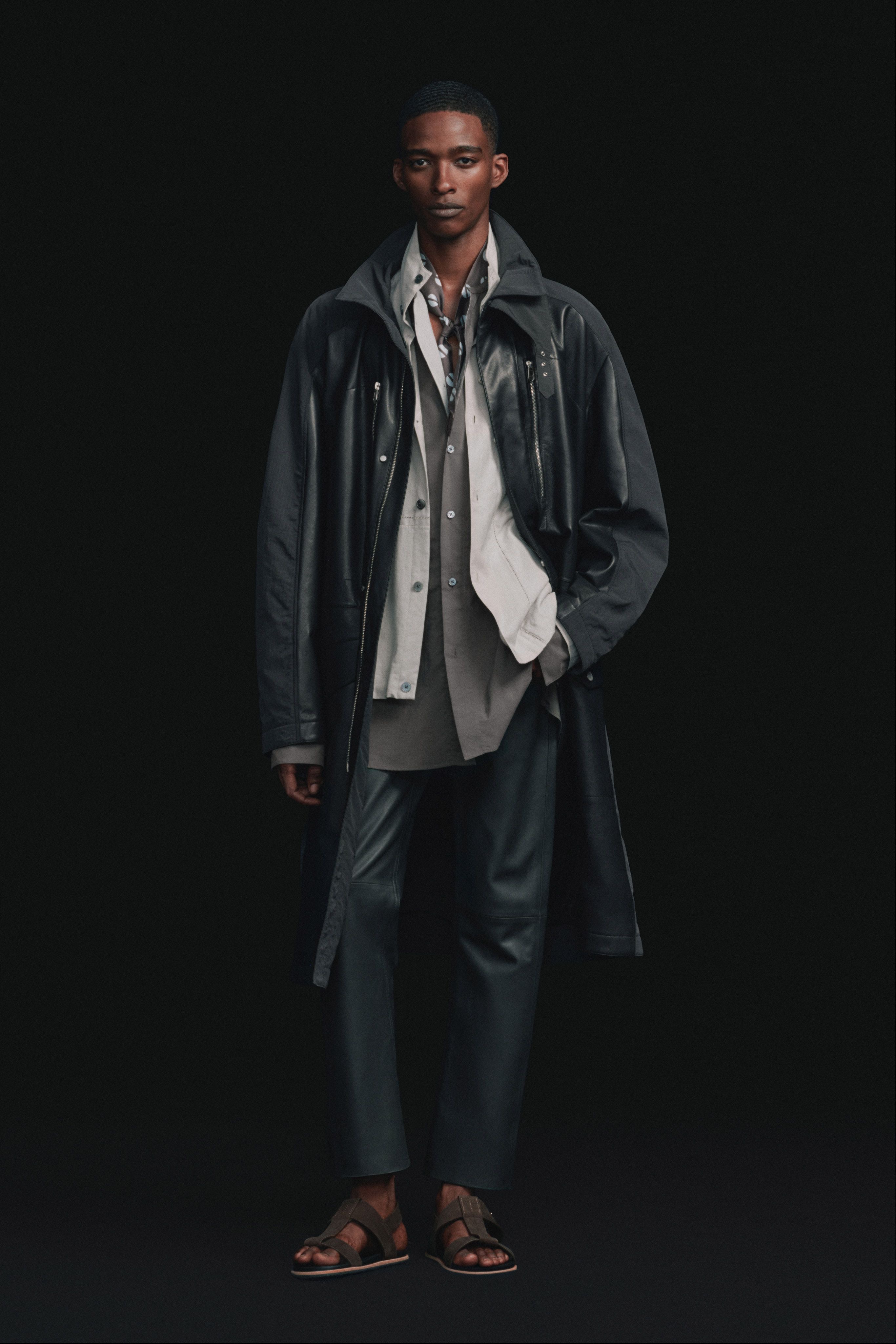
This balance between discipline and ease became the collection’s central tension. Tailoring was precise, but rarely severe; utilitarian garments were elevated without being stripped of their function. Ripstop parkas were combined with plume calfskin, water-repellent cotton drill appeared beside silk and cotton voile, while a jumpsuit was constructed from an armored blend of cotton and paper. Elsewhere, technical silk ikat, linen chintz and cashmere-and-cotton mouliné introduced subtle shifts in weight and surface. Leather, inevitably, remained one of the collection’s most compelling languages. Yet its treatment was often surprisingly light. A wisteria plume-calfskin T-shirt and matching hooded blouson were micro-perforated with the Della Cavalleria motif, transforming a material usually associated with structure and permanence into something breathable and almost weightless.
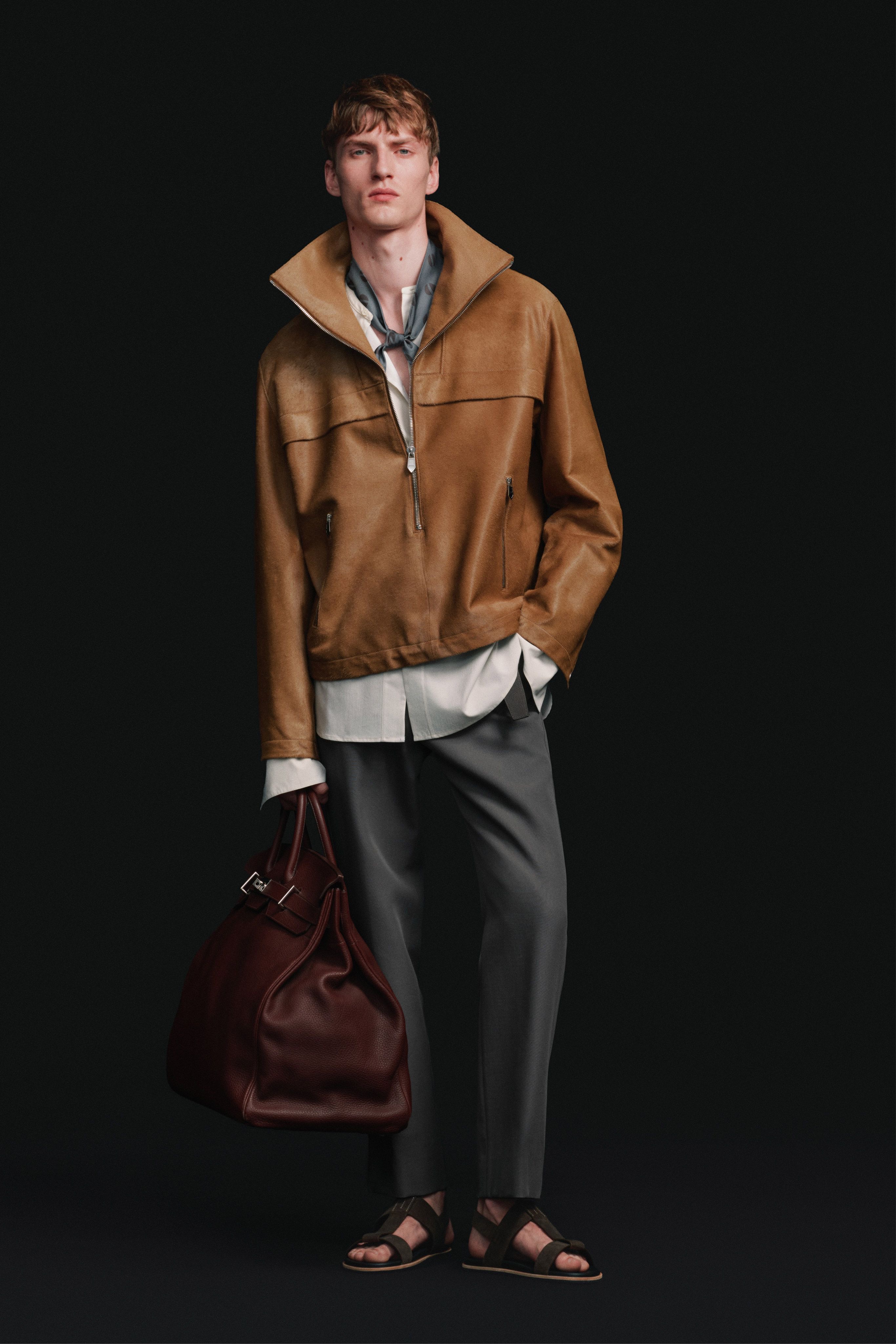
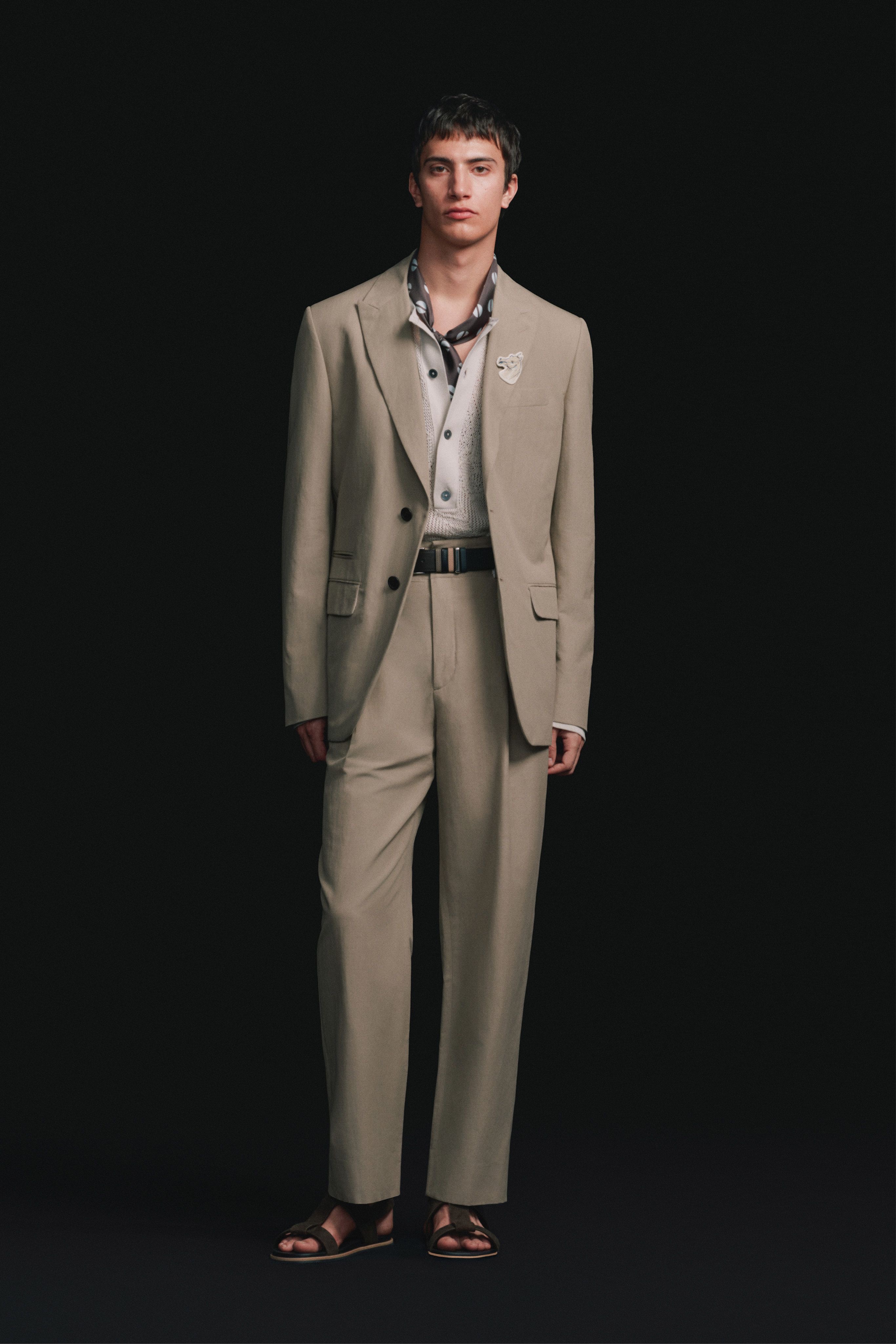
Openwork appeared throughout the collection in checks, polka dots and tie-inspired patterns, puncturing leather, mercerized cotton and silk knitwear with controlled intervals of negative space. These perforations were more than ornamental. By allowing air, movement and glimpses of the layers beneath to pass through traditionally substantial materials, Hermès reconsidered how craftsmanship could respond to the physical demands of summer. A gold Heritage calfskin blouson, punctuated with openwork polka dots and inspired by the Mangeoire bag, appeared substantial from a distance yet revealed a playful lightness up close. Graphite sport calfskin was similarly worked into an overshirt and wide trousers, creating a complete leather silhouette that avoided the heaviness such a proposition might ordinarily suggest.
The proportions reinforced this sense of controlled relaxation. High waists and softly pleated trousers gave the silhouette a measured verticality, while boat-neck shirts, fine-gauge knits and abbreviated blousons introduced a quieter sensuality. Sandals accompanied much of the collection, preventing the tailoring from becoming overly formal, while wide multi-loop belts brought a more graphic form of structure to the waist. The Hermès man remained composed.
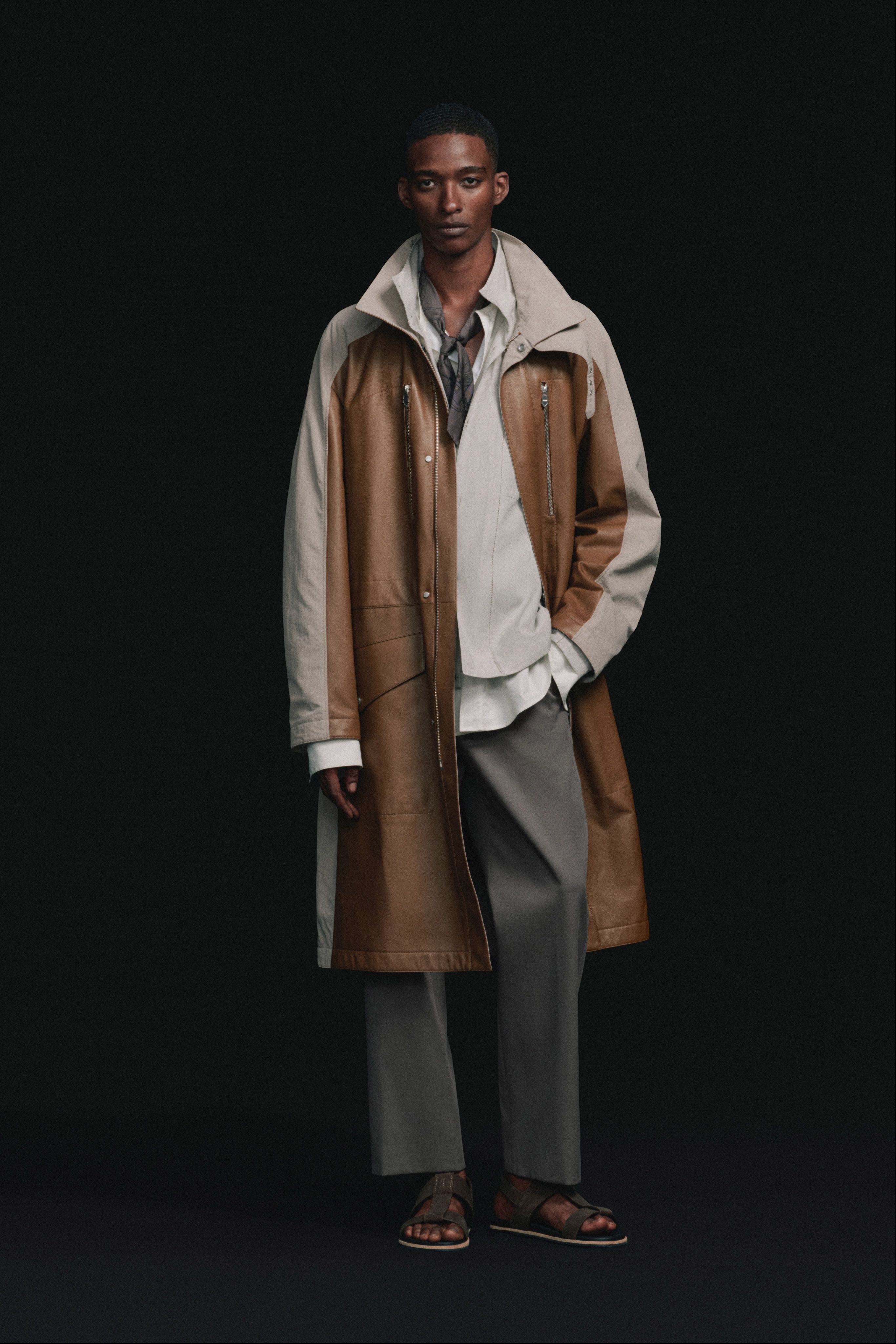
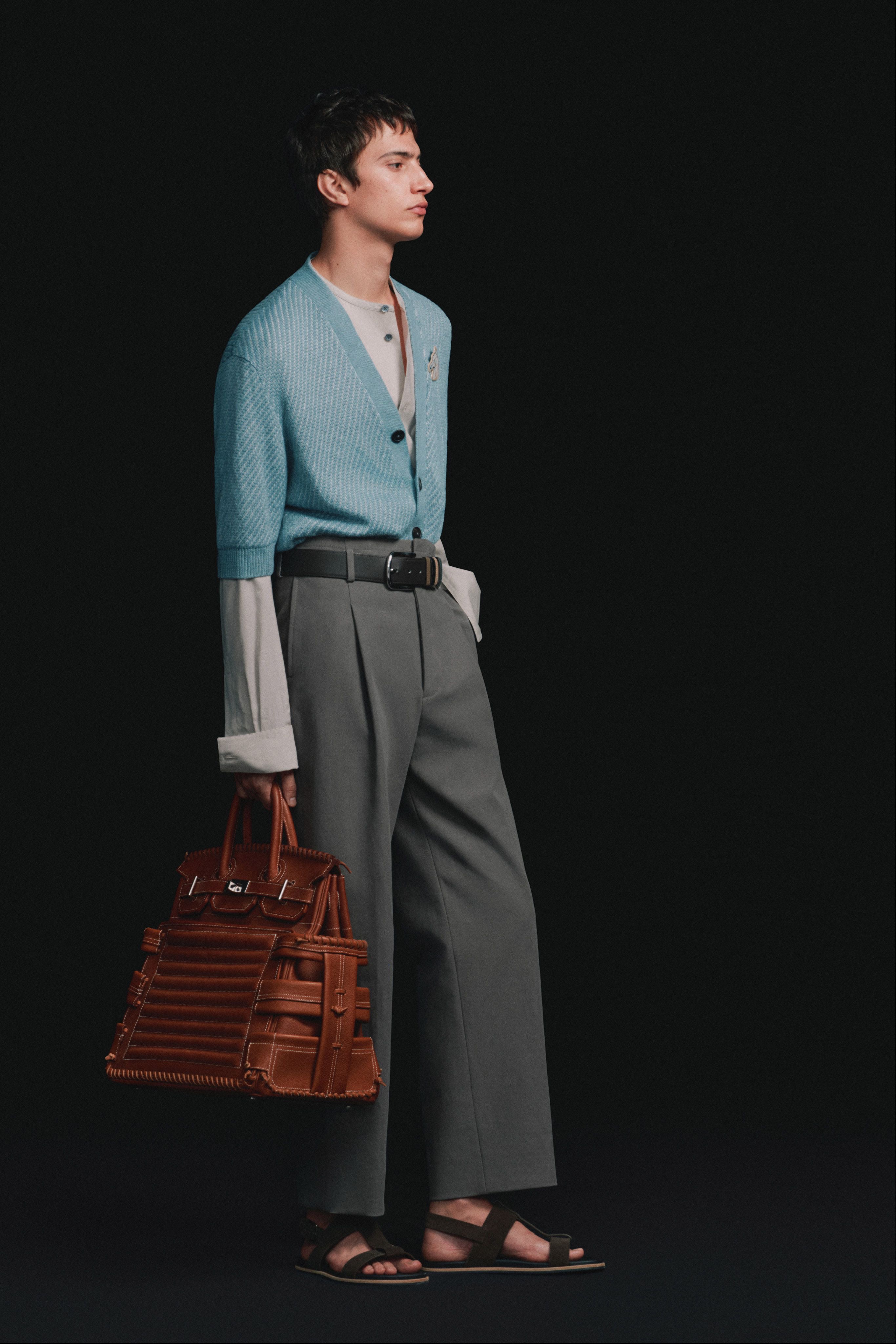
Look 17 from Hermès Men's Spring/Summer 2027 collection. Courtesy of Hermès.
The accessories were more selective than in previous seasons, and several of the most striking pieces were not visible during the presentation. Most notable was the Haut à Courroies Pitcher from Look 17. Constructed in Barénia Faubourg and gold Barénia calfskin, the bag reimagined the familiar HAC through an enlarged, almost skeletal framework. Its ribbed, basket-like construction transformed an emblem of Hermès leatherwork into something closer to a piece of portable architecture. Spring/Summer 2027 was therefore a season of calibration. It demonstrated how refinement can emerge through minute adjustments: a perforation that changes the weight of leather, a higher waist that alters the posture, or a softened tie that releases tailoring from its conventions. The collection may not have delivered a singular, theatrical statement, but it did something perhaps more characteristic of Hermès—it made complexity appear effortless.