
By June Roberson
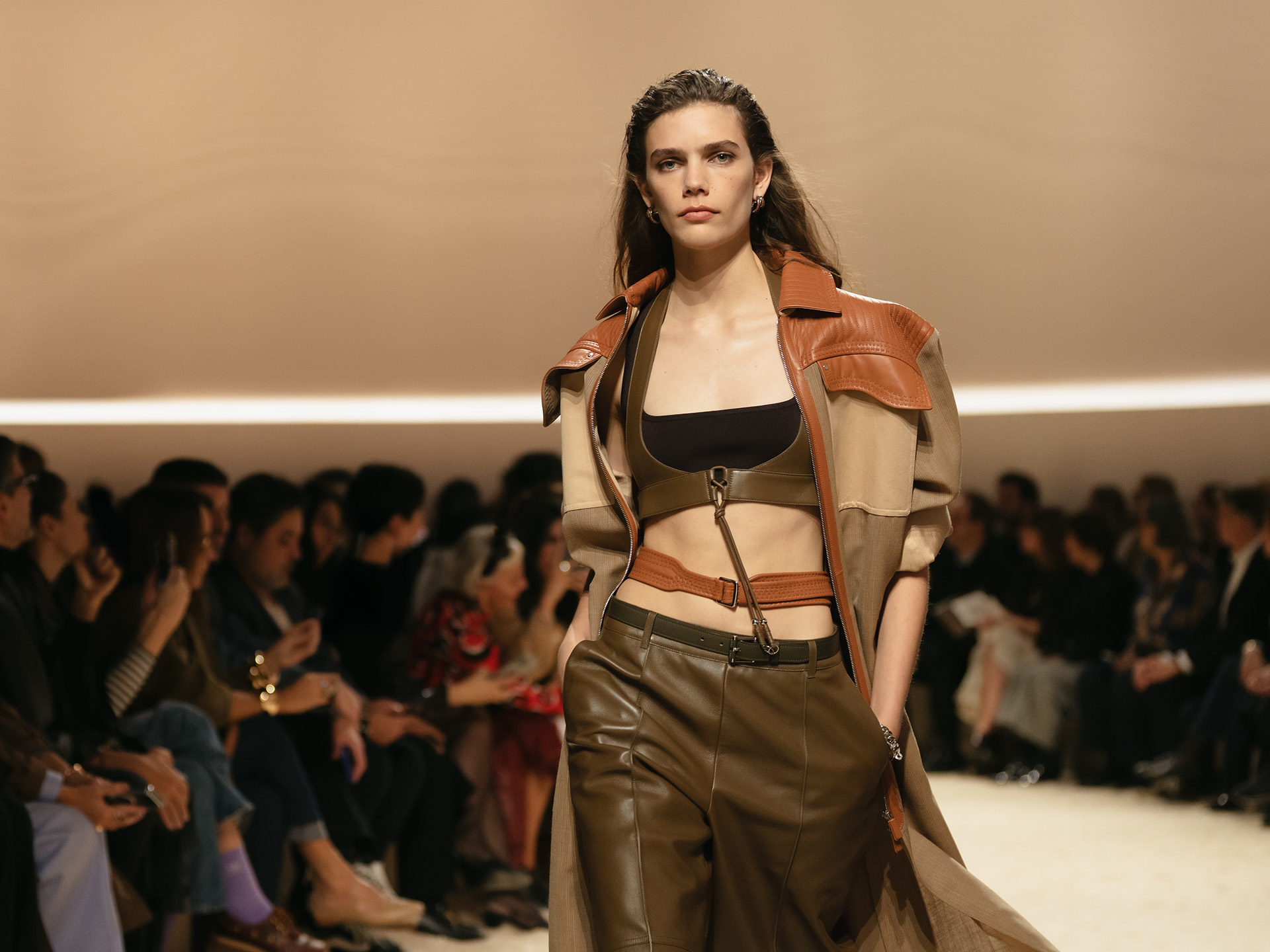
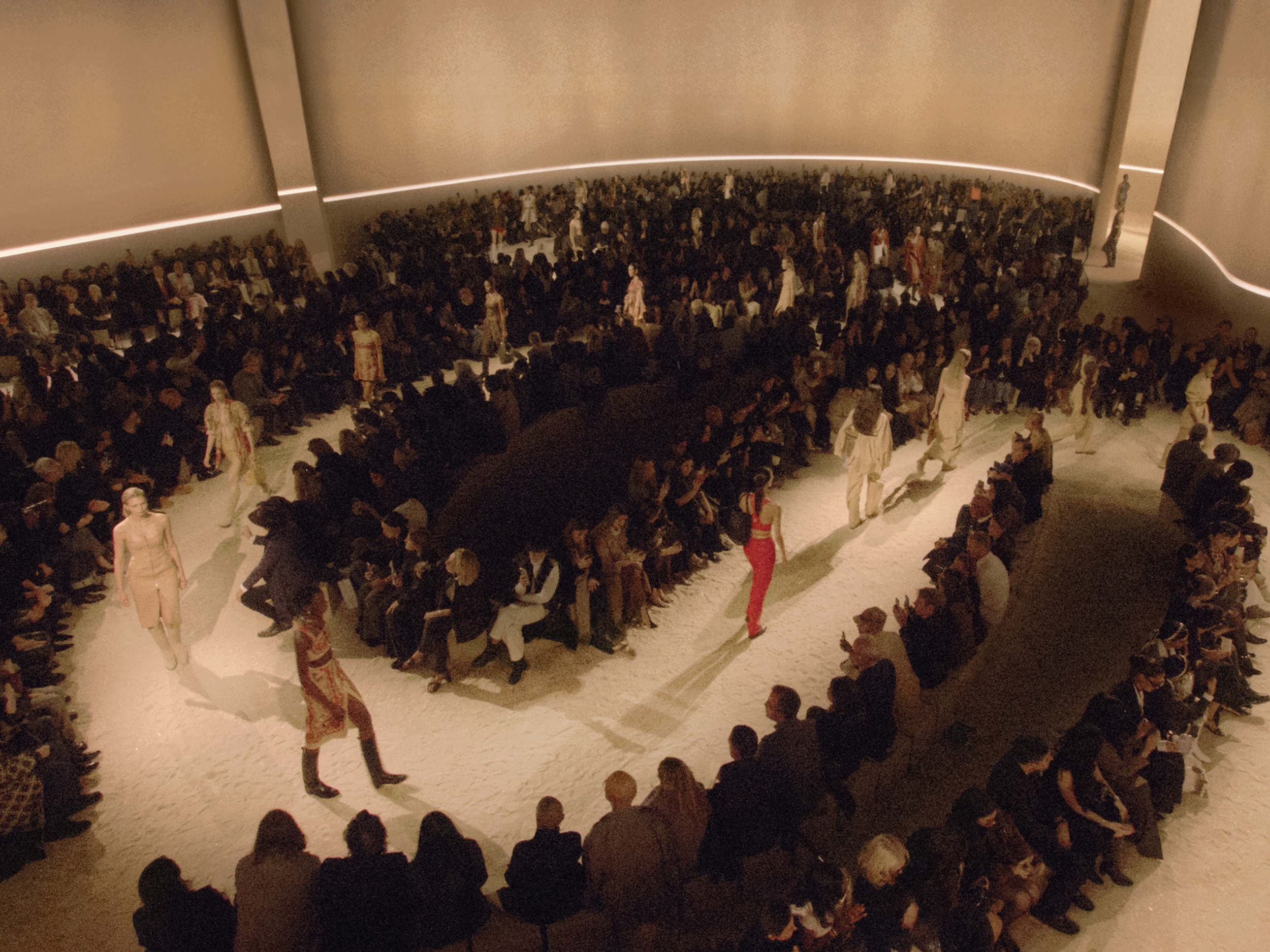
A comforting autumnal hue lingered outside the Hermès Spring/Summer 2026 show as guests made their way through leaf-strewn streets toward the Garde Républicaine in Paris. As her twelfth year with the house approaches, Nadège Vanhee unveiled a collection that met every expectation while staying true to Hermès’ timeless codes. Inspired by southern France’s Camargue region, famed for its white horses and bull races, Vanhee translated a cowboy fantasy into something unmistakably Parisian. The Camargue, after all, remains a favorite escape for the French just dying to cosplay a cowpoke. Drawing from the region’s sun-bleached beaches and spirited livestock shows, Vanhee sent models down a winding runway of white sand, its surface doubling as arena footing as they traversed the room.
Trend? Please, Hermès Invented It
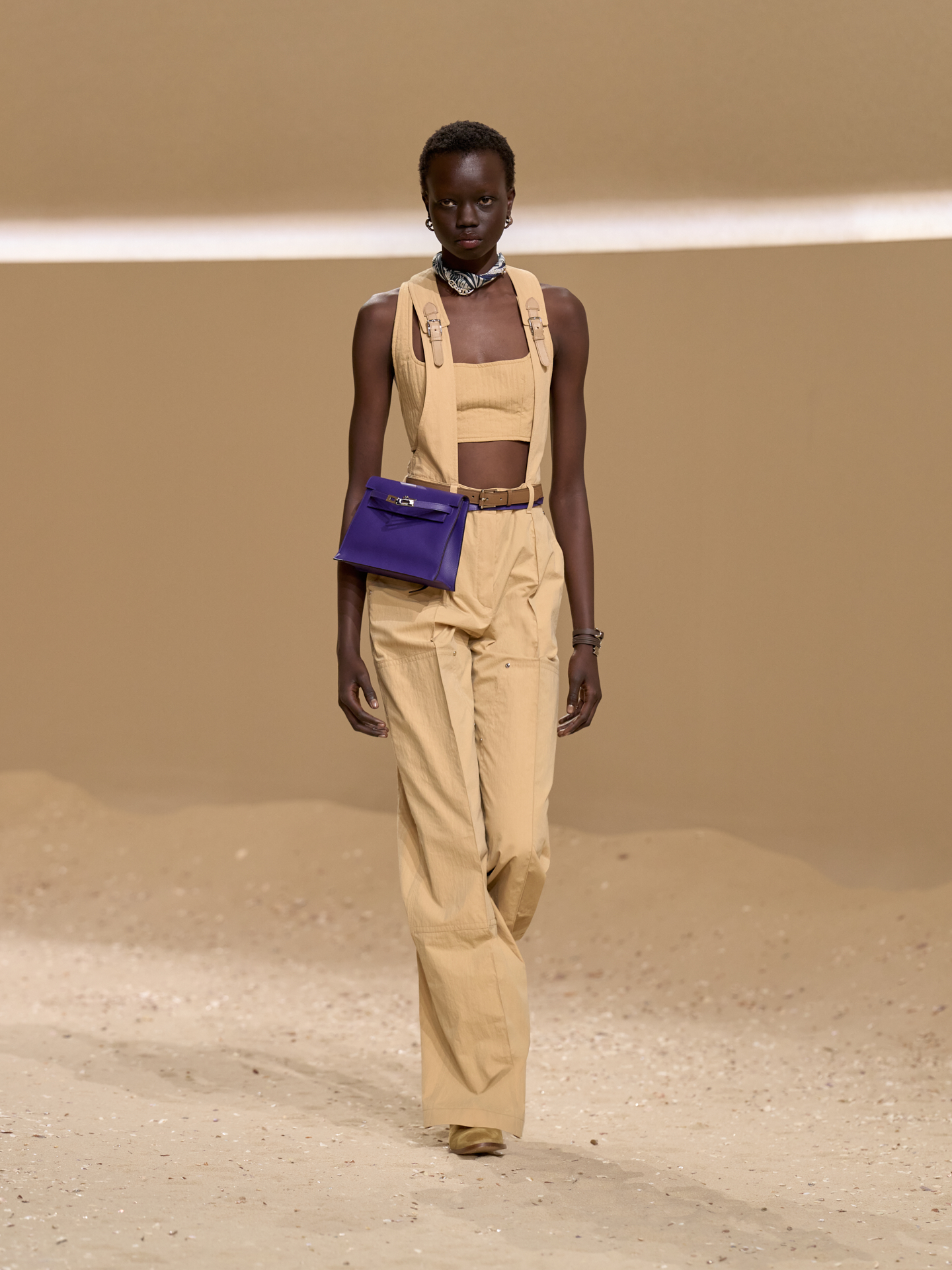
For Hermès, the equestrian thread is no simple fad or conversation fodder for a fleeting trend but taken as legitimate oath. The equestrian woman comes harnessed, yet unfettered, in soft leather, curving lines, and haltered tops fastened by utilitarian buckles. The opening look felt tangibly restrained beneath a leather breast collar and a waist piece that belted bare skin. Over these detached torso panels, a three-toned leather long coat swept behind, its tails walking in tandem with brown Bermuda shorts and classic knee-high riding boots. Look 16 introduced double buckle-strap suspenders that cinched the beige ensemble from shoulder to waist, feeling slightly displaced only due to the absence of a saddle to secure. A purple and white scarf, rolled and tied neatly, eloquently reimagined the wild rags of the Old West while nodding Hermès’ iconic carrés. Though not performing in its traditional cattle driving ways, the scarf found new purpose by anchoring a purple mini purse secured at the model’s hips.
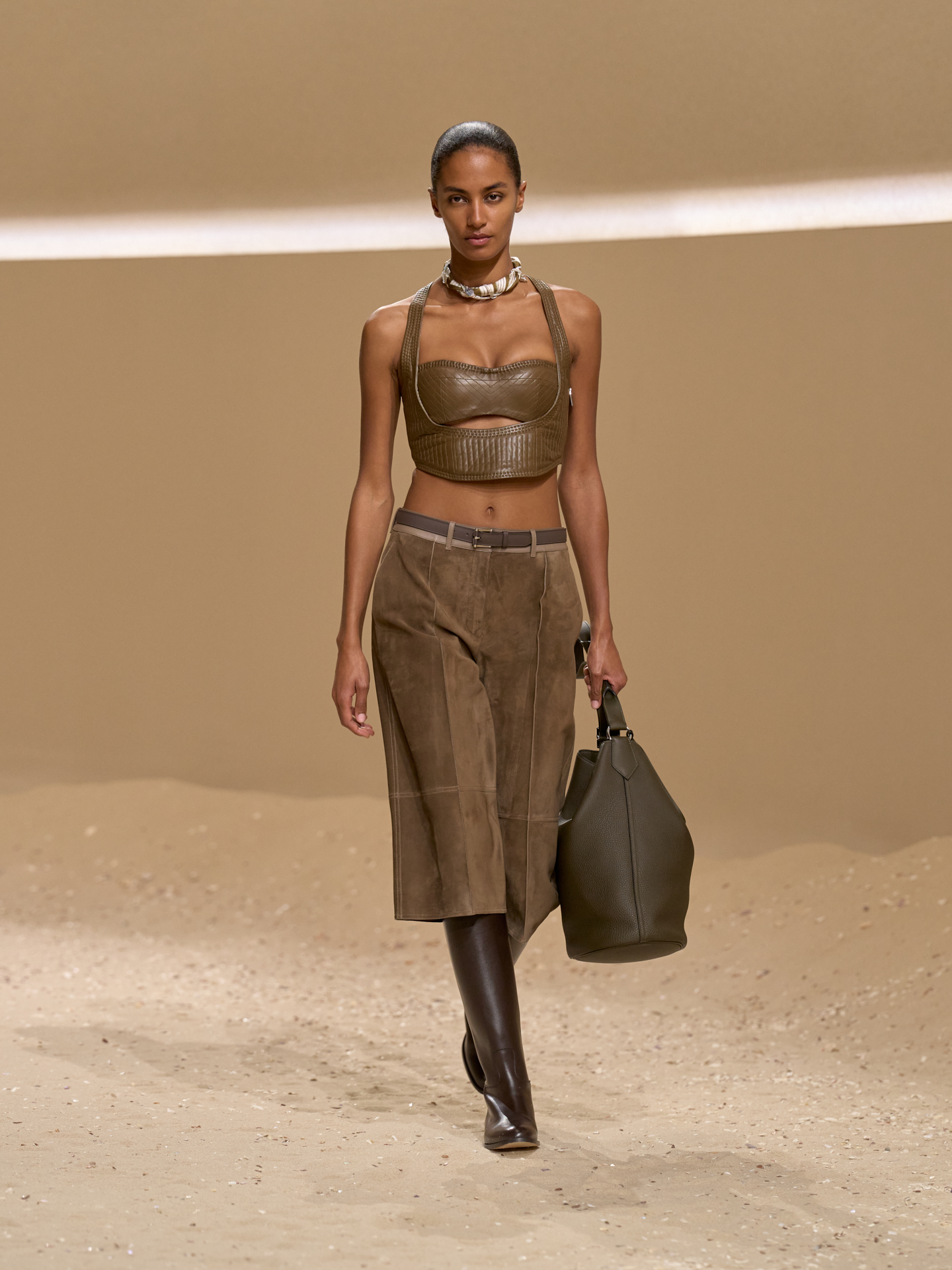
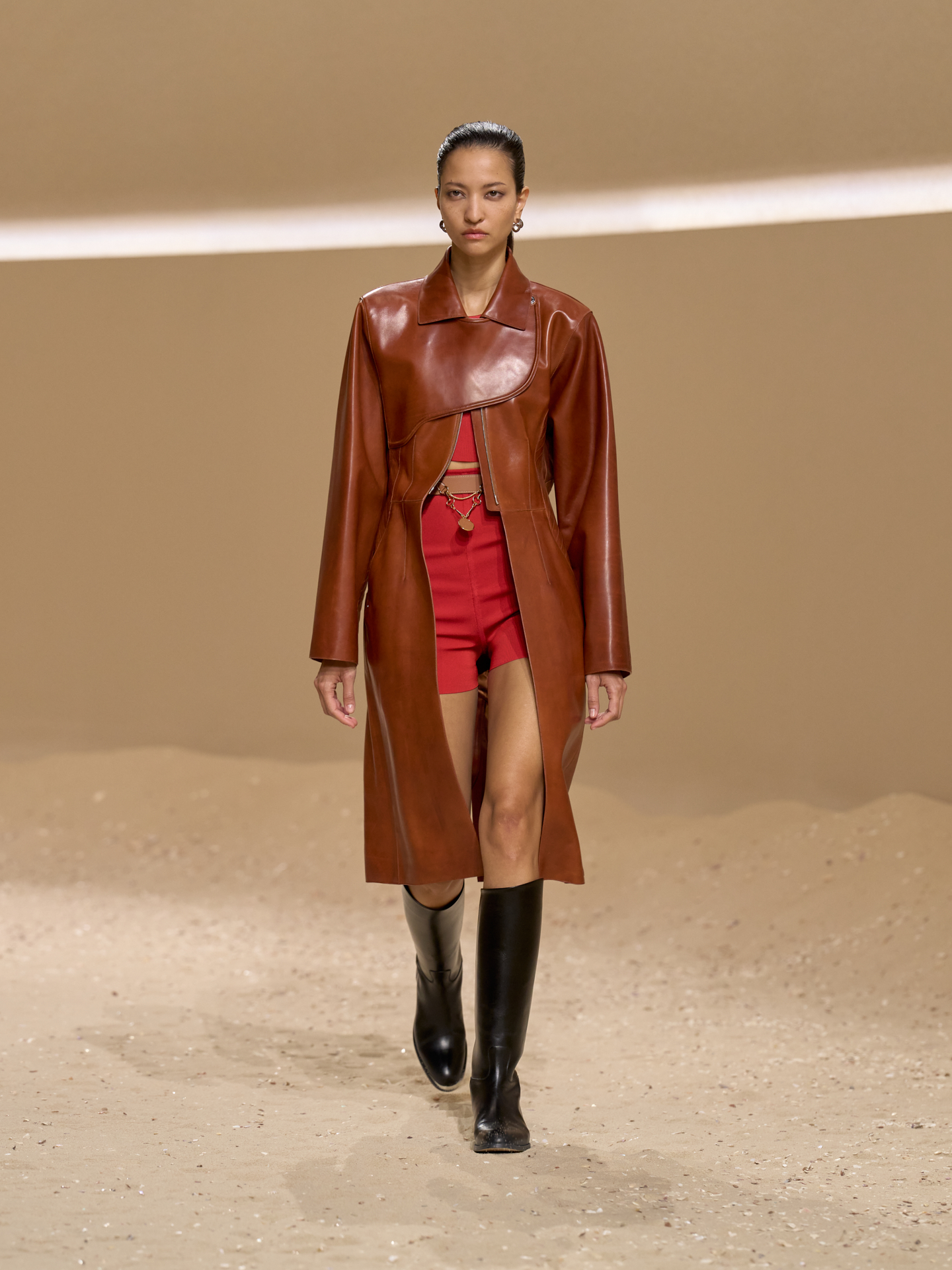
As for ethos, the brand is nothing if not true to its métiers. From dressing the horse drawn carriage to gifting women the revolutionary Birkin, the house’s history is craft and code and revisit it they do. In variations like the cropped leather top of Look 24 or semi-fastened trench that concealed the better half of Look 29, the collection preferred soft bending lines as opposed to the abstract. The gentle curves that form from pommel to cantle, only briefly disrupted by the rider that sits between, were re-interpreted through uncut supple leathers that became perforated, dust-colored neutrals with vibrant carmine bursts and a closing set of monochromatic mediterranean blues that embodied a bohemian kind of freedom.
Hermès Women's Spring/Summer 2026: Looks 24, 29 (Image courtesy of Hermès)
Creative influences eagerly flocked to watch the groundwork unfold. Fashion mainstays saw Tamara Kalinic, Grece Ghanem, Leonie Hanne, and Jeanette Madsen while screen stars spanning continents included Australian-born Violet Grace Atkinson, Filipino Australian Anne Curtis, and Mexican actress Loreto Peralta formed part of the show’s diverse watch party.
Are Horse-Girls All The Rage?
So, what about horses is suddenly screaming luxury? Is it sheer expense that makes the muse relatable for the elite and a dreamscape for the less stable, or did we just finally stop pretending it wasn’t cool? Once considered a derogatory label, your grade-school horse-girl was ahead of the curve, the “weird girl” suddenly rewritten through luxury wear as the girl you secretly wish you could be. Vanhee leans into this very depiction, just as Hermès always did first. She designs with functionality in mind, while allowing her personal fascinations the space to truly take the lead. And finally, to address the elephant, or should we say the horse, in the room… how long until her non-human muse is allowed to take the runway?
Featured Image: Photography by Zoe Joubert