
By Louise Daniel
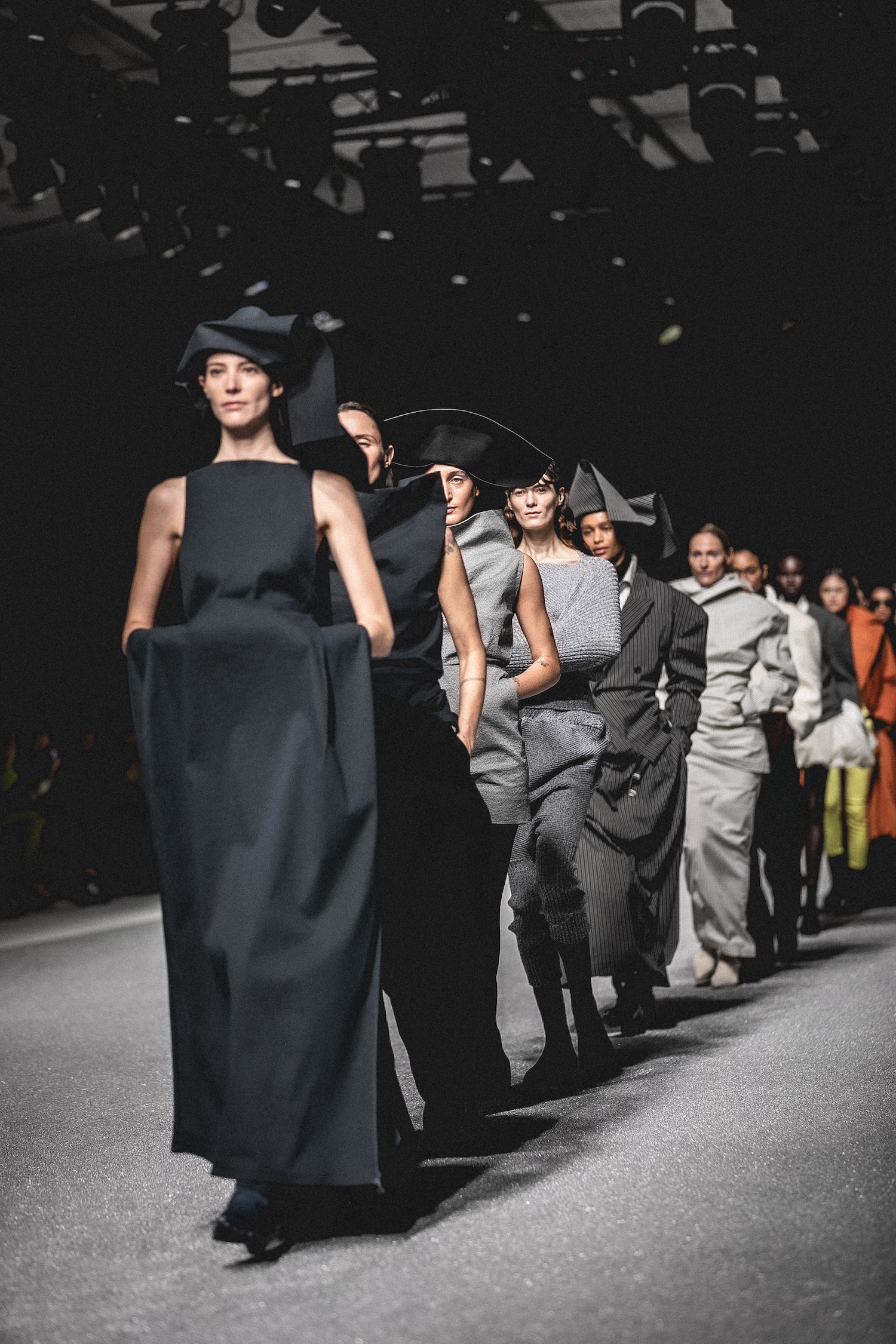
間 (Ma) in Japanese is the principle that creation can only become meaningful because something is allowed to exist around it. It is that space of allowing that makes the act of creation itself whole. For Issey Miyake’s Fall/Winter 2026, Satoshi Kondo questions the dynamic tension between deliberate creation and allowing space for the unfinished. In the most striking way, the philosophy of 間 (Ma) was holistically integrated—from the ethereal clothes to the very runway structure itself, composed of fine silvery dust.
A sense of Zen overtook the Carrousel du Louvre as live abstract tunes by Matthew Herbert and Momoko Gil echoed throughout the iconic space. It seemed to lull the guests into the present moment as fifty-two exceptional looks glided almost shimmered—down the silver pathway.
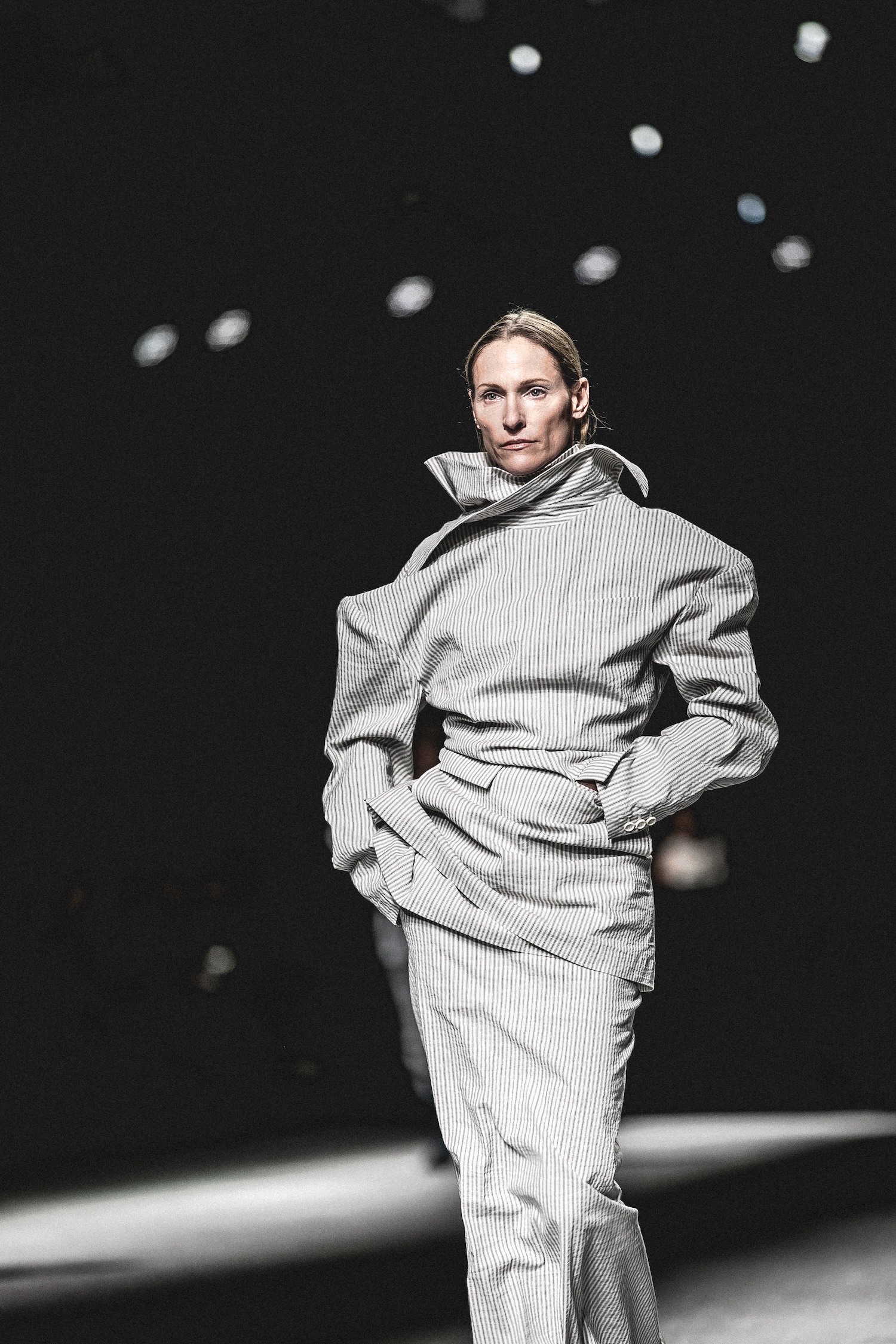
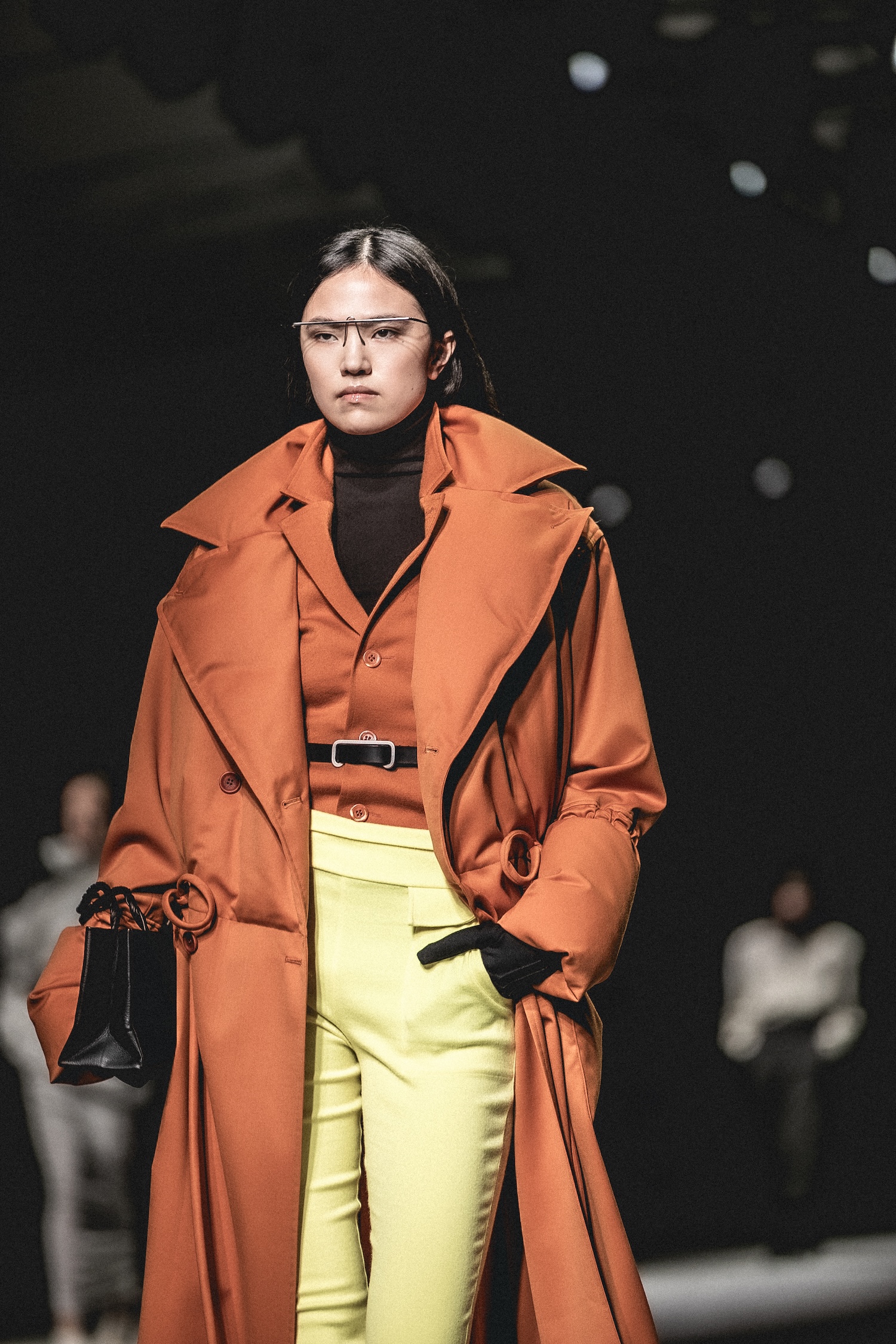
Issey Miyake Fall/Winter 2026 (Images courtesy of Louise Daniel)
The Will to Create, The Will to Allow: Kondo’s Limitless Miyake
Nature is the singular point of origin for Kondo’s Miyake. The relationship between time and intentional intervention was observed in the contingent progression of the runway itself. Textures extracted from stone, paper, and glossed shells appeared in all forms: twisted, layered, or simply shaped to the wearer’s body. Materiality became an evident playground for Kondo this season, as we saw a variety of yarns, knits, wring pleats, and wool composing the silhouettes of the runway. The A-POC (A Piece of Cloth), a universal concept originating from Mr. Issey Miyake himself, undergoes a subtle clothing renaissance here. This can be observed in single-zip dresses draped into three-dimensional shapes and in voluminous coats with a strong geometrical impact.
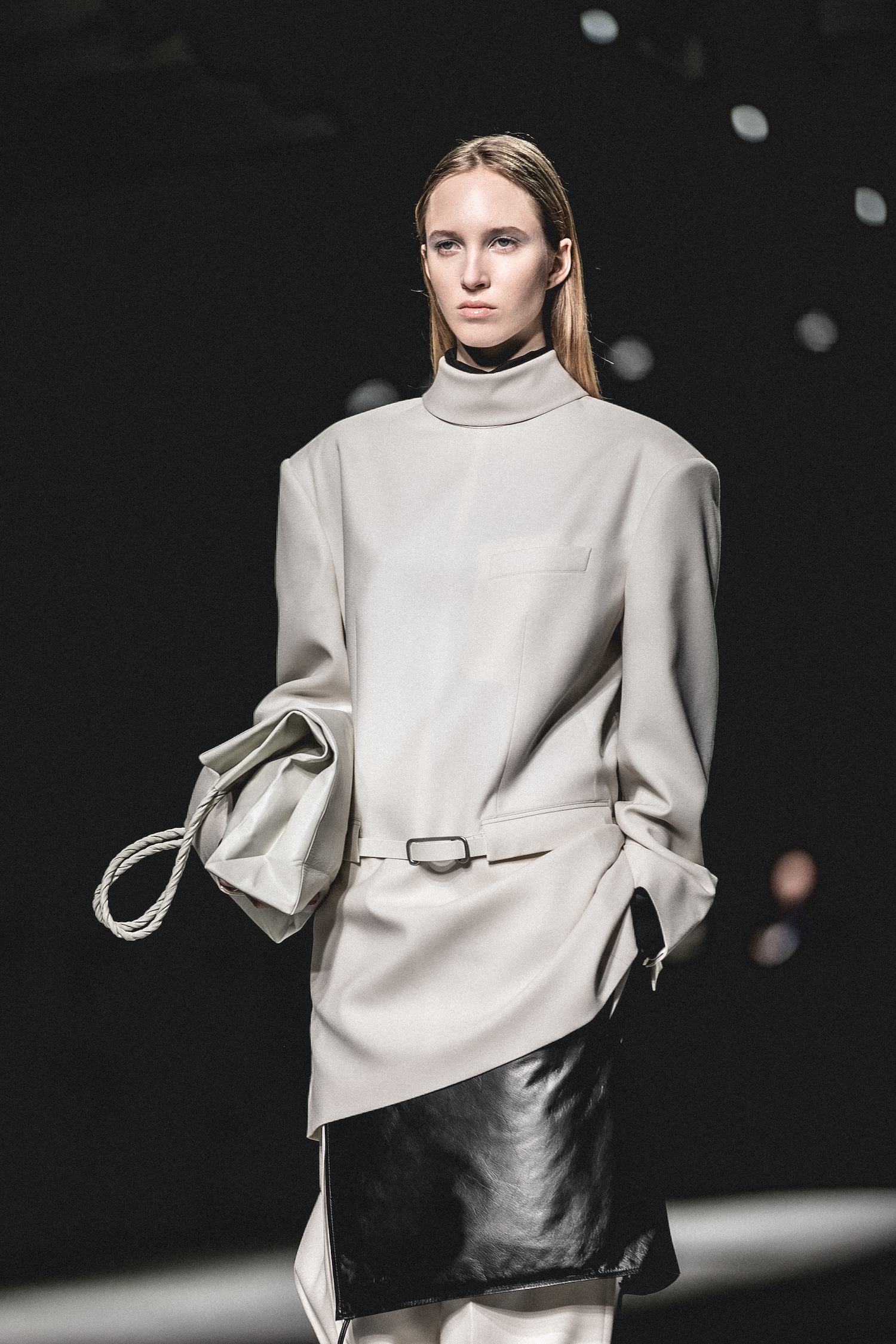
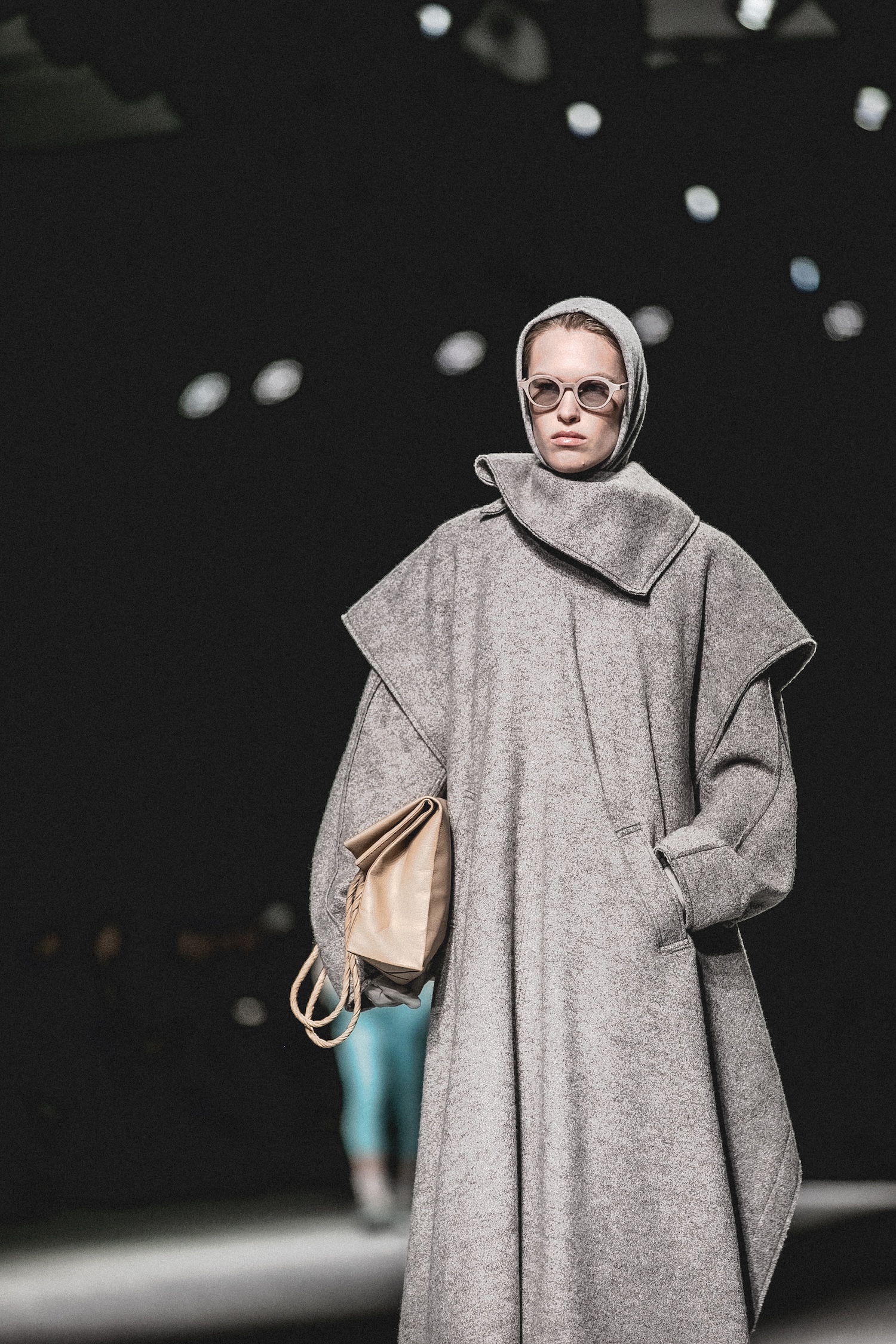
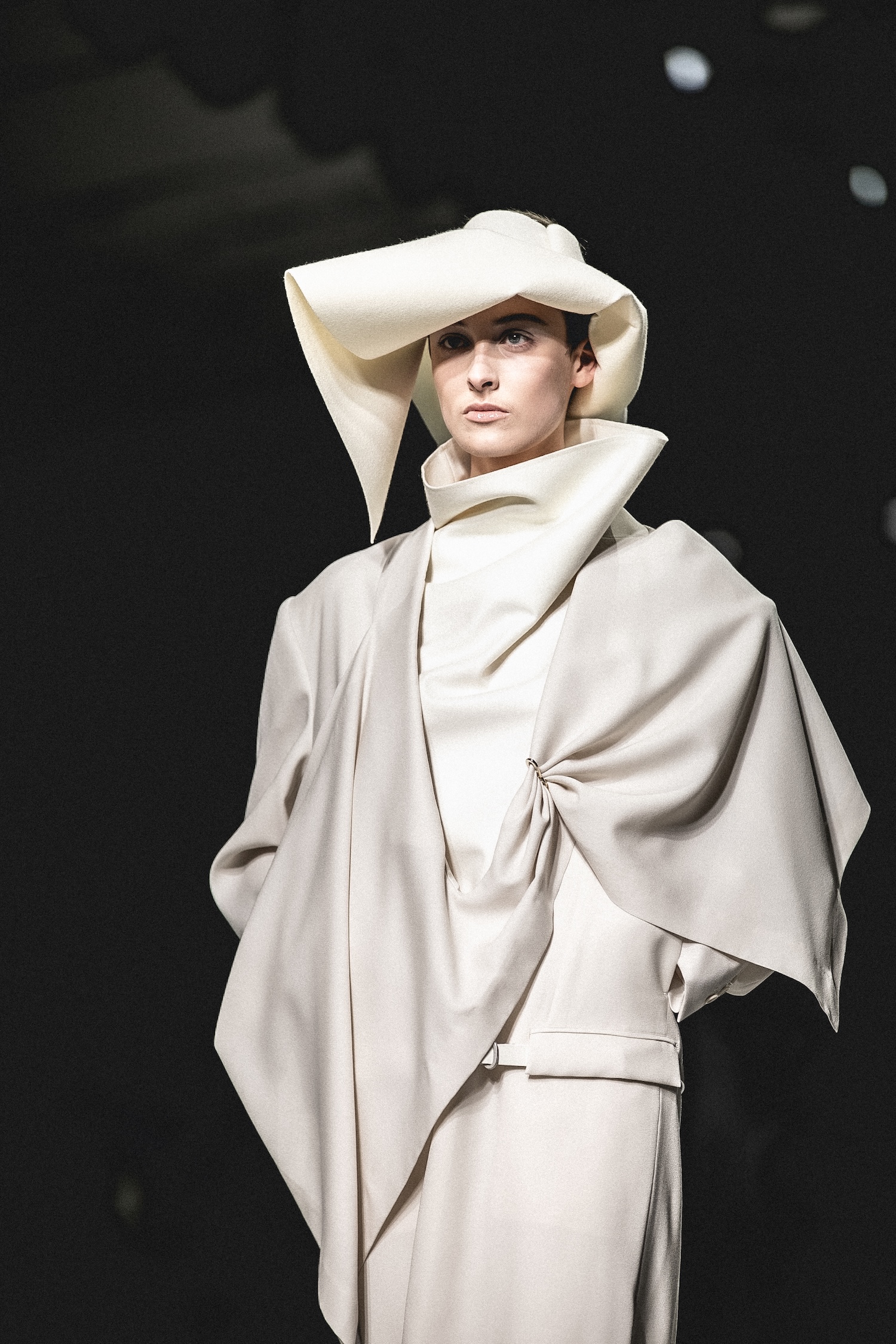
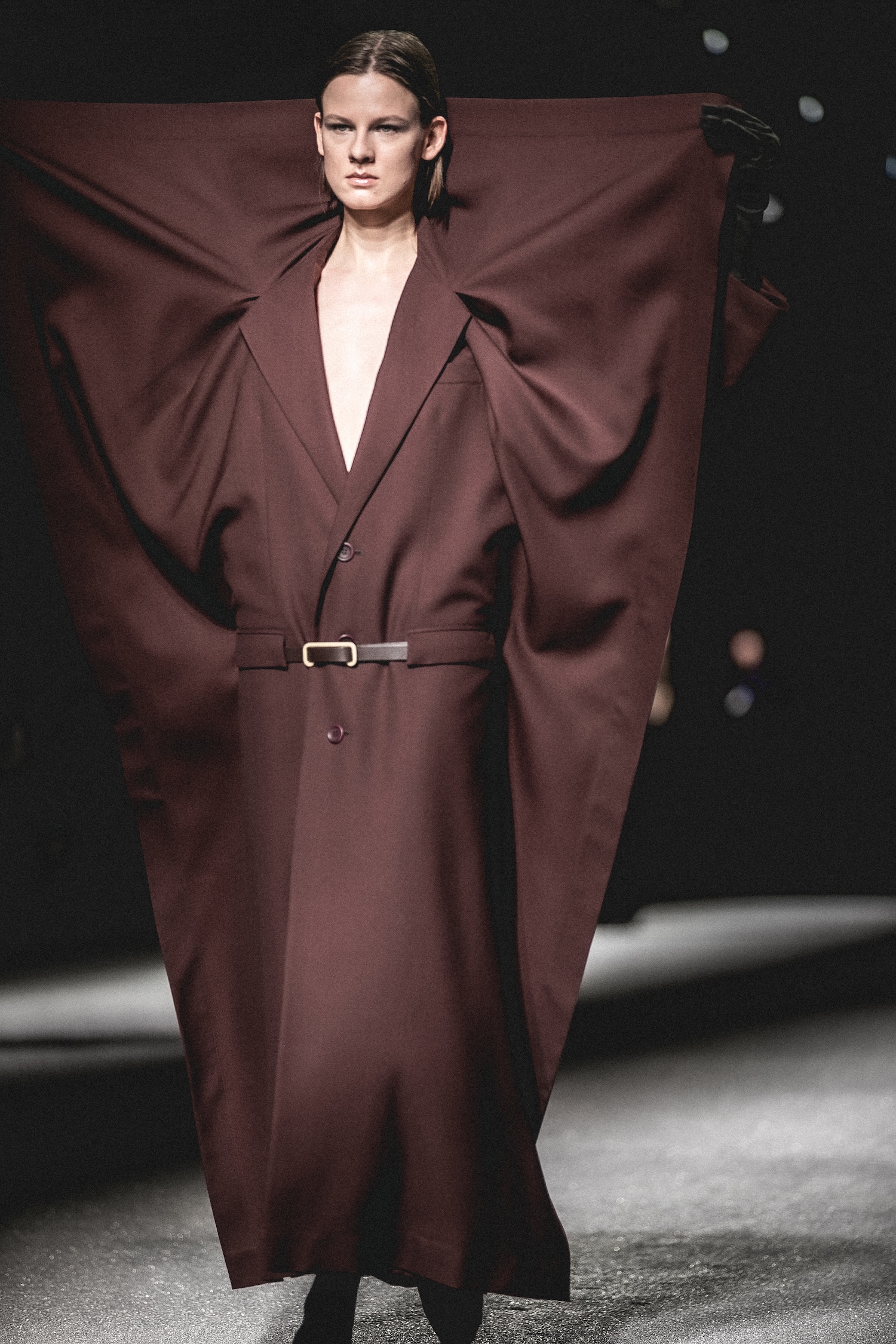
Issey Miyake Fall/Winter 2026 (Images courtesy of Louise Daniel)
A defining element on the runway was the series of glossed bustiers and bodices that both began and concluded many of the ensembles. Built from the concept of a kimono sash (obi), the Miyake corsets are not about restraining the body but simply framing it. Truly rooted in exceptional Japanese craftsmanship, they are created by artisans from the Echizen region of Fukui Prefecture using layered sheets of washi paper. They are then finished by artisans in Kyoto with lacquer coating, giving them a glossy, solid form.
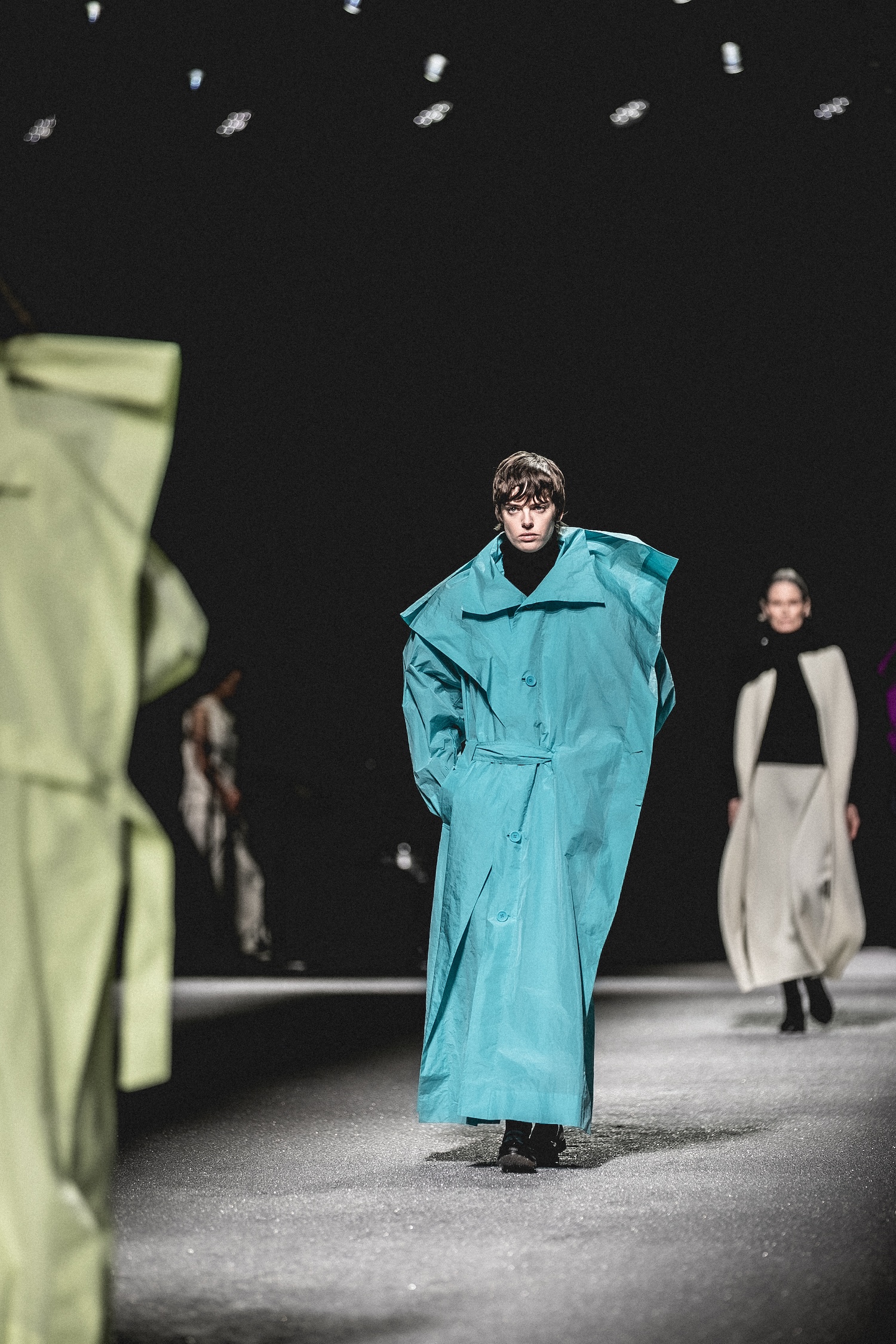
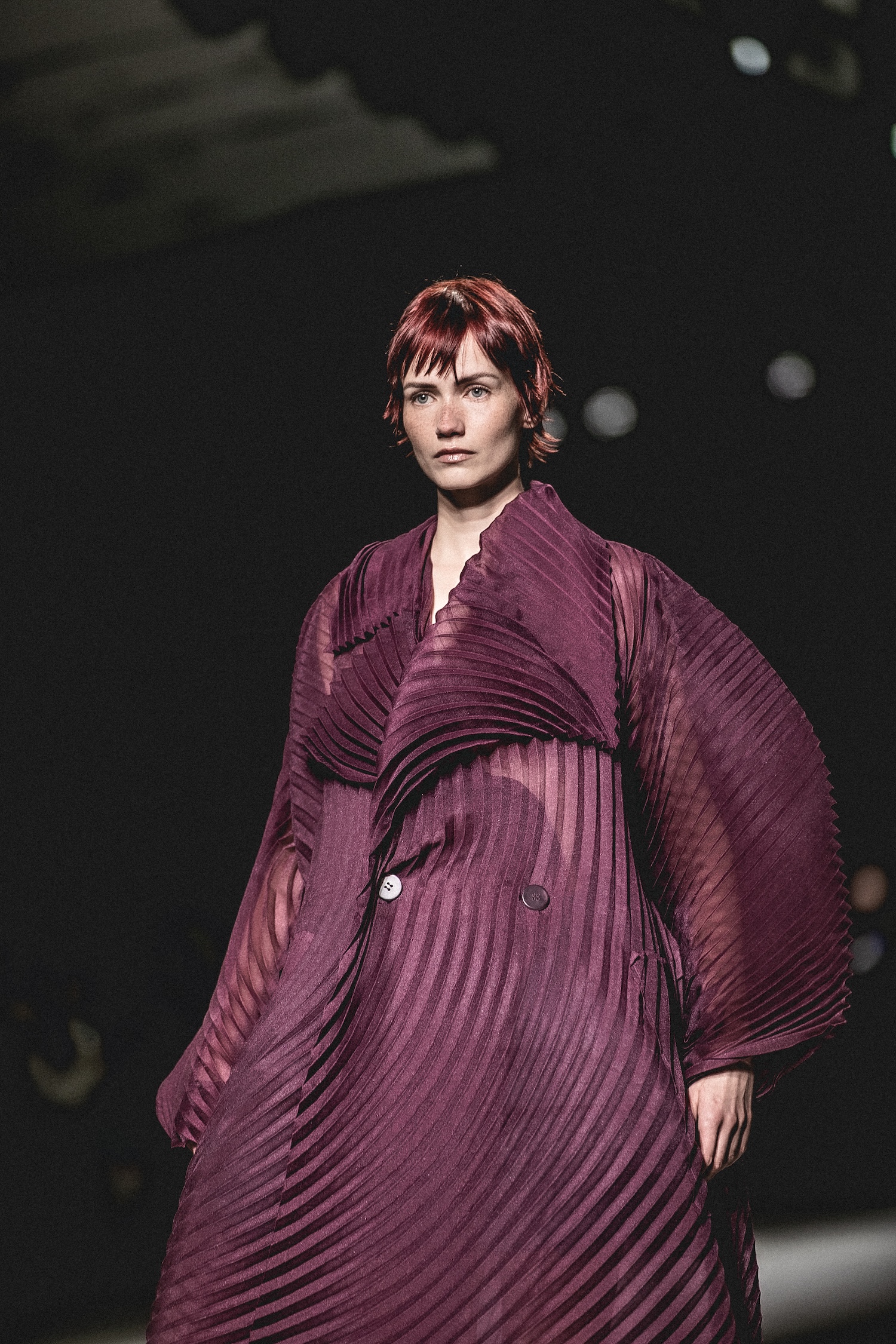
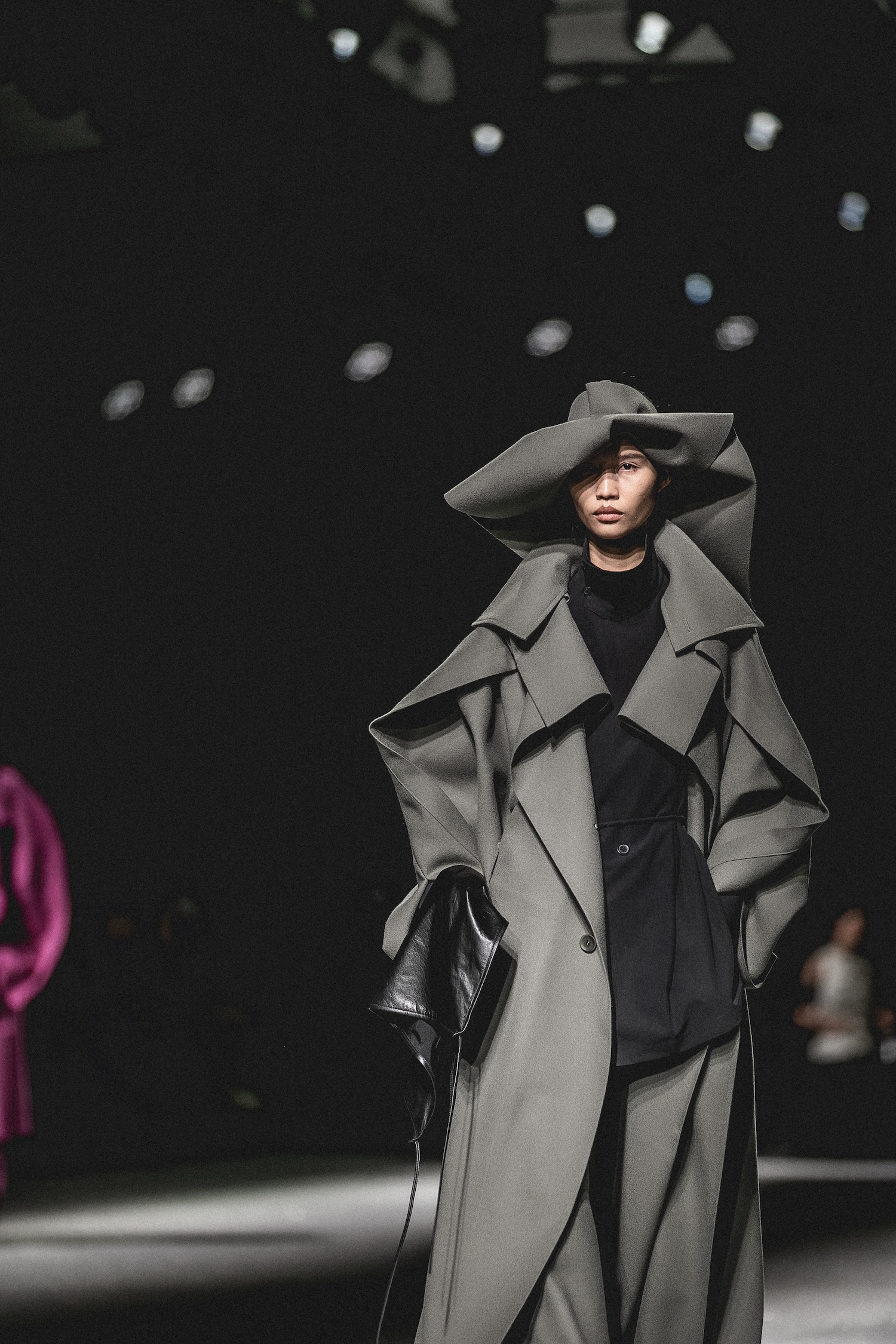
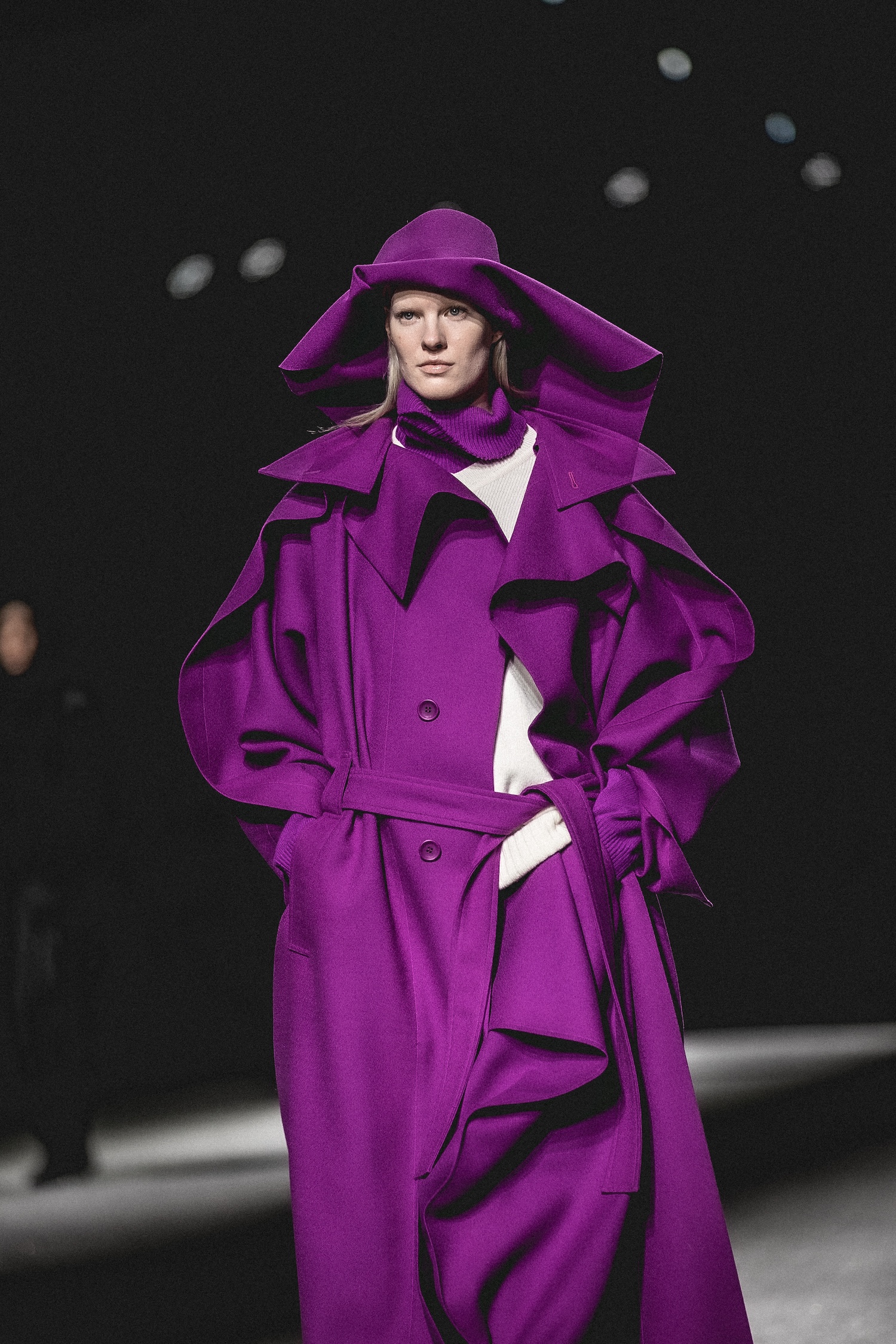
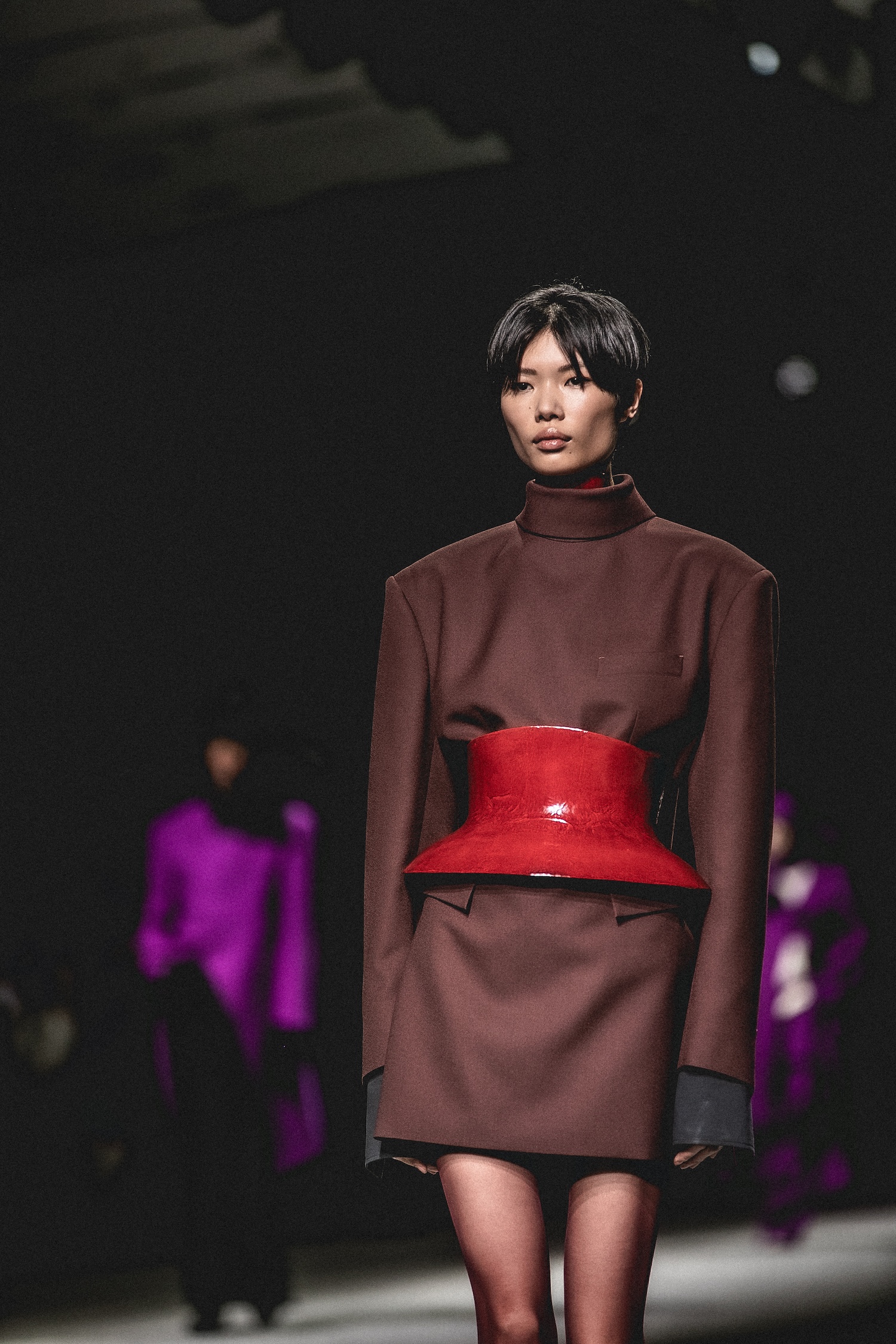
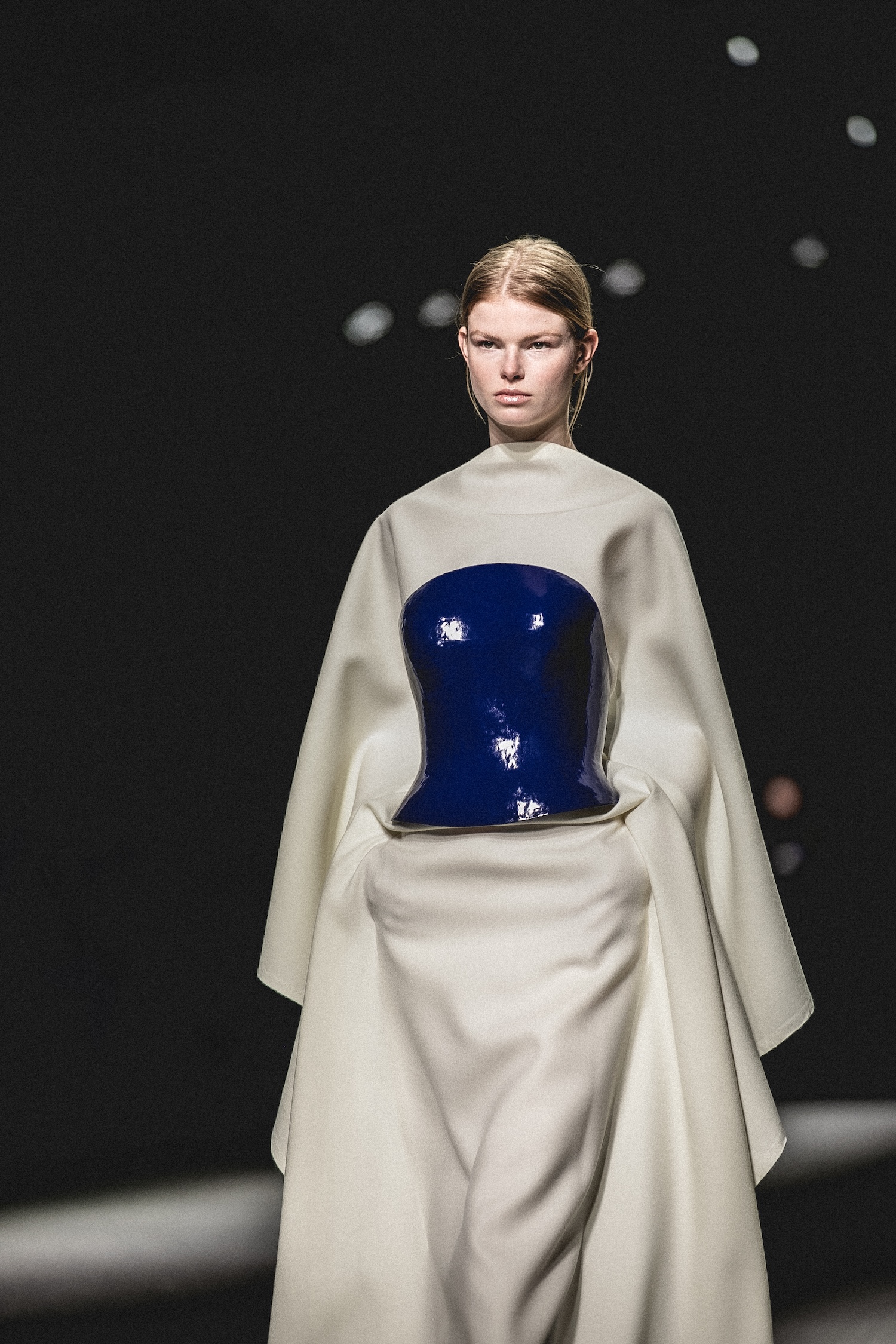
Issey Miyake Fall/Winter 2026 (Images courtesy of Louise Daniel)
Depth was never lost within the aesthetics of Kondo’s Miyake, as each look signified his ability to intervene with the material at precisely the right moment—just enough to allow its structure to take form before letting it live on its own. Of course, this may sound simple in theory, but it requires an almost obsessive level of restraint and craftsmanship. Engineering and traditional craft meet at the intersection of Kondo’s Miyake. Transcending the very concept of aesthetics, Kondo’s Miyake becomes an exercise in balance applied to design. Through that dynamic tension between creating and allowing, he evolves the very essence of Issey Miyake itself.