
By Louise Daniel
Watanabe-san doesn’t do interviews anymore. Press releases remain short and direct. Maybe because his work speaks more than any words could. In a previous post-show interview for Spring 2020 (the famous collection of sliced and diced trench coats), Watanabe-san answered, “You might as well ask me why I’m living,” to the journalist who asked about the motive behind that collection. Following the show, journalists received an email stating, “Watanabe-san simply wanted to create strong garments by maximizing his techniques to the fullest.”
For Fall/Winter 2026, we can still observe this all-consuming drive to simply create garments that exist in their own right. Aptly titled “The Art of Assemblage,” the damier-tiled runway became the setting for the theatrical film noir that unfolded before us—arguably Watanabe-san’s most dynamic collection to date. Irina Shayk, a longtime supporter of the brand, opened the show with much bravado, dressed in a “moto-mania” couture look with a silhouette that is a contamination of an 18th century pannier and the 1950s couture hourglass shape.
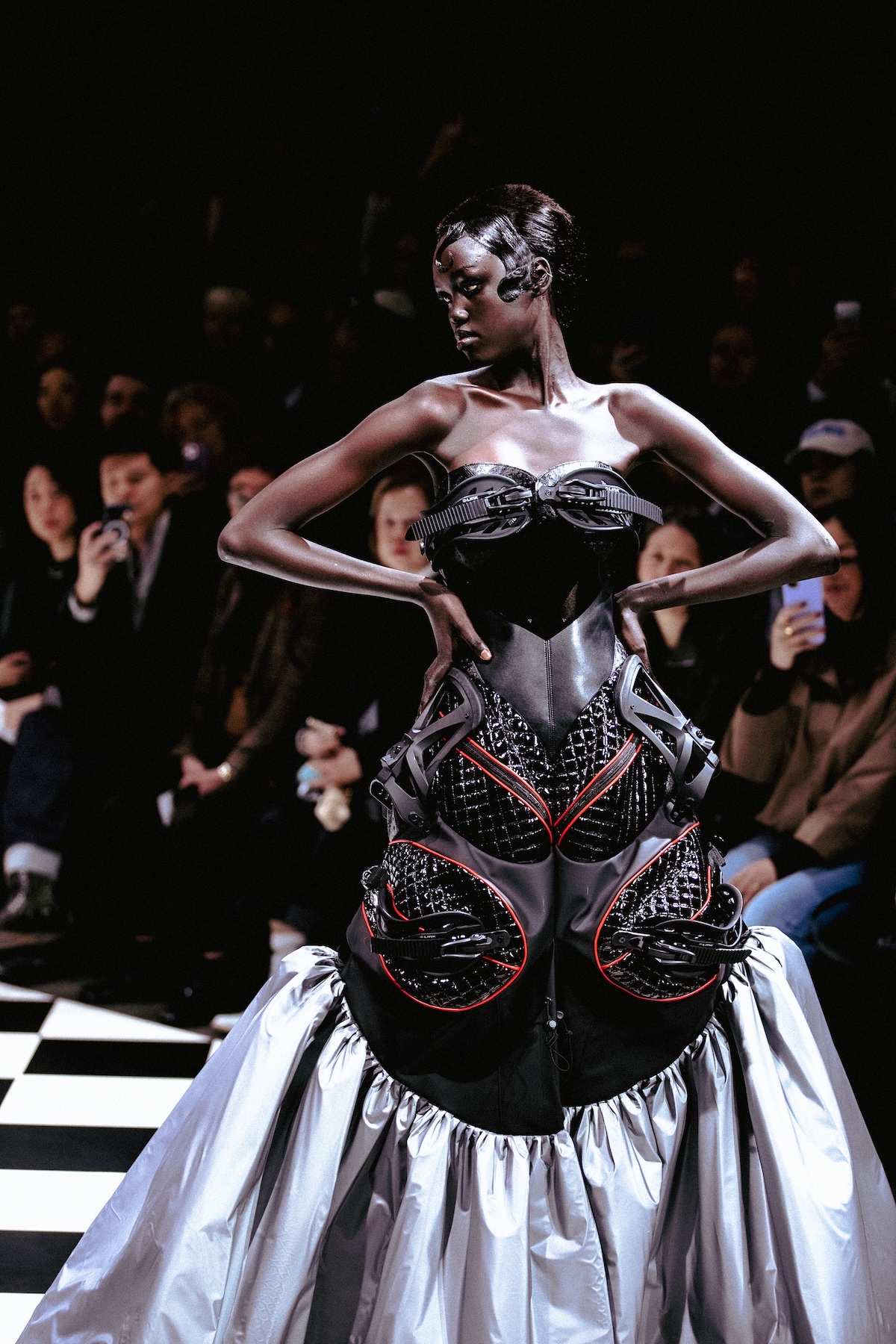
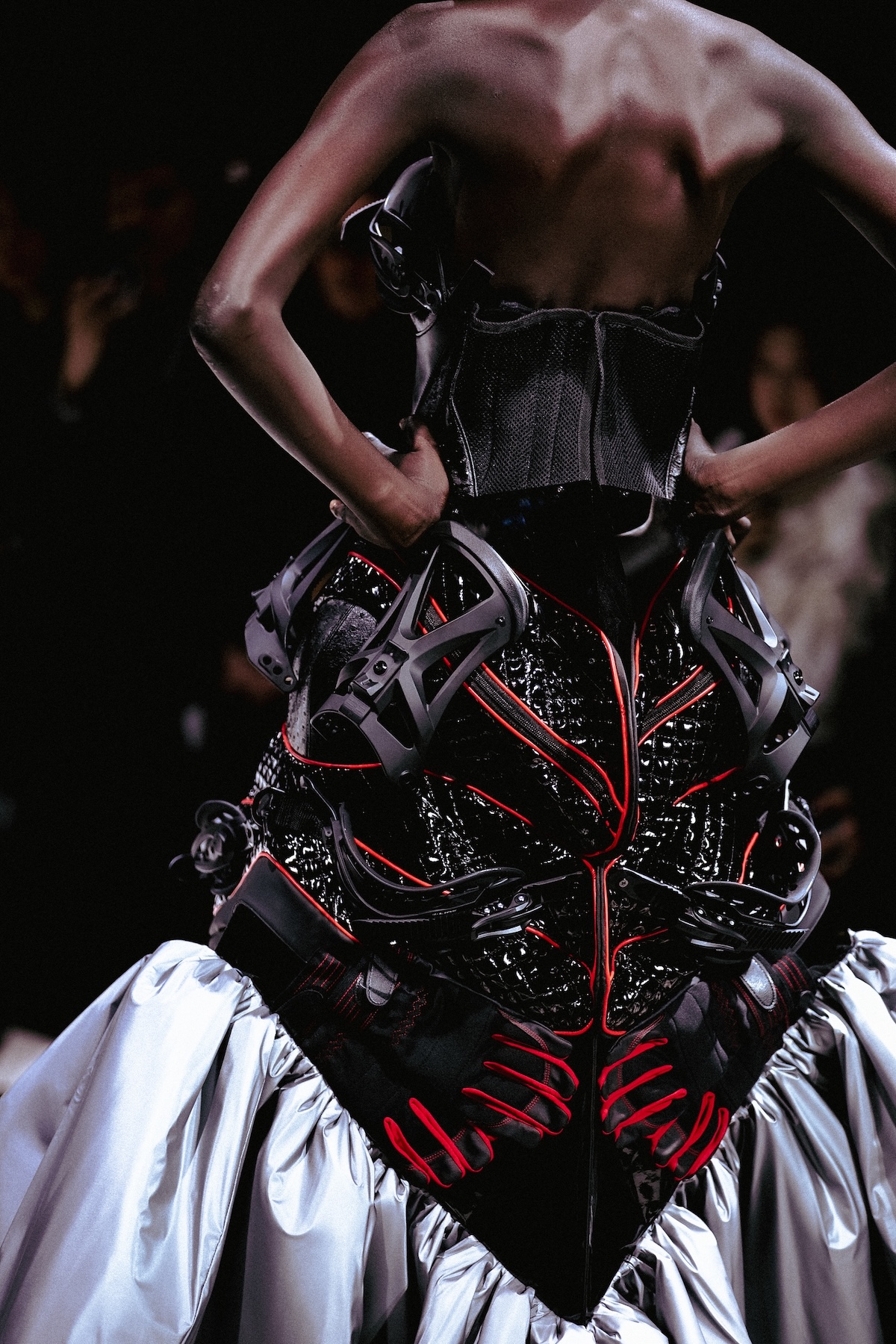
Junya Watanabe Fall/Winter 2026 (Images courtesy of Louise Daniel)
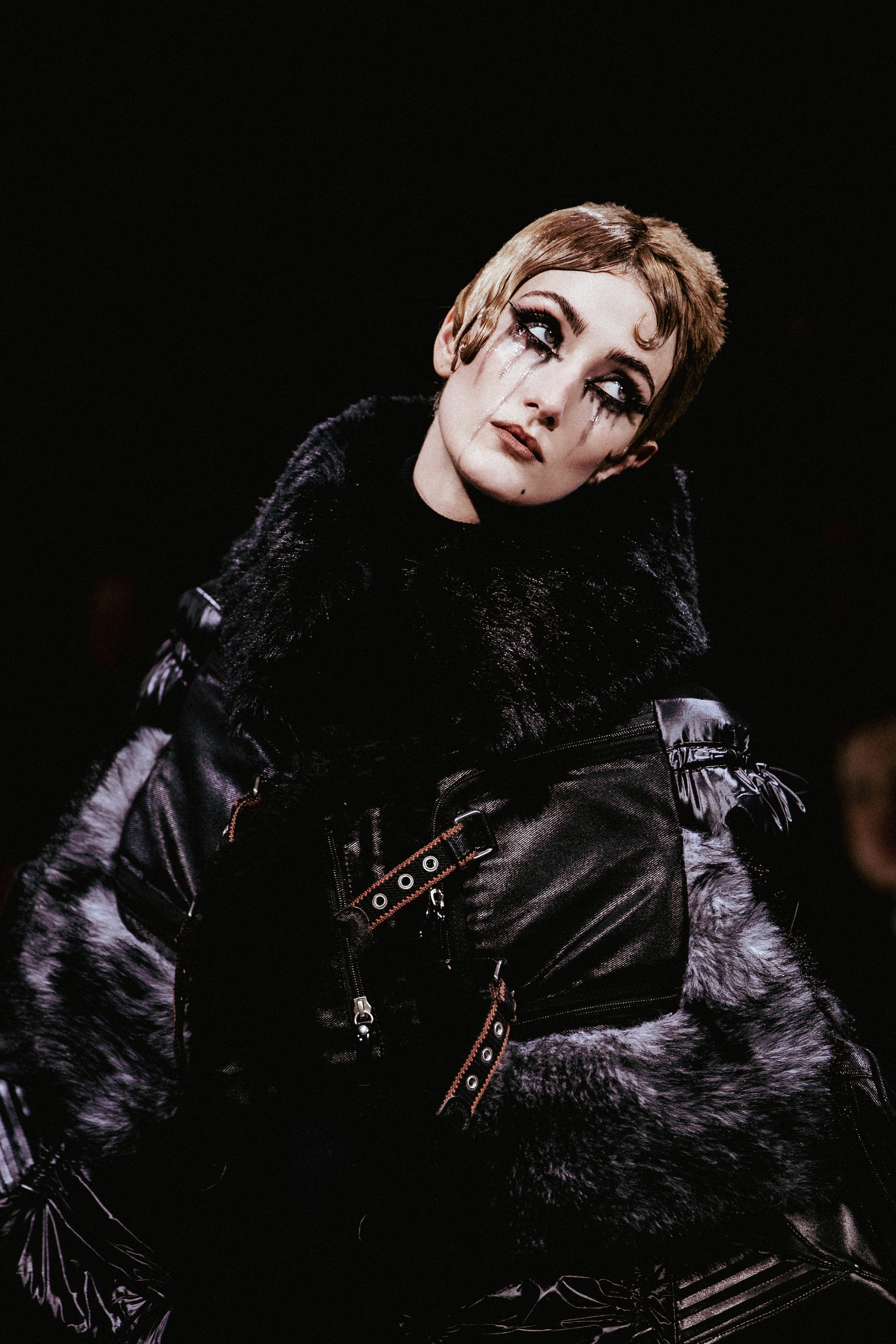
Much of the performative intensity on the runway can be credited to the work of legendary movement director Pat Boguslawski, the man behind Leon Dame’s internet-breaking Margiela walk in their Spring 2020 show. This marks a first for a Junya Watanabe runway. As for the beauty looks, they were a mix of old-world glamour with a touch of dystopia—thanks to the combined artistry of Eugene Souleiman and Isamaya Ffrench.
The prevailing mood of the runway is akin to a Daidō Moriyama postwar photograph from the 1970s: dark, gritty, and carrying emotional residue from the beauty of wreckage. Junya Watanabe Men Fall/Winter 2026 almost seemed to be the chivalrous prequel to this show. In the spirit of “maximizing his techniques,” Watanabe-san contaminated iconic silhouettes from the previous century with “patchwork” couture drawn from his own body of work.
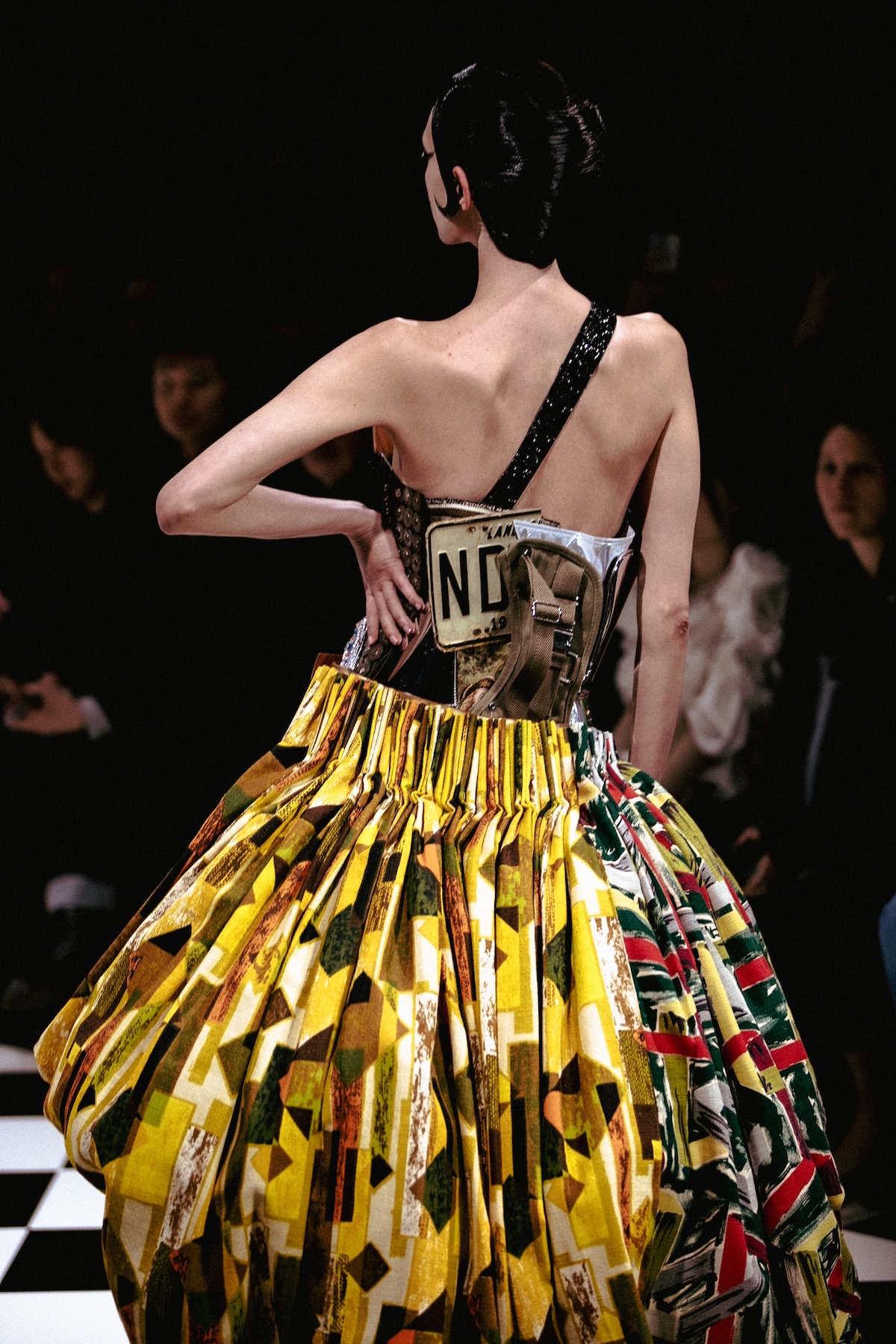
Junya Watanabe Fall/Winter 2026 (Images courtesy of Louise Daniel)
For example, leftover wigs from Fall/Winter 2003 appeared on Maggie Maurer’s quilt-collage cover, which was then discarded to reveal a black turtleneck with a slip dress. Innerraum pieces from Fall/Winter 2023 and Spring/Summer 2025, shapes from the Edward Scissorhands Fall 2022 collection, silver parachutes from Spring/Summer 2025, reworked leather from Fall/Winter 2025, gold fabric from Spring/Summer 2022, denim and taffeta from Spring/Summer 2019—the list of references could go on, as each piece carries the weight of Junya Watanabe’s four-decade career.
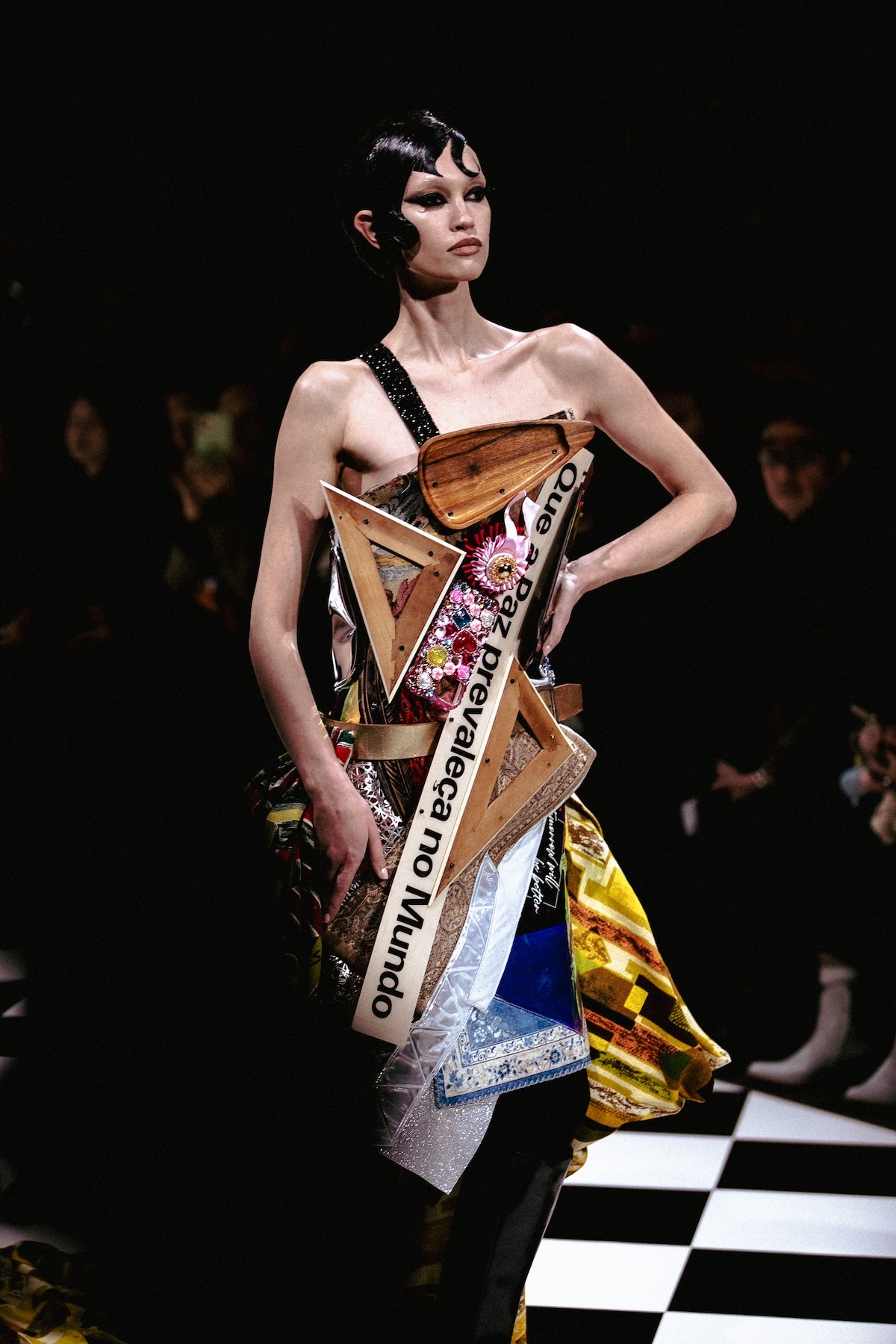
The only ensemble with significant text is worn by model Patricia Zajac: a one-strapped patchwork dress combining a 1920s slip dress with the silhouette of a late-19th-century bustle gown. The Portuguese text “Que a Paz Prevaleça no Mundo” translates to: May peace prevail in the world. A fitting statement for the current social and cultural affairs that plague the planet—never exempting the world of fashion from their impact.
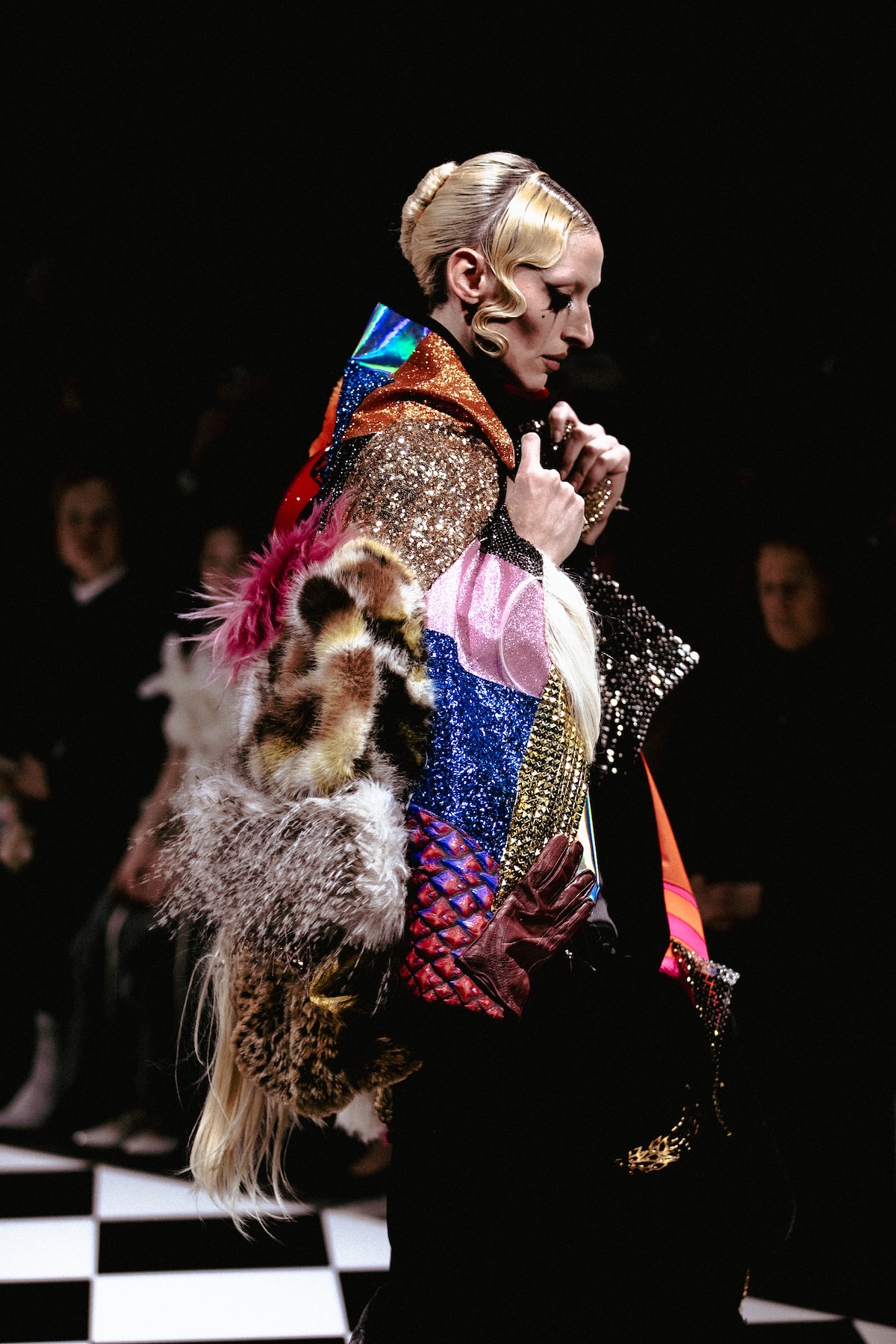
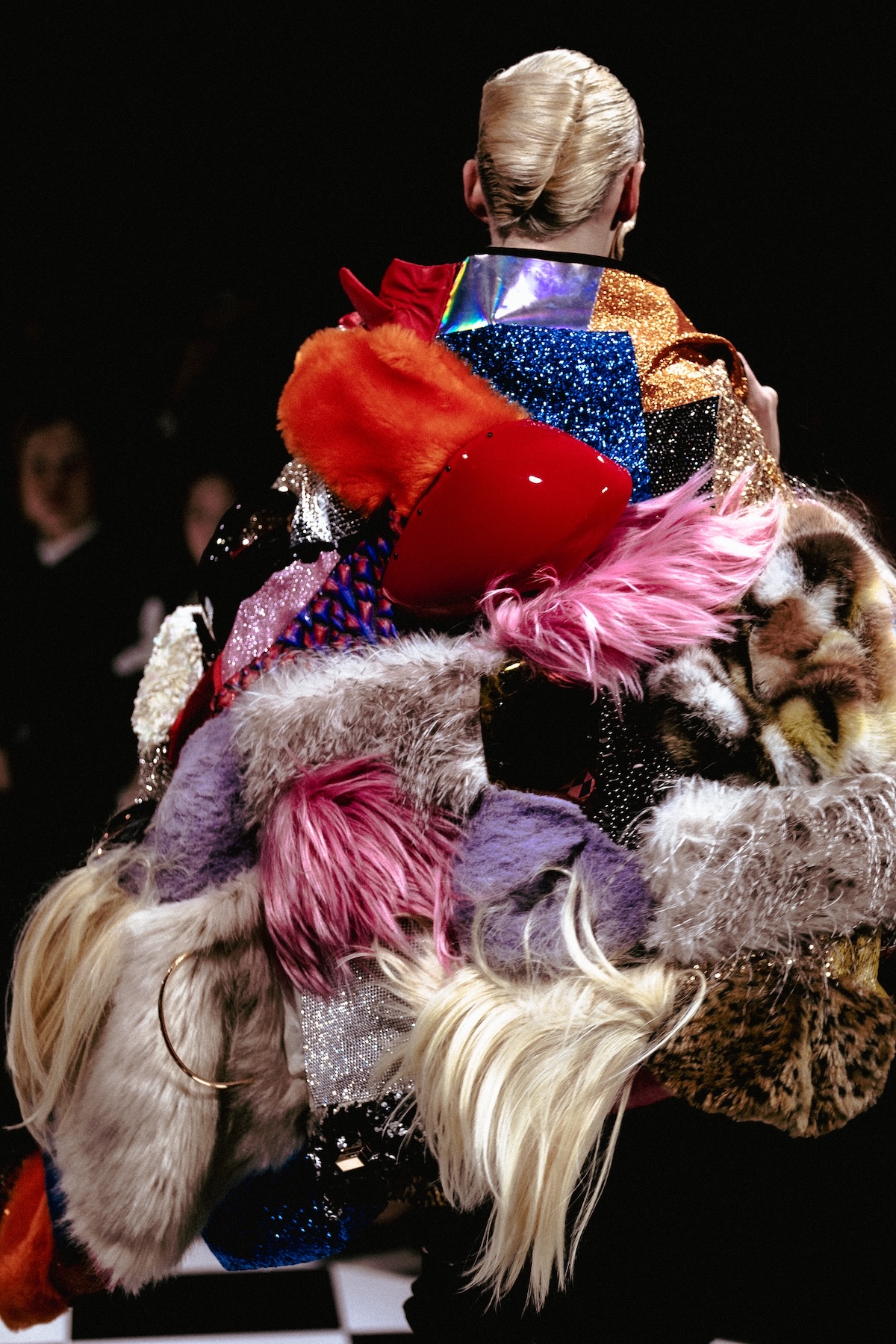
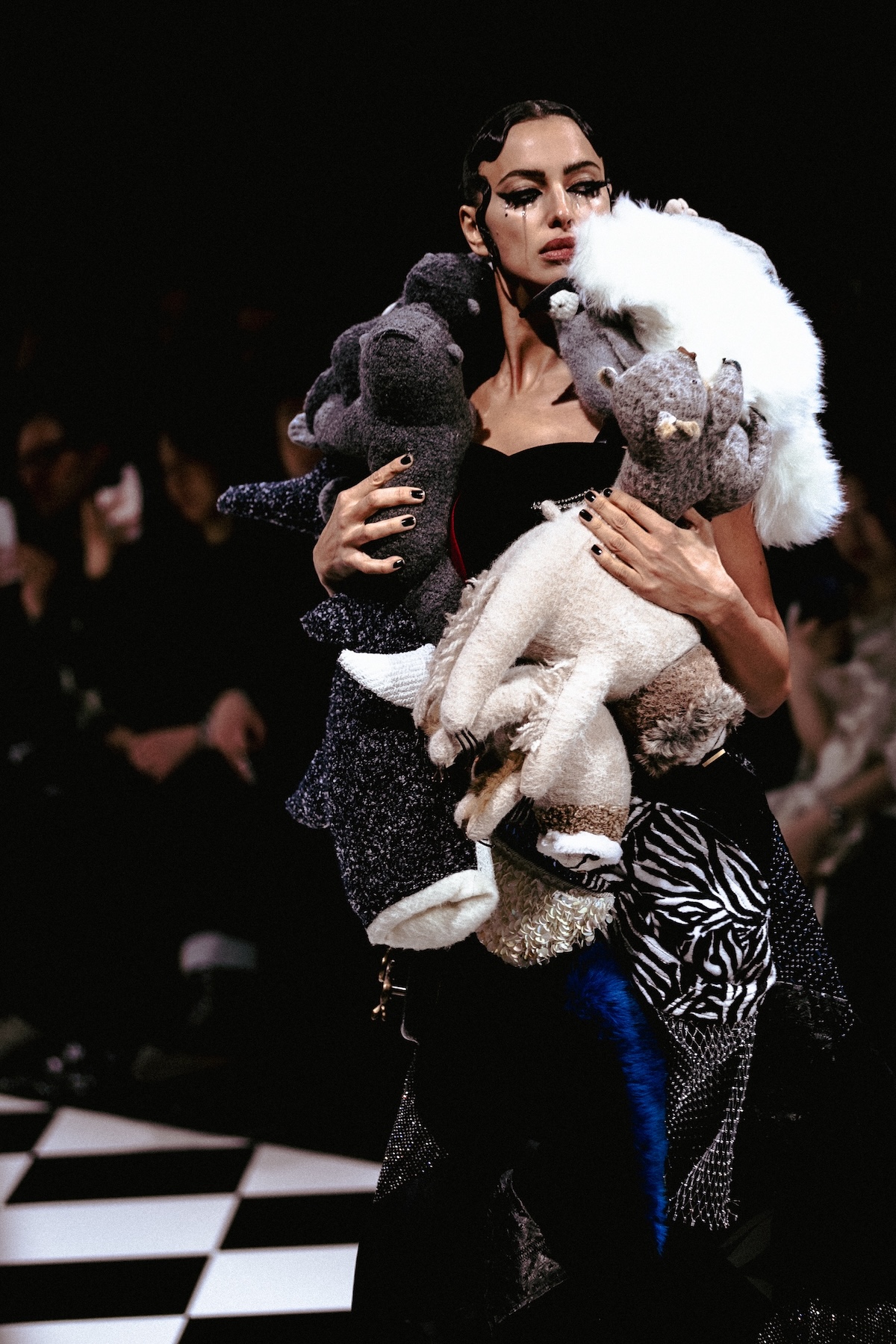
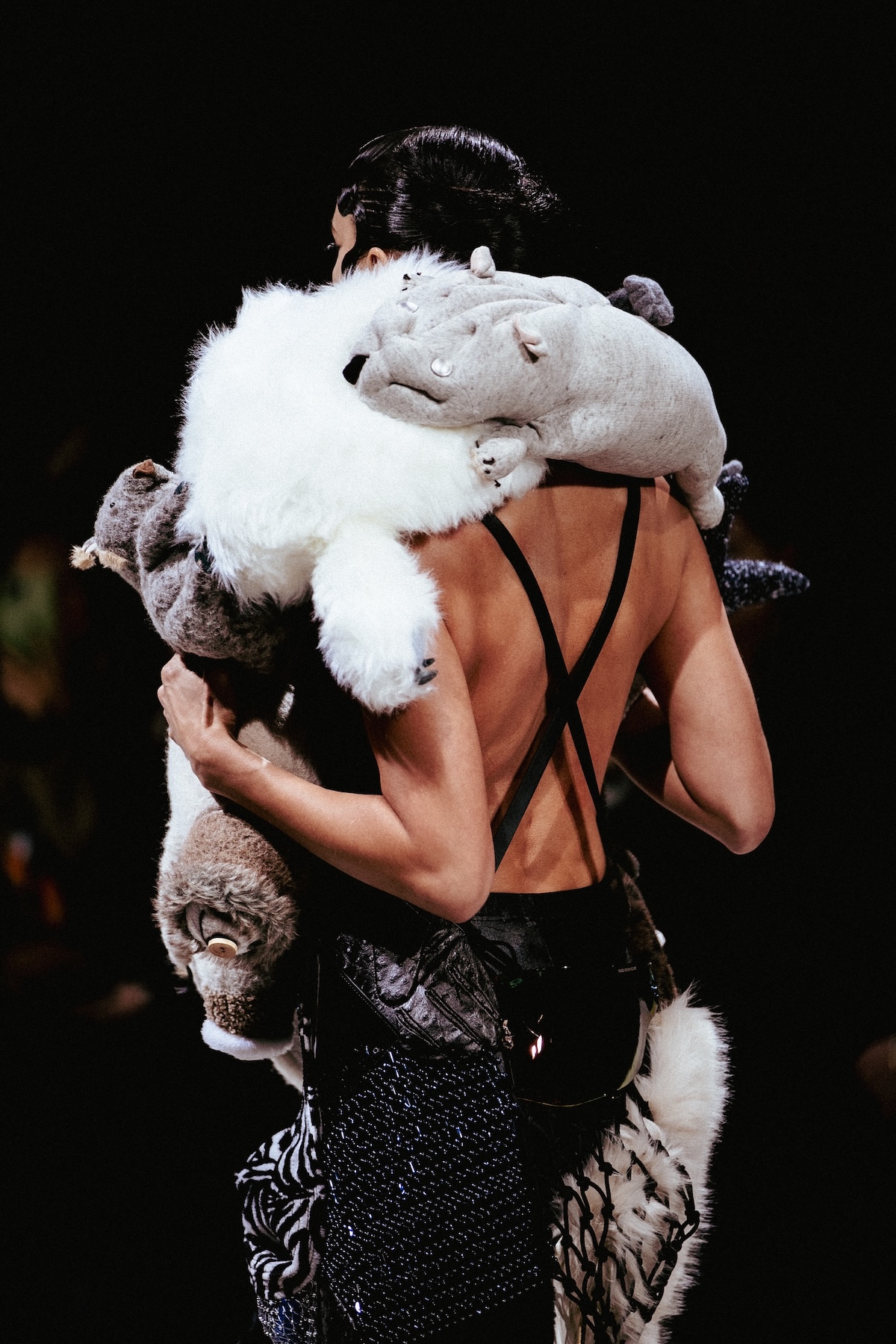
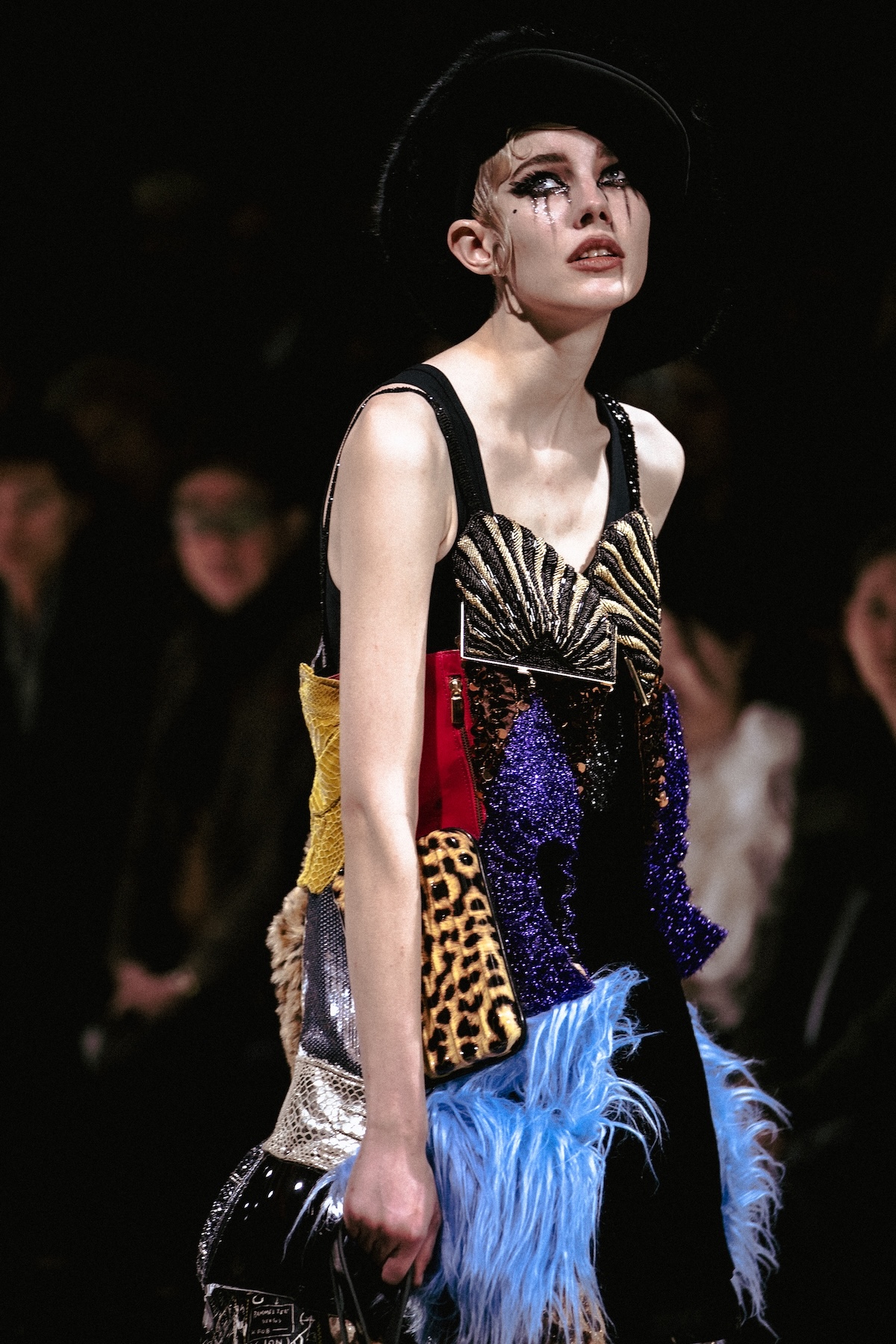
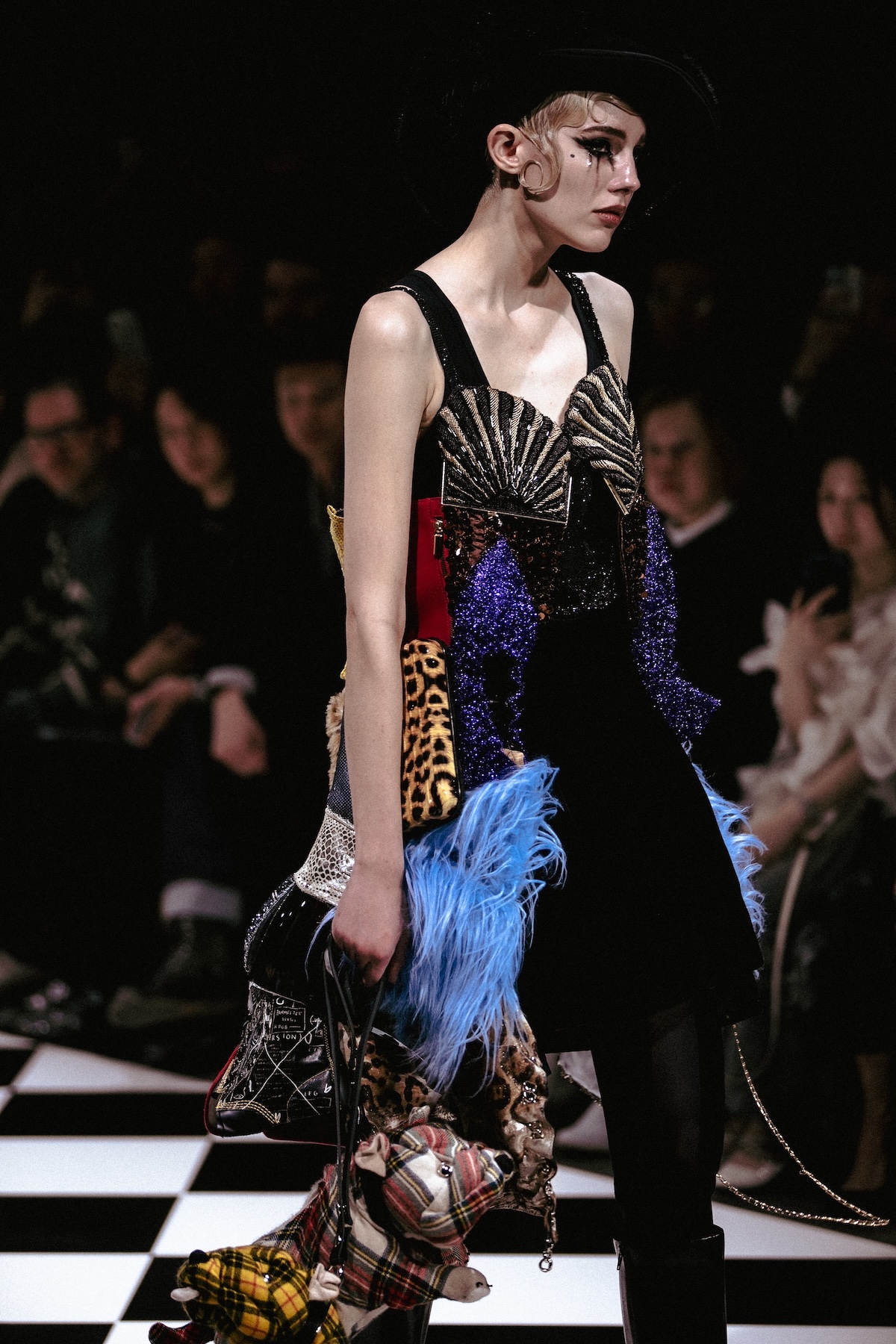
Junya Watanabe Fall/Winter 2026 (Images courtesy of Louise Daniel)
Watanabe’s Fall/Winter 2026 collection, with all its impressive techniques and theatrical flair, serves as a reflection on the assemblage culture that seems to rule the world of creation today. We have become slaves to constant nostalgia and the chase for the next relevant historical reference. Watanabe shines a bright light on our collective impulse to assemble fragments from one decade to the next—reminding us that creation today is no longer about purity of origin, but about the courage to recombine the past into something undeniably new.