
By Louise Daniel
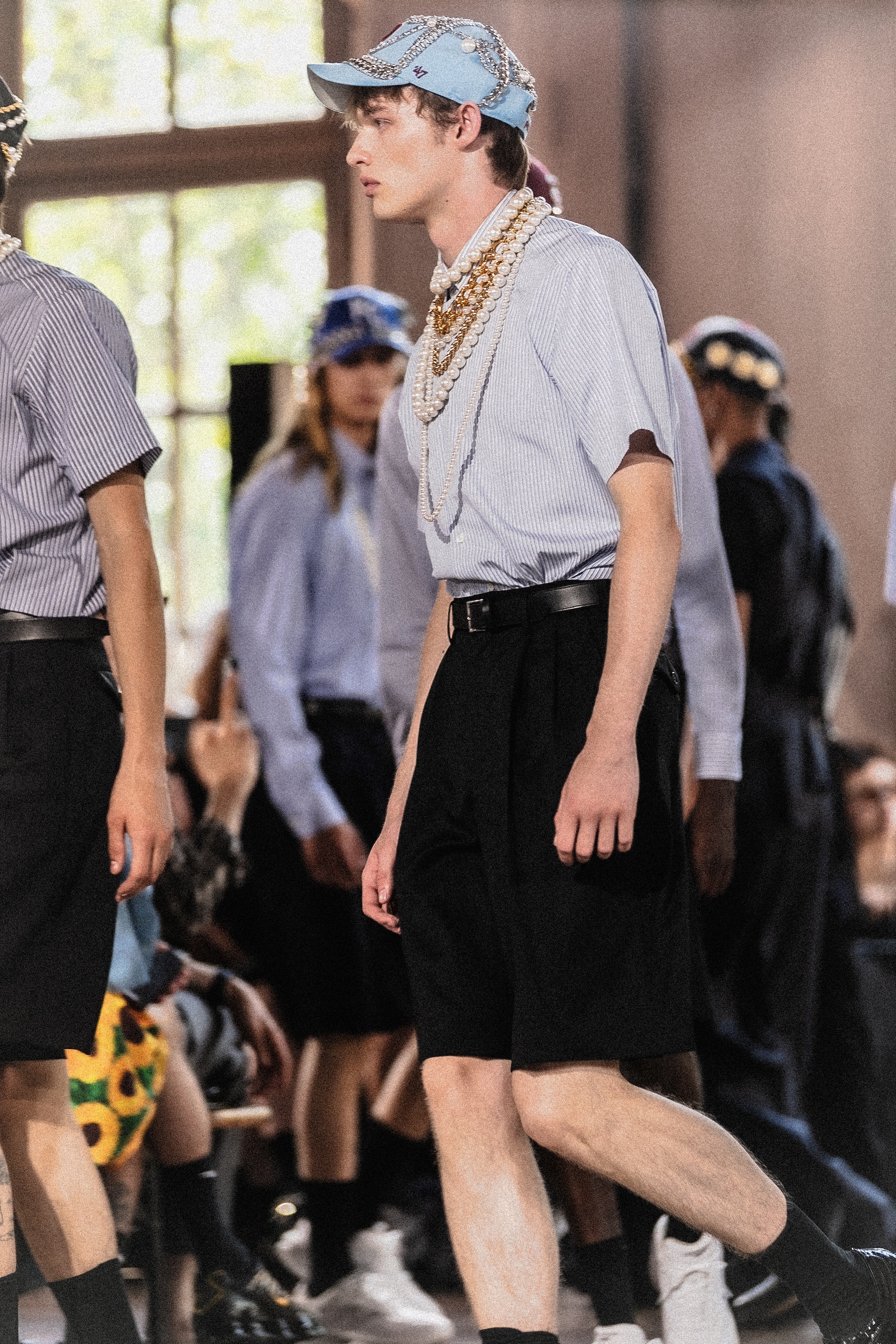
In an era of predictability, Watanabe-san refuses to be predictable. By all accounts, he aims to evolve—or rather, urbanize—the Junya archetype through an impressive roster of collaborations. Aptly titled "BLING BLING BLING," Spring/Summer 2027 unfolds as an ecosystem of sixteen collaborators, reconfiguring codes borrowed from hip-hop, sportswear, workwear, and punk through the unmistakable precision of Junya Watanabe's tailoring.
Under the blazing Paris heat, we are presented with a truly unexpected collection—one that exposes the increasingly thin separation between streetwear and masculine elegance. Compared to last season's dapper gentlemen, Spring/Summer 2027 introduces a distinctly contemporary urban figure: men sporting heavily embellished baseball caps by artist Kota Okuda, Kappa tracksuits whose iconic Omini logo has been subtly absorbed into tailoring, pearl-draped jackets, exposed construction, and garments that seem to constantly negotiate between polish and provocation.
Watanabe uses each partnership as another dialect within his expanding menswear vocabulary. Kappa, Needles, Levi's, Carhartt, Luigi Borrelli, Guy Rover, Maria Santangelo, New Balance, Tricker's, DHL, Union LA and others become ingredients within the same design ecosystem. The result feels like one continuously evolving Junya universe.
Juxtapositions between high and low culture unfold through coexistence. As if the rigid boundaries between archetypes have dissolved, Watanabe finds new ways to evolve the language of menswear itself. Denim trousers receive tracksuit detailing, wavy dual-toned cut-outs interrupt familiar silhouettes, while layered edges naturally enrich knitwear, vests and jackets. Traditional tailoring no longer exists independently from sportswear—they become mutually dependent, each strengthening the other. This season, tweed undergoes perhaps one of its most unexpected transformations. Rather than functioning as the dominant fabric, its rigidity is broken down into details and accessories.
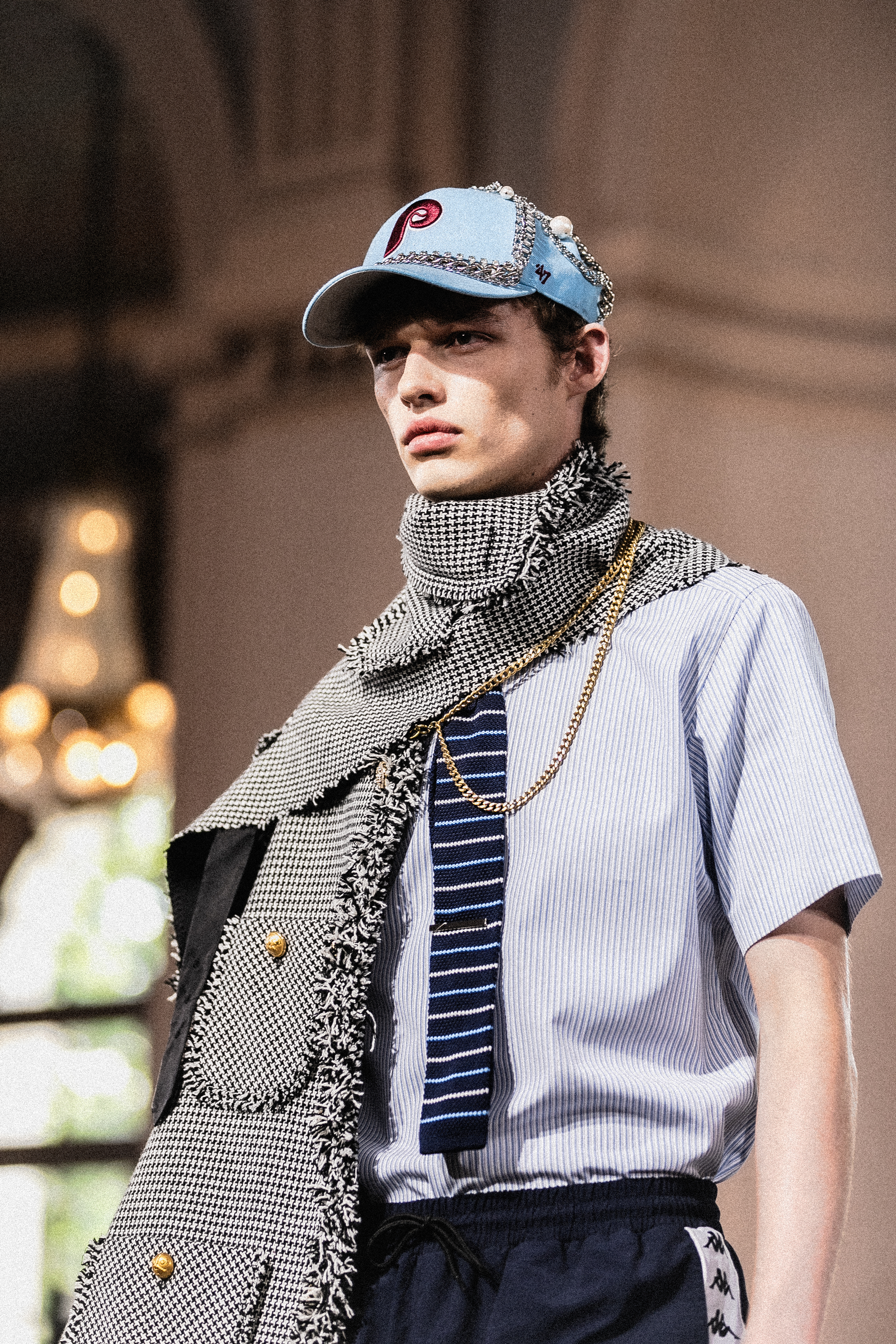
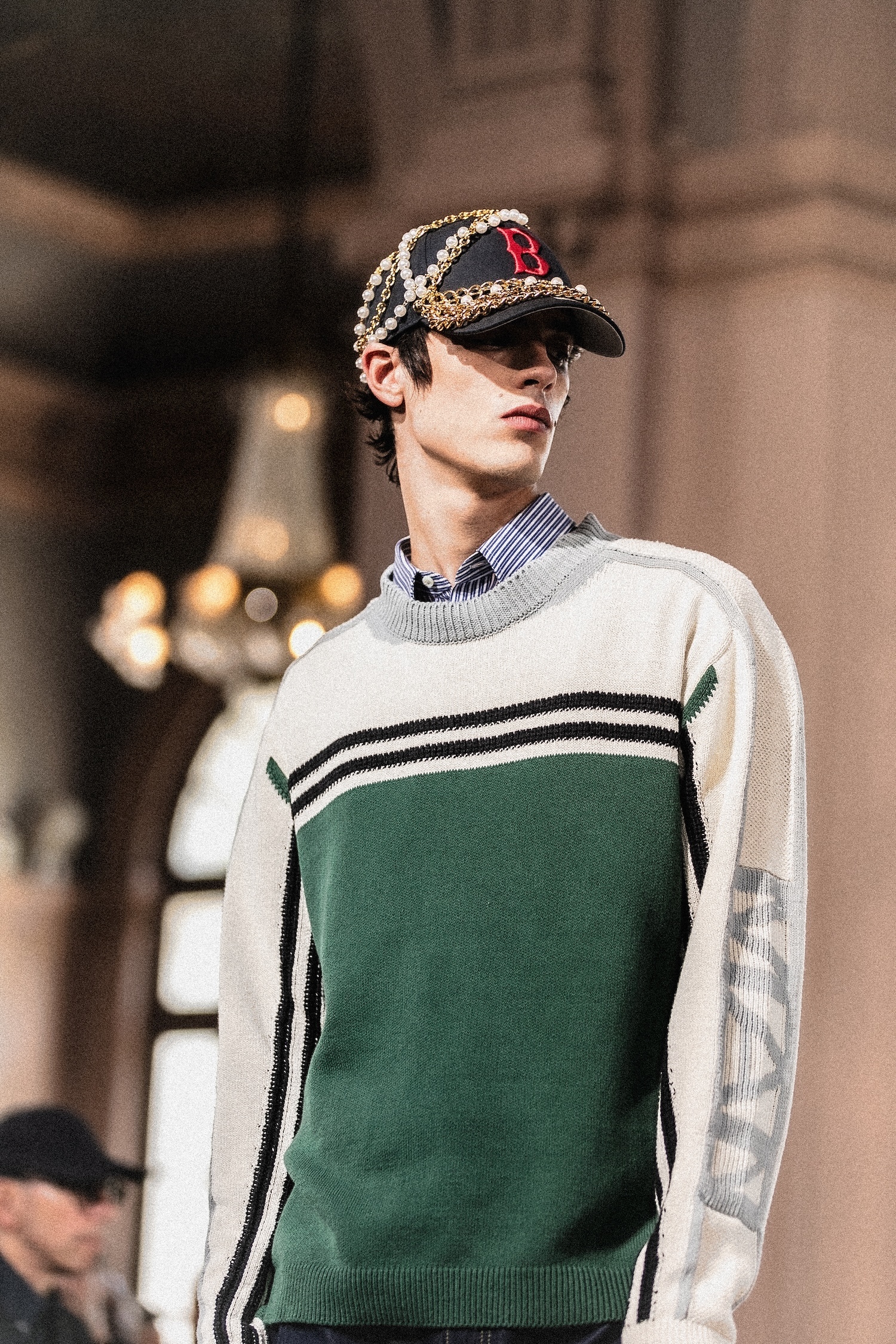
Junay Watanabe MAN SS27: Looks 21, 11. Courtesy of Louise Daniel.
One of my favorite looks, Look 21, reimagines tweed as an oversized scarf layered over striped shirting, athletic shorts and a loosely hanging tie—a surprisingly effortless collision between preppy dressing and sportswear. Meanwhile, the opening look immediately establishes the collection's thesis through a black Kappa tracksuit elevated with sculptural shoulder constructions formed from sneakers and finished with cascading pearl chains, transforming sportswear into something almost ceremonial.
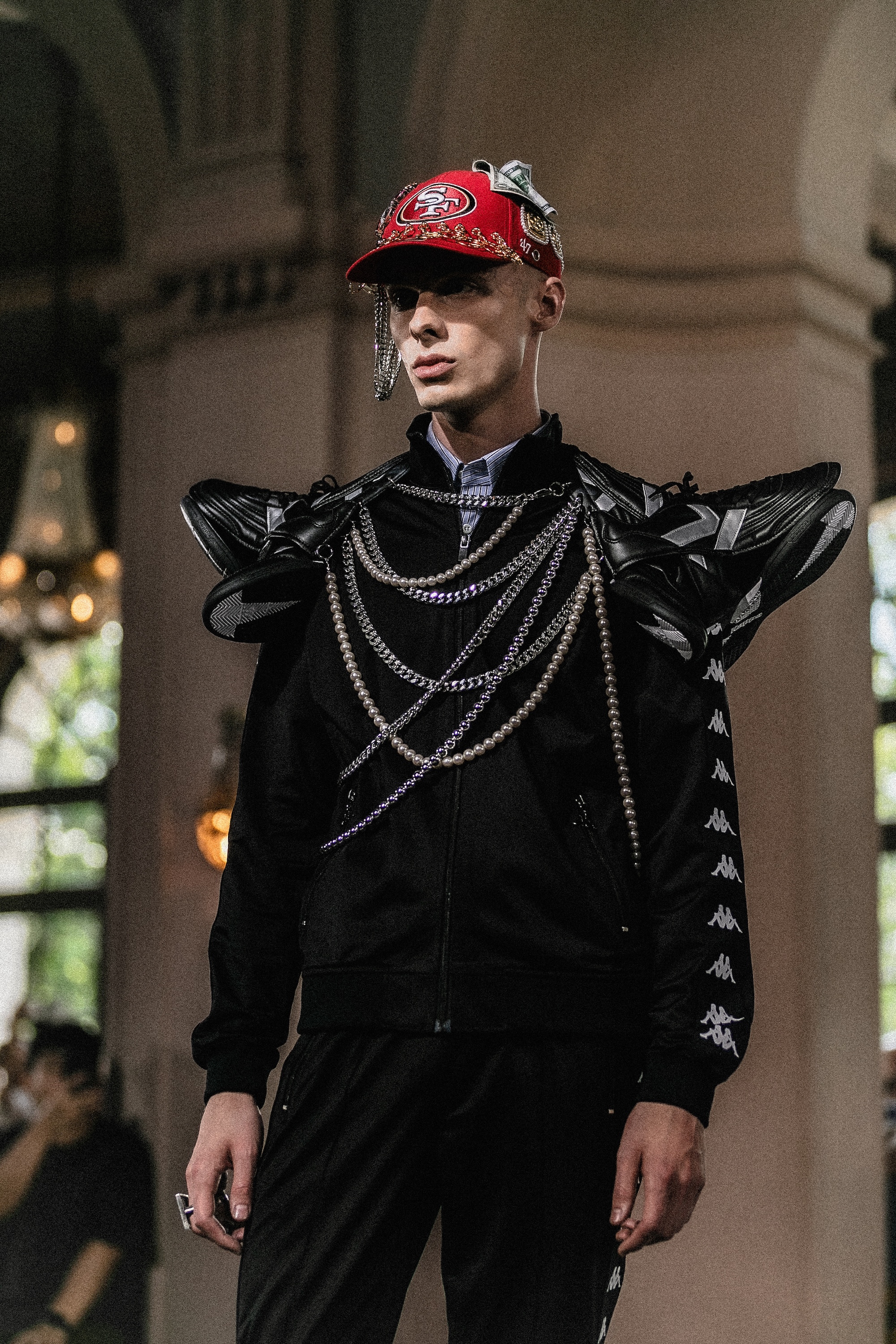
The opening look from Junya Watanabe MAN sets the show's direction to define the urban protagonist for SS27. Courtesy of Louise Daniel.
Perhaps the collection's boldest statement arrives through the heavily embellished tailoring. Look 3, one of the season's strongest, presents a black blazer almost entirely consumed by medals, pins, chains, crystals, dollar bills and brooches. Beneath the visual excess lies impeccable tailoring, allowing what could easily descend into costume to instead become strangely desirable.
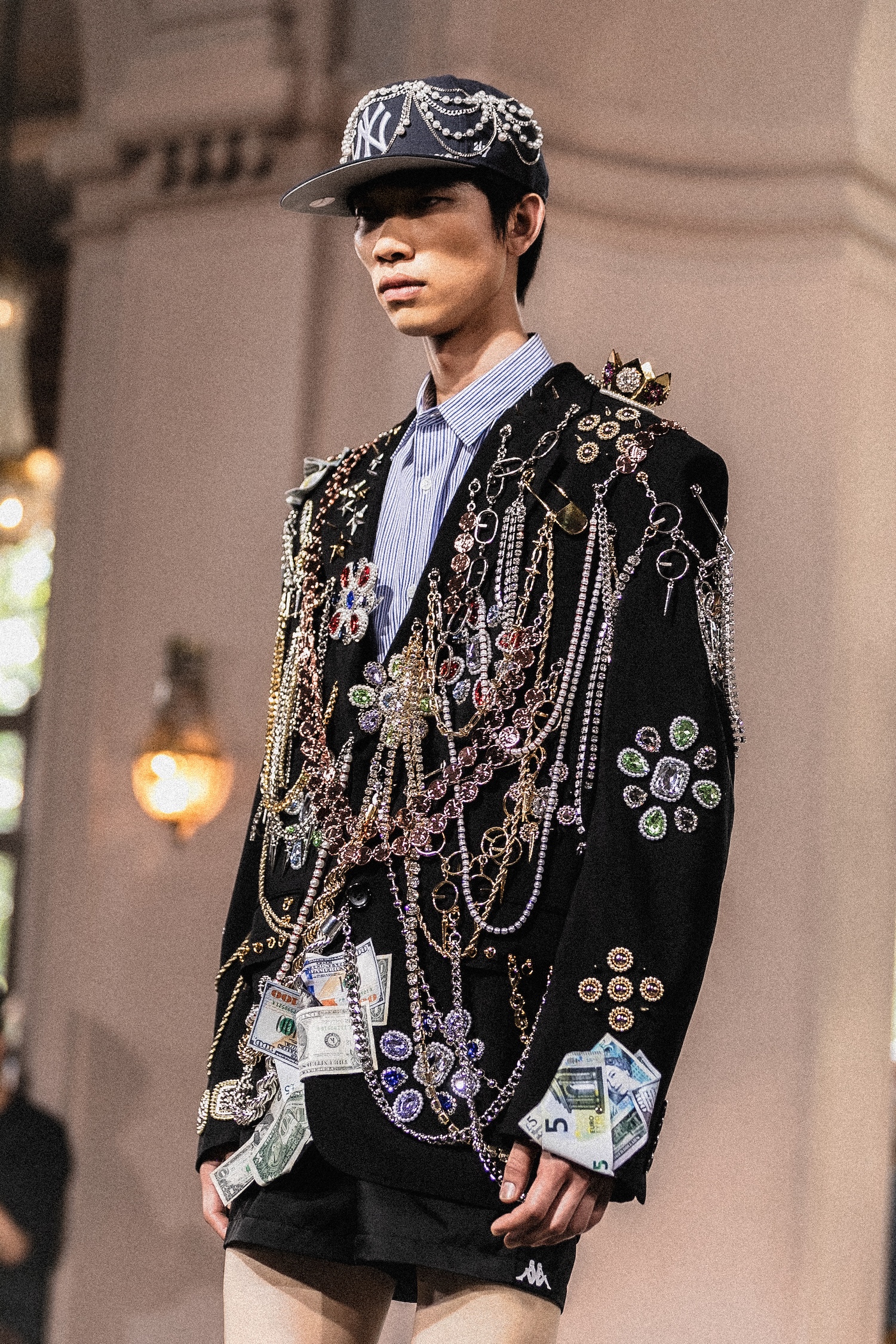
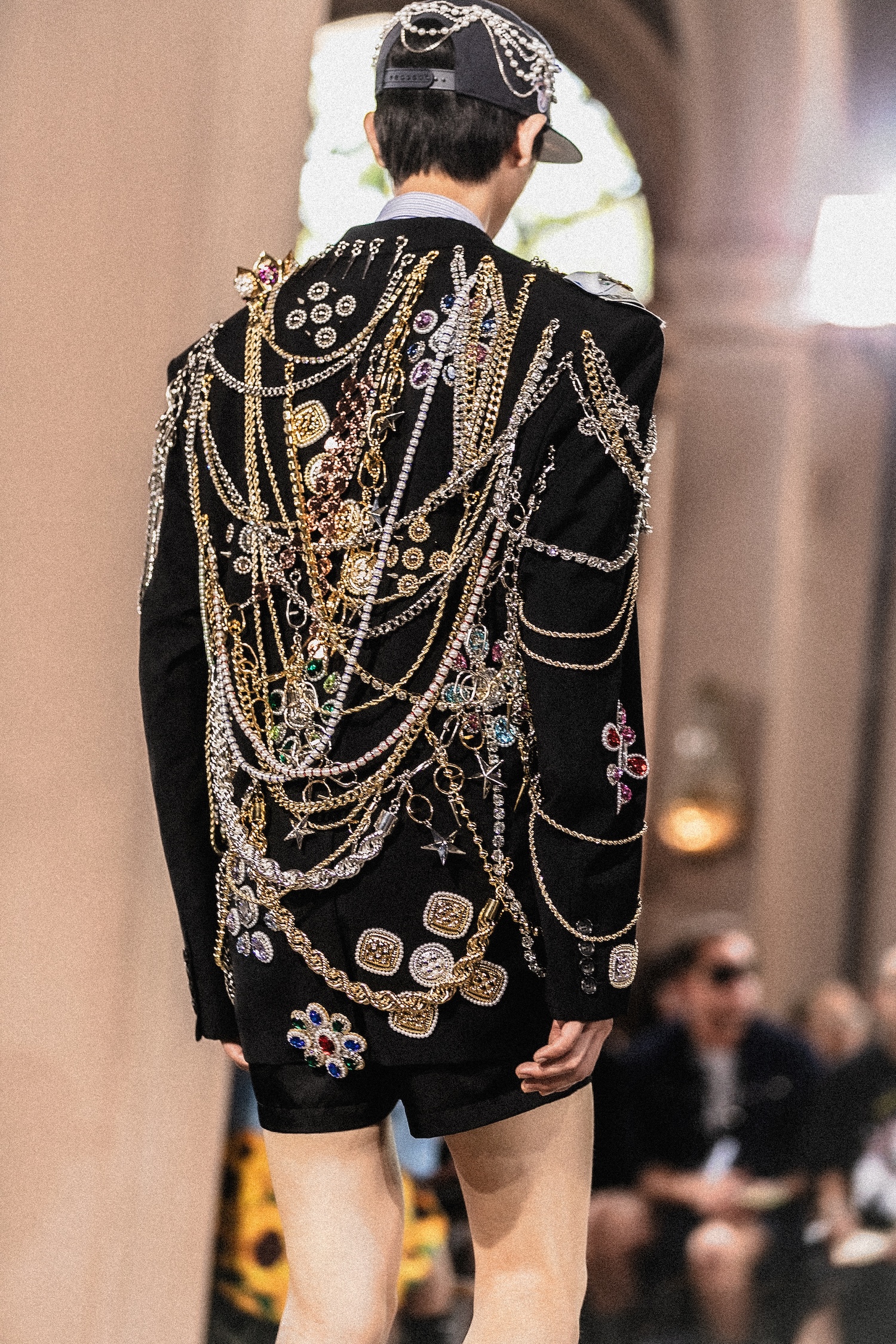
Junya Watanabe MAN SS27: Look 3. Courtesy of Louise Daniel.
Elsewhere, leather motorcycle references quietly weave themselves throughout the collection without overpowering its broader narrative. Sportswear repeatedly dissolves into tailoring, while Neapolitan shirting from Luigi Borrelli, Guy Rover, and Maria Santangelo is reconstructed with athletic proportions. Levi's denim is reversed, Needles' track jackets merge with workwear, and familiar garments continuously abandon their original functions in favor of entirely new identities. The final look, before the parade of Junya school boys finish the runway, ultimately dictates the tone of the collection. A floor-length black tailored silhouette adorned with layered pearl chains and finished with a jewel-encrusted red cap feels almost regal in its restraint. After an entire collection built upon visual accumulation, streetwear, tailoring, workwear, luxury, punk and sportswear cease to compete with one another. Instead, they coexist within the same silhouette, reflecting the increasingly fluid way contemporary masculinity dresses.