
By Jesse Scott
As a first-generation immigrant with Ghanaian roots and a New York childhood, Samuel Boakye grew up between worlds. Today he celebrates the synergies and tensions within that space through his brand Kwasi Paul. Curating an updated version of dandyism deeply inspired by his own family and faithful to traditional Ghanaian textiles and designs, Boakye is meticulously welcoming clients to a swaggering universe that combines such diverse influences as the “urban cowboy” and “Afrobeats glamour.”
2025 is a watershed moment for Boakye, as Kwasi Paul is being featured in the exhibition “Superfine: Tailoring Black Style,” just four years after the brand launched. As his star rapidly rises, Boakye sat down with Rain’s Jesse Scott to chat about his self-made start in fashion, the rich cultural tapestry that he weaves into his collections, and his optimism for the future.

Samuel Boakye, founder of Kwasi Paul
Jesse Scott: Let us start by talking about the name Kwasi Paul. What does the name of the brand mean to you and how does it connect to your sartorial language?
Samuel Boakye: The brand is both an ode to my parents and to the juxtapositions that I live in as a first-generation American from Ghana. Kwasi is derived from Ghana whereas Paul is more of a Western name. I am very influenced by both cultures that I grew up with and I intertwine these influences with the designs and the stories that we create.
When did you know you wanted to be a designer? How did your journey begin?
I started late…in 2014 when I was twenty-three! My mother went to FIT, and I was always great with sketching, but I grew up not really caring too much about fashion. The inspiration was sparked when my friend asked me for some design help; I realized that it was a fire that needed to be ignited, and I went deep into it afterwards. At first, I was making a lot of custom wedding suits, prom suits, scarves, and haram pants. This was before my label. I was just getting warmed up with the machine at the time and was doing a lot by hand…missing sleep, trying to get these custom-made orders in.
When did you take the leap to launch your brand?
The idea of the brand came about in 2020 and then we first launched in 2021. After I had gotten used to the machines and gone to tailoring school, I knew that I wanted to create something personal and meaningful. I produced the brand Kwasi Paul because I wanted to dive a little bit more into the juxtapositions of my world and pull inspiration from my various experiences. Kwasi Paul eventually became my personal diary. I feel like a lot of people can relate to it, because so many of us are born into that “in-between space.”
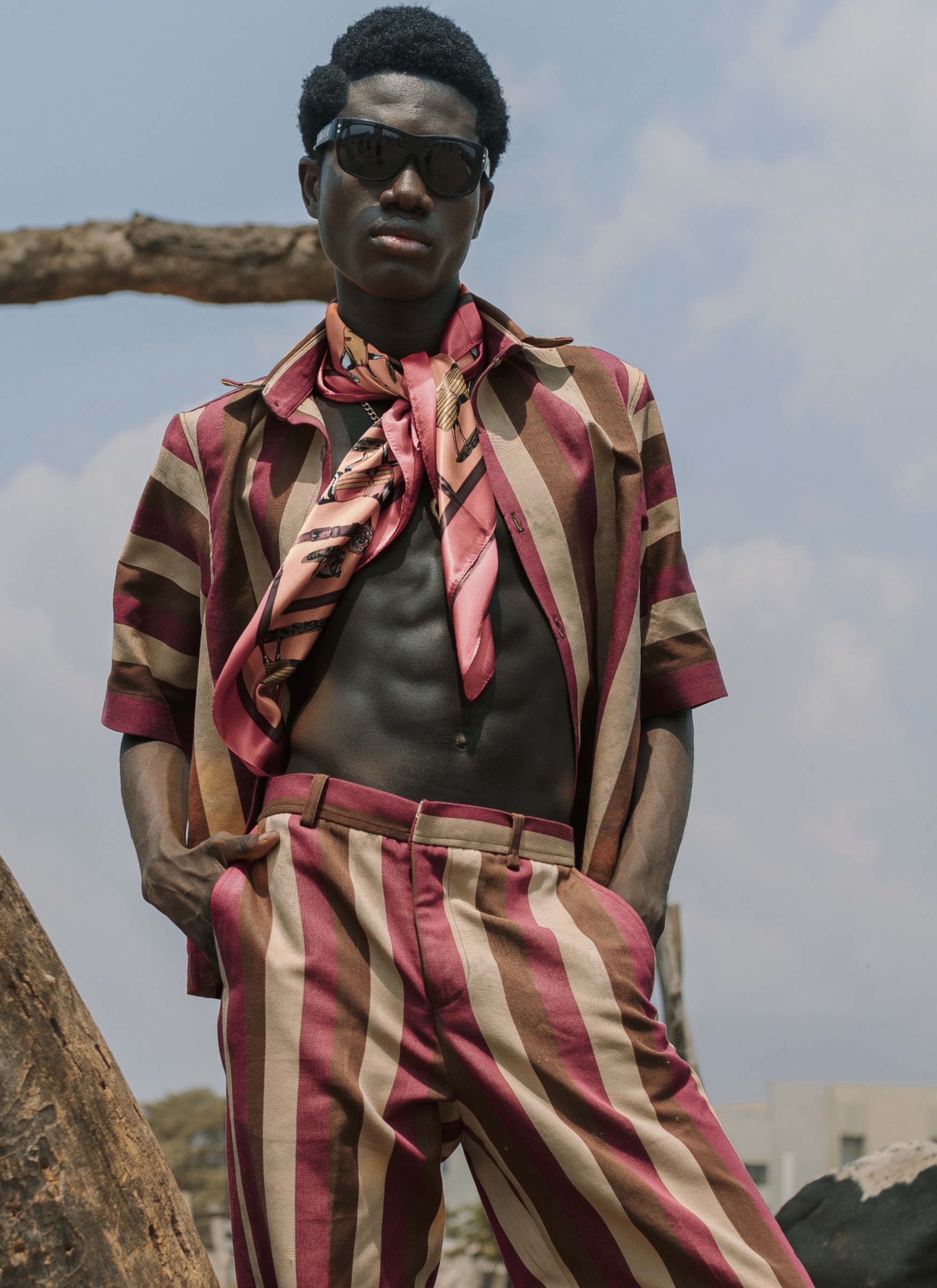
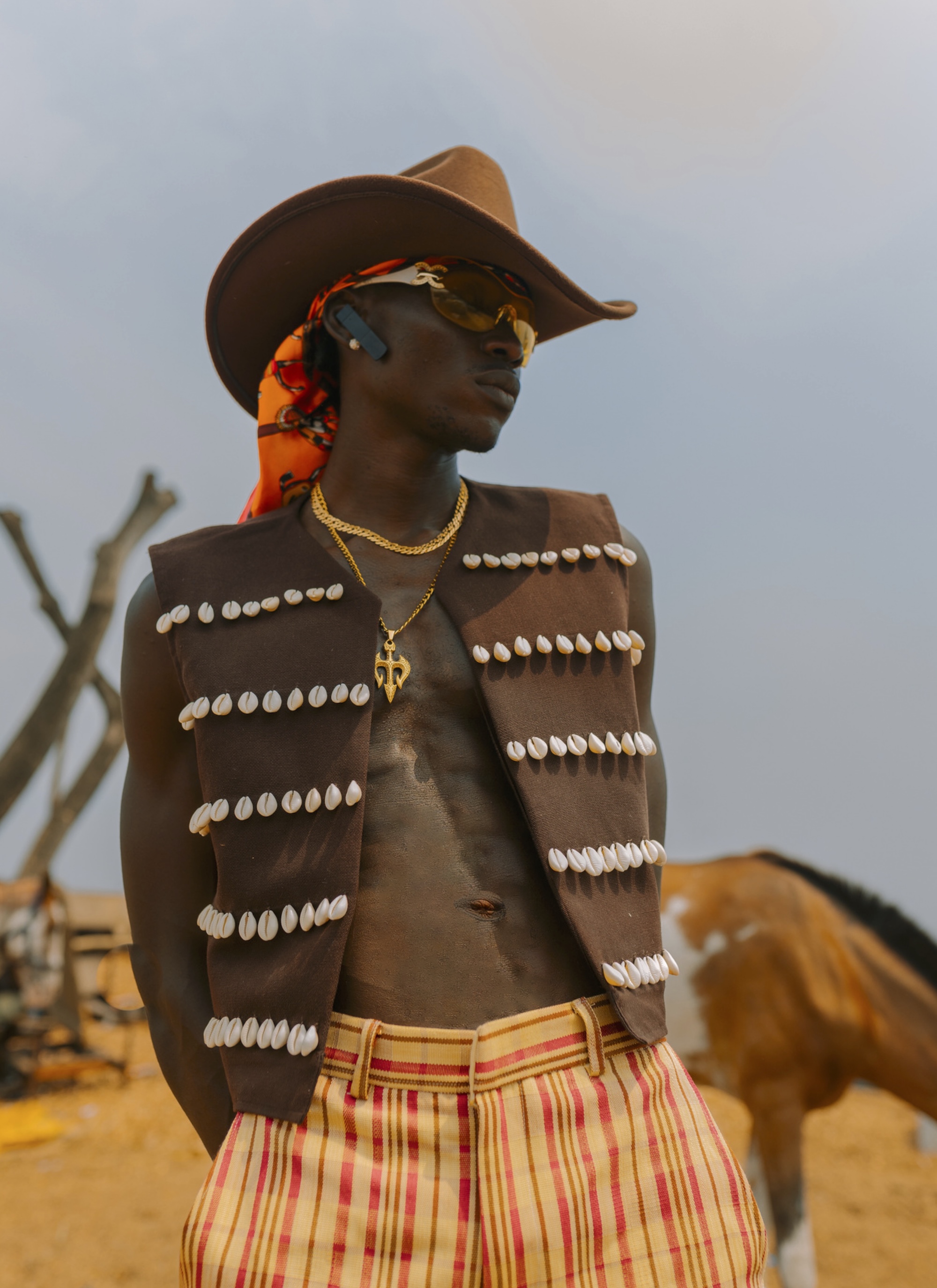
Kwasi Paul invokes design juxtapositions of personal memory and Boakye's Ghanian roots (Imagery courtesy of Kwasi Paul)
How do you split your time between New York and Ghana?
I am based in New York, but I go to Ghana every year, usually in December. Our pieces are made in Ghana, so it feels like I am there five times a week, because I am constantly talking to our manufacturers. I was just on the phone with them this morning.
Let us go back to 2020. It cannot have been easy to launch the brand during Covid; how did the pandemic affect your process?
In 2020 it was all about ideating; I had a lot of downtime as everyone did so really think it through and made sure it was what I wanted to do. And then I started putting some sketches on the pad, creating some pieces, sampling, testing out. In 2021, the world was still in a weird spot, but we thought “we can’t keep waiting for tomorrow” and decided to launch our collection. We started with a little prelude called “Letters from our Ancestors” and then we launched our first official collection “From Gold Coast to East Coast” that fall. That inaugural collection kind of gives you the definition of who we are as a brand.
I was just reviewing that collection to get a better sense of your sartorial vocabulary. Let us get more into the specifics; how do the elements of your designs reflect Ghana and the African diaspora?
So, we start out with the fabric, which is done on an A-Loom by weavers from Ghana. It is 70% or 80% hand-woven cotton and sometimes hand-woven cotton and silk. This is a technique that has been passed down from century to century by our ancestors; we felt it was important for this technique to be at the nucleus of the brand. Moving on from the textile aspect, we create pieces that are inspired by both modern-day and nostalgic 70s and 80s tailoring. I love the classic suits - big lapels, wide pant legs. But then, at times, you will also see that I am inspired by silhouettes that my ancestors wore - cultural pieces like wraps and pleated garments. And we always play attention to the way the fabric moves. We do a little bit of everything to find the fine balance between tradition and modernism.
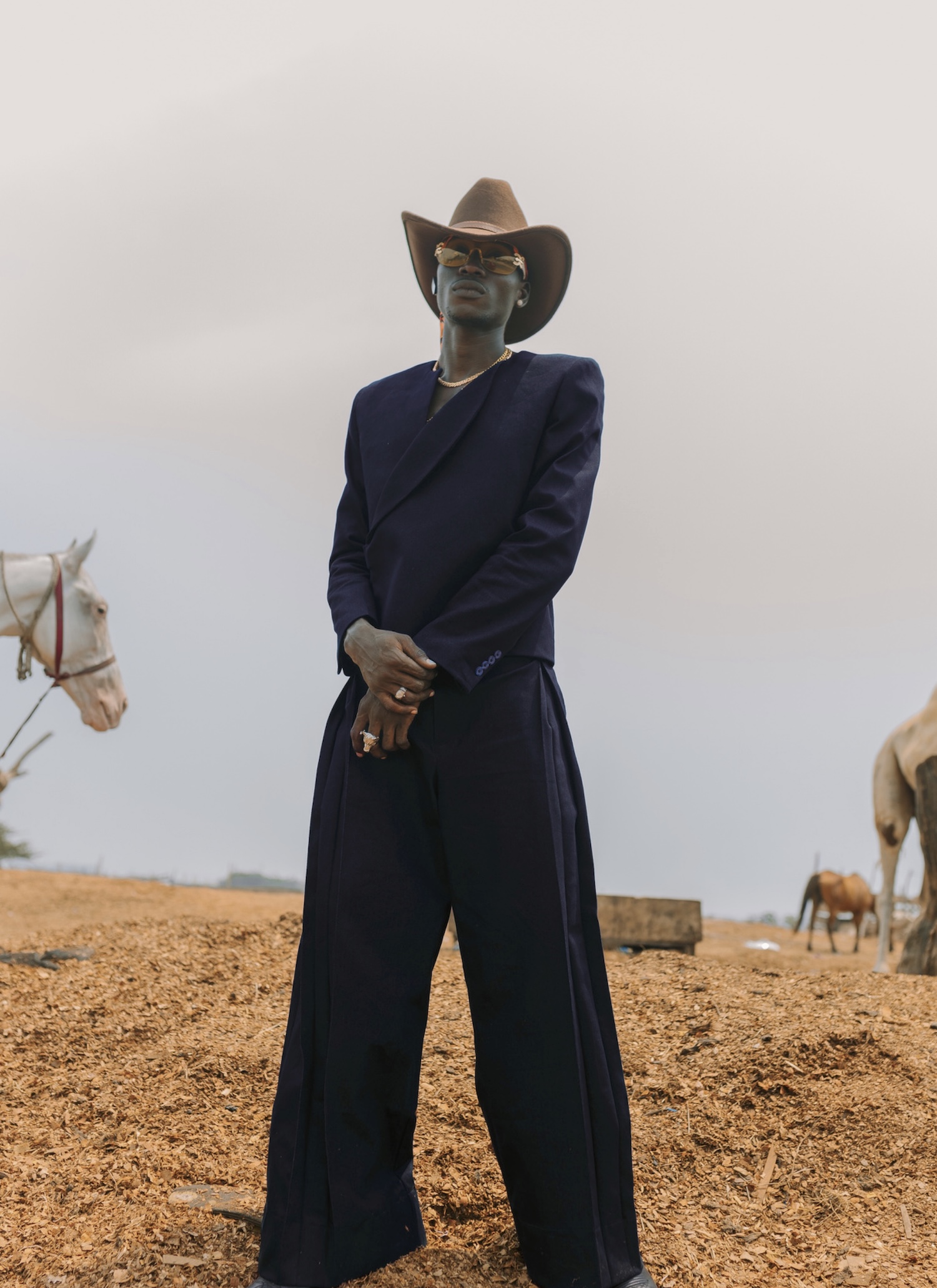
A Western inspired look from Kwasi Paul's 'Area Borga' collection (Image courtesy of Kwasi Paul)
Let us dive into your current collection, entitled Area Borga. Could you tell our readers the story behind this term?
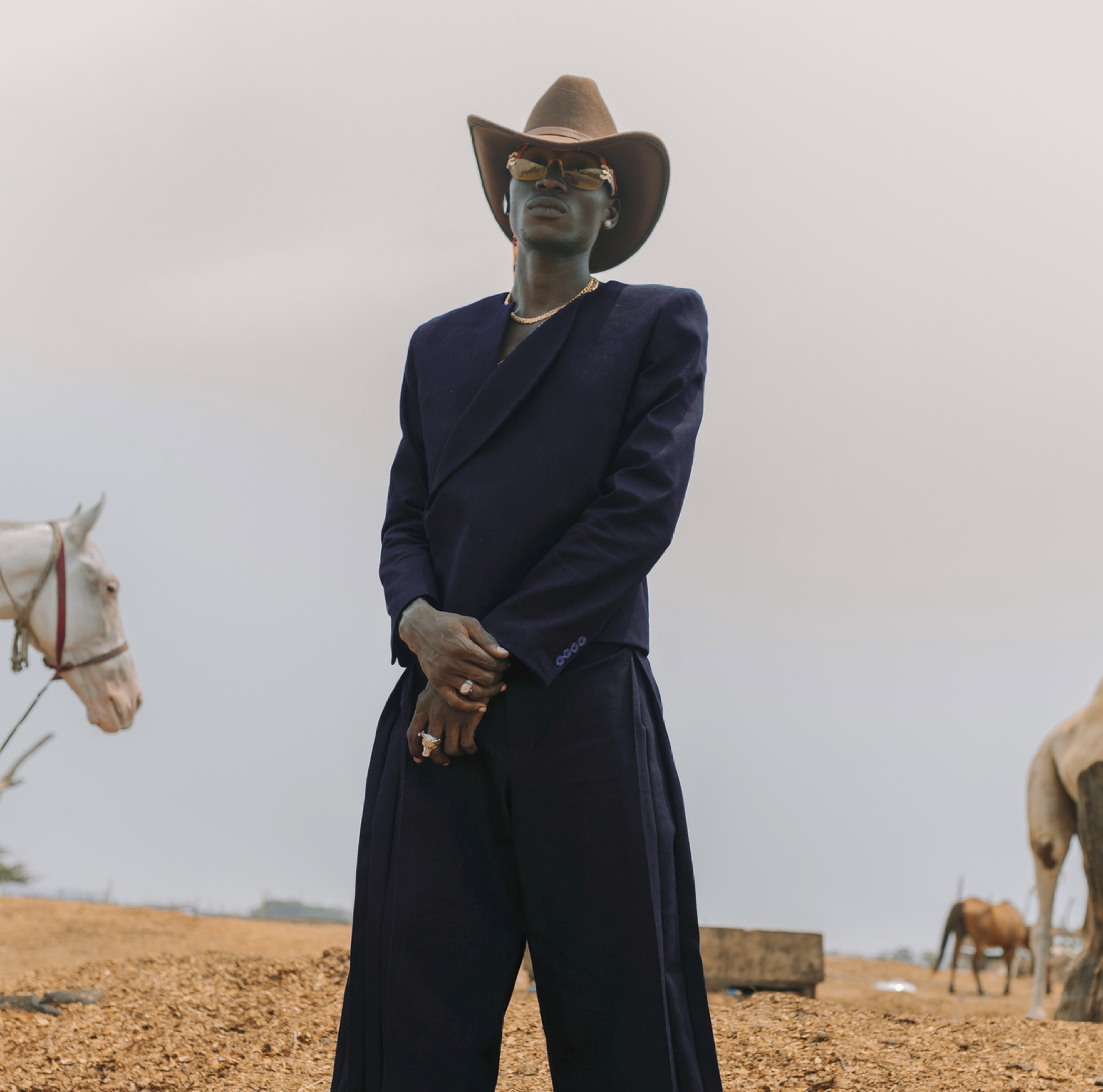
So “area borga” is a term that we call people from Ghana that travelled to the West and came back. When they returned to Ghana, they adopted this swag, ego; having been exposed to the West, they took on a new personality. It was the idea of “I’ve seen the world…I’ve seen outside of this space…you guys ain’t seen nothing yet.” So, the language changed, the accent changed, the clothing changed. People started wearing cowboy hats, jerseys, and other American garments.
The actual term “borga’ means “burger” in German because a lot of these people were traveling to Germany in the seventies and eighties. “Area” was added because they were like “I own this area; this is my new neighborhood.” The term really started picking up again in the Y2K era when I was growing up. We would give Ghanaians living in the US, like a lot of my uncles, that nickname. These are people that are coming through church or various events with pointed-toe shoes, slick suits, and Gucci or Canal Street Gucci glasses.
How do you convey this rich history and flashy aesthetic through your collection?
We focus less on the swag and ego aspect and more on the hustle behind that. As an immigrant, it is not easy to go from one place and assimilate into a whole different country. Not everybody gets that green card or that ticket to the States with an opportunity to change their life. People that can immigrate often take jobs that do not pay much, like a taxi driver, but they never carry that stress or feeling of “being down” on their face; they still carry themselves with confidence. So that’s “area borga” - our version of dandyism. I have a lot of area borgas in my family.
What sort of music were you listening to when you were creating this collection?
I am constantly listening to R&B and Afrobeats. When I think of this collection I think of Hiplife [a Ghanaian brand of hip-hop] - artists like Daddy Lumba from back in the day. Hiplife is a blueprint for other sounds that you hear now, like Afrobeats and your Burna Boys or Wizkids [both Nigerian artists] of the world.
At the same time, I listen to a lot of Teddy Pendergrass and Barry Weiss, which I was exposed to in the 90’s by my pops. He was big on country as well; when he first came to the States he settled in Nashville. That is why you can see a mid-West influence in the collection with horses, some boots, and other cowboy looks. We are taking people on a Magic School Bus trip.
I have been using the term “urban cowboy” a lot lately. I really see that shining through in the Area Borga collection.
Yes, that is exactly what it is. That big boy cowboy swagger with a metropolitan touch.
The Met just chose your work to feature in the new Costume Institute exhibition “Superfine: Tailoring Black Style.” What does this mean to you?
I am still on Cloud Nine about it. It meant that we were seen even though we are an emerging brand that has not been in the game that long. It is a confirmation of what we are doing. We have gone through all these challenges like Covid and the current economic problems and moments like the Met show us that we are still on the right path. The fact that they tied us to this specific theme also meant a lot. Like I said, the “Area Borga” collection and our previous “Amerikan Dreamin” collection are our version of dandyism - inspired by my father, my uncles, my father’s friends. So, to be aligned with the “Superfine” theme was a great feeling.
It has been a change for the brand since we have been in the Met. So many people are already reaching out requesting pieces or to hear our story…and we are still in there for another six months. We are a part of history. Students are going to the museum writing pieces about us, we are in a book, we are officially in doctrine and history. It is one of the greatest things that has ever happened to me in the fashion space.
Congratulations! I am sure people are going to be reading that coffee table book 50 or 60 years from now. And it is obviously such an exciting development for the future of the brand; where do you see Kwasi Paul going in the coming years?
We want to continue building the world of Kwasi Paul, which hits on all five of our senses. We are looking at collaborations and ways that we can innovate. The world is moving so fast with tech and AI so even though heritage is always going to be a part of our nucleus, we are asking how we can innovate traditional techniques, designs, and textiles. I used to work in fashion trend forecasting so I understand how important it is to design collections seasons ahead of time. In the immediate future we are dropping the second part of our “Area Borga” ‘collection this spring, we have an amazing collection called “Imported Treasures” coming out this winter, and then next year we have a spring/summer collection called “Keepsakes” lined up.
Thanks so much for your time, Sam! I cannot wait to discover these new collections.