
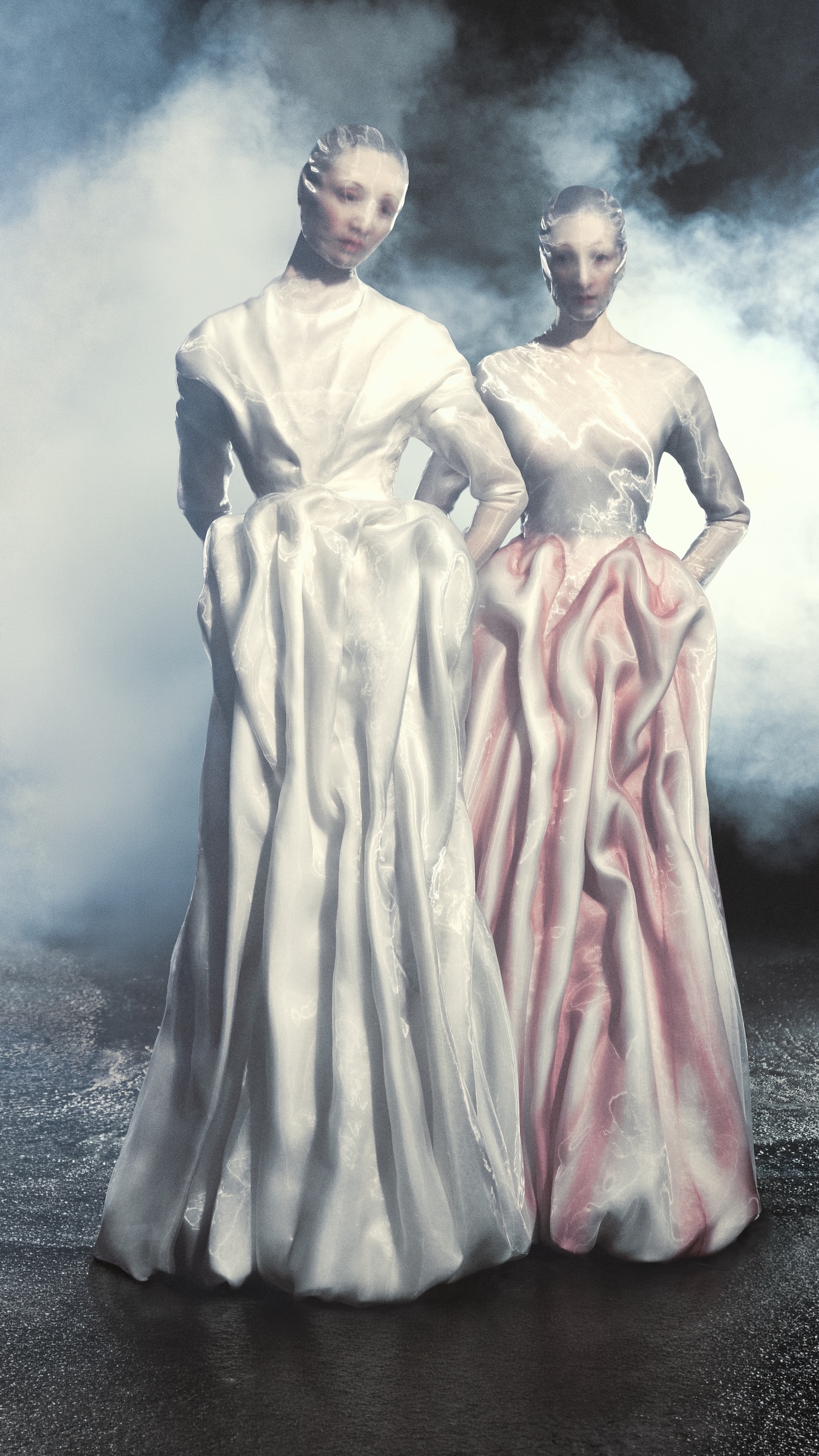
By Louise Daniel
How very Margiela of Glenn Martens to host the Maison’s Fall/Winter 2026 show at a shipping container dock, transformed into a dystopian Parisian flea market filled with oddities and curiosities. Beeswax-covered Edwardian mourning gowns, slashed tapestries, and living porcelain dolls walking in Artisanal heel-less boots.
In Martens’ world of aesthetic rearticulation, China became the center for the saga of his own Margiela renaissance, fueled by studied intent and controlled methodology. At its full force, the FW26 show was the catalyst for the launch of Maison Margiela/Folders, a series of exhibitions happening across the country: an Artisanal exhibition in Shanghai, an Anonymity of Masks exhibition in Beijing, a Tabi exhibition in Chengdu, and the Bianchetto experience in Shenzhen. A project ambitious in scope and ingenious in its articulation.

Stacked shipping containers form the industrial backdrop for Maison Margiela’s Fall/Winter 2026 show in Shanghai. Courtesy of Maison Margiela.
With the recent debut exhibition of the Antwerp Six at MoMu, Galliano entering a two-year partnership with Zara, and Martin Margiela himself evolving his practice in the visual arts, we are truly living in times of post-alternative fashion. With the collapse of originality under constant referencing, we are entering an epoch of hyper-referentiality—a culture of endless citation. However, Margiela by Martens seems to find a near-perfect semiotic balance between the archival and technical intervention. As evidenced by his most refined collection yet, Fall/Winter 2026 further elevates Maison Margiela’s enduring presence in the industry—not just as a niche disruptor, but as a global leader of what will continue to endure in authenticity.
A Margelian System: From the Bianchetto to Masks to Anonymity
The essence of Maison Margiela lies in its ability to transform the banal—to distort what is common. Here, house codes established by its predecessors, from Martin Margiela himself to John Galliano’s theatrical oeuvre, were repurposed. The masked models became living, breathing archives, stitched together in silhouettes that sit between the Edwardian and the modernized. However, these references were elevated through techniques that demand painstaking hours; some dresses took hundreds of hours to complete with delicate precision. For example, the show opened with a series of looks that emulated the glaze of porcelain—an intensity achieved through expert airbrushing and layered glass organza in Look 1 and 5.
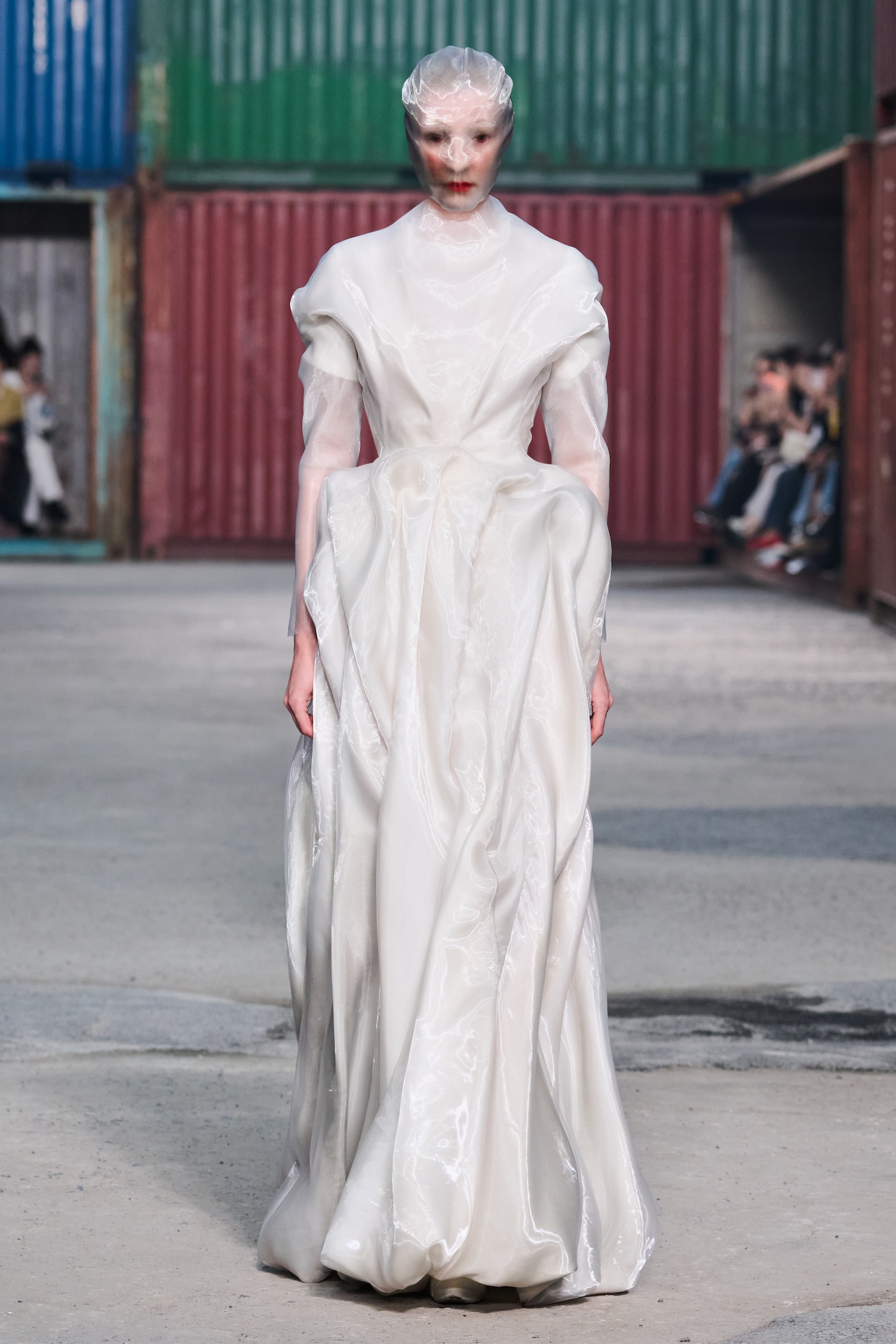
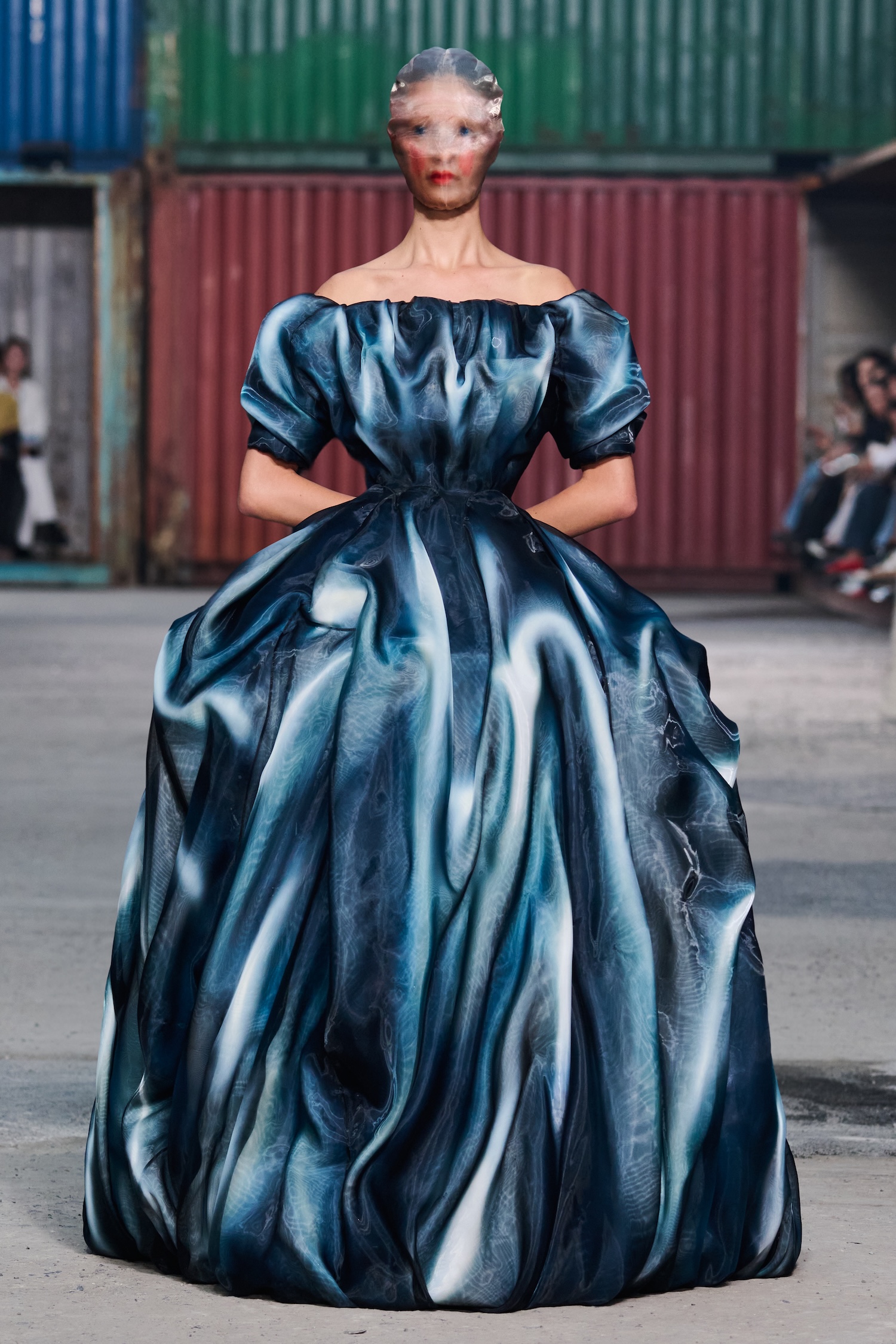
Maison Margiela Fall/Winter 2026: Looks 1, 5. Courtesy of the House.
Of course, the viral 90-kilo cracked porcelain dress, meticulously pieced together from 500 individually fired ceramic pieces, took center stage. The idea of trompe l’œil was observed in Look 9 and Look 50 in the form of a second-skin waistcoat and a leather dress—the clothes themselves appearing fused to the wearer. Another addition to the strong accessories portfolio of Margiela is the new Box Bag with metallic trims. Standout looks came in visions of gold, beeswax, repurposed leather jackets, and even an actual 19th-century canapé.
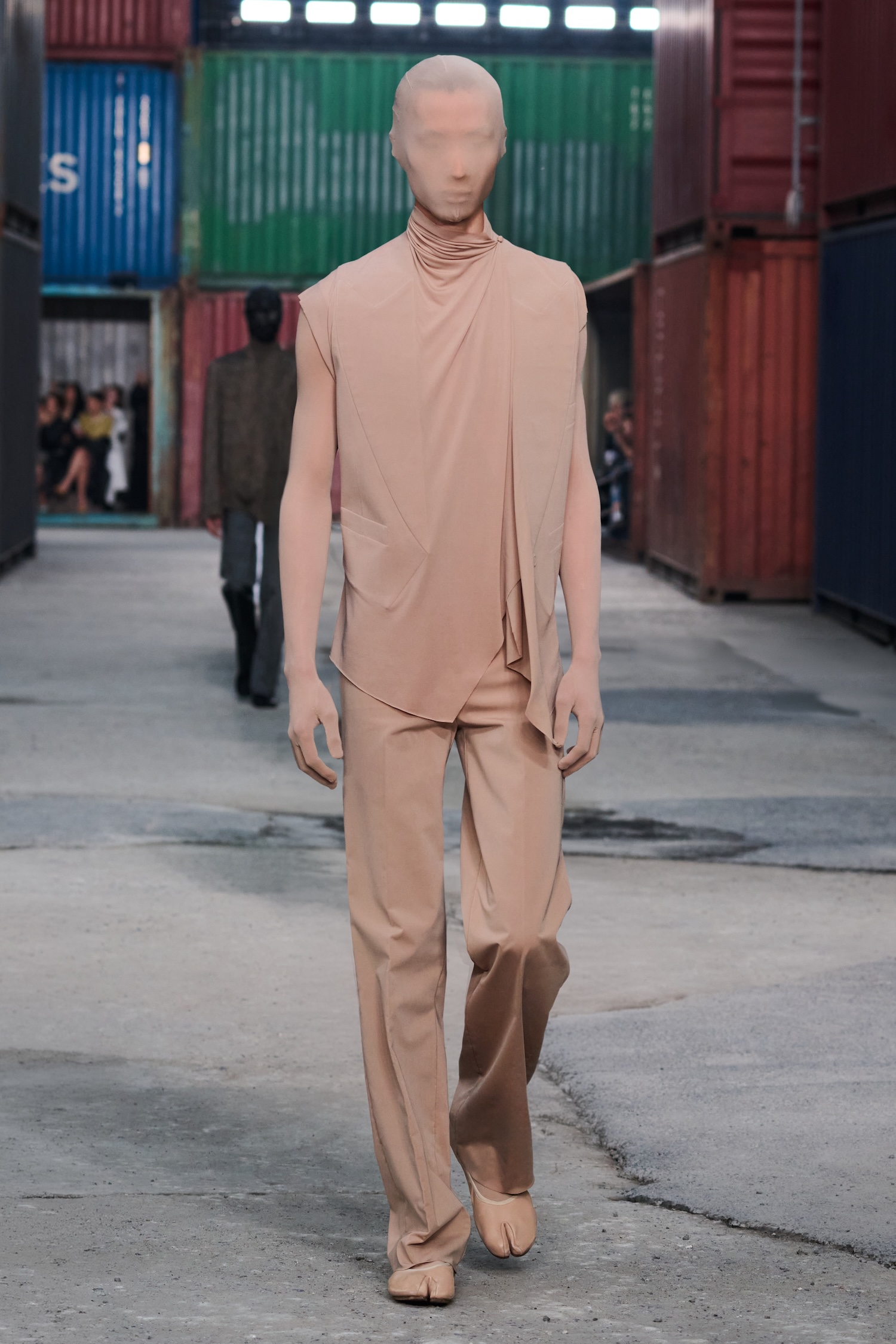
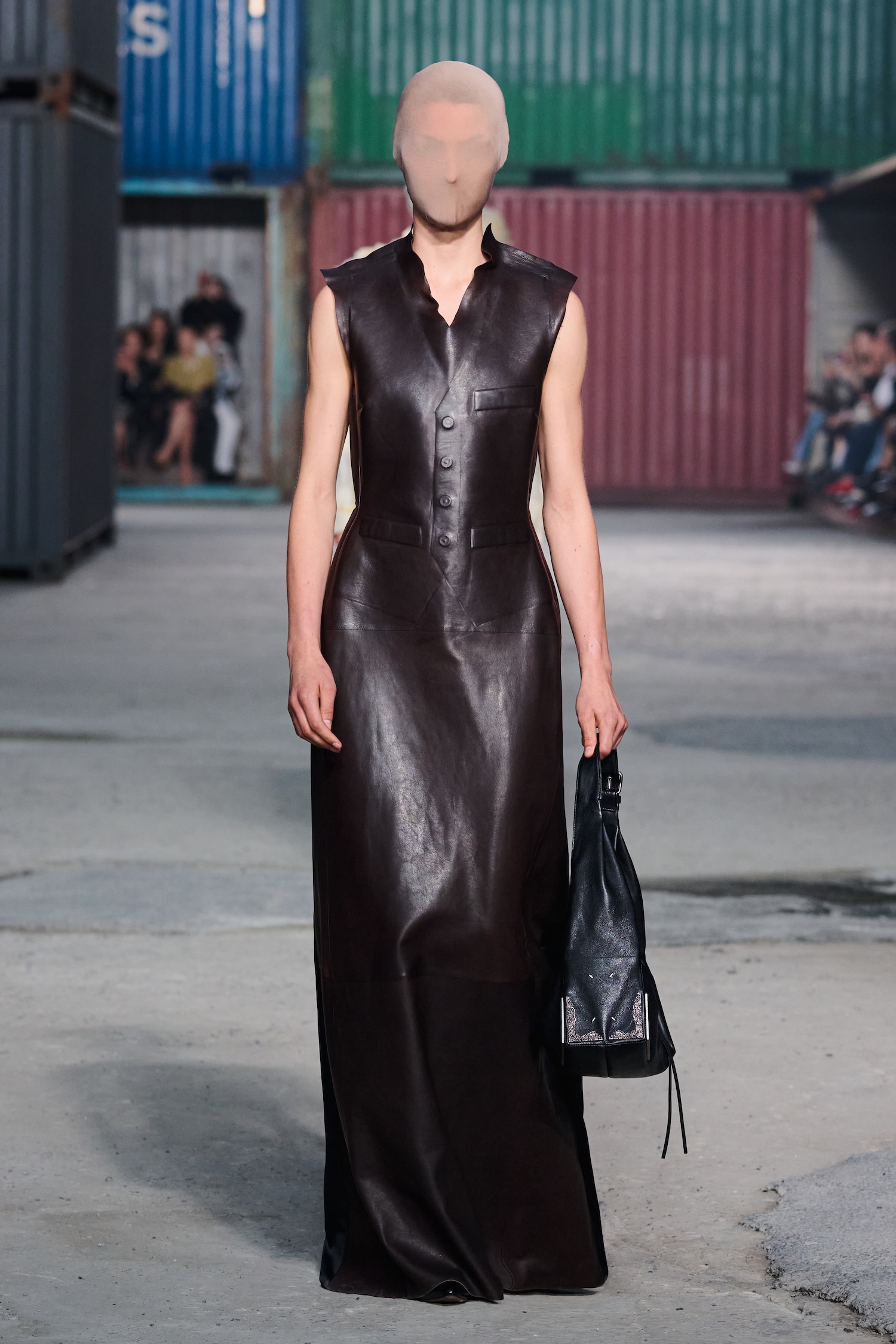
Maison Margiela Fall/Winter 2026: Looks 9, 50. Courtesy of the House.
Look 18 and 23 were artisanal golden ensembles composed of gilded gold leaf and 150,000 hand-applied gold stars. Meanwhile, Look 25 mimics the silhouette of an Edwardian mourning gown, dripped and doused in beeswax, worn with Tabi claw Plexi boots. Look 43 included 15 repurposed leather jackets in one look.
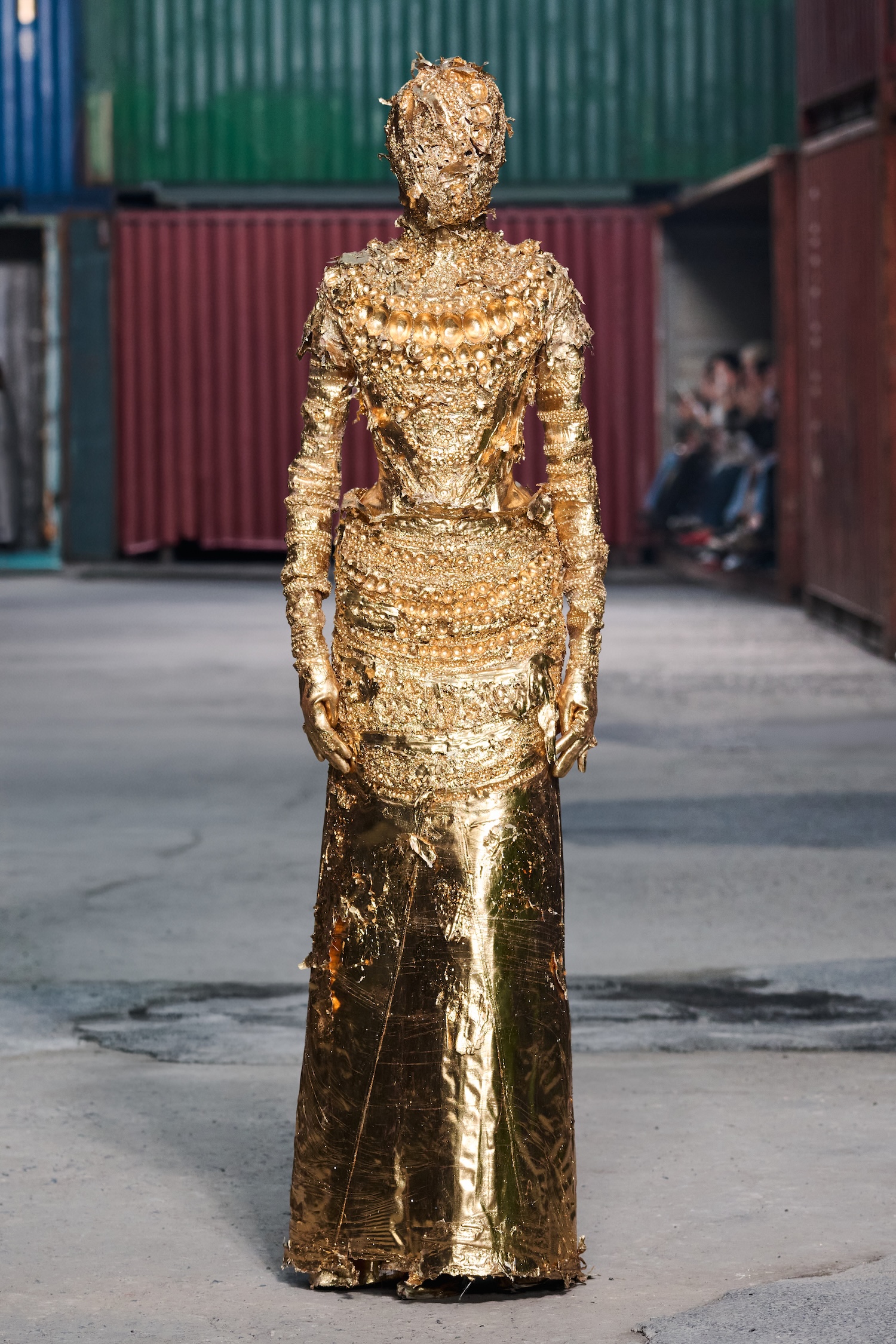
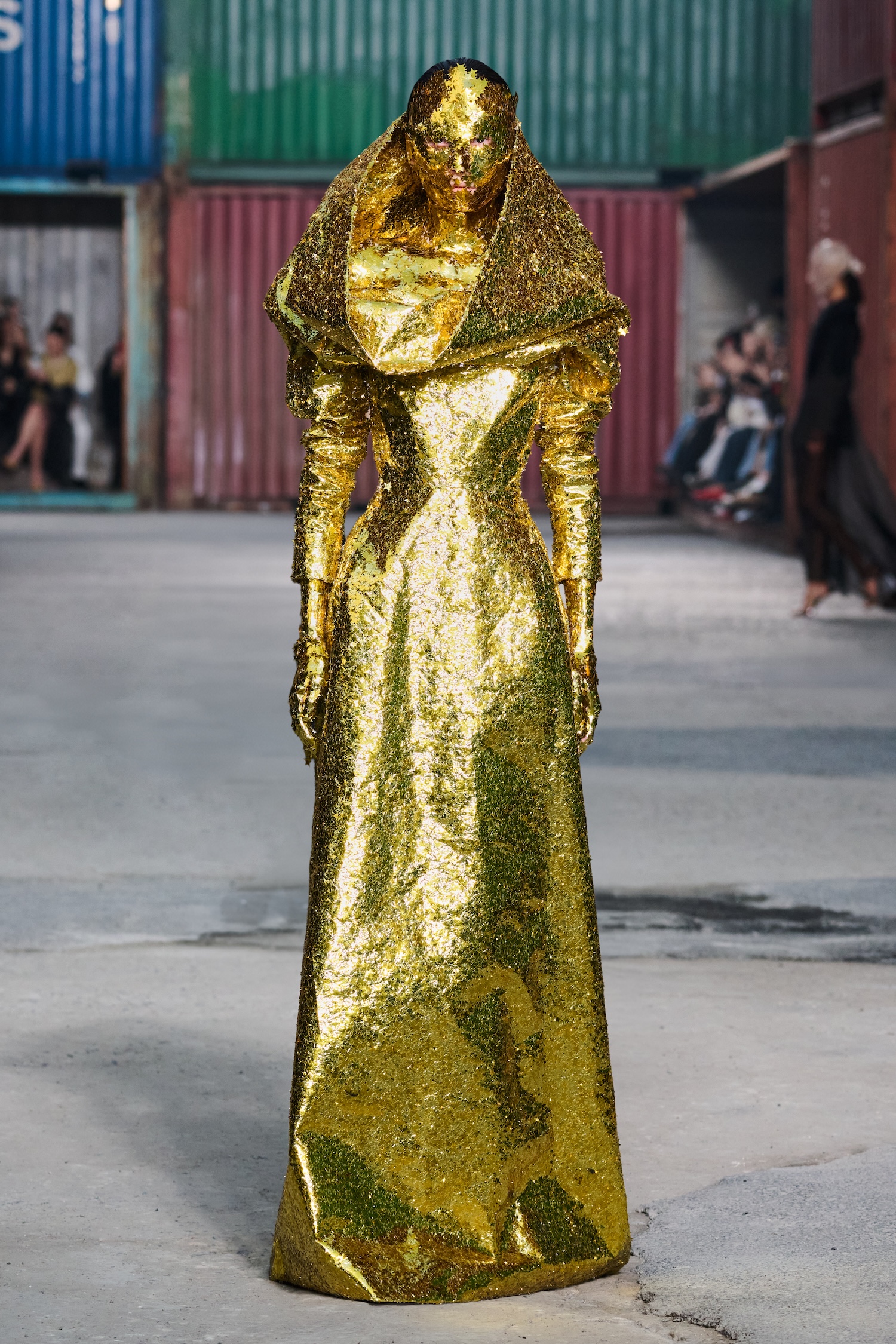
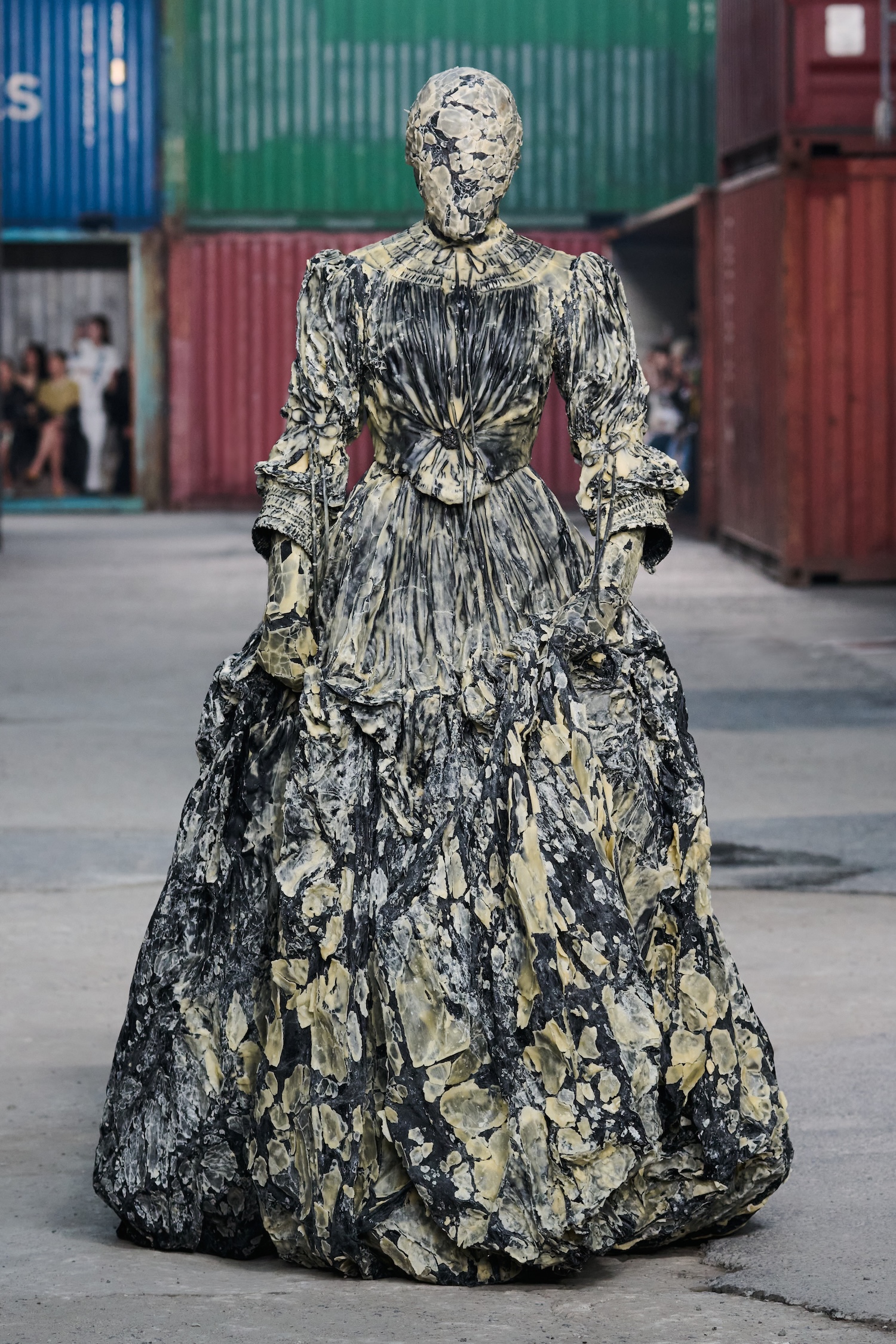
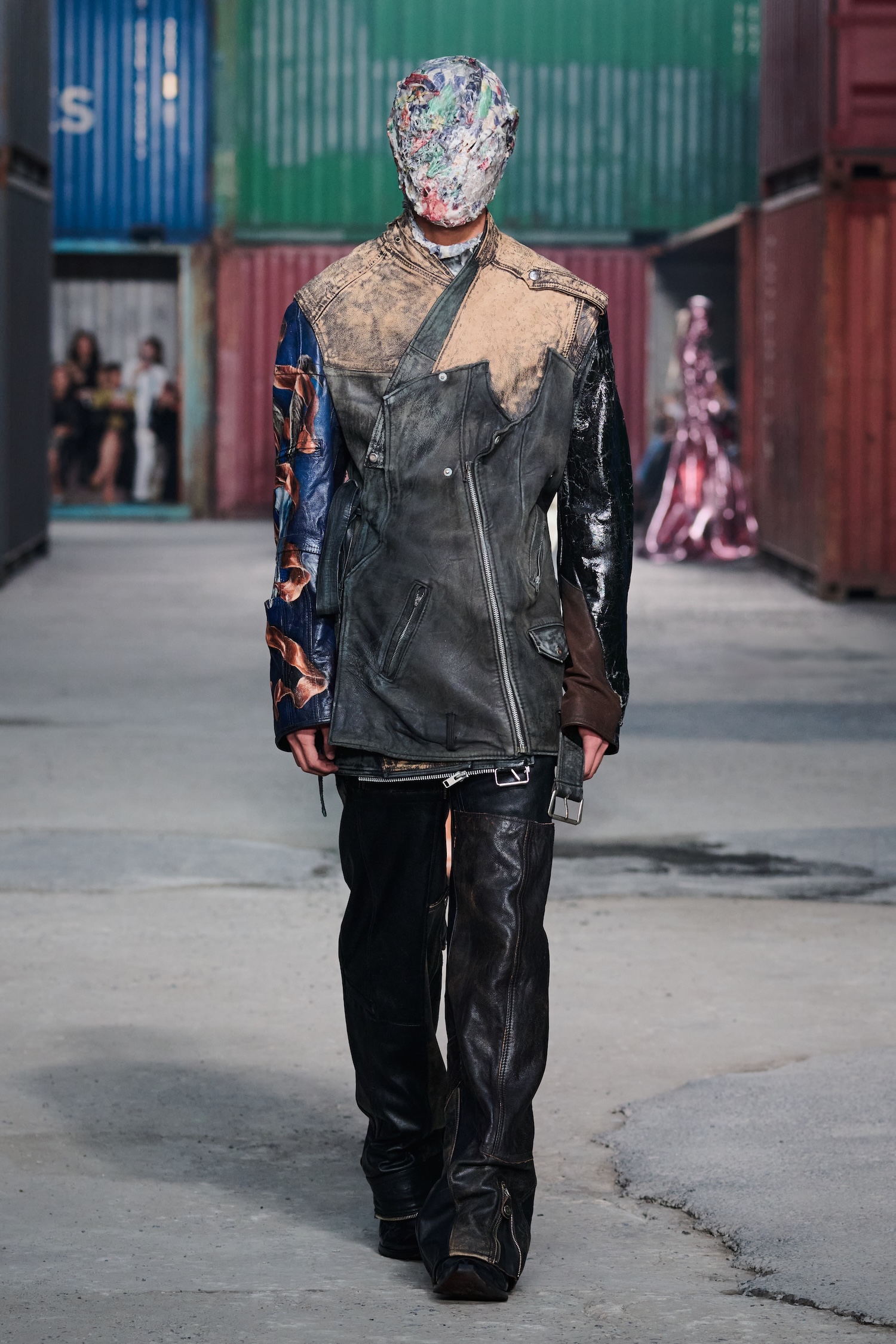
Maison Margiela Fall/Winter 2026: Looks 18, 23, 25, 43. Courtesy of the House.
And the pièce de résistance—the conclusion of the collection—was a gown constructed from a flea market find: a restored 19th-century painting.
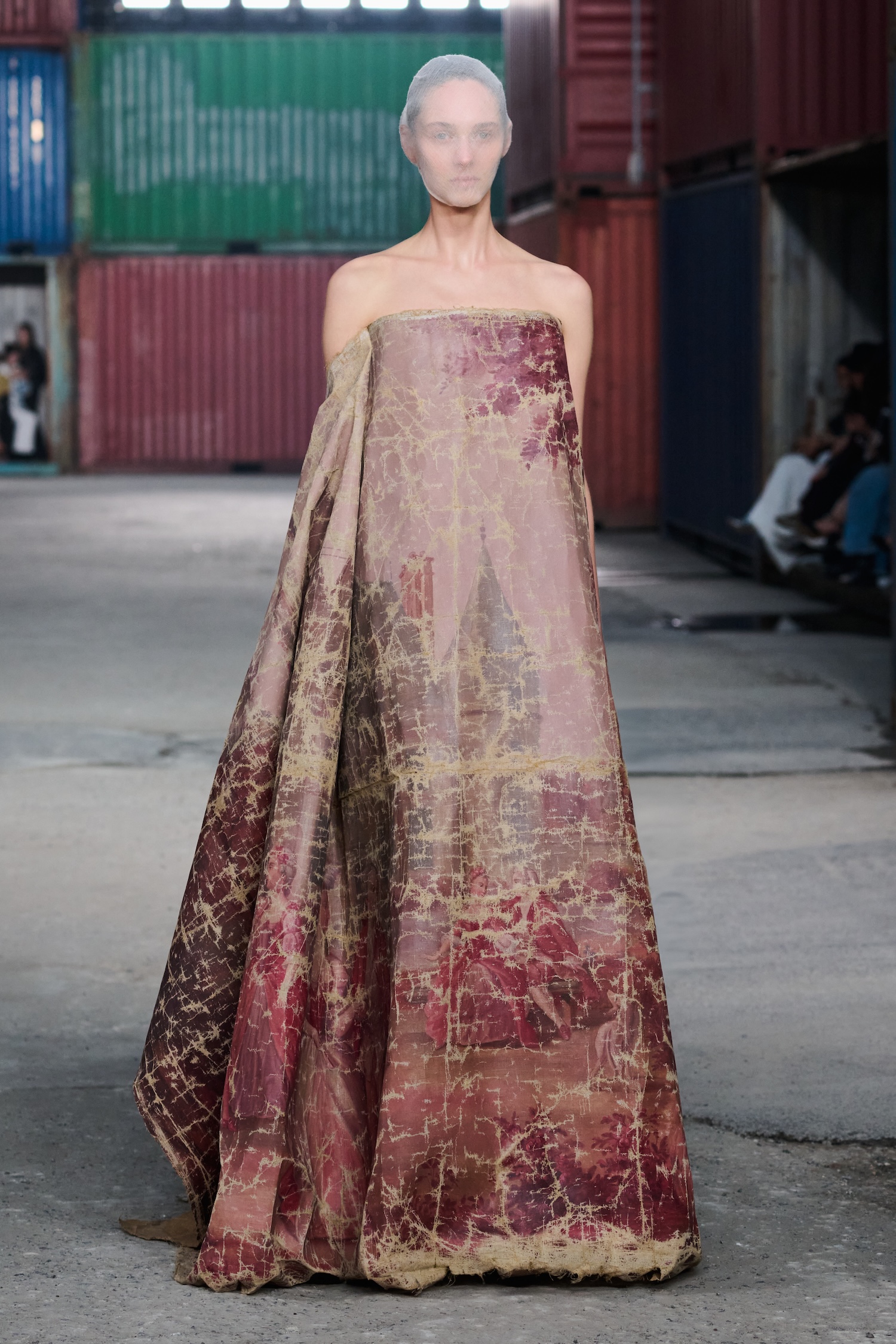
Maison Margiela Fall/Winter 2026, Closing Look. Courtesy of the House.
Back to the banal. Flea markets are usually where hidden treasures are found in what was once discarded. This is where Glenn and the Margiela team began: in the imperfect. In fact, Glenn Martens introduces a new addition to the Margiela language: disarray artisanal couture. Exquisite pieces intentionally engineered to embrace imperfection.
Post-Alternative Fashion Is Technique Over Novelty
Each look in the collection is brimming with intensive techniques that are truly a joy to dissect. At its core, Margiela by Martens aims to refine technique in order to artistically elevate the banal. In a time obsessed with constant novelty, Martens proposes something far more enduring: that true innovation lies in the mastery of transformation.