The Fashion Editorial Team
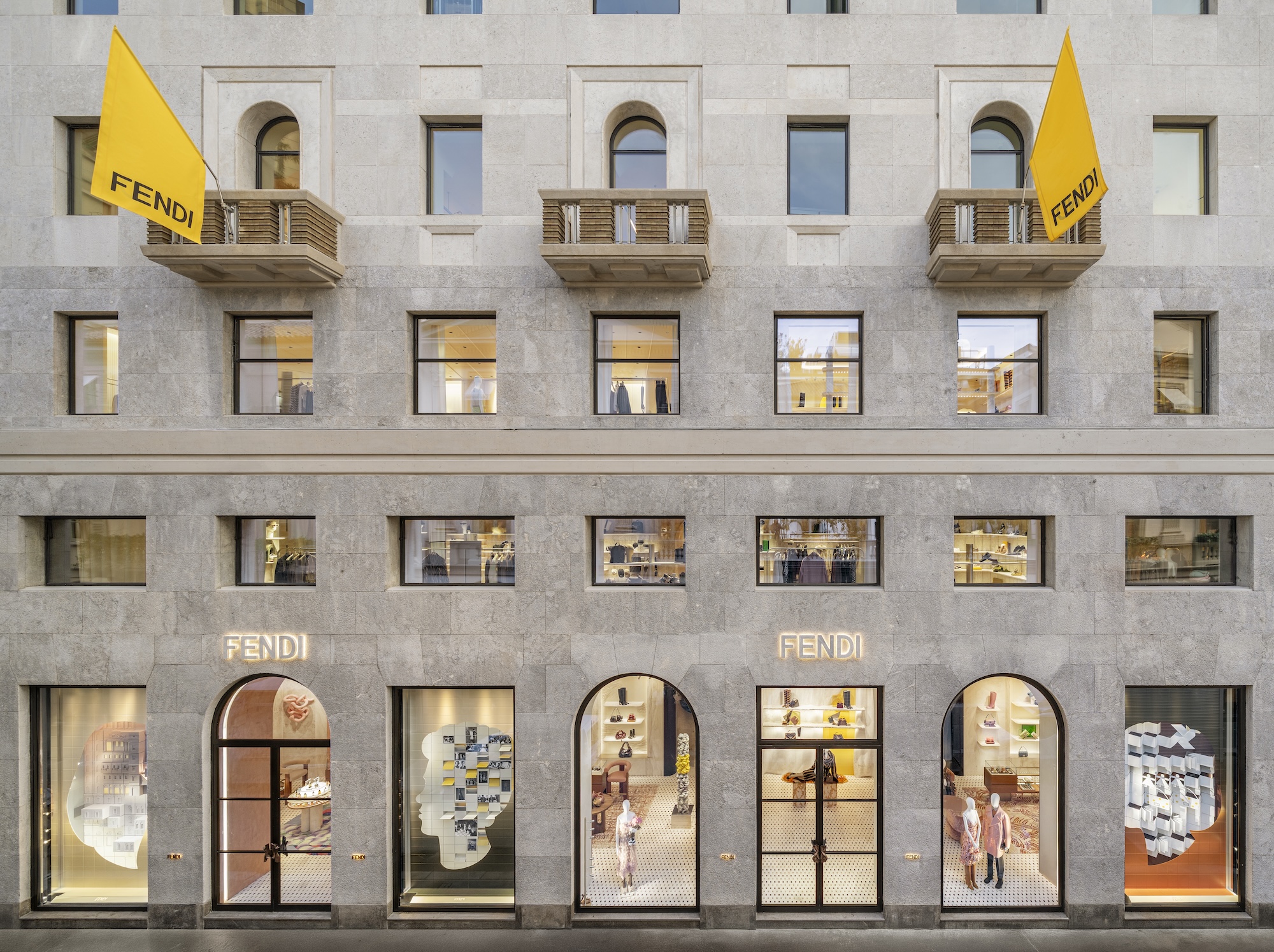
On September 24, FENDI opened the doors to its Flagship store in Milan located between Via Montenapoleone and Corso Matteotti. Designed by architect Emilio Lancia, the historic 910 square meter boutique spans four floors which includes an in-house Atelier and three distinct dining experiences by Langosteria.
FENDI'S design language co-exists with the building's history through its ancient Roman marble patterns, arches, and 1930s Milanese interiors. Ultimately, the space finds its harmony among elements from both worlds. Joining Fendi for this historic opening, local foundations, and art galleries: Fondazione Officine Saffi, Fondazione Arnaldo Pomodoro, Mazzoleni and Secci galleries lend carefully selected art works to the boutique.
On the store's ground floor, women's accessories is followed by Men's and Kid's dedicated spaces. Entering from Via Montenapoleone, guests are greeting to a spacious hall with walnut arches, Calce Romana, ribbed Travertino marble walls, and Domus-style flooring inspired by ancient Roman houses. Awash in history, the sculptural Travertino marble, with its irregular drapery, recalls Baroque Roman statues while the squared tiles of Rosso Lepanto and Breccia Oniciata marbles form parallel rows of burgundy and creamy yellow against a Travertino background. In collaboration with Fondazione Officine Saffi, the center of the space features an organic-shaped column in yellow, purple, and green enameled ceramic by artist Anton Alvarez.
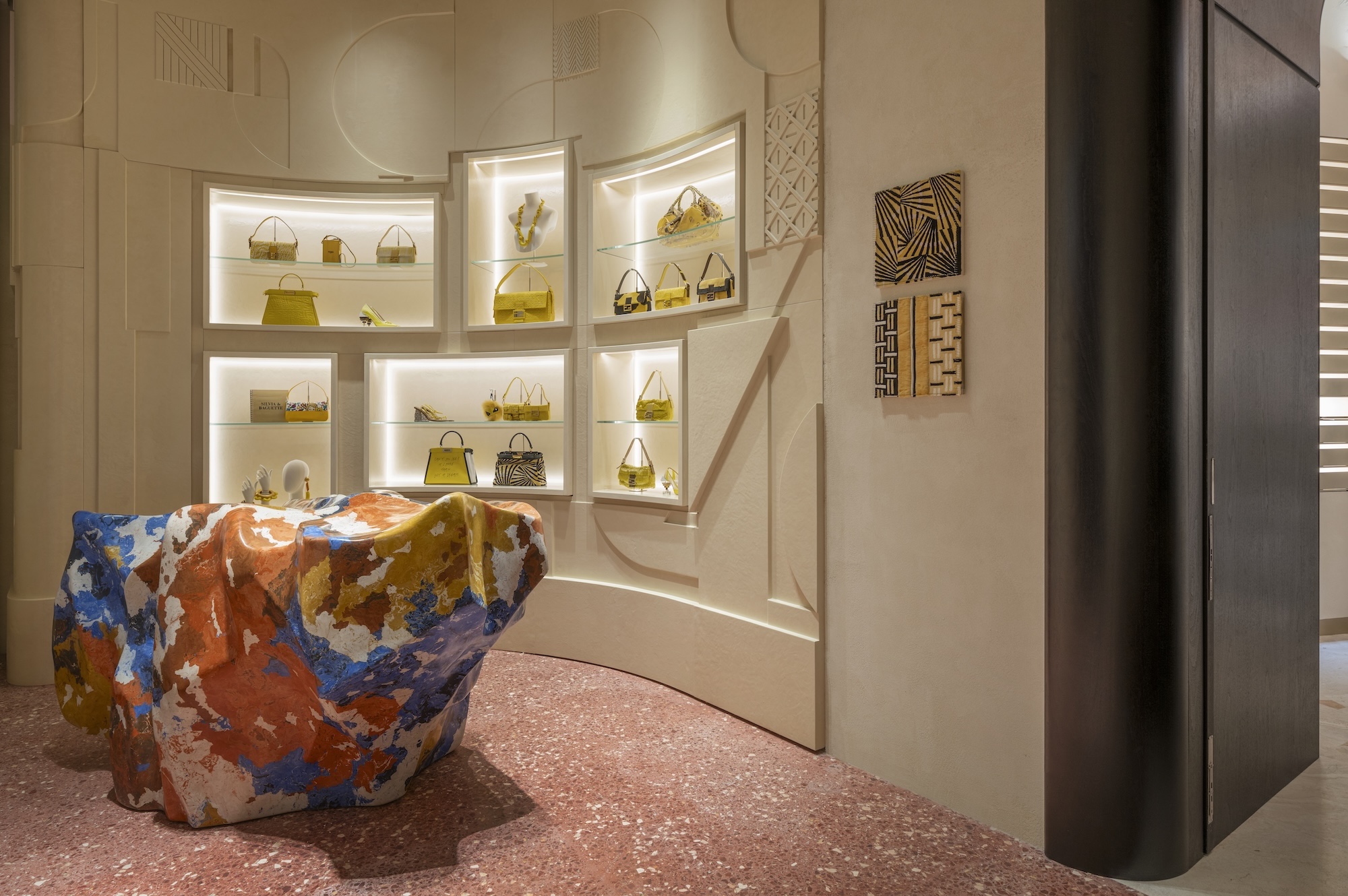
Entering from Corso Matteotti, guests destined for the space's upper floor restaurants or for ground floor shopping are greeted with walnut boiserie and Langosteria characters in addition to a handcrafted sculpture by Roberto Sironi. Conceived as a multifaceted abstract meteorite-like shape, this work is rendered in electric blue, dark yellow, terracotta, and employs a Marmo di Rima technique.
Moving towards the building's interior, an accessories room displays the House's latest fashion jewelry, sunglasses, belts, fragrances, and textile offerings. Alternating ribbed Travertino marble forms curved angles while two asymmetrically knotted works by artist Roger Cal, in collaboration with Officine Saffi, are crafted from ceramic in signature FENDI yellow and bubblegum pink. At the building's heart is a central staircase originally designed by Emilio Lancia with additional delicate pink glass rhombus elements and a Cuoio Romano leather handrail with Selleria stitching, signifying the House's craftsmanship. A contemporary fresco by artist Edoardo Piermattei rendered in pink, burgundy, neon blue and terracotta, lends a sculptural dimension to the space.
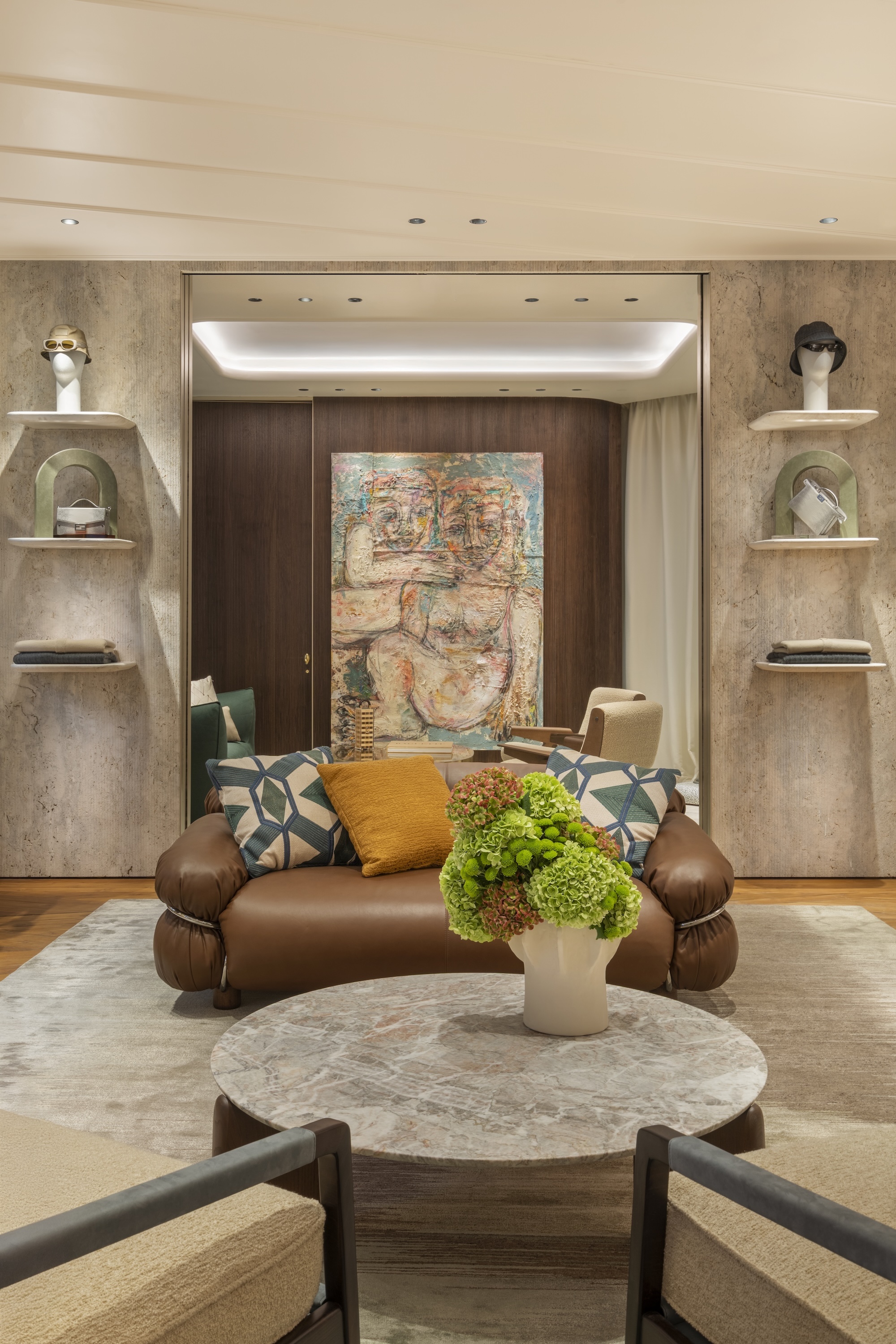
The Men's space unfolds on the first floor with teak wood parquet flooring inspired by backgammon boards and ribbed Travertino Silver walls. A perforated silver nickel door leads to the VIP room which is rendered in dark walnut and Travertino Silver floors. A painting by Daniel Crews-Chubbs, 'Where the wild things are,' adds a playful touch. Completing the space is a Roman-inspired wallpaper designed by artist Luke Edward Hall for Rubelli. FENDI kids, meanwhile, features neutral tones with pastel details. Palladiana flooring in Travertino and colored marble adds a playful twist to ancient Roman design elements.
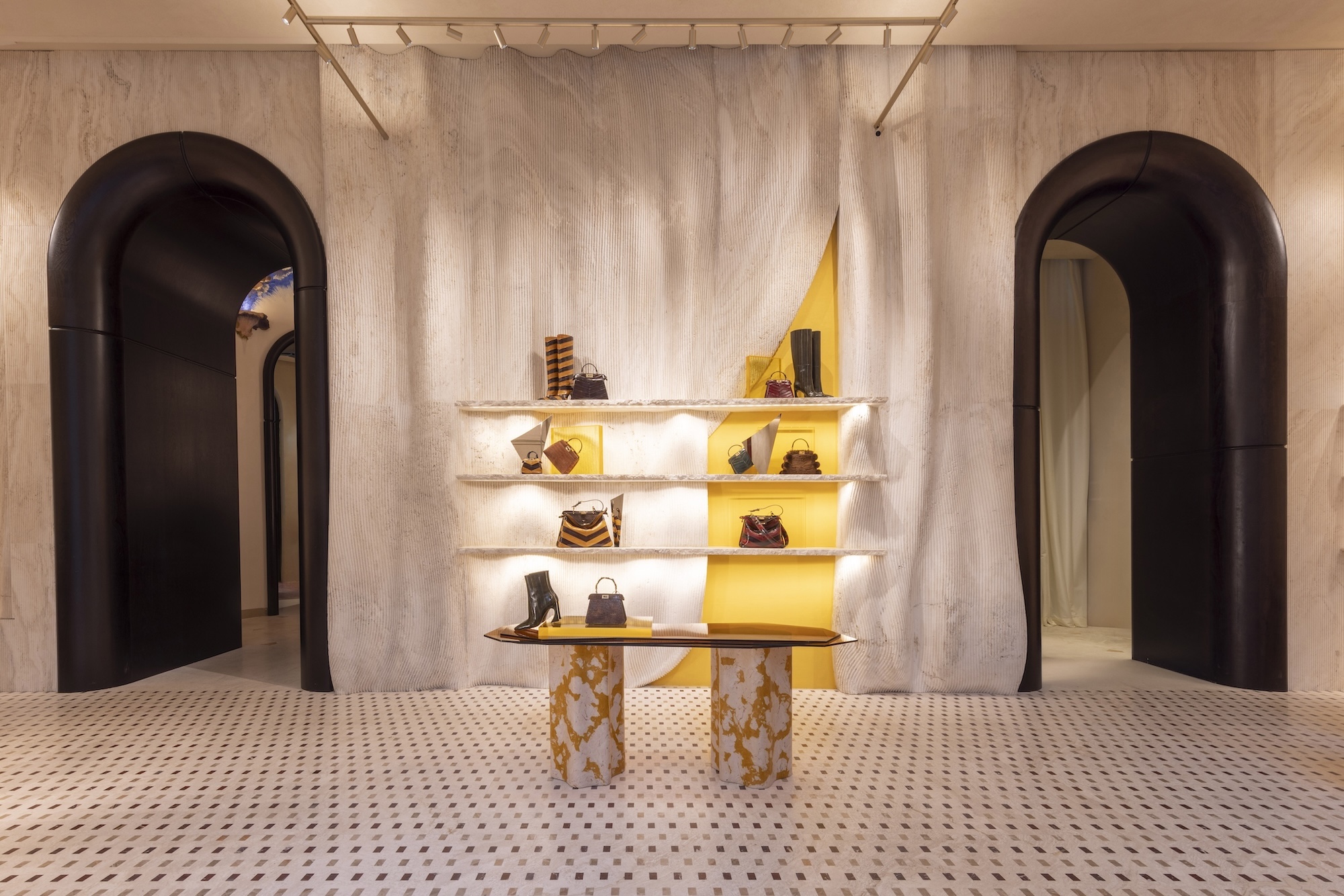
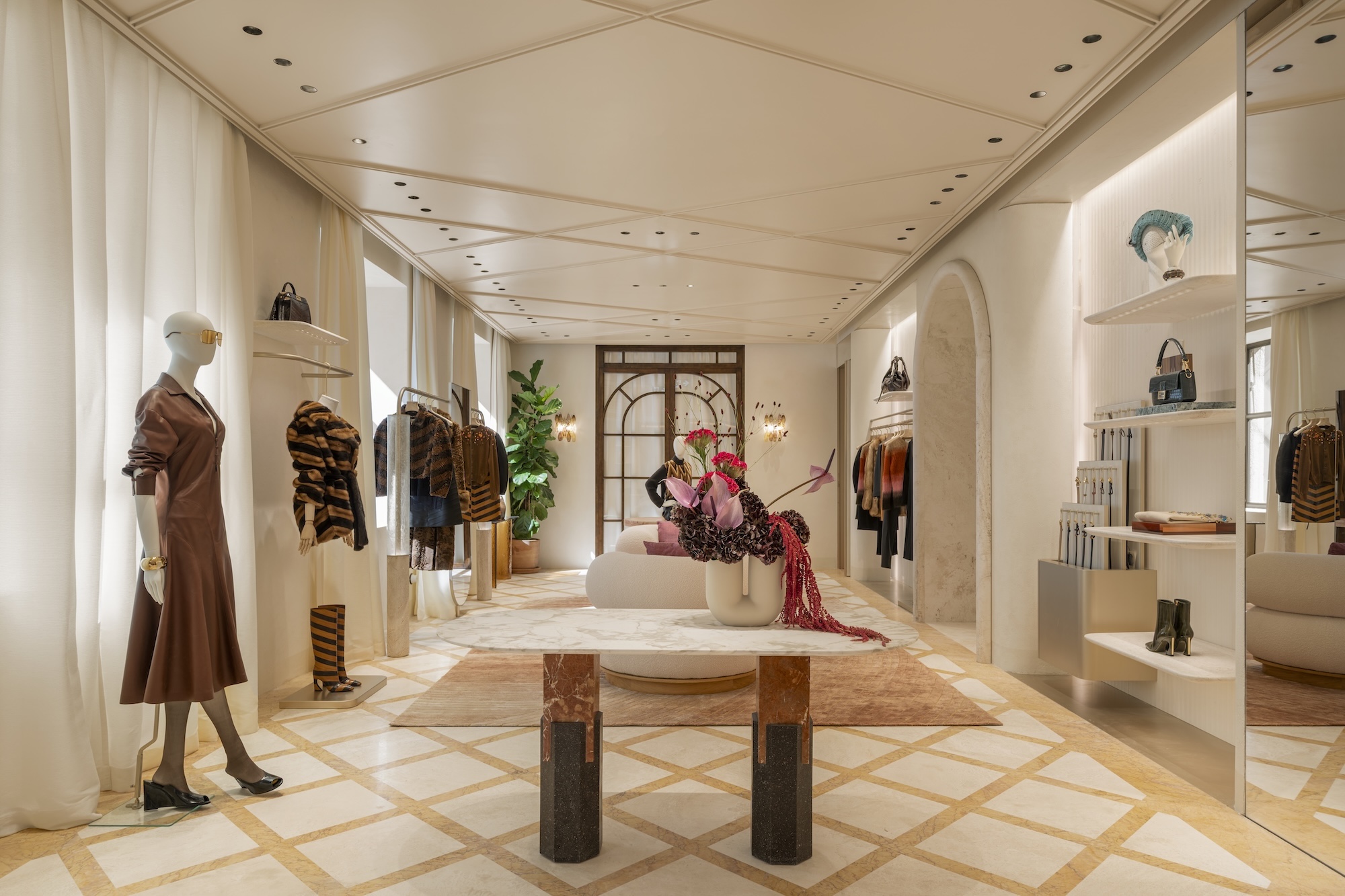
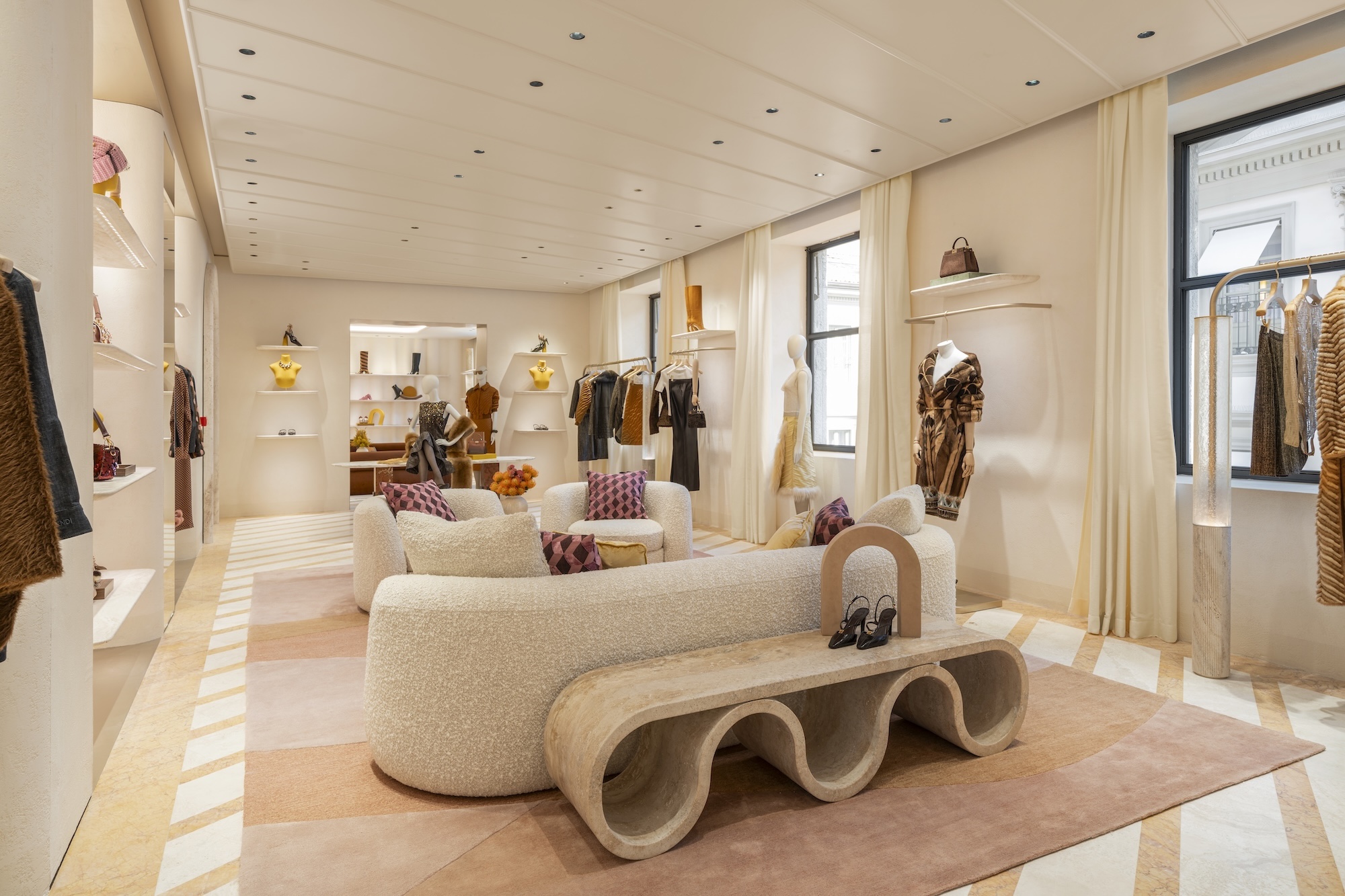
On the second floor, FENDI Couture and fur are placed among luxurious lacquered-effect ivory walls and are complemented by Travertino Ascoli marble arches. Two women's ready-to-wear salons combine Roman and Milanese materials and feature marbles, soft lines, and curved door handles rendered in colored glass. Waved walls in Calce Romano become a shoe display, inspired by the unfolding leather rolls and façade of the FENDI Factory in Fermo, which is specialized in footwear. Two connecting women's VIP rooms, one is specially dedicated to high jewelry and designed with Travertino Ascoli marble in a powder pink palette while the other room offers a view of Piazza San Babila.
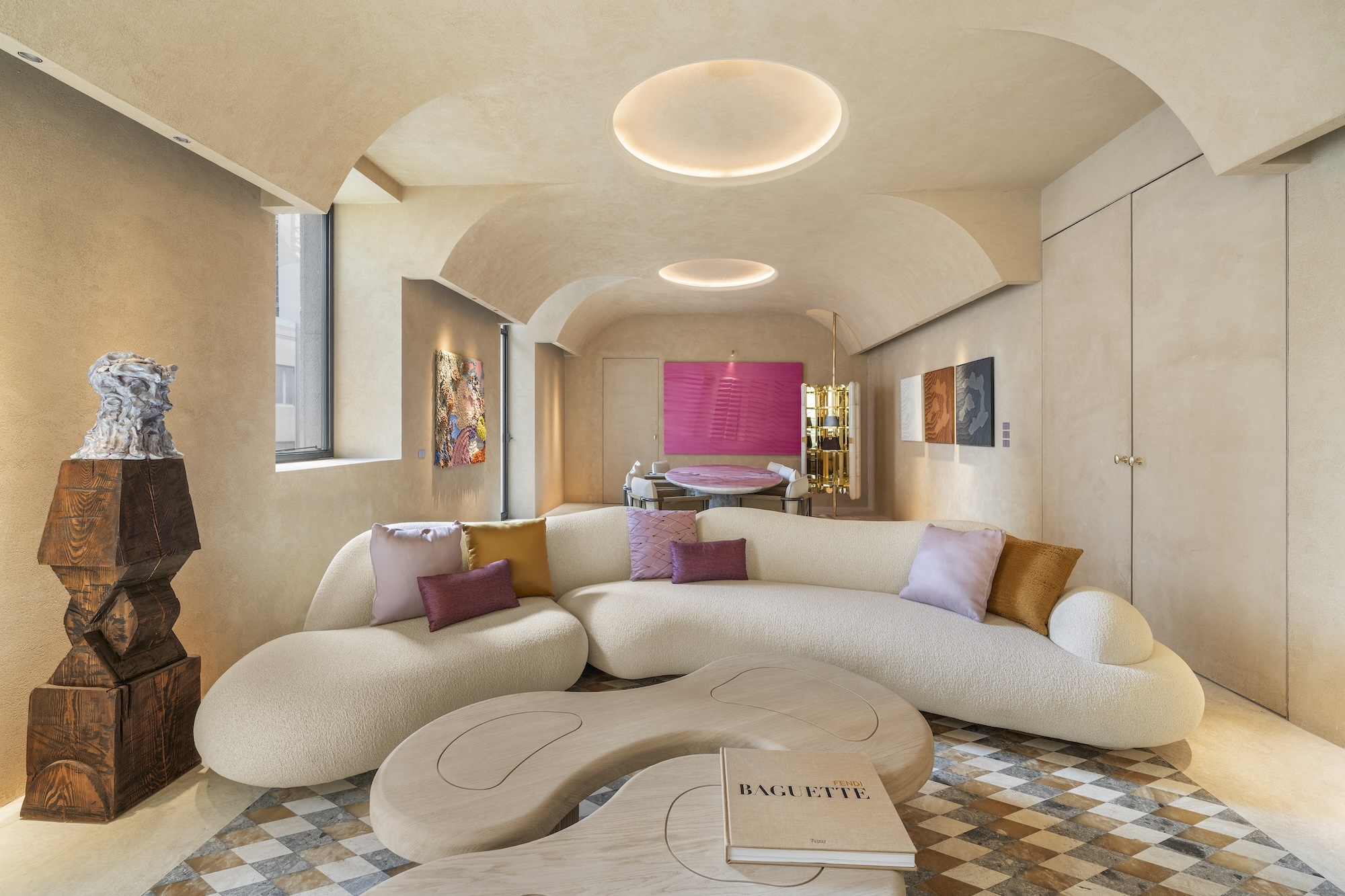
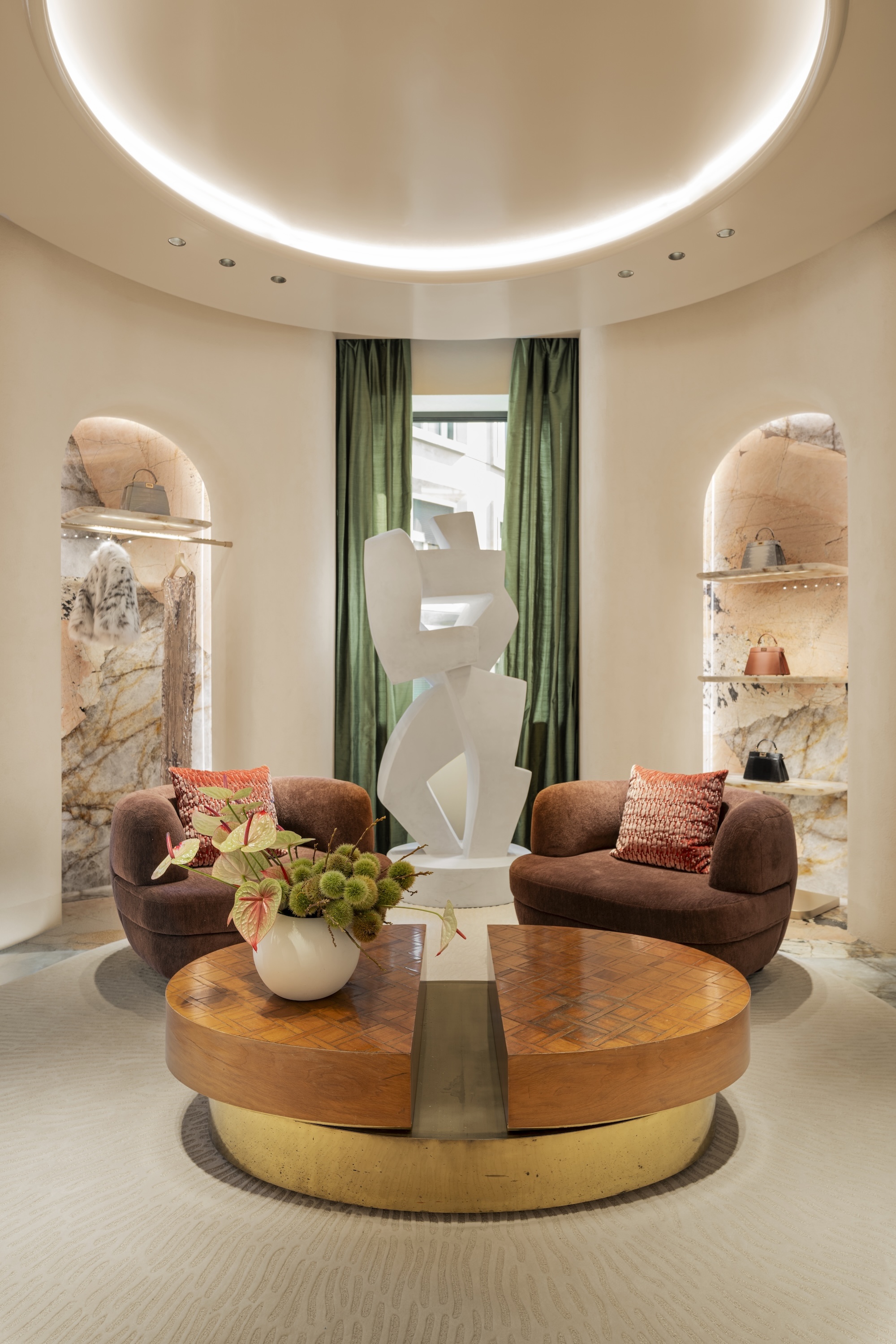
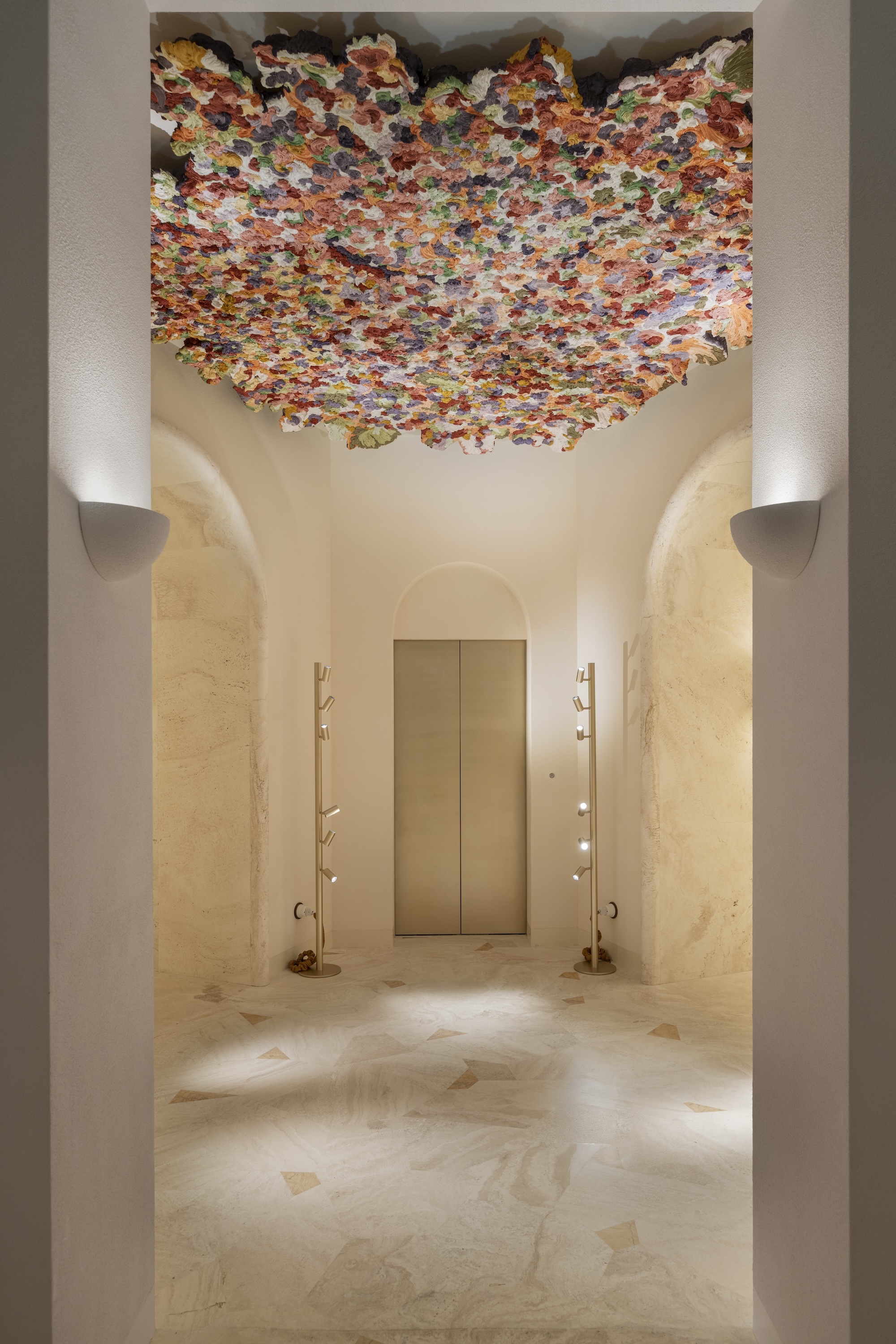
On the third floor, guests are greeted to a sculpture dedicated to the FENDI Atelier by artist Nick Cave. This space further celebrates the Roman House's excellences in fur and leather work. Artisans create personalized products and on display are some of the Maison's most cherished pieces from FENDI's 100-year history. This space evolves into the FENDI Apartment through a special arched foyer inspired by the Pantheon. A cocooning VIP salon with an illuminated curved ceiling recalls the Pantheon's oculus. A colorful mosaic floor leads to artworks 'Rossa Rosa' by Agostino Bonalumi and 'Tracee I' by Arnaldo Pomodoro which symbolizes FENDI and Fondazione Arnaldo Pomodoro's years-long collaboration. Lastly, a special ceramic bar cabinet in crafted with the Japanese Raku technique reveals the latest offerings from the FENDI universe.
Via Montenapoleone 1
Images courtesy of FENDI