
By Louise Daniel
Henri Alexander Levy is one of postmodern fashion’s most provocative cultural omnivores. Rather than simply being labeled a designer, Levy is no stranger to drawing inspiration from different facets of culture—art, the oddities of a certain decade, historical movements, music, design, and people.
After his recent winter exhibit titled Ask Us If He Was Our Son in Moscow, one could conclude that Levy’s snow setting may have been inspired by this trip to Russia. However, as we all know, ERD prides itself on the complexity of its universe. Levy himself disclosed that a single theme would be far too direct for his vision, insinuating instead that this idea had been snowballing throughout the season.
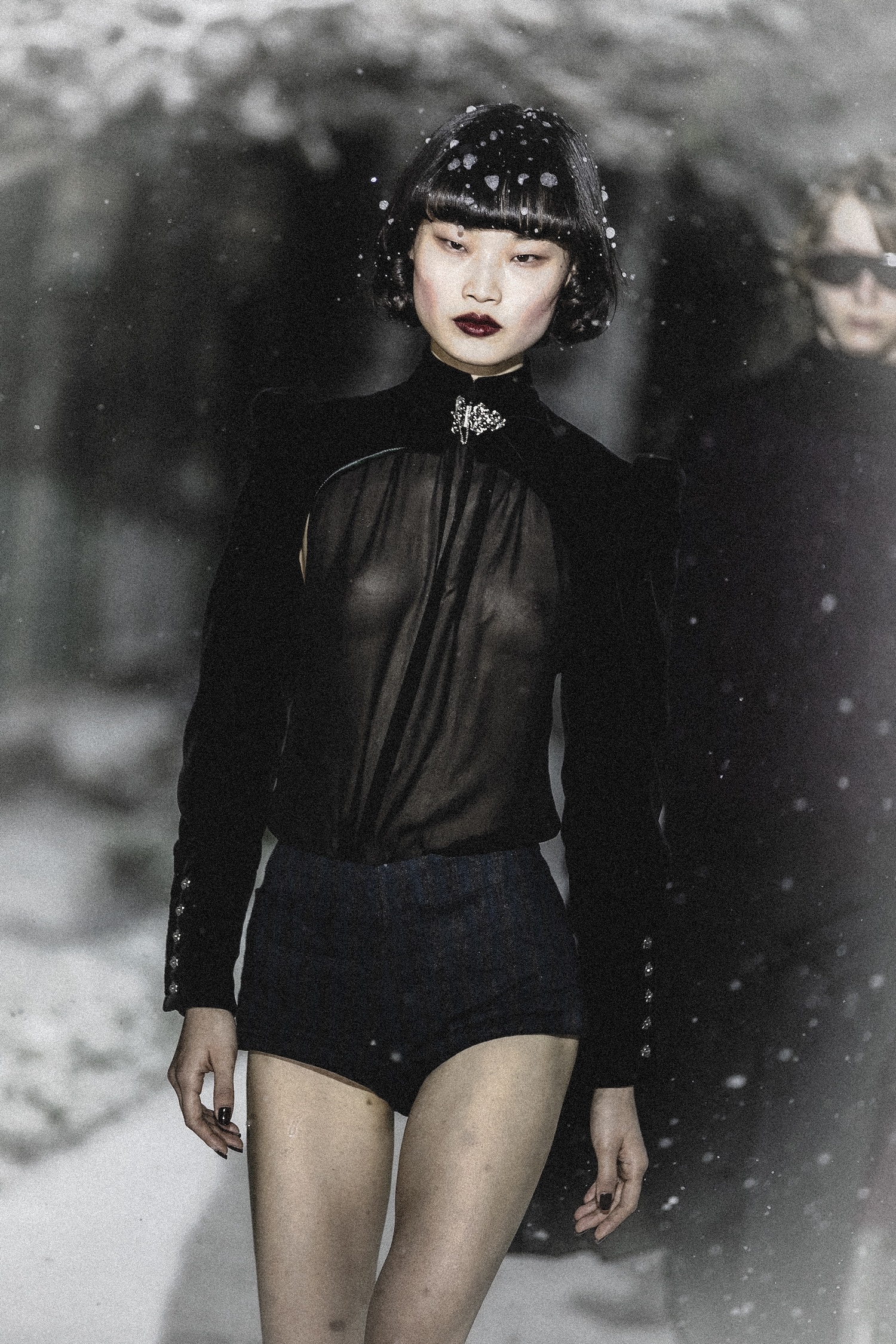
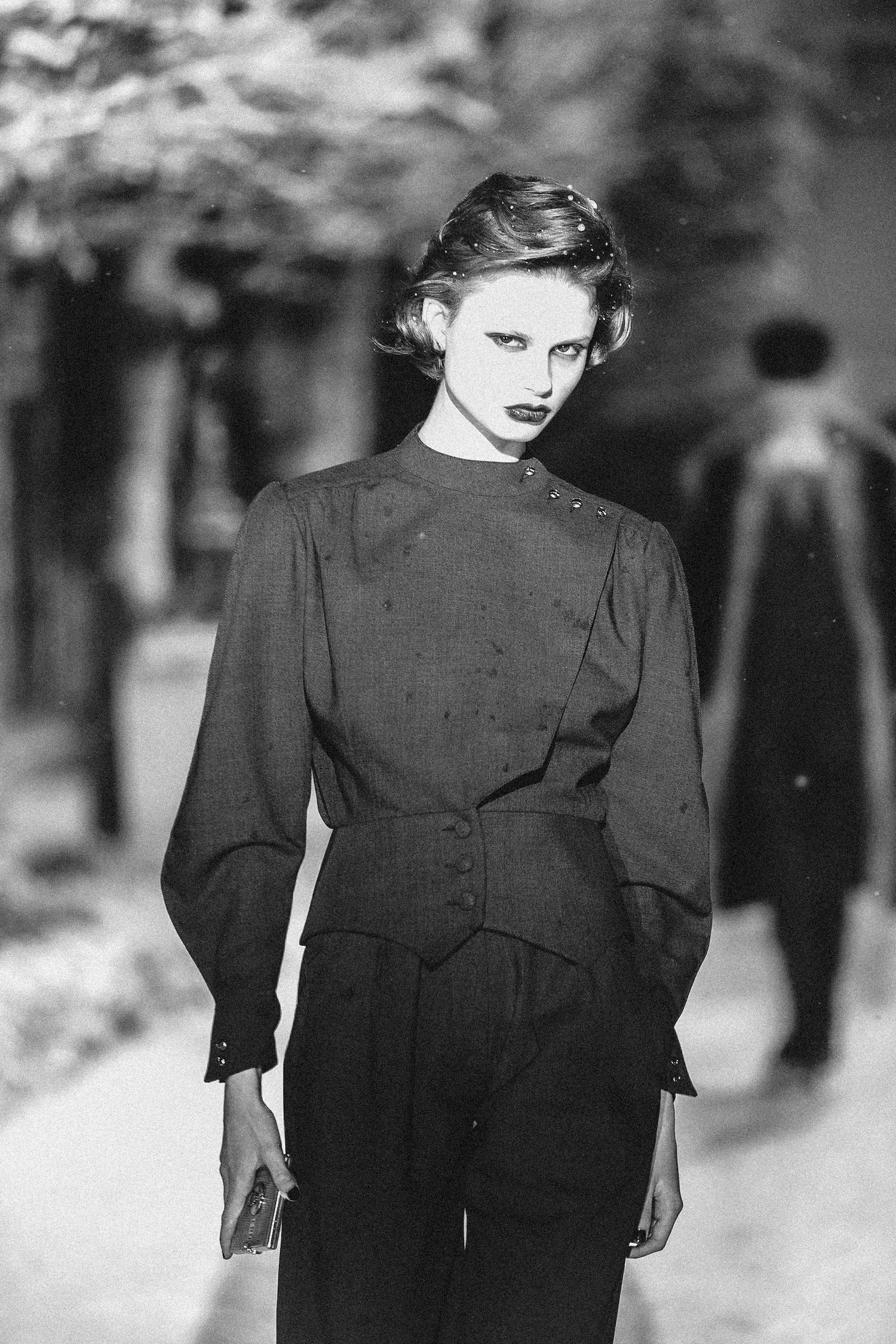
Enfants Riches Déprimés Fall/Winter 2026 show (Images courtesy of Louise Daniel)
Just as Paris was beginning to show its first hints of spring, ERD transformed the historic courtyard of the Maison de la Chimie into a landscape suspended in winter chaos. Controversy is part of the code of conduct expected at every ERD show. Among Levy’s many acts of artistic rebellion, we previously witnessed musicians locked inside cage boxes while playing haunting melodies during Spring/Summer 2025.
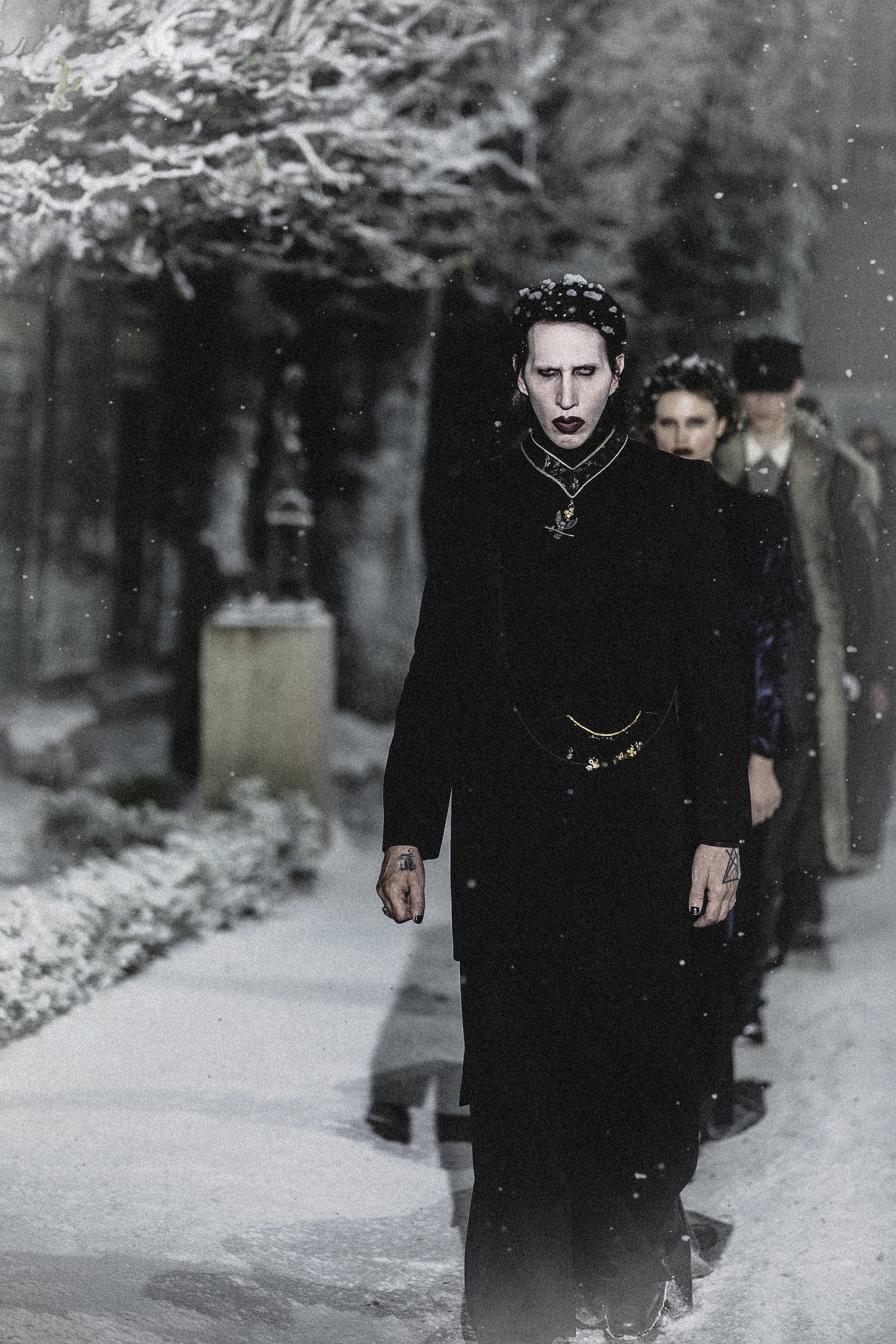
For Fall/Winter 2026, guests received an especially chilling welcome. A model in a white bikini, chained and gripping the faux snow, lay almost lifeless throughout the entire show. To heighten the spectacle, Marilyn Manson, carrying his own air of controversy, opened the runway in uncompromising black, wearing a 19th-century ecclesiastical coat adorned with a sternum necklace and a gold ceremonial chain.
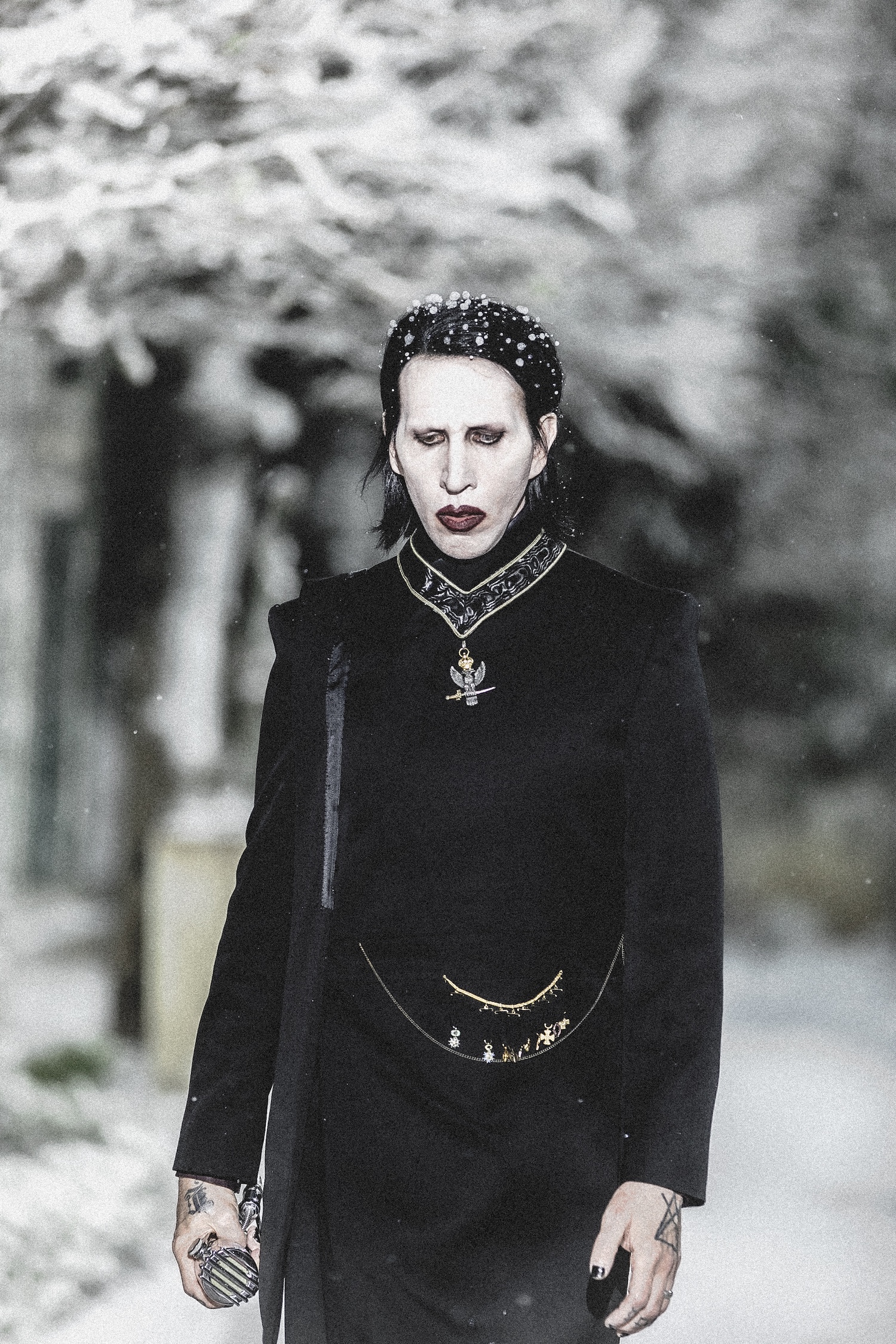
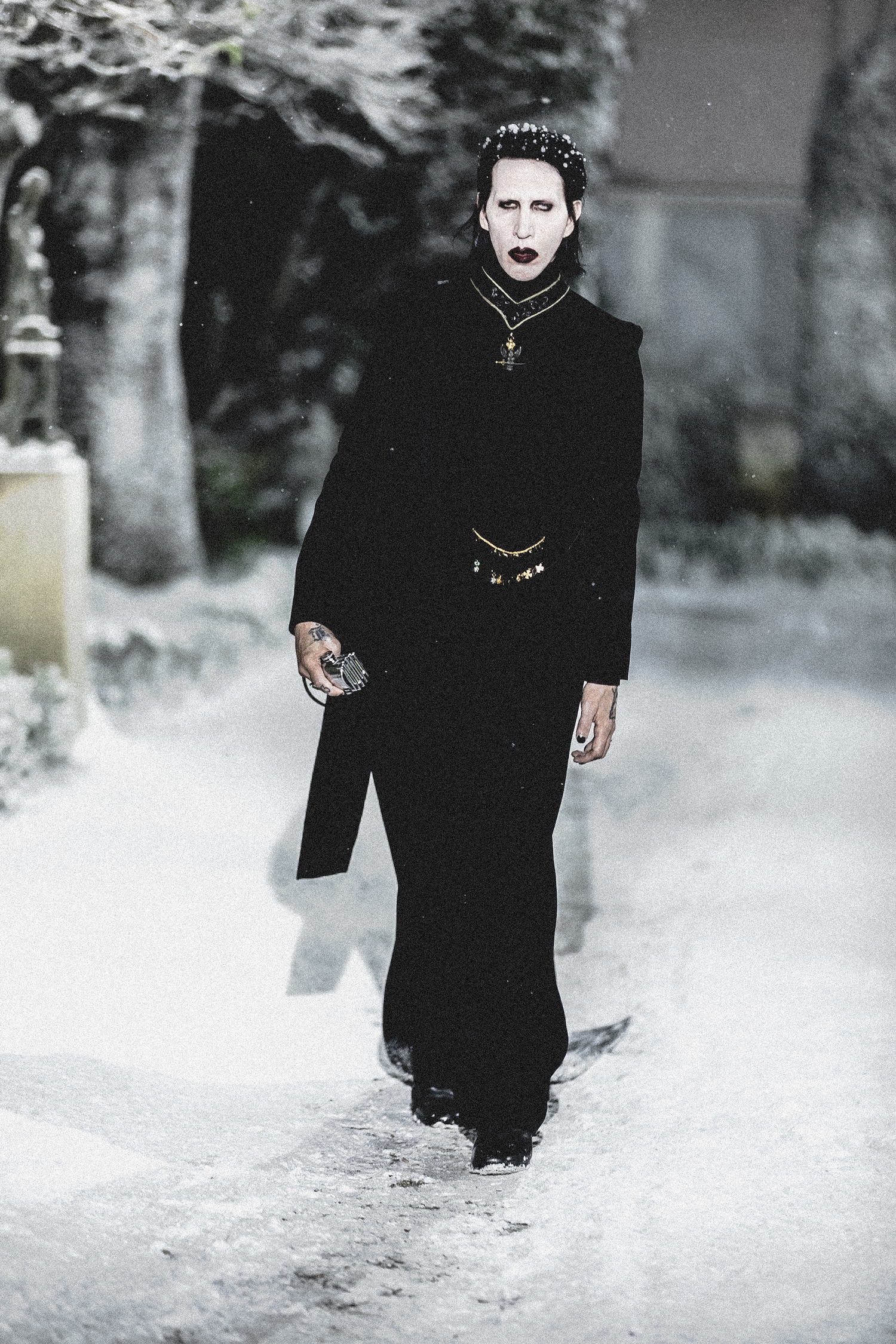
Controversial rock legend and cultural icon, Marilyn Manson, walks during the Enfants Riches Déprimés Fall/Winter 2026 show (Images courtesy of Louise Daniel)
This deliberate provocation has placed ERD firmly on the radar as one of Paris Fashion Week’s most polarizing shows. Beyond the contentiousness, Levy’s unyielding dedication to his world-building has garnered him a cult following of artists and provocateurs who embody a sense of bourgeois punk that cannot be found anywhere else.
His monastic attention to detail—from the collection’s hyper-specific iconography to the severe tailoring, disciplined casting, styling irregularities, and even the last scattered traces of snow on the runway—has allowed him to command this audience. At its core, Levy runs something close to a totalitarian fashion regime, where the characters are more than willing to surrender themselves to his uncompromising vision.
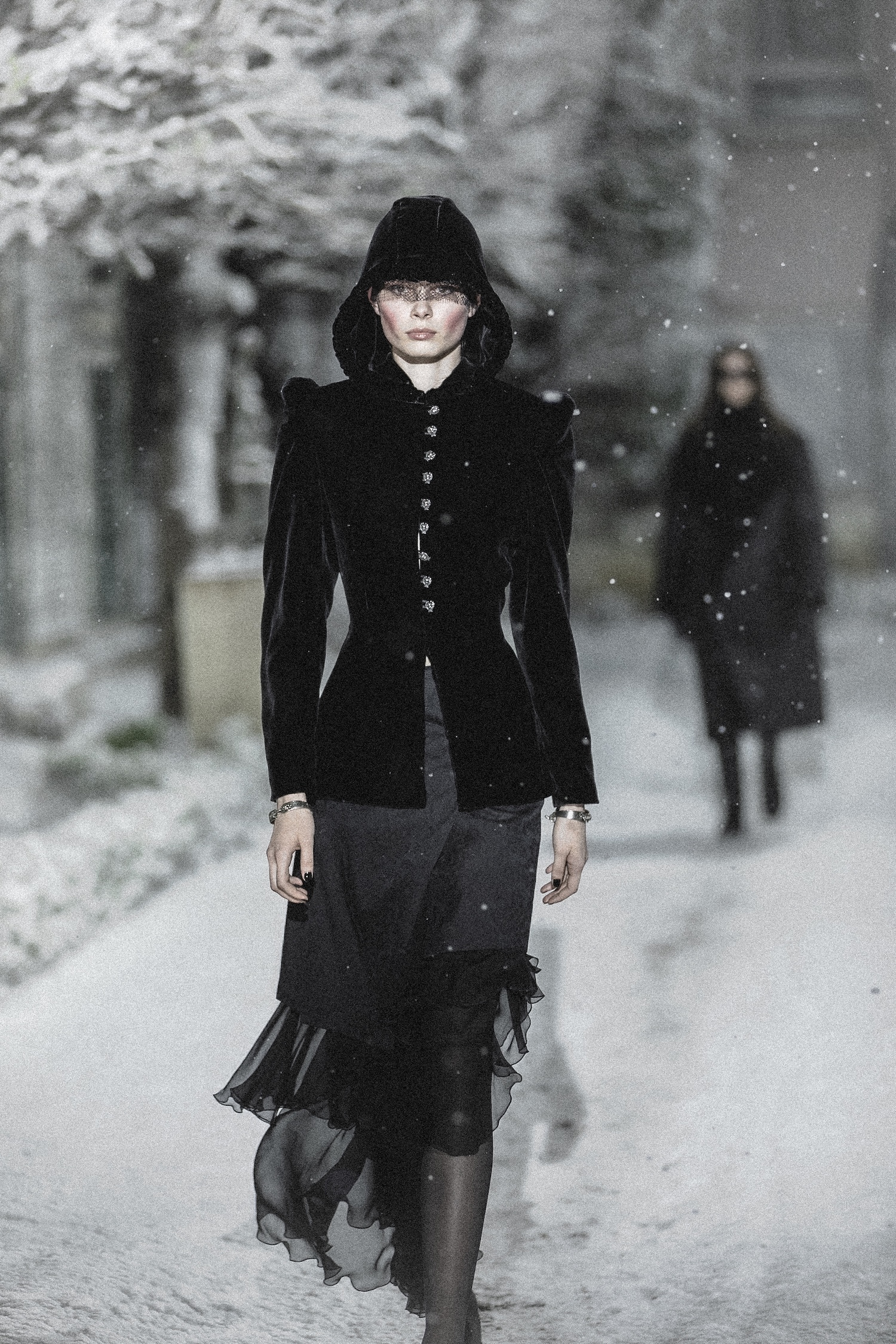
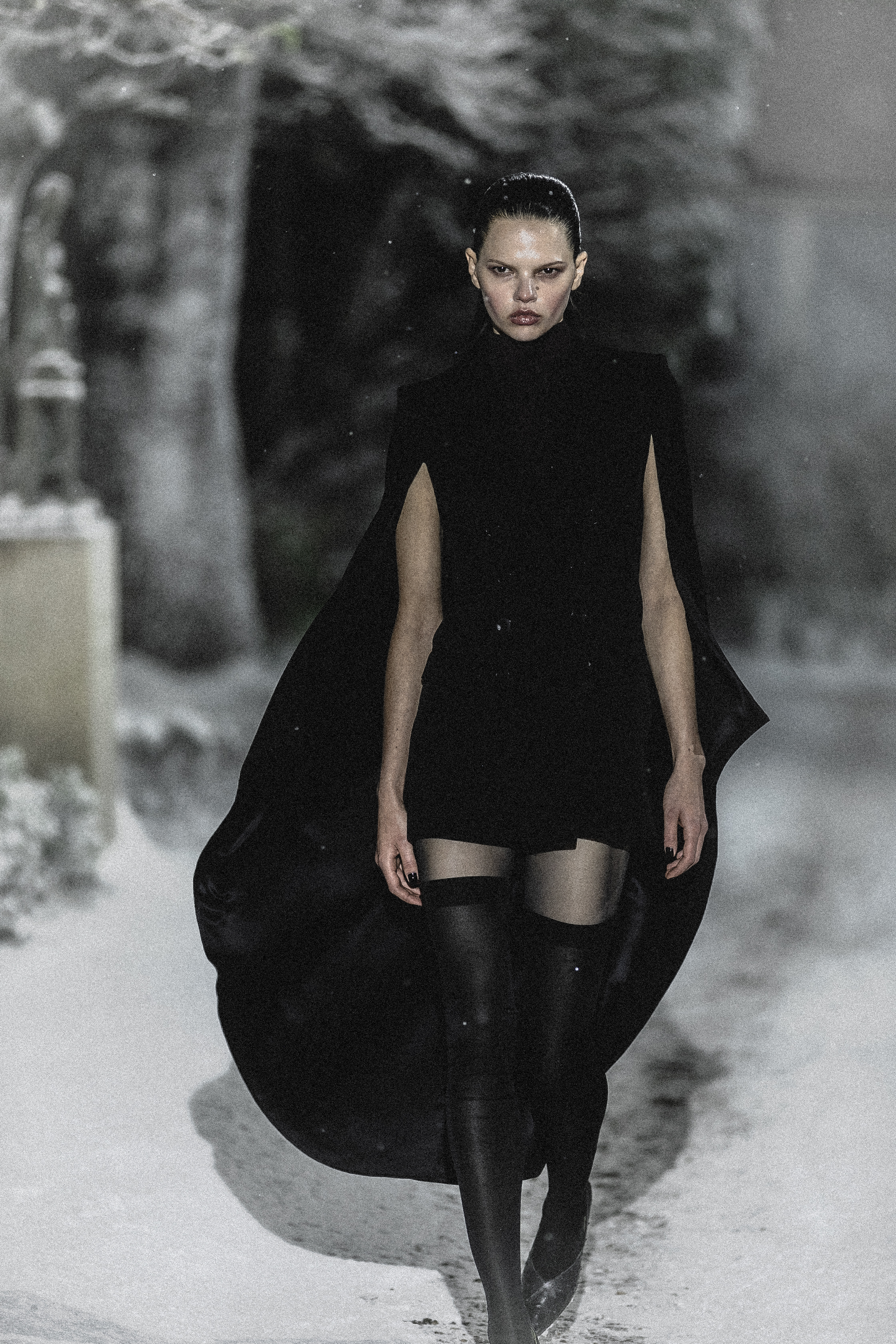
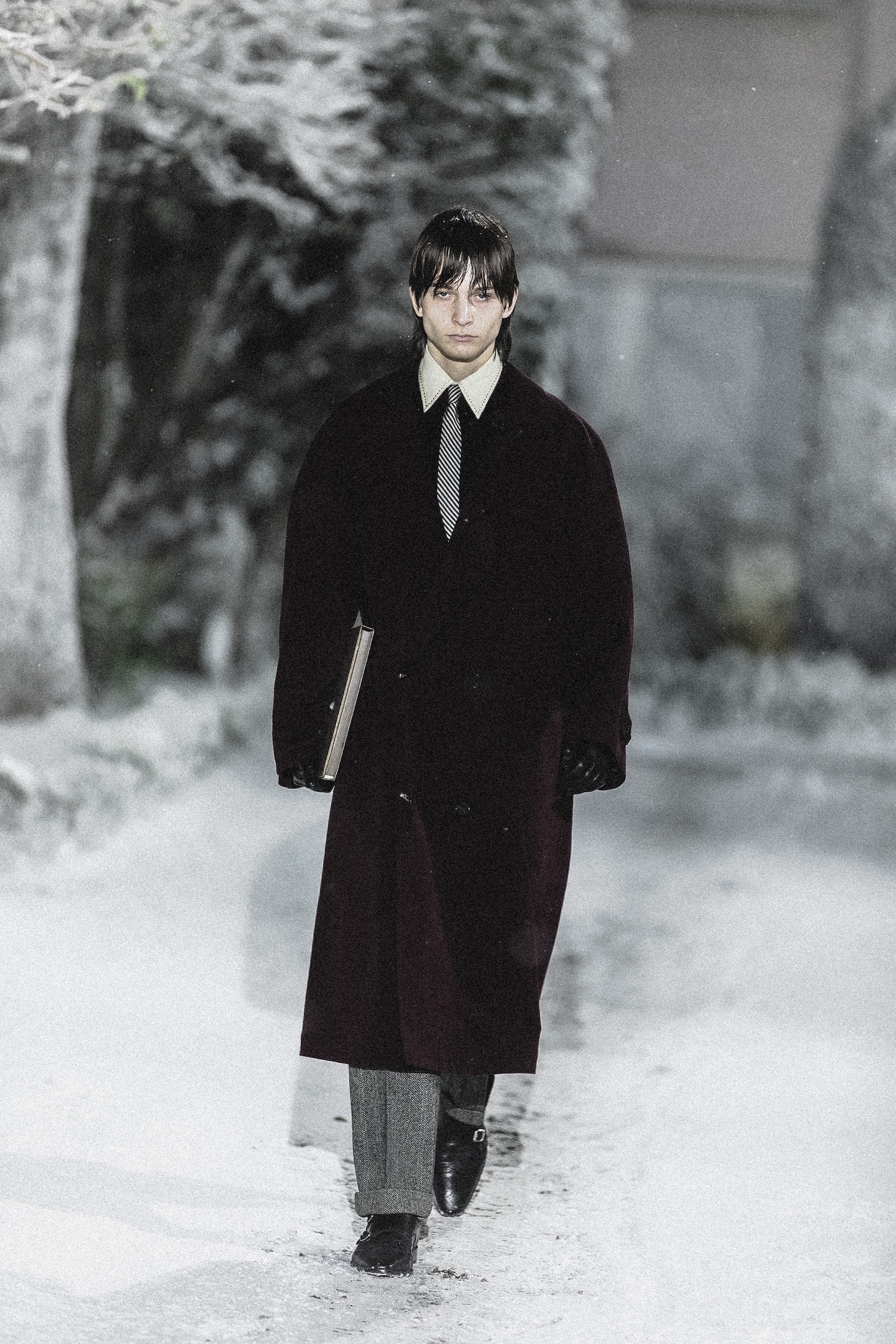
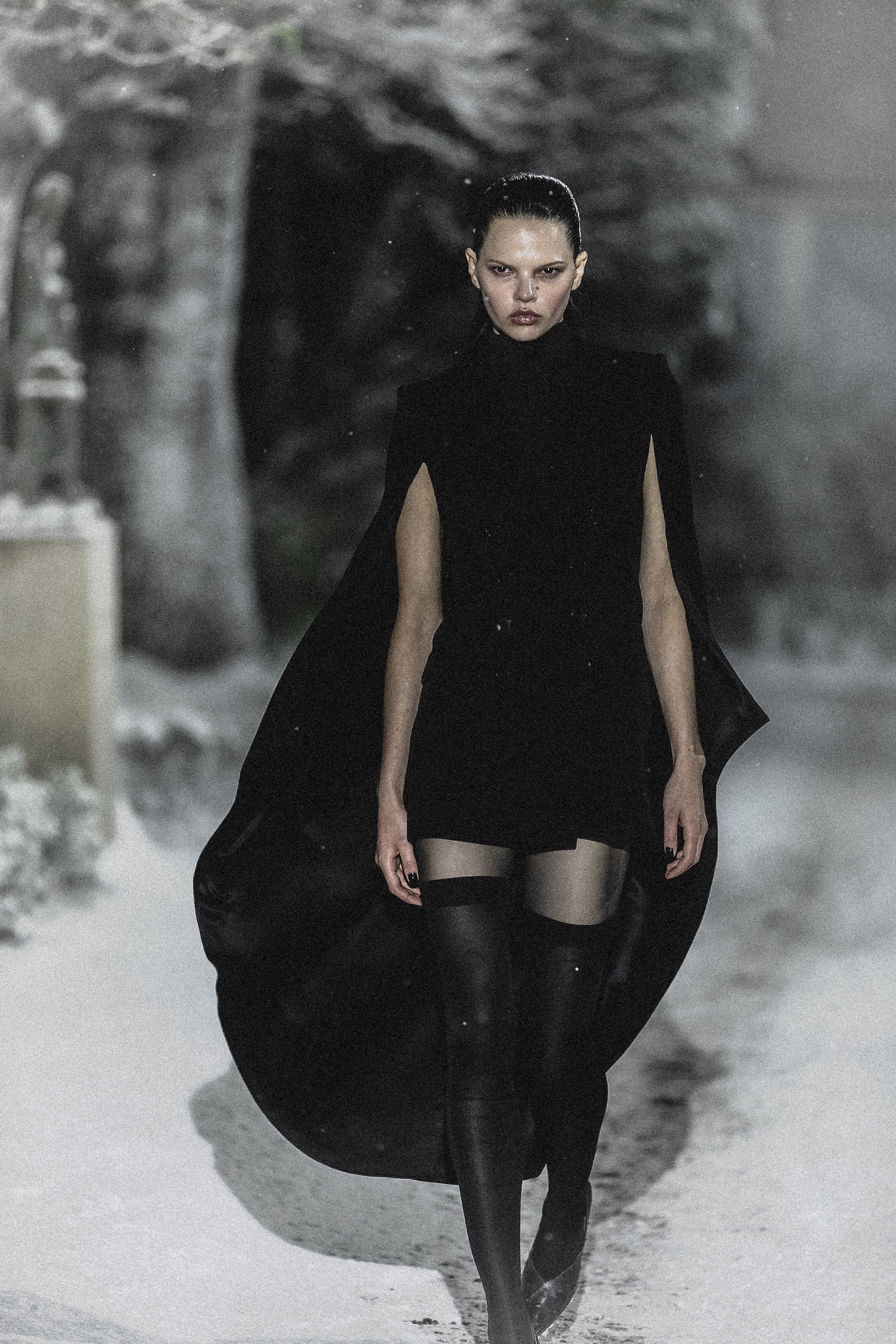
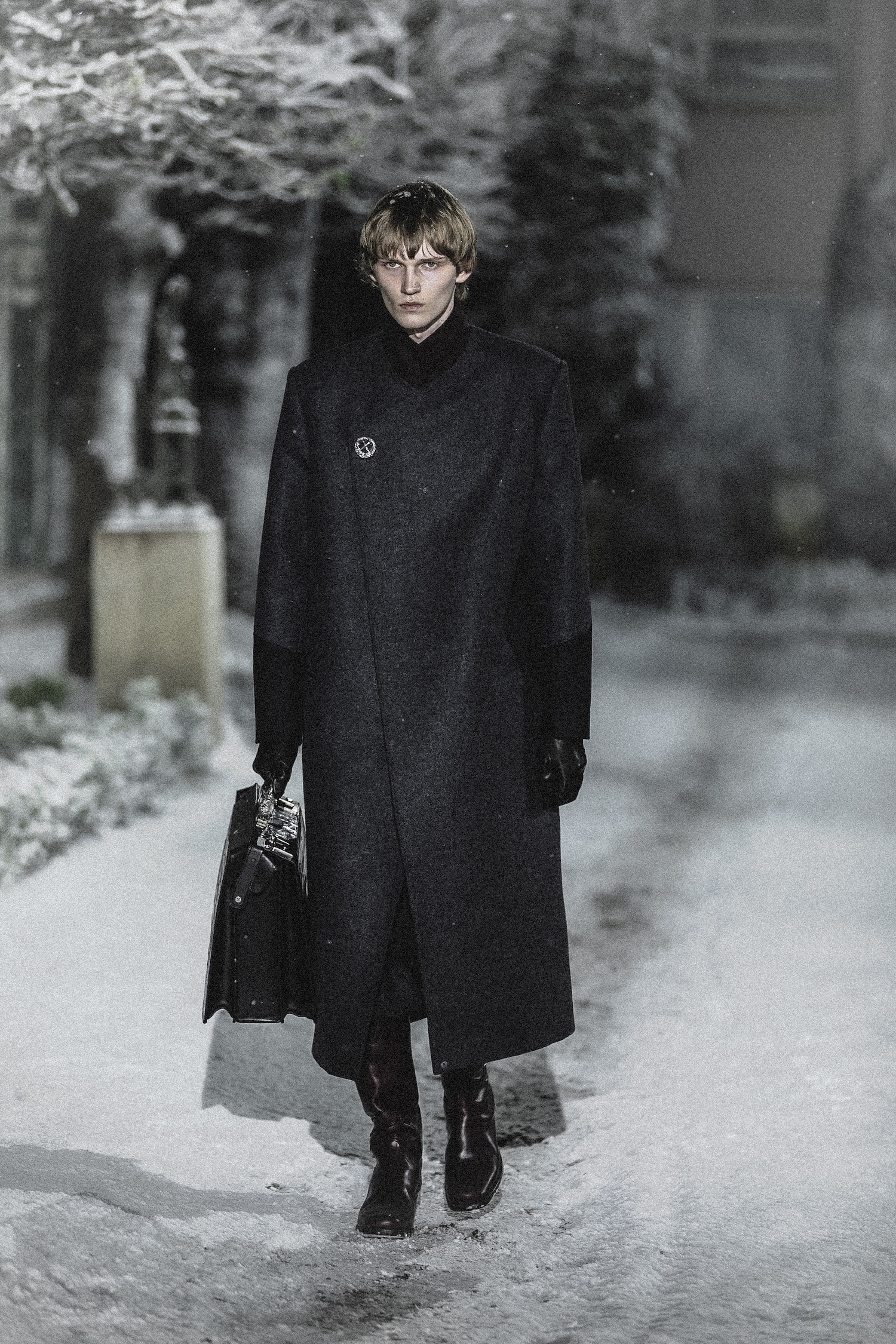
Enfants Riches Déprimés Fall/Winter 2026 show (Images courtesy of Louise Daniel)
The thirty-seven polished looks on the runway are proof of his evolving aesthetic authority, as if Levy himself is progressing into a more seasoned multi-hyphenate. Regardless, this ERD collection is densely layered. The cold atmosphere and regimented authority associated with military uniforms may hark back to a time when hope seemed bleak. Yet in Levy’s own language of rebellion, his tailoring and precise adjustments speak of struggle, while the choice of freedom—perhaps in the flowing fabrics and the fierce attitude of the models—remains unmistakably present. In the ERD universe, even the harshest winter is not meant to defeat us. Instead, it reminds us that we must power through the blizzard with intensity.