
Interview by Jesse Scott
For Ugo Charron, the world of scent is a way of life. The talented young Frenchman has been in love with perfume since his teenage years; now, as a perfumer for MANE (one of the world’s leading fragrance manufacturers), he is the nose behind signature scents for names such as Anthropologie, Victoria’s Secret, ROAN Fragrance, and Gentlemen’s Nod. Most recently he teamed up with Pierre Mergui, founder of revolutionary new niche perfumery, Première Peau, to create the Nuit Élastique perfume, a revelation in layers of jasmine, latex, and balsam. Following Nuit Élastique’s launch, Ugo found time to sit down with our Jesse Scott to talk about his creative process, nature vs. chemistry, and shaping his olfactory legacy.
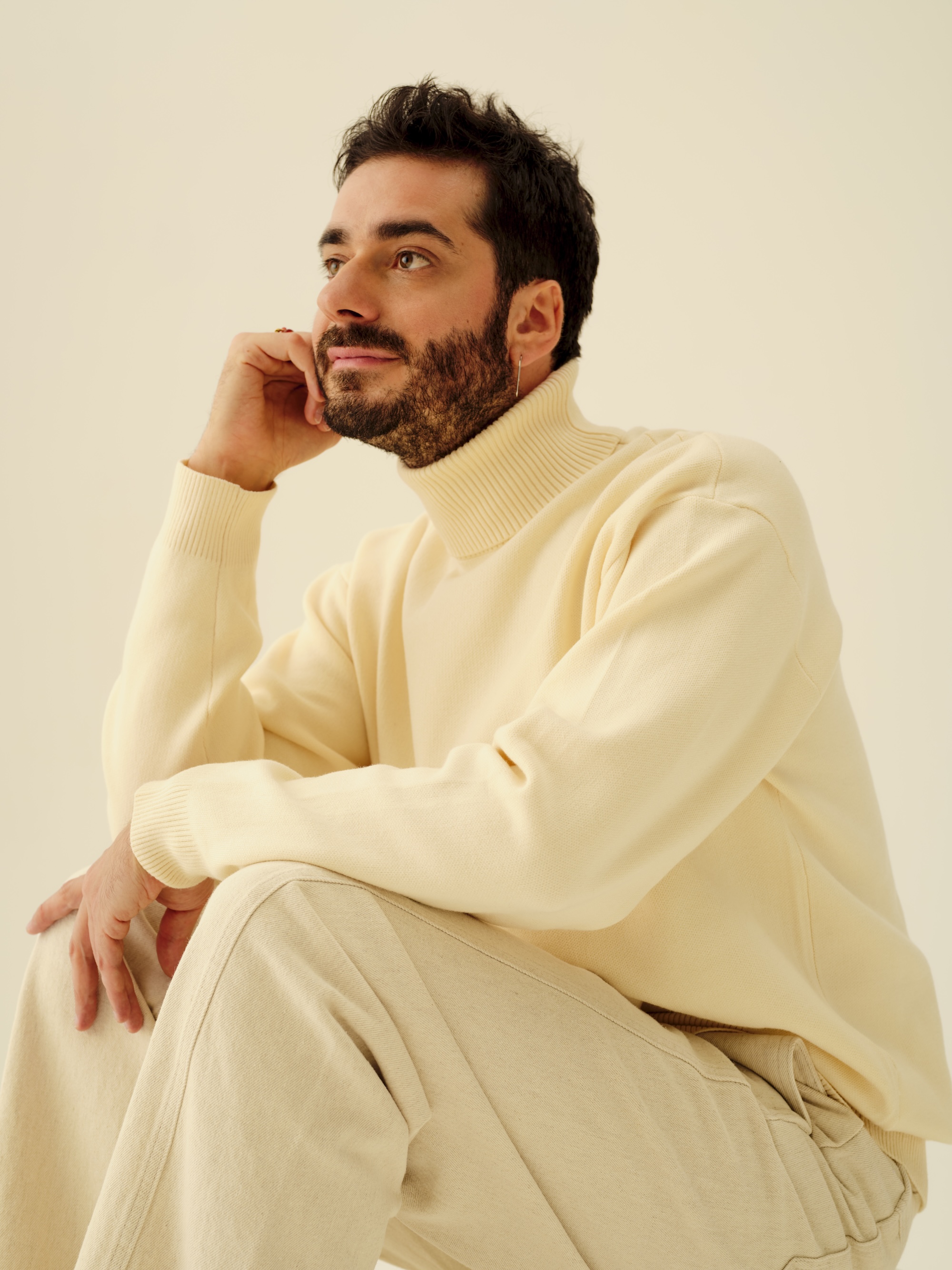
Ugo Charon speaks exclusively to Rain on his olfactory journey
JS: How did your olfactory journey begin? When did you know you wanted to be a perfumer?
UC: My olfactory journey began before I realized that the job of a perfumer existed. When I was thirteen or fourteen, I read the book Perfume: Story of a Murderer by Patrick Süskind. It’s the story of a perfumer who’s a bit crazy, and the way the author described the world of smells intrigued me because it was very precise. I realized that there’s a whole new dimension out there, became very curious about scents and how they are made, and ended up as a chemical engineer.
So, did you enter the perfume industry directly out of school?
I took a gap year during my studies to focus on perfume and went to Grasse in the south of France; there, I did an internship for six months at Parfumerie Galimard and knew this was my dream job. But as the perfume world is very small, and my parents are not from the industry, it was hard to break through. It took me about five or six years, with lots of meetings and interviews. There are not a lot of open positions; maybe once every two or three years the big five companies will train two to three apprentices to be their next generation perfumer.
To be clear, I didn’t go that route. I had the opportunity to train with Christopher Laudamiel, who went to IFF [one of the world’s leading scent design companies and schools] and then launched his own company ten to fifteen years ago. I worked with him for four years, focusing mainly on fine fragrances and ambient sensing. We were between New York and Berlin and it was quite intense, because there were only two or three in the company, but Christophe gave me a lot of freedom. Having a mentor is pretty rare; I learned a lot and it’s thanks to Christophe that I’m here with MANE right now.
Let’s talk about your creative process. When you begin to work on a perfume, do you begin from a specific inspiration like an emotion or a story?
It’s a bit of everything. It can begin with an idea from the director of the brand, which I then try to translate into olfactory form. Or, it can begin with a scent or combination of scents that I’ve been working with for years. Sometimes I know there is something interesting in one of my small creations but it hasn’t found a home yet; then I massage that creation to make it fit for a brand.
I create in two different ways: figurative and abstract. To give an example, when I created the perfume Dead Dinosaur for Snif [released in 2022], I used my figurative process. The idea was to capture a gasoline smell, so I began by going to a gas station. I wanted to work from the present, not from distant memory, because your memory can trick you and your recollection of a scent can be different from reality. Once at the gas station, I tried to open all of my senses and let synesthesia take over [the neurological phenomenon by which multiple sensory or cognitive pathways are simultaneously stimulated, thus causing us to correlate sounds, scents, colors, temperatures or tastes with each other].
The more details you have and the more things you feel, the more ingredients you can explore that you otherwise might have forgotten. With the gasoline, I asked 'is it cold or warm?' 'Would it have a pitched sound or more of a bass sound?' Kinetic touch is also very important: 'would it feel silky or would it feel rough?' For me, gasoline feels cold, so I generally used notes that feel cold rather than warm. It seems pitched, so I included ingredients that are very powerful from the top. And it feels rough, so I layered smoky notes. All of this is to say that the more you open your senses, the more precise you can be when you create.
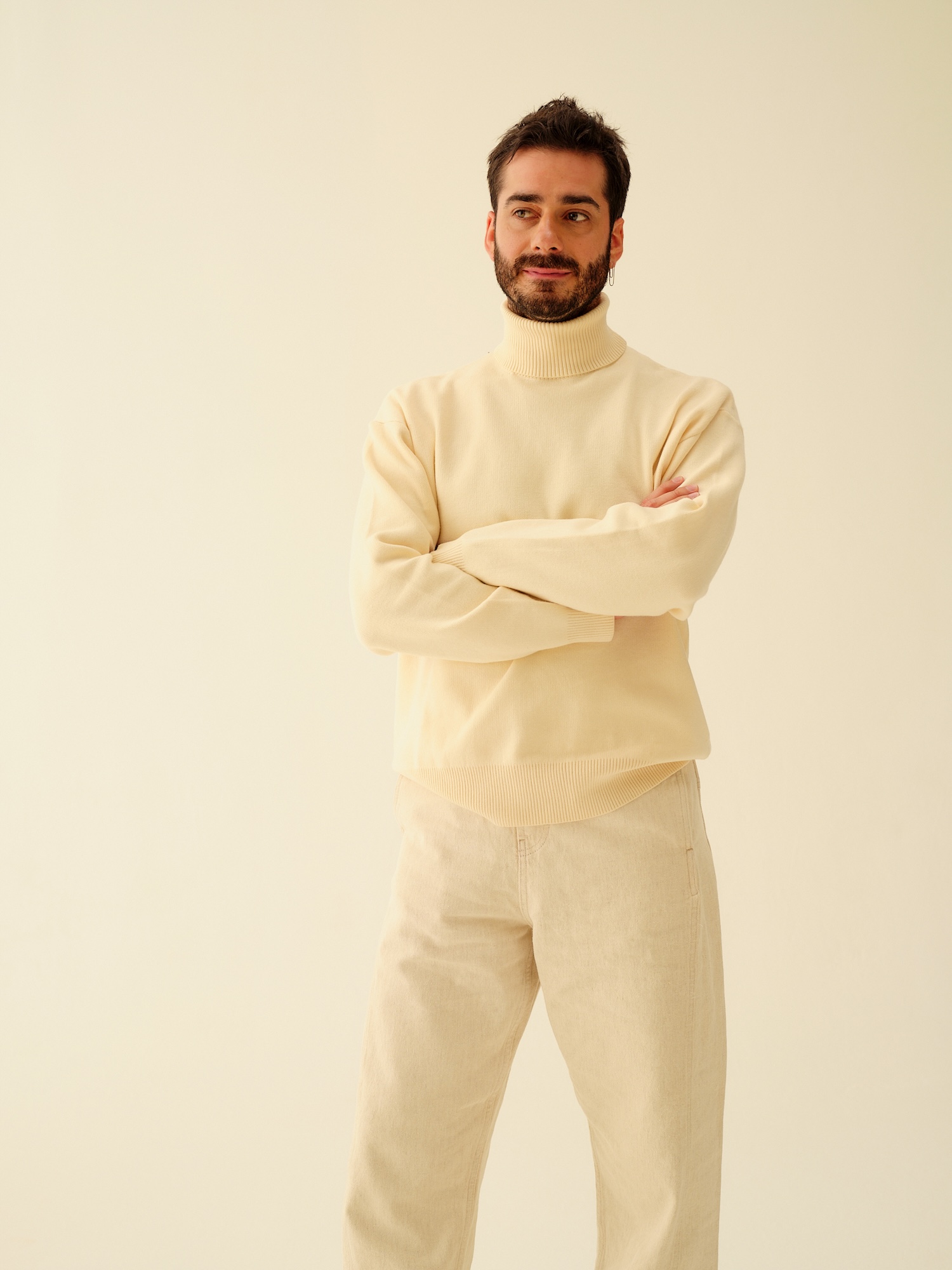
Ugo Charon discusses his distinct and some unconventional inspirations for his olfactory creations
Has your creative process changed over the years?
Digging back into my first creations is a very interesting exercise or me because I see how I used to formulate ideas. My ideas used to be a bit rawer but also a bit bolder. As you master your craft, you become more comfortable and take less risks, in a way, which can be dangerous. So, it’s important for me to go back to older formulas which may be unfinished or too raw but still have this raw energy inside of them.
Which do you think is more important when creating a perfume: intuition or scientific precision?
First you need the instinct. A good perfume will begin with three to ten ingredients that have a certain tension and energy. You find this with instinct, and then you use your experience to perfect it so that it projects and goes well on the skin. Perfume creation is science, but it’s basic science. It’s more of a memory game. We write formulas like you would a recipe with ten to fifteen ingredients; then we have to balance the proportions and use each ingredient as a tool, disregarding what it is like individually and asking what it brings to the overall creation.
Do you have an olfactory signature? What makes an Ugo Charron perfume unique?
That’s a really tough question. Personally, I love musks; a lot of salty notes, smoky notes, and icy notes, but I don’t create for myself; I create for other people. If I put my own taste at the forefront, I’m forgetting that my job is to give joy to people, so I need to be careful with that. And sometimes, to reach certain olfactory territories, you need to use scents that you don’t like.
Let’s talk about Prèmiere Peau. How did your collaboration with Pierre Mergui begin and what most excites you about this young brand?
I met Pierre in Paris and immediately saw that he is a perfectionist. His vision and his optimism made me fall in love with the brand. And he’s like a bulldozer; he will not stop until his vision has been executed!
With Prèmiere Peau, Pierre is working with different perfumers to create very specific scents. We talked about collaborating and had several ideas… in the end, we both love jasmine and he had tried to create something with jasmine with other perfumers but no one had been able to achieve what he wanted. So, I was very pleased to take on this challenge; I like the pressure. We created a fragrance with notes of latex, kalamata black olive, jasmine, and neo curry. Neo curry is a very particular ingredient, not as aromatic as cumin but has some of the same facets and a very strong projection. And Nuit Élastique [the Prèmiere Peau fragrance] is a very particular scent. It’s not for everyone, but I’m excited to see how it does.
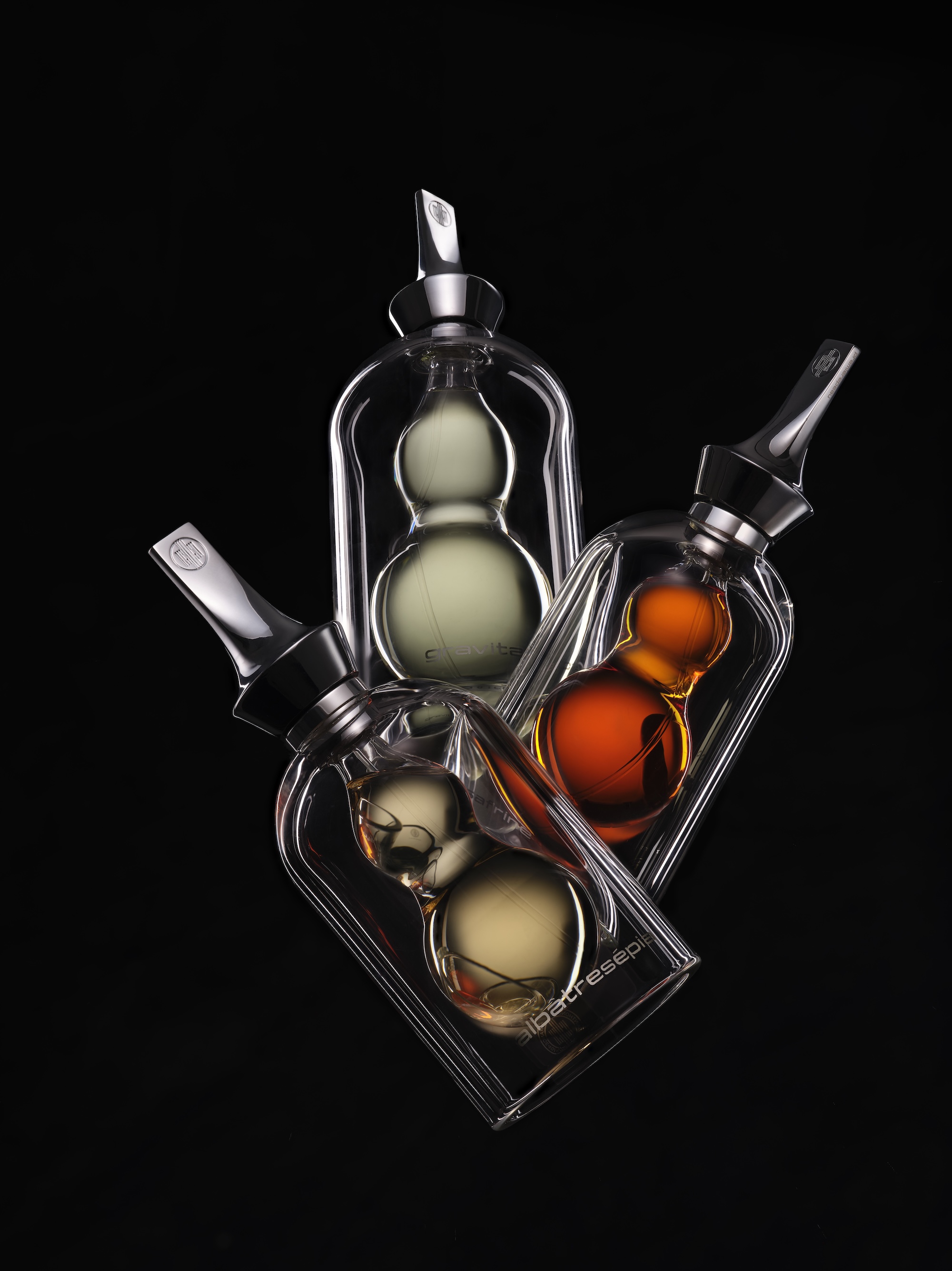
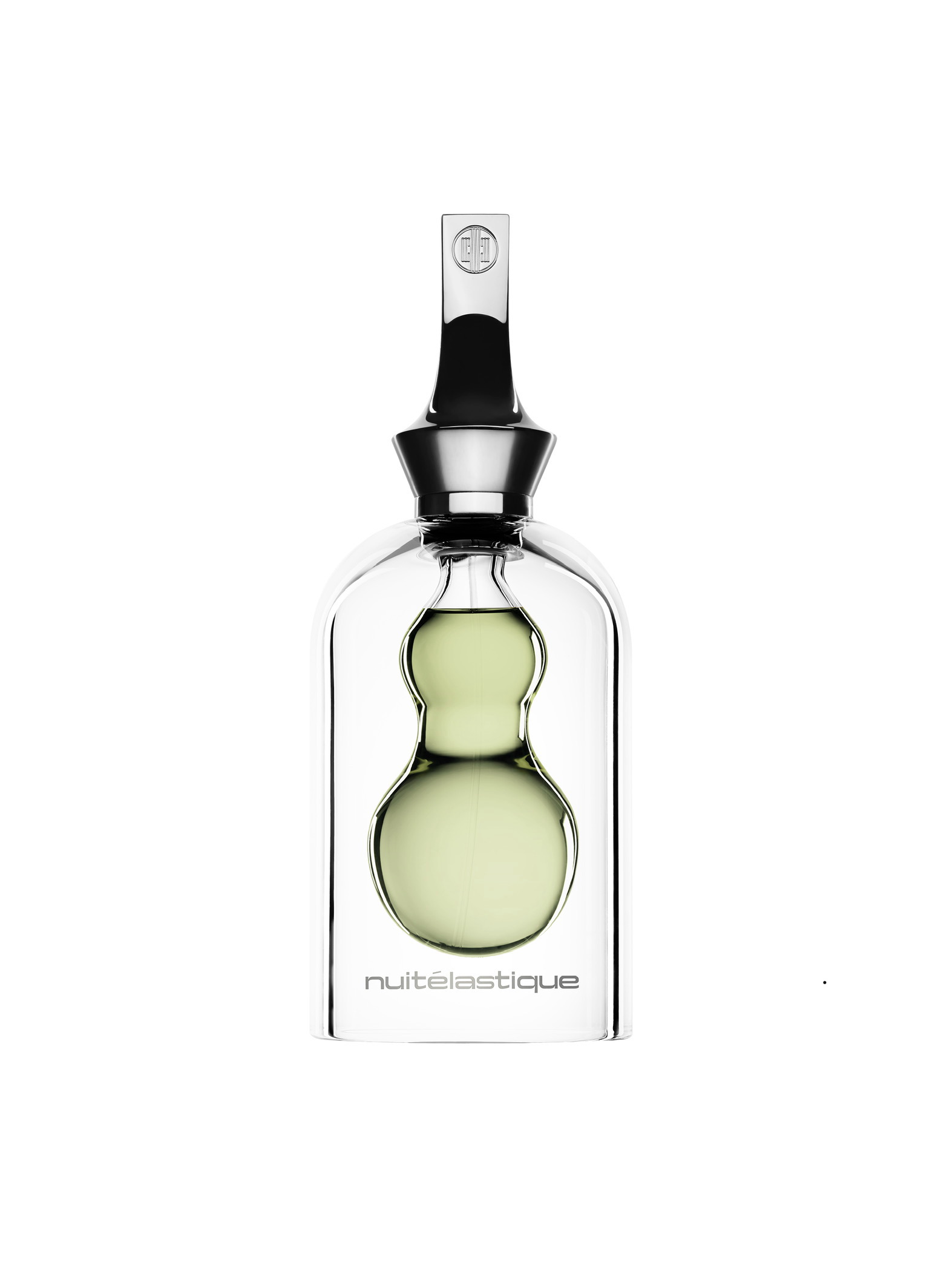
Pierre Mergui and Ugo Charron debut their first collaborative fragrance, 'Nuit Élastique' by Prèmiere Peau (Images courtesy of Prèmiere Peau)
Most perfume brands aim to seduce the masses. One of the things that differentiates Pierre and Prèmiere Peau is that they instead 'aim to express a perfumer’s singular voice?' What does this idea of a perfume as an author’s work, instead of as a generic image of seduction, mean to you?
I love this concept, and I would love to work on more projects like this. Prèmiere Peau gave me complete creative freedom… and at the same time it’s more pressure because you are putting yourself kind of naked out there. It’s rare these days to have that kind of confidence from the artistic director, where you can explore more olfactory territories than you can with more commercial perfuming. So, for me it was a big treat and I hope to work with Pierre again.
Tell me about the niche perfume industry in general. What changes have you observed over the past few years and what do you foresee in the future?
So, the niche perfume industry began around three years ago and has grown quickly. These days you have a lot of brands launching that claim to be niche but truly aren’t. Moving forward, I think that 5-10% of so-called niche brands will be truly niche, driving innovation and leveraging new ingredients. And I think that a lot of these brands will expand into the mist sector. Perfume bottles can be pretty expensive, for example $290 a bottle. So, by moving into mists, which could sell for $50-$70, a brand can become more accessible for other people without compromising their DNA. In terms of technology, you have more and more aqua perfume, or water-based perfume, but it’s tough to find stability with that so I don’t know if I can call it a trend.
Are there any common misconceptions about perfumers or fragrance that you would like to dispel? What else would you like our readers to know about how their favorite scents are created?
I’d like to talk about 'nature vs. chemistry' and dispel the perception that 'natural ingredients are automatically good and synthetic ingredients are automatically bad.' It’s much more complicated than that. Natural ingredients can be dangerous and cause damage to our bodies. You wouldn’t want to take a shot of lavender essence or some of the other pure ingredients we put in perfumes! And synthetic ingredients can actually help the environment. For example, if you’re working with only natural rose scents, you’re using extensive amounts of water. And if you’re cutting all of those roses, then someday the rose will disappear.
I also want people to know that it’s difficult to succeed as a perfumer. When I was a teenager dreaming of this job, I didn’t realize how intense the industry was; it’s not easy to get here and I’m working on twenty projects at a time. But it’s 200% worth it. To be able to create scents and give joy to people; I’m living my dream right now.
Finally, what emotions or ideas do you hope lingers with someone after they wear one of your perfumes? What, right now, is your olfactory legacy?
My niche perfumes and commercial perfumes are very different. With a very niche intellectual perfume, fewer people will be touched by it, but when they are touched by it, they will be touched very profoundly. I love that. On the opposite side, I also like to create perfumes that are more accessible and comprehensible because, even if it’s on the surface, you can touch more people.
If someone buys a perfume that I made, then in some small way it is like I will live with that person. I try to convey joy with my creations, and if a person feels that and is comfortable with the scent, that’s the best gift I can give. Ideally, if a person likes a perfume, it can give them an olfactory invisible shield, an aura. And it can also help them to travel through time, with different notes evolving or recalling personal memories.