By The Arts Editorial Team
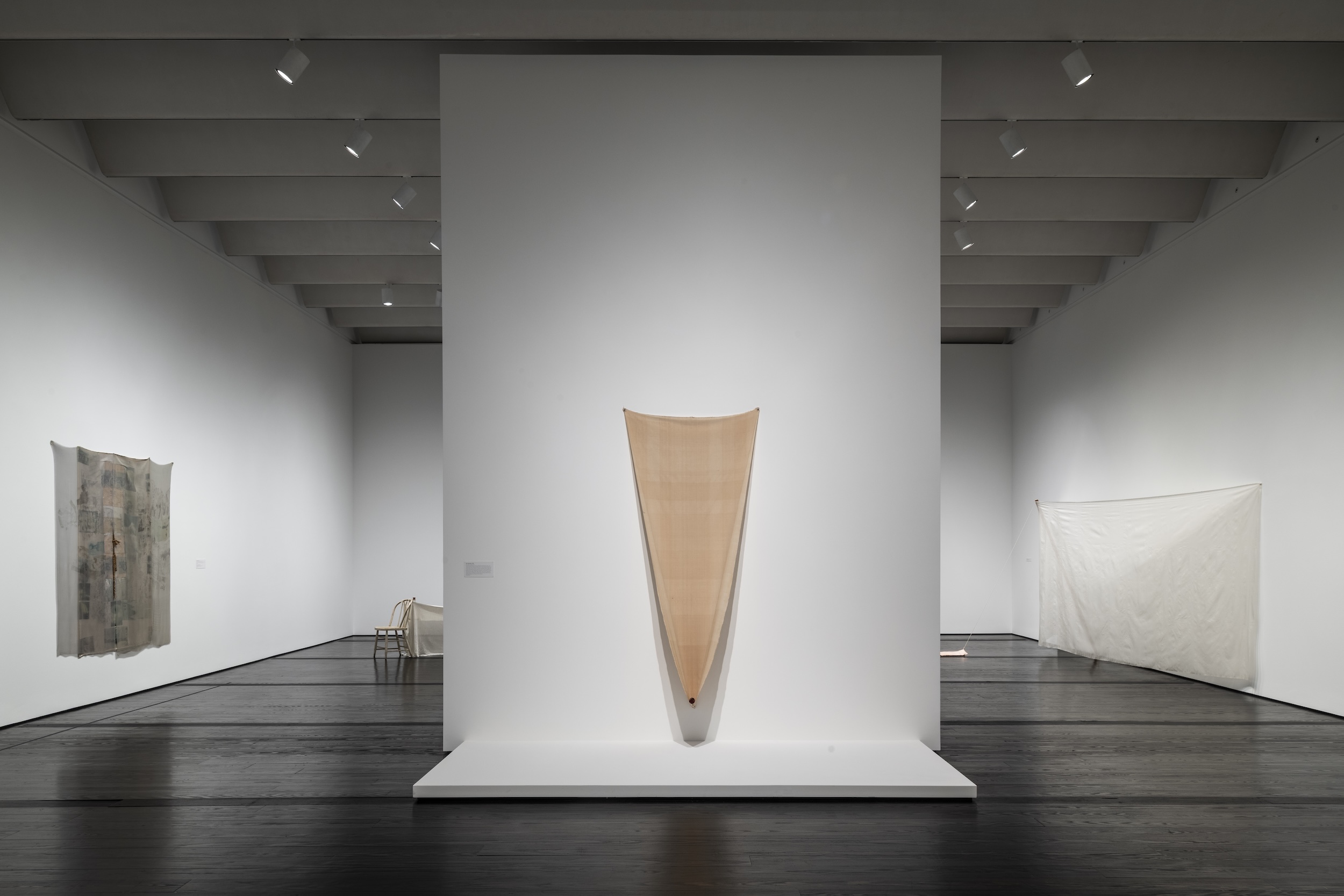
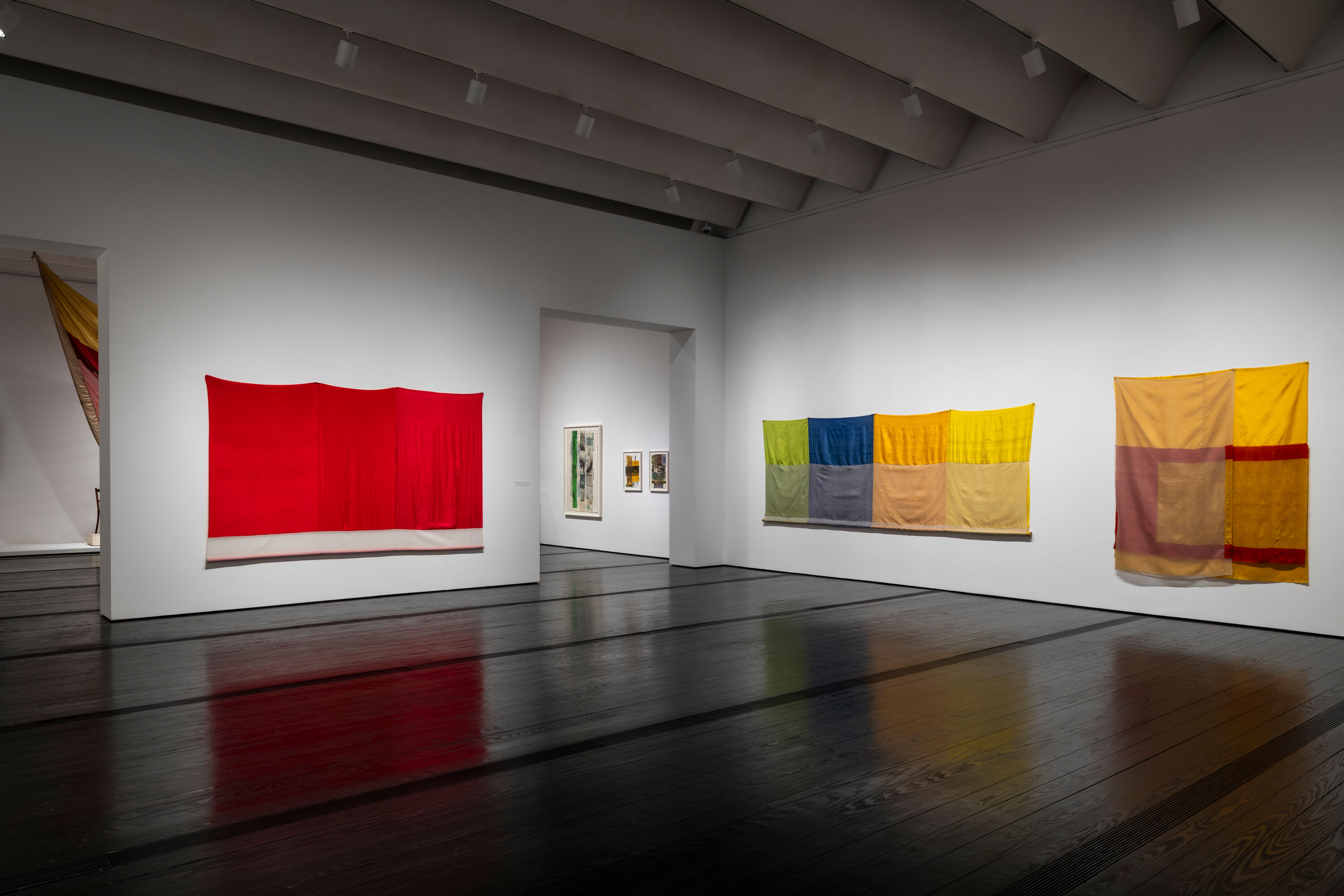
Marking the Centennial of Texas-born artist Robert Rauschenberg (1925-2008), Houston fine arts museum, The Menil Collection presents 'Robert Rauschenberg Fabric Works of the 1970s.' In collaboration with the Rauschenberg Foundation, the exhibition is the first museum survey of fabric works by the artist.
Describing the close affiliation of the museum with the artist, The Menil Collection's Director, Rebecca Rabinow, recounted, “Robert Rauschenberg was a close friend of the Menil. He first met the museum’s founders John and Dominique de Menil in the early 1960s. He attended the inauguration of the museum in 1987 and subsequently was the subject of several major exhibitions organized by the Menil’s curators. We are proud to continue this lineage and work with the Robert Rauschenberg Foundation to mark the centennial of the artist's birth, directing attention to an intriguing yet understudied facet of Rauschenberg’s oeuvre.”
Born in a small coastal town ninety miles east of Houston, Rauschenberg is highly regarded for his conceptual investigations of post-war American culture and thought. Through his innovative use of mixed materials and found objects, Rauschenberg challenged audiences with new forms and provocative iconography. By 1964, he had become celebrated in the press as the most important artist since Jackson Pollock.
As art's boundaries and mediums expanded still, the 1970s ushered in a new decade defined by fabric works, installations and performance works. It is during this critical period for art that Rauschenberg began to spend more time away from New York at his home in Captiva Island, Florida. It is in this coastal setting where Rauschenberg explored the nature of woven materials—how they held printed images, moved in the air, responded to gravity, and reflected color or light. The resulting sail-like structures, flexible and open, vivid, lend his work a reduction in form, invoking the lightness of air itself.
Michelle White, Senior Curator of The Menil Collection, expands: “This exhibition looks at Rauschenberg’s fascinating use of woven materials in the 1970s, which reflect his career-long interest in not only the intersection of art and life, for which the artist has become so well known, but his acumen with fabric stemming from his early interest in fashion design and deep understanding of how woven material can so beautifully relate to the body. As such, the artist’s utilization of fabric at this time, along with his engagement with the language of minimalism, provides a new way to consider the artist's work at mid-career, one that anticipates so many contemporary concerns in the decades to follow.”
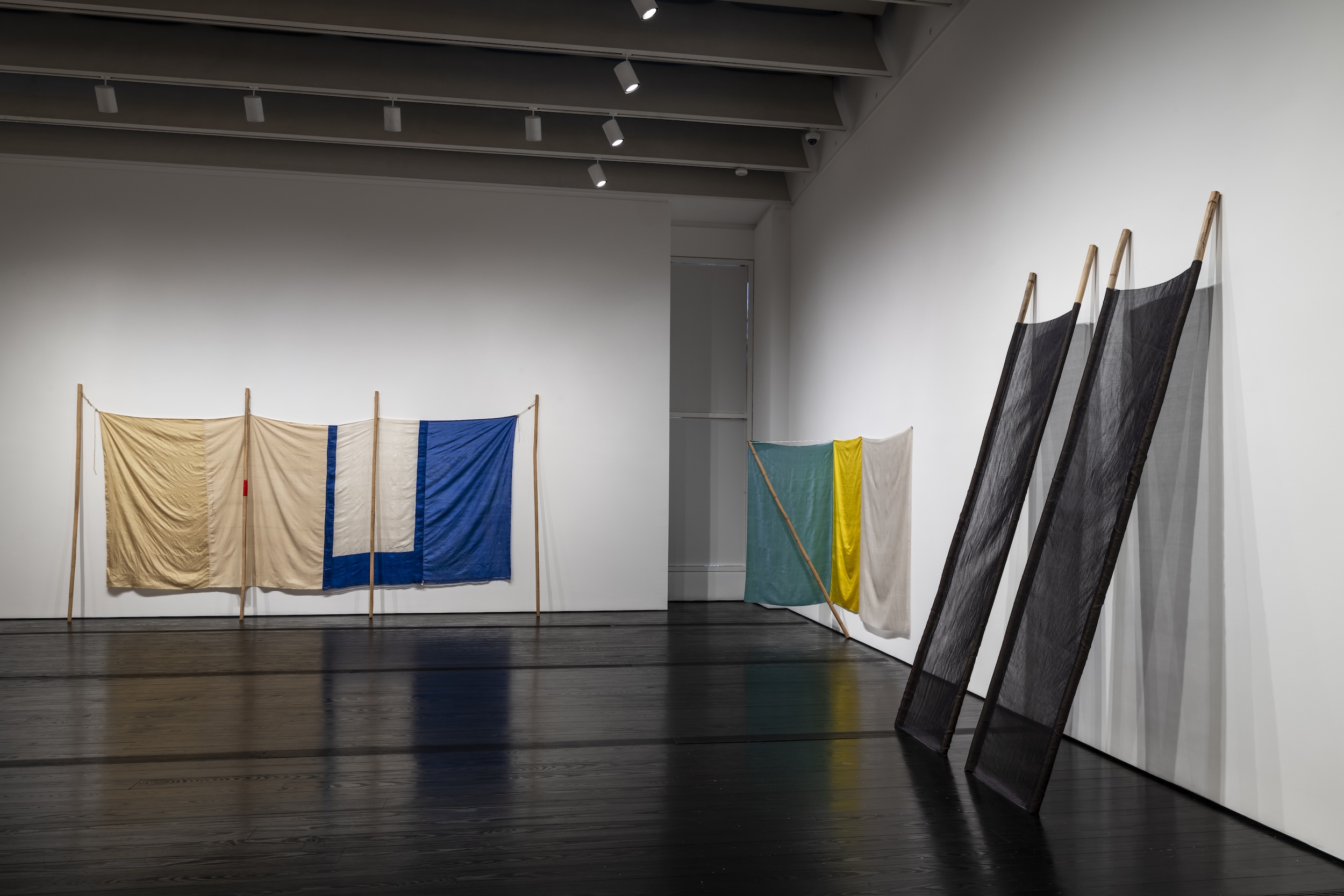
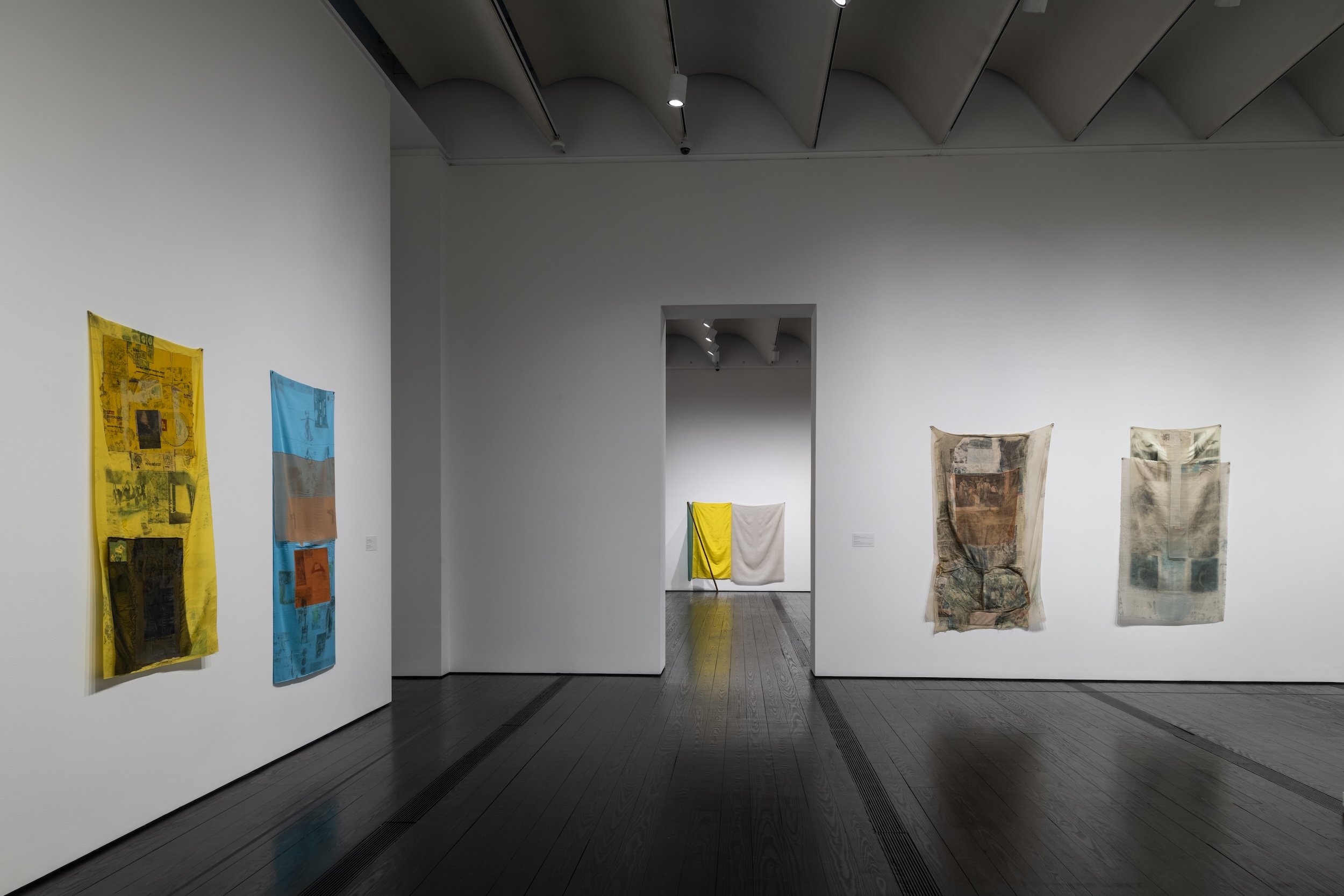
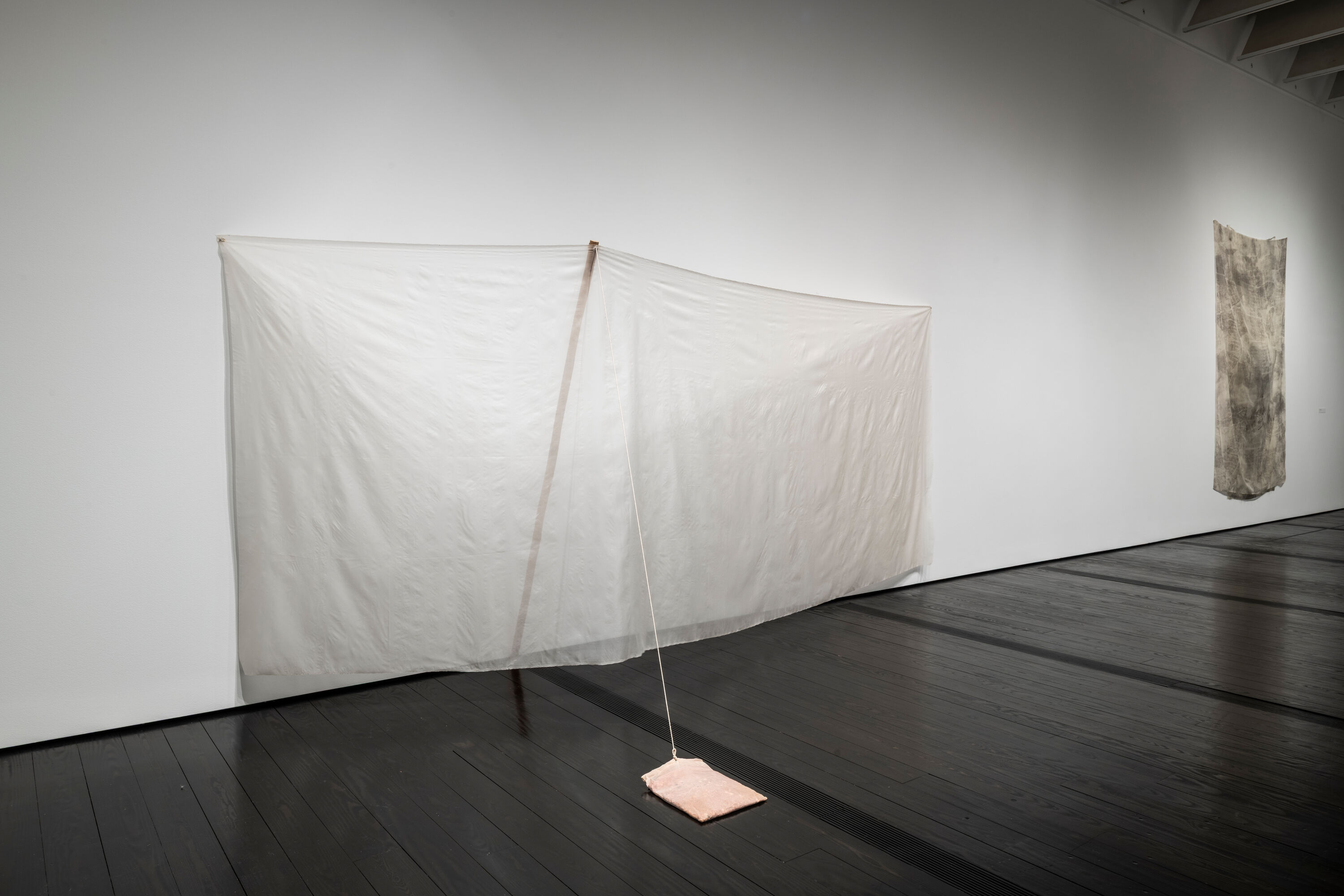
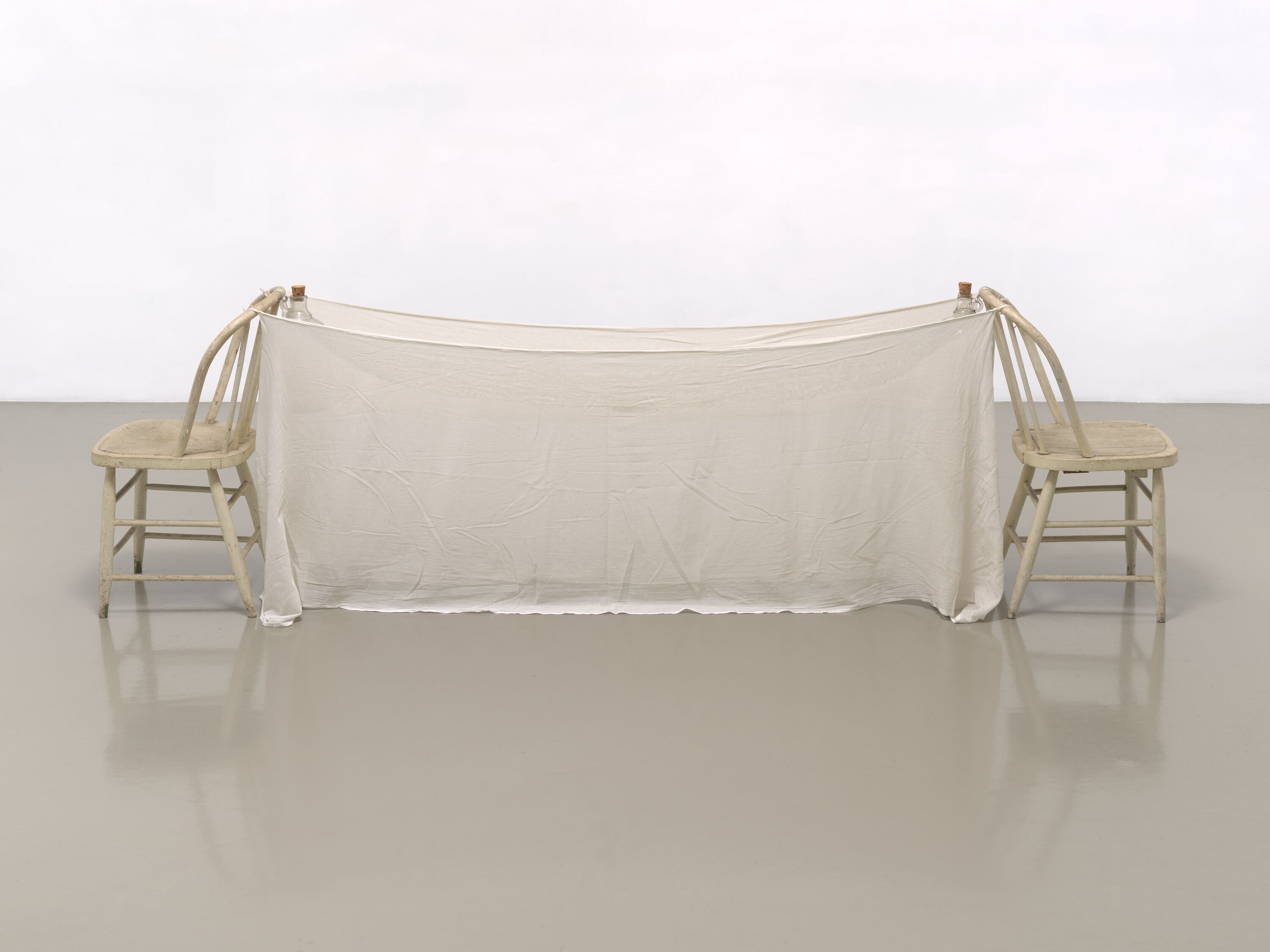
Rauschenberg continued to create his assemblages in his sculptural series, Venetians (1972-73) which he imparted with ephemerality, sensuality, and ambiguity. One 1973 work, "Sant’Agnese," is comprised of semi-transparent mosquito netting draped between two worn chairs and held in place by shoelaces, tactile materials conceived to protect and support the body. Shortly thereafter, Rauschenberg began employing printmaking to transfer images from printed media onto unstretched cloth in his series, Hoarfrosts (1974-76). Inspired by the lightness of frozen vegetation, these silks and sheers are suspended and sculpted into layered compositions. Owing as much to his residency in Ahmedabad, India, a city renown for textiles, as to his love of windsurfing, Rauschenberg's "Jammers" (1975-76) features swaths of brightly colored fabrics propped up by lightweight sticks.
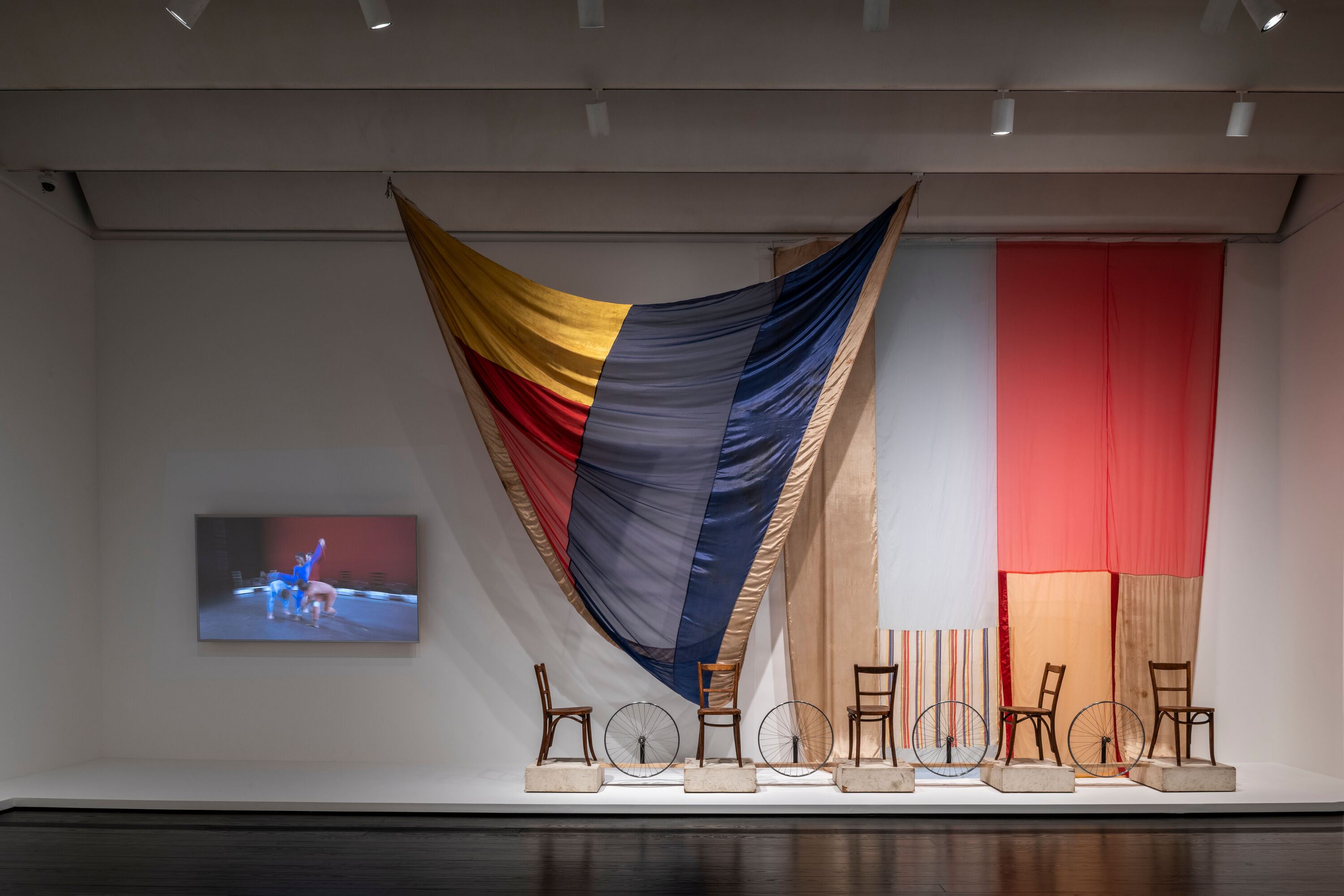
Two collaborations from the late 70s—Tantric Geography, a 1977 piece for Travelogue with musician John Cage and choreographer Merce Cunningham, and a hypnotic fabric display for a dance set and performance by Viola Farber. These installation works represent the rapid development and exploration of artistic practices in the late-70s.
Describing this groundbreaking exhibit's impact, Executive Director of the Robert Rauschenberg Foundation, Courtney J. Martin, reflects: “We are honored to partner with the Menil Collection on this landmark exhibition during Rauschenberg’s Centennial year. This is more than a celebration—it is an invitation to rediscover Rauschenberg through a new lens, as Centennial exhibitions across the globe illuminate the depth and diversity of his transdisciplinary vision. At the Menil, that spirit comes alive in the first museum survey of his radical work with fabric—a body of art that reveals his deep engagement with materiality, movement, and light. We are especially proud to present this vital aspect of his work in Texas—a place that remained an enduring touchstone throughout his life and career.”
'Robert Rauschenberg Fabric Works of the 1970s' is on view through March 1, 2026.
1533 Sul Ross Street, Houston, Texas
Installation view of 'Robert Rauschenberg: Fabric Works of the 1970s,' at The Menil Collection in Houston (Images courtesy The Menil Collection)