
By Louise Daniel
Robert Wun demonstrates that what makes a remarkable couturier is not simply the ability to construct, but to question, philosophize and dream. Presented at the Dôme de Paris, his Fall 2026 Couture collection, Childsplay, was his fantastical proposition yet. Styled by Patti Wilson, with music by Eric Liu, hair by Ali Pirzadeh and make-up by Valentina Li, the show invited us to perceive couture through the innocent eyes of childhood.
Wun’s signatures remain unmistakable: sharpened shoulders, elongated gloves, claw-like fingers, anatomical embroideries and haunting silhouettes. Yet he never allows these codes to become repetitive. They form a language that he continuously dismantles and reconstructs. Wun feels less like a dressmaker than a philosopher whose medium happens to be couture. “What is the opposite of all the weight and seriousness we carry?” he asks in the collection notes. Childsplay emerged from this introspection: a desire to move beyond the emotional gravity of his world without abandoning its integrity. The collection offered a return to curiosity—the belief that something else might still be possible.
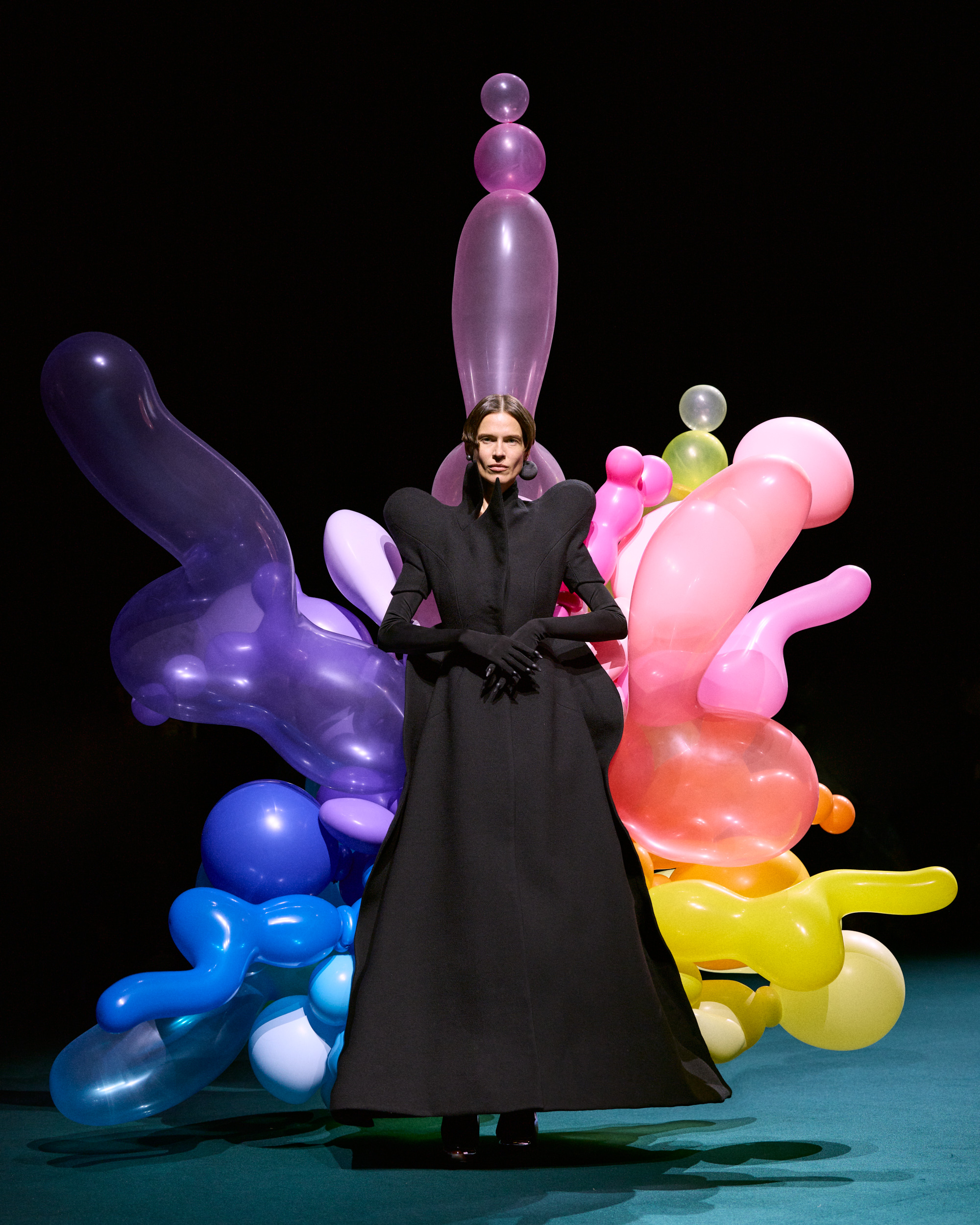
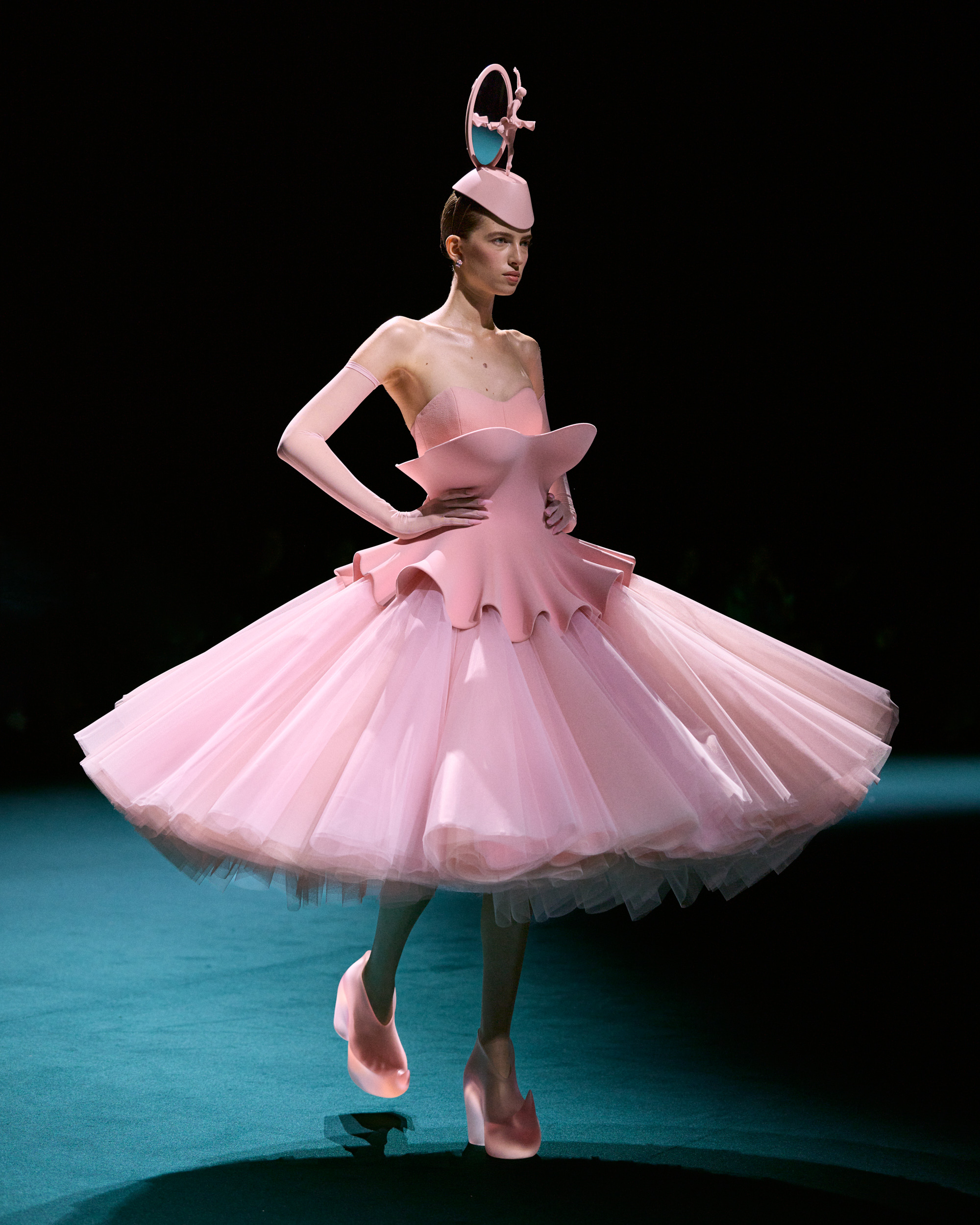
Robert Wun Couture Fall 2026: Looks 25, 13. Courtesy of Robert Wun.
As children, we were taught about life through stories. We looked to their characters to understand beauty, danger and transformation. Wun revisited that period through a timeline of growing up—from the child as plain paper, to being colored, shaped and formed. It was a primal reset: clothing approached from a clean slate and couture examined through pure curiosity. Across 25 looks, the collection unfolded as a concise narrative. The opening looks served as blank canvases. A white T-shirt was expanded into the architecture of a ball gown, complete with clawed gloves, a pointed party hat and a small rabbit. It was followed by an oversized white ensemble with a scarf-like headpiece transformed into a helmet. Both were covered in multicolored embroidered splashes, like a child’s first encounter with paint.
From there, Wun introduced color through its most elementary language. Red, blue and yellow appeared in succession, recalling the primary shades through which children first understand the visual world. A red mermaid gown was punctuated by spherical forms; a blue ensemble reduced the body into sharp planes beneath a headpiece resembling an open book; and a chartreuse gown flowed beneath a paper-plane-like structure. Basic colors and shapes were translated through couture technique, allowing the collection to move from being colored to being formed.
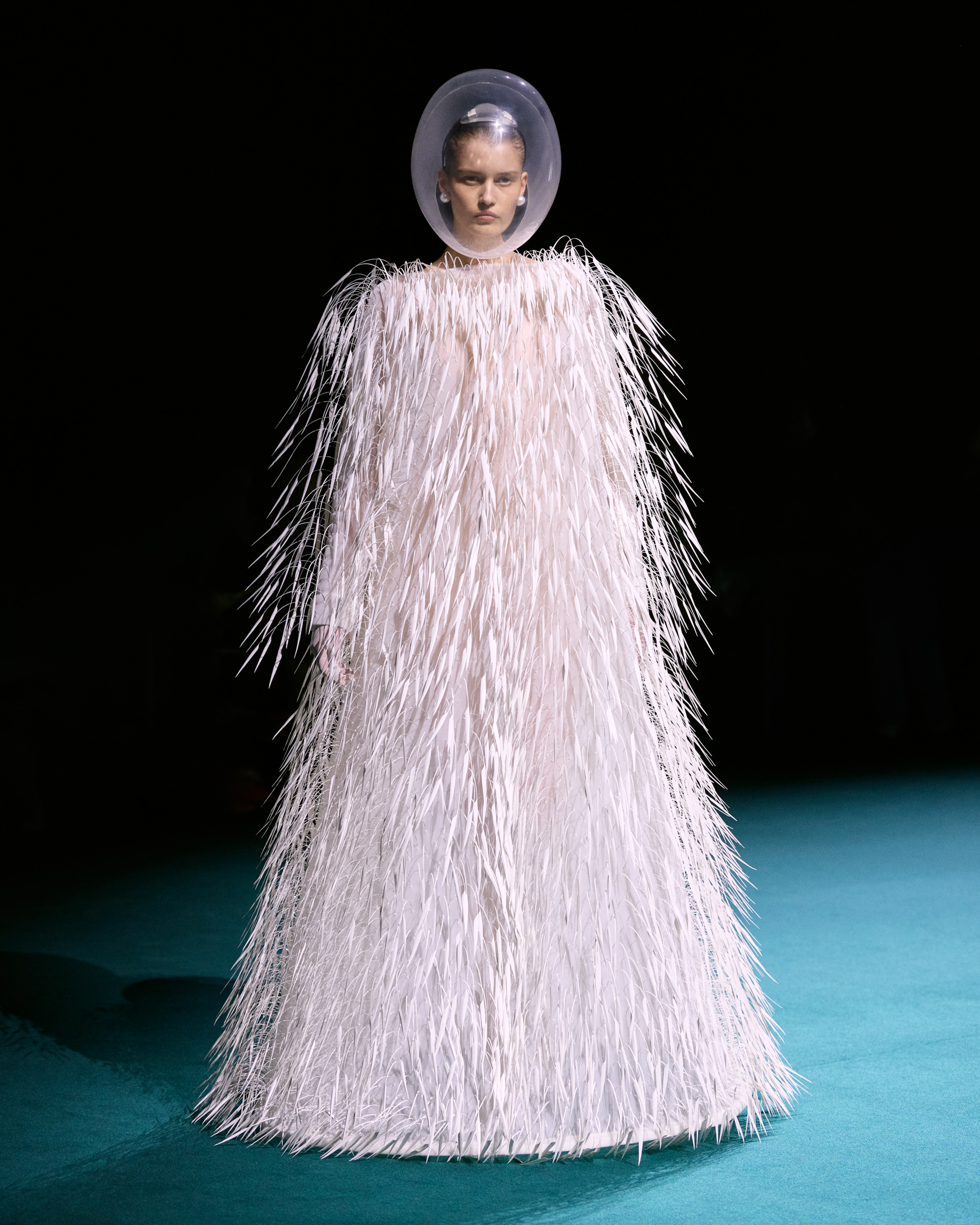
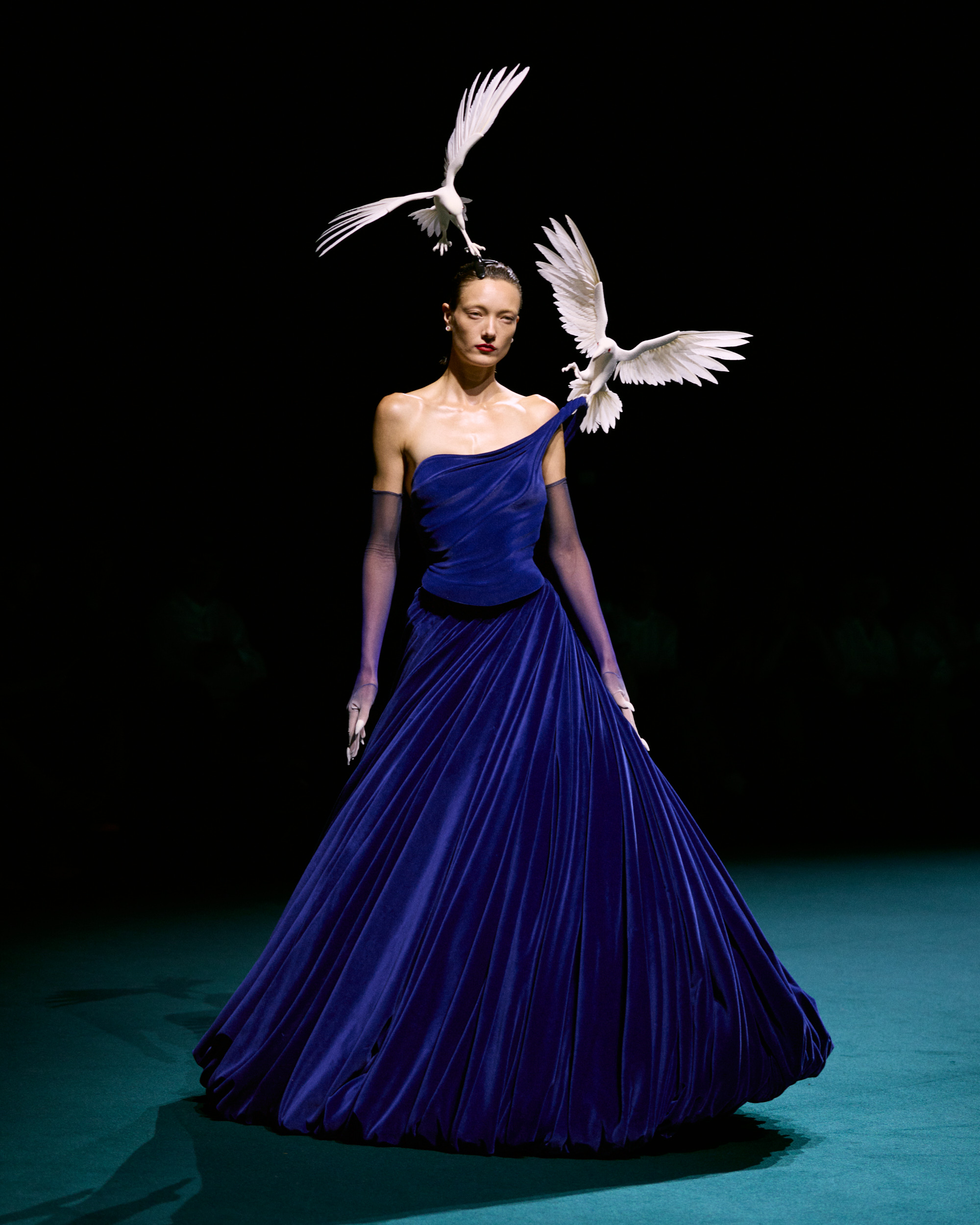
Robert Wun Couture Fall 2026: Looks 20, 22. Courtesy of Robert Wun.
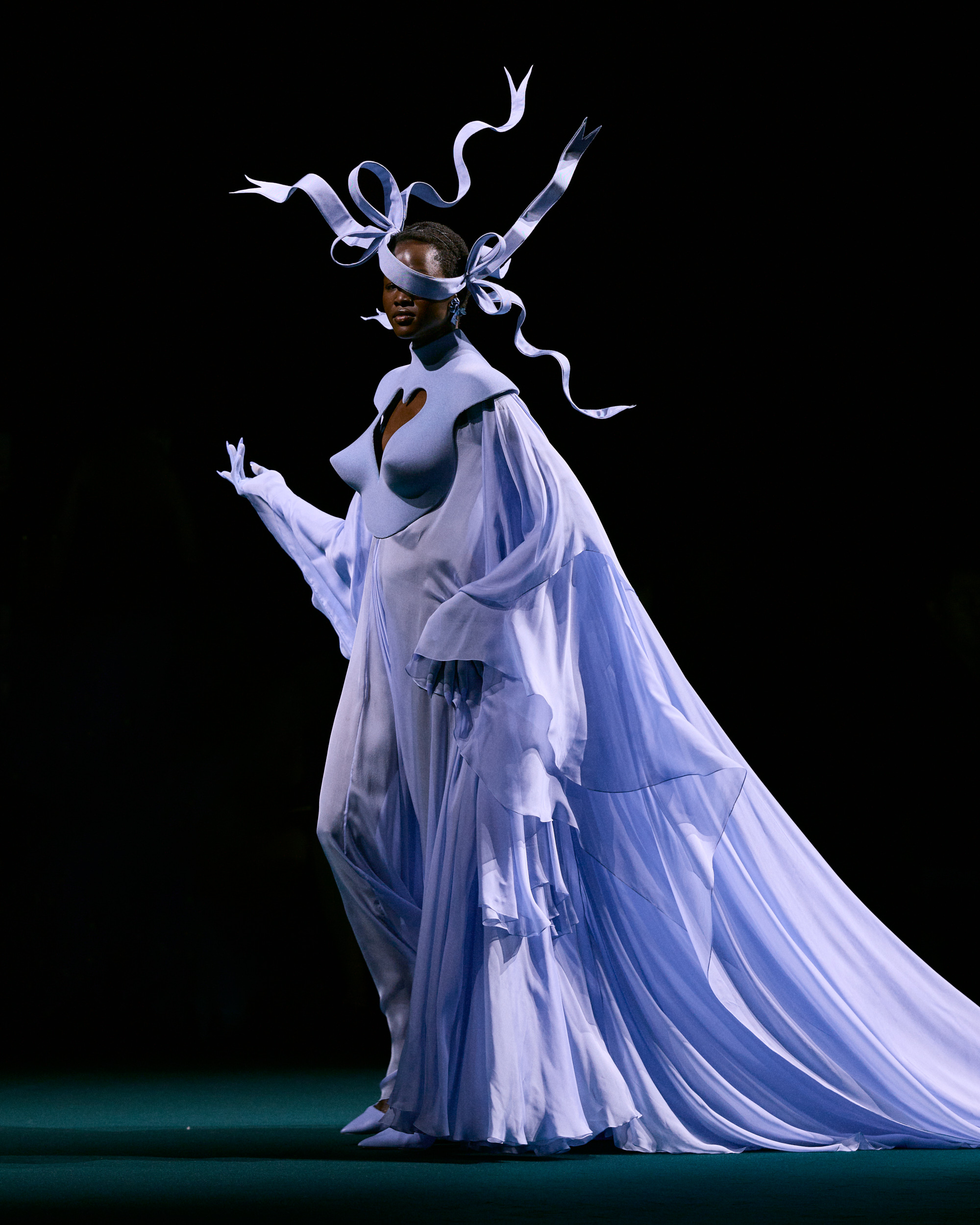
Soon, the runway was populated by figures of childhood imagination. Models carried enormous stuffed rabbits and bears, elongated ears emerged from sculpted gowns, and a black-and-white tailored look folded around the body like origami. It was as though the fashion audience had grown up only to witness its storybook characters walking before them. Wun has always excelled at creating silhouettes that are haunting without becoming static. In Childsplay, that quality allowed him to move between innocence and unease—the two states that often coexist within fairy tales. A pleated blue gown was surrounded by white birds, while a scarlet hooded silhouette transformed Little Red Riding Hood into something more commanding. Elsewhere, an animal-like mask suggested the wolf on the other side of the narrative. The darker figures complicated this innocence. A monochrome suit was embroidered with the human skeleton, while another black silhouette appeared beneath an extended veil and pointed headpiece. These were the monsters that enter childhood stories, reminding us that wonder can be frightening.
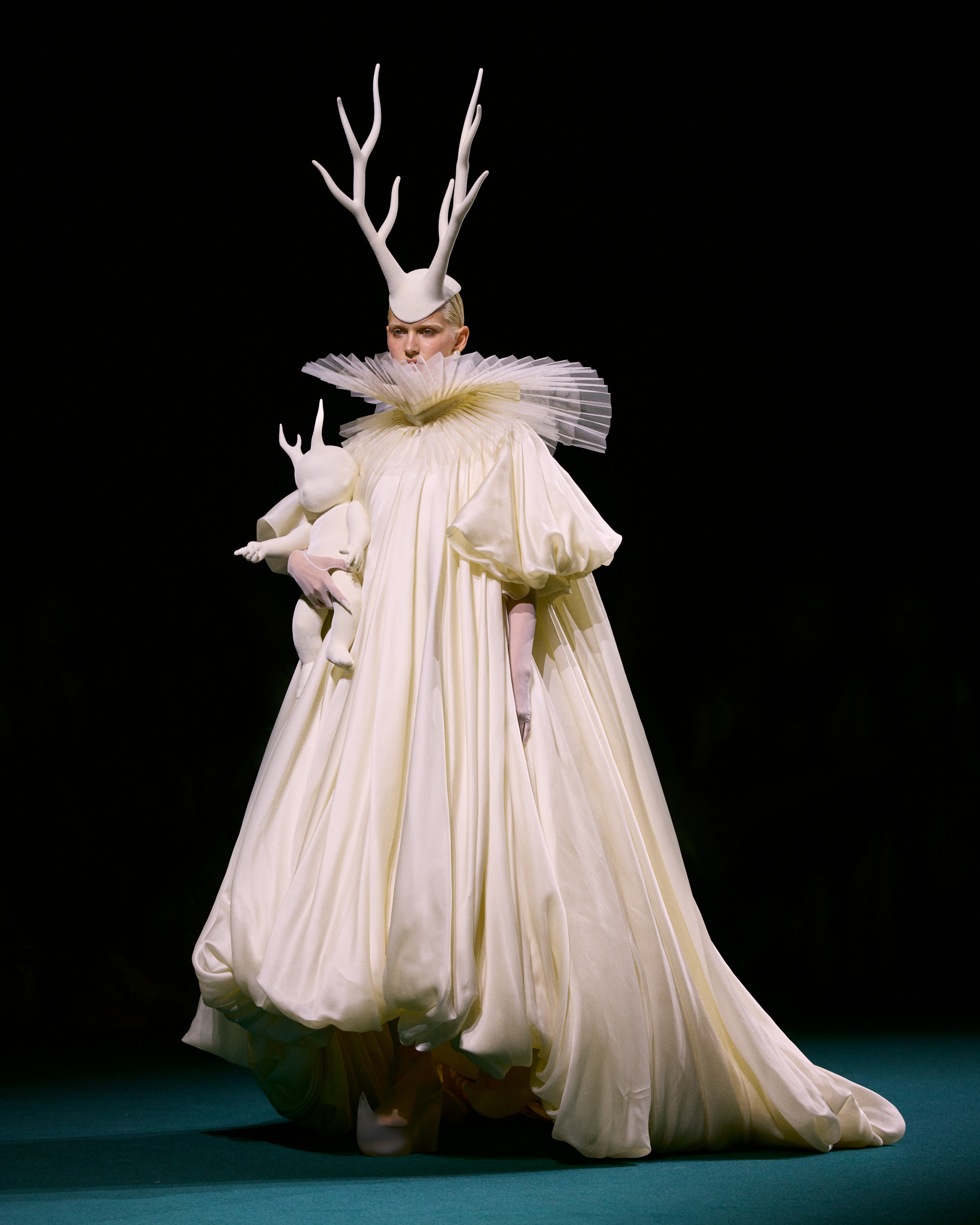
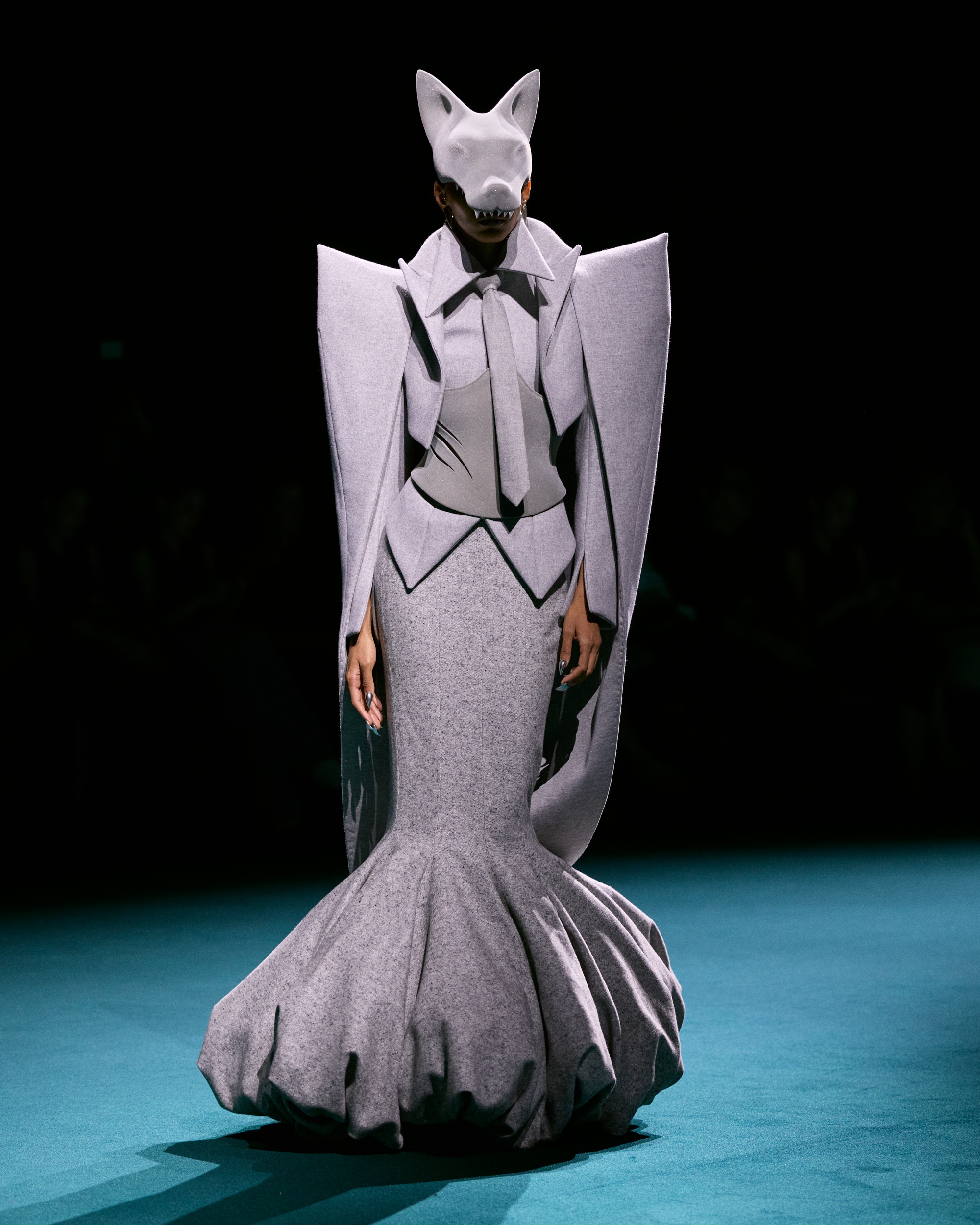
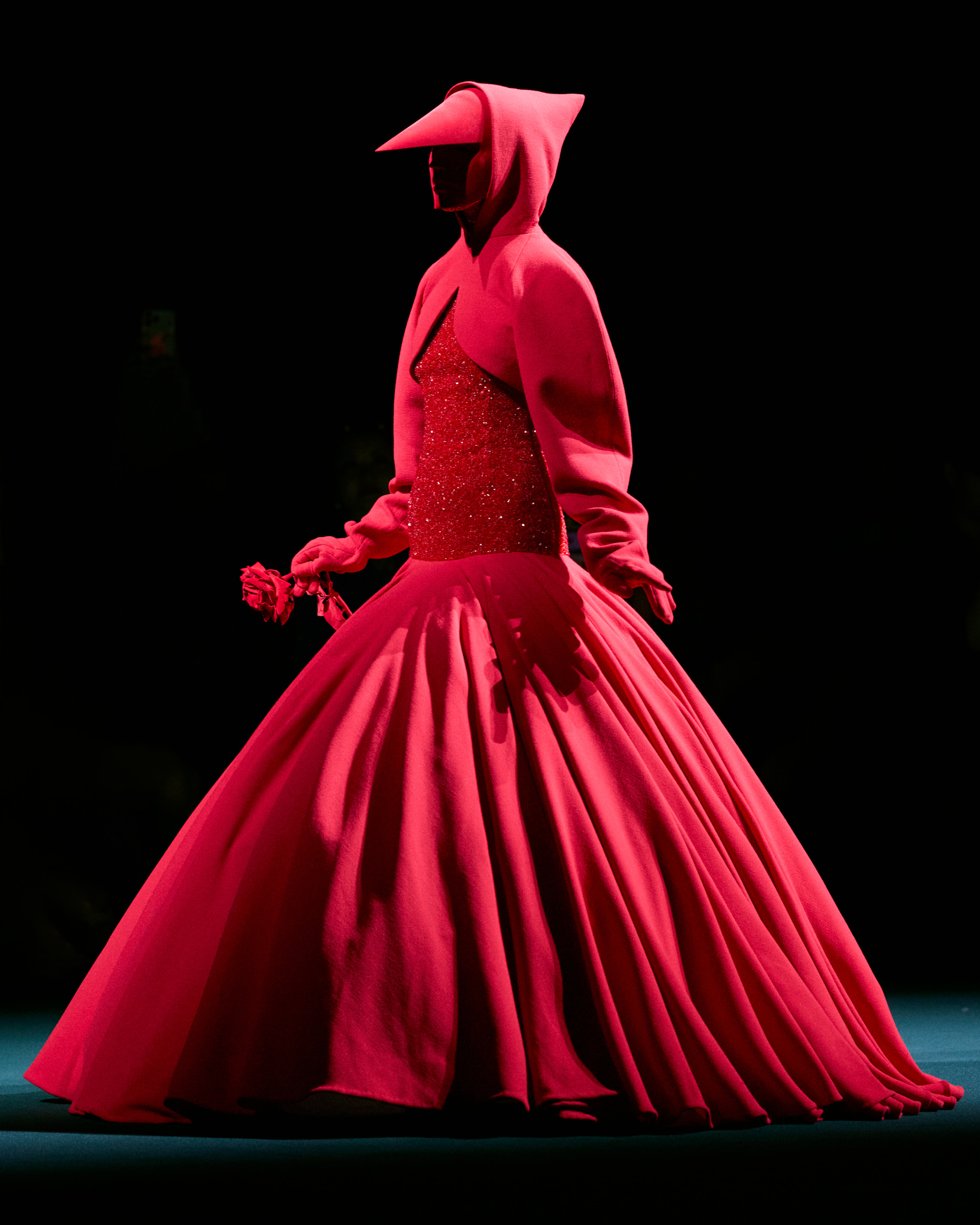
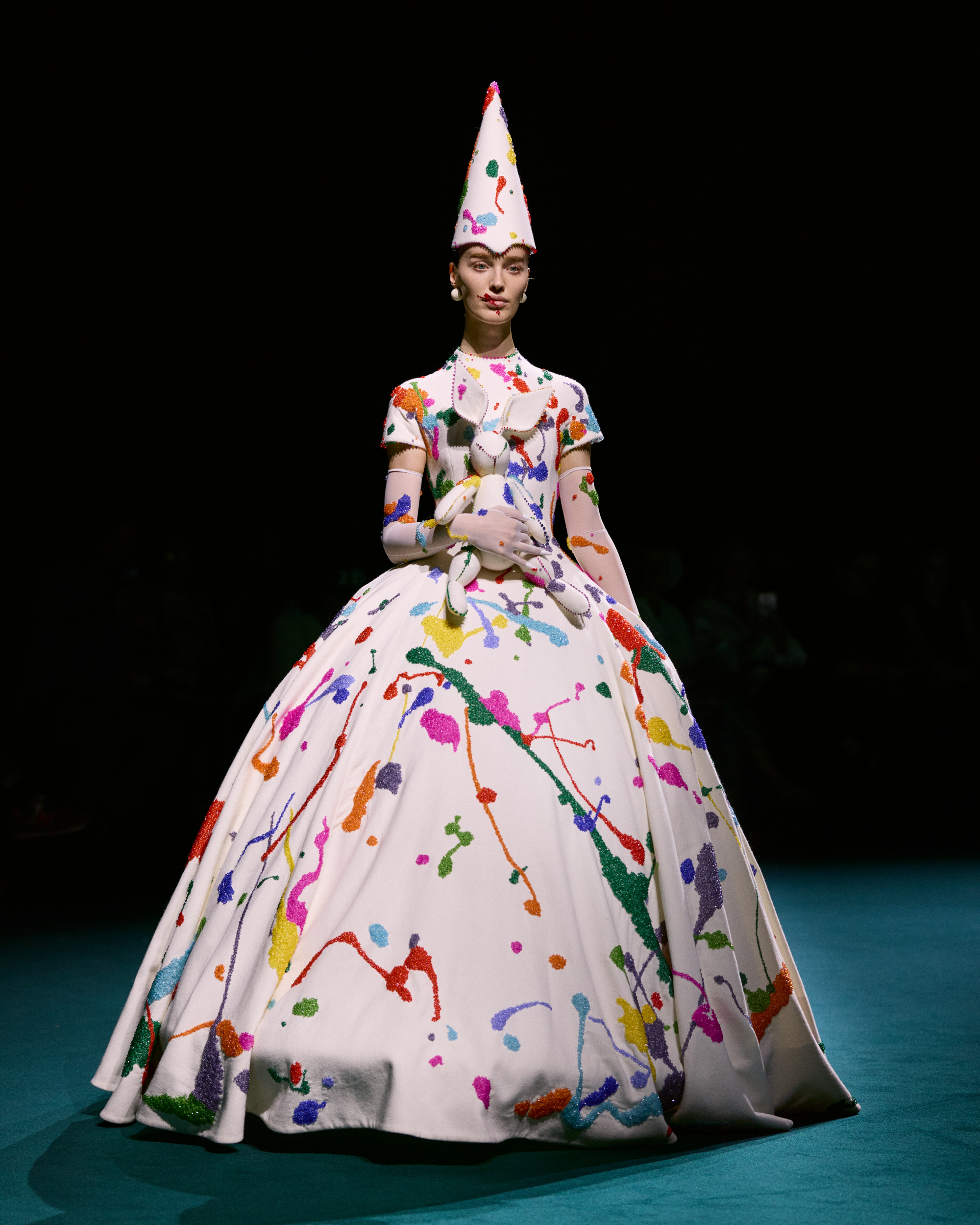
Robert Wun Couture Fall 2026: Looks 1, 15. Courtesy of Robert Wun.
The finale turned that interior imagination outward. Customized balloons erupted from two sharply tailored bodies, first in translucent white and then in saturated color. They appeared to burst from the garments like thoughts too expansive to be contained, while monumental shoulders and monochrome foundations preserved Wun’s disciplined tailoring. The balloons were joyful, but their fragility gave the finale its emotional force. They represented the childhood we still carry within us—beautiful, weightless and never meant to remain unchanged. Childsplay does not ask couture to become less serious. It asks what seriousness is for. In Wun’s hands, couture becomes a commitment to emotion, memory and the courage to create. The collection that asks us to re-believe—not blindly, but deliberately—in curiosity, goodness and the courage to create. That is not child’s play in the diminishing sense of the phrase. It is the serious work of remembering why we began dreaming at all.