
By Louise Daniel
If fashion is always looking for the unexpected, trust that Nicolas Ghesquière will deliver brevity in the form of retro futuristic fables ones that honor the grounds of nature and humanity’s long-standing attempt at coexistence.
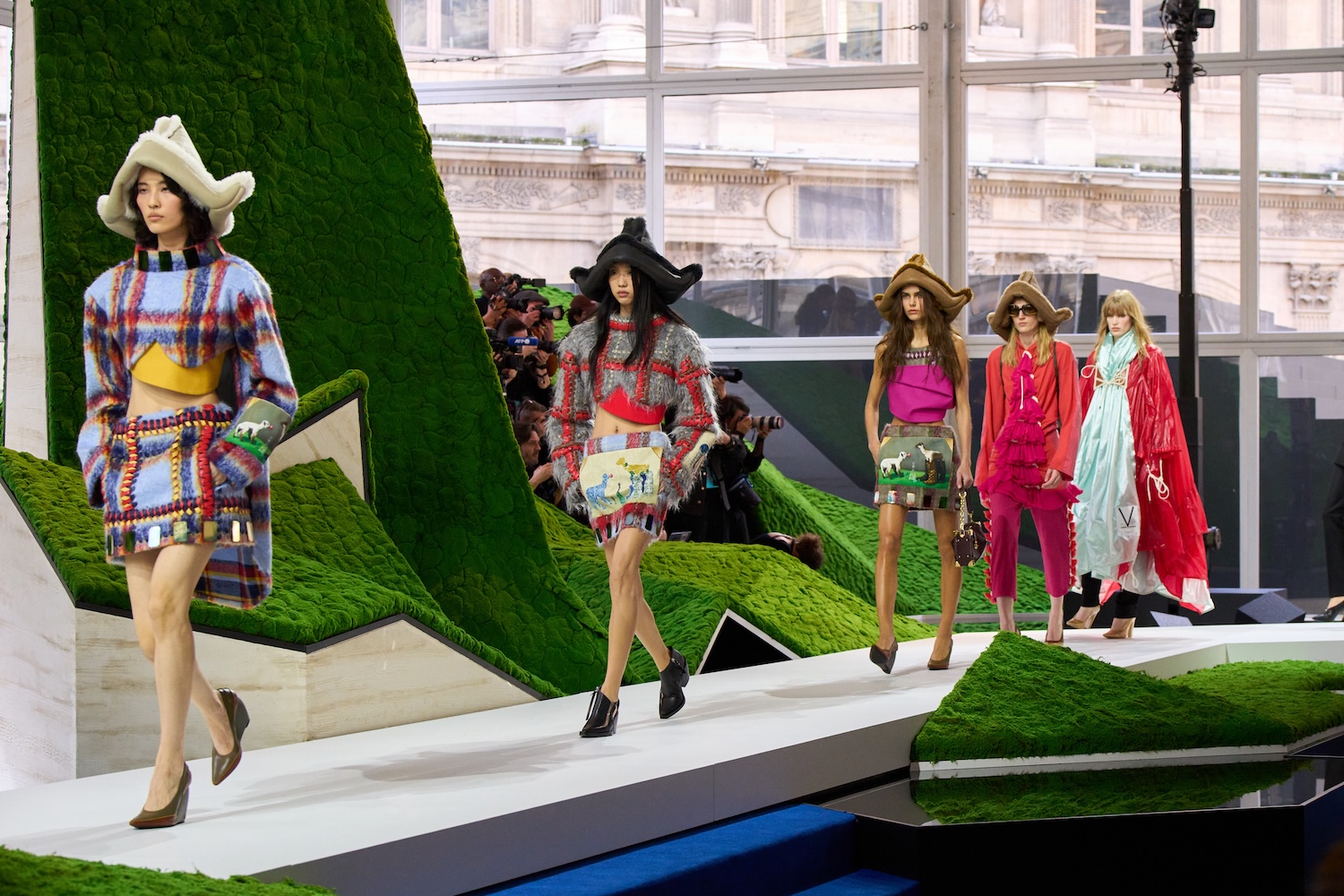
Louis Vuitton Fall/Winter 2026 marked a natural return to the ingenuity behind humanity’s savoir-faire and savoir-être over centuries. Set in a geometrical green space designed by Jeremy Hindle, the production designer behind the hit show Severance), Ghesquière introduced a collection that felt familiar yet foreign. It was designed to anthropomorphize the rawest materials into distinctive ensembles. It felt detached from the pull of trends overtaking the industry as of late.
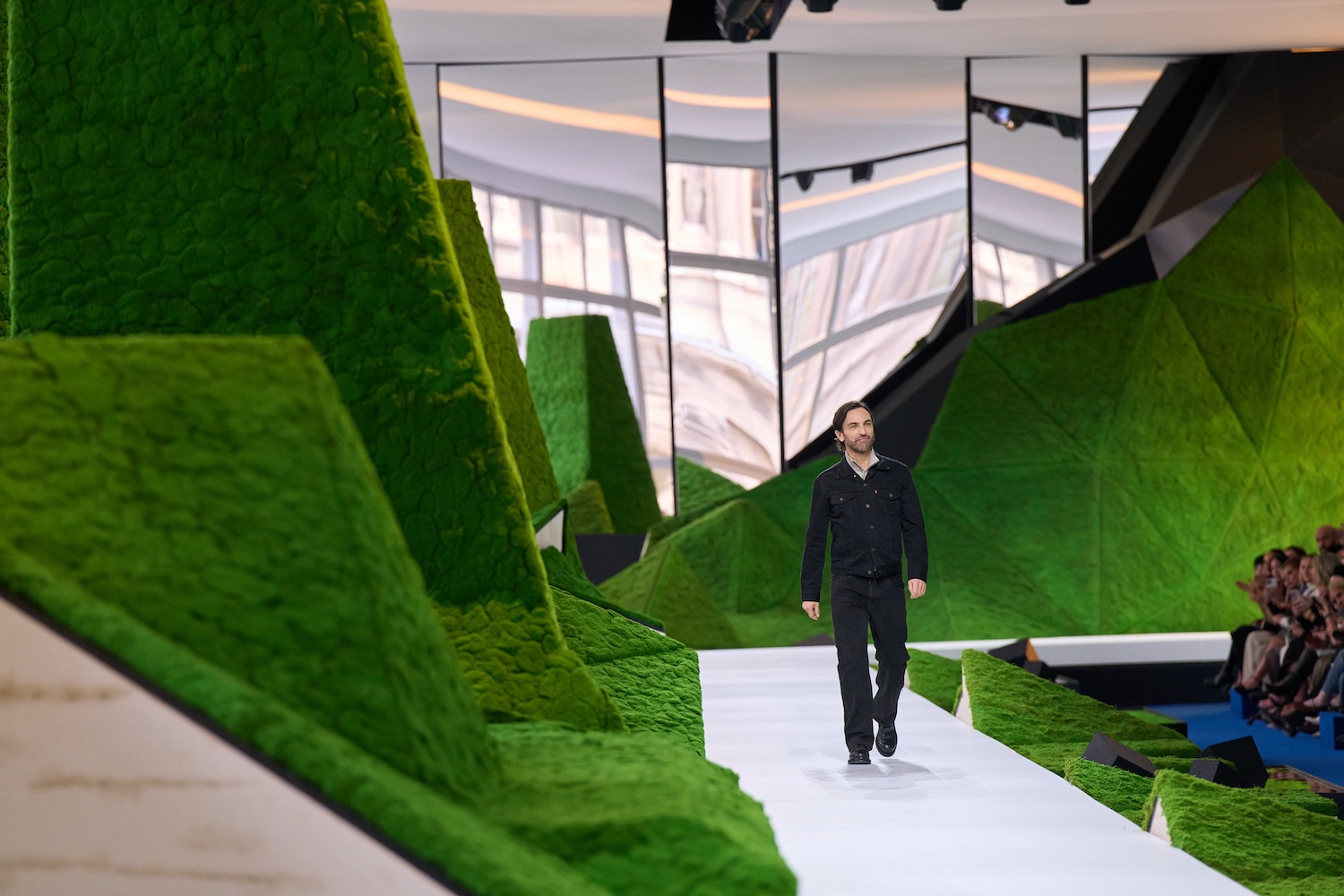
Louis Vuitton Women’s Artistic Director Nicolas Ghesquière takes a bow at the close of the Fall/Winter 2026 collection during Paris Fashion Week. (Image courtesy of Louis Vuitton)
Traces of nomadic traditional costumes, animalier patterns woven and melded throughout, naturalistic materials shaping texturized outerwear, and elements of protection, such as the web basket shields outlined with leather trims from Looks 41 and 42, made the collection’s appeal more organic in its articulation. Even the paintings of Ukrainian artist Nazar Strelyaev-Nazarko layered a sense of folkloric whimsy.
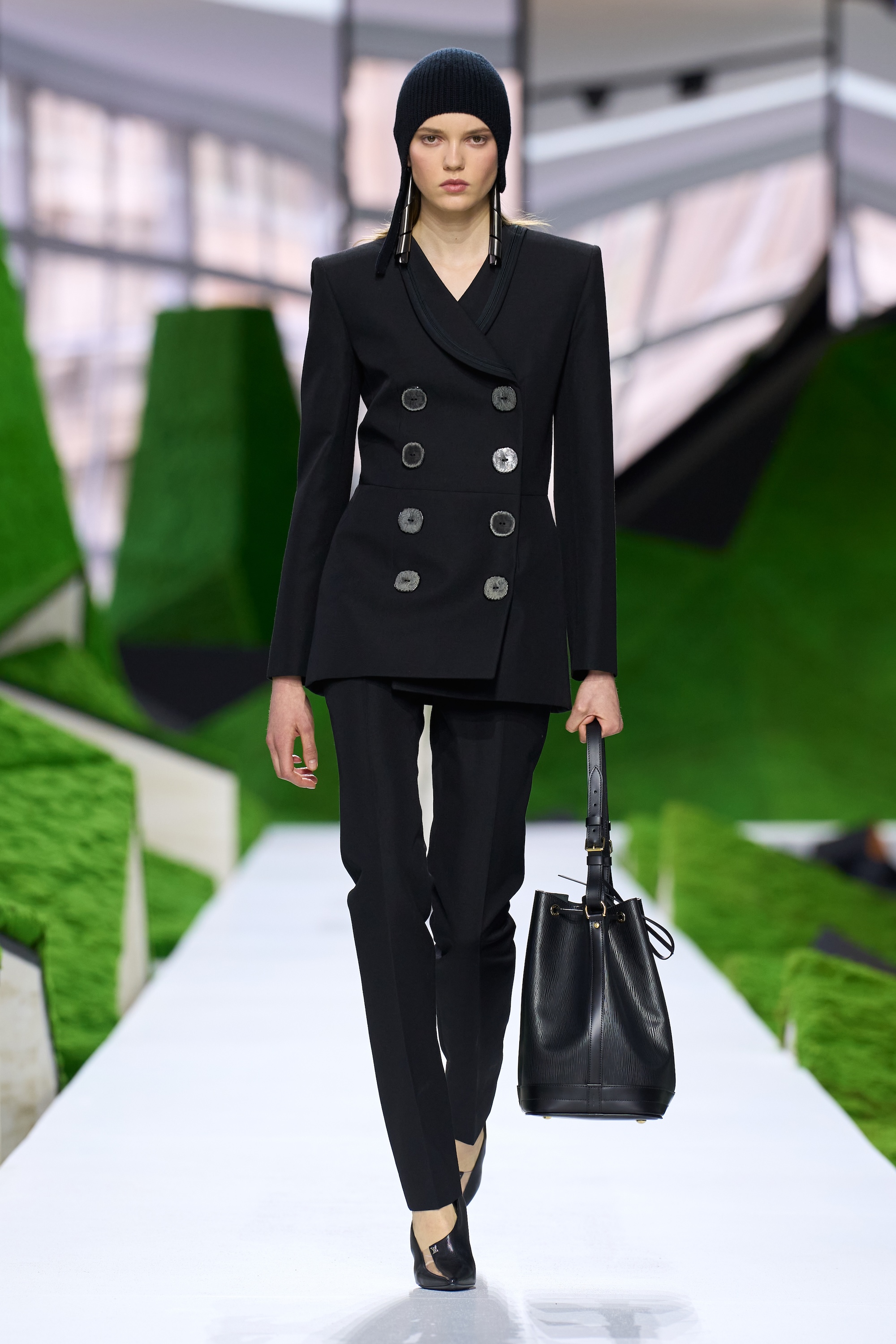
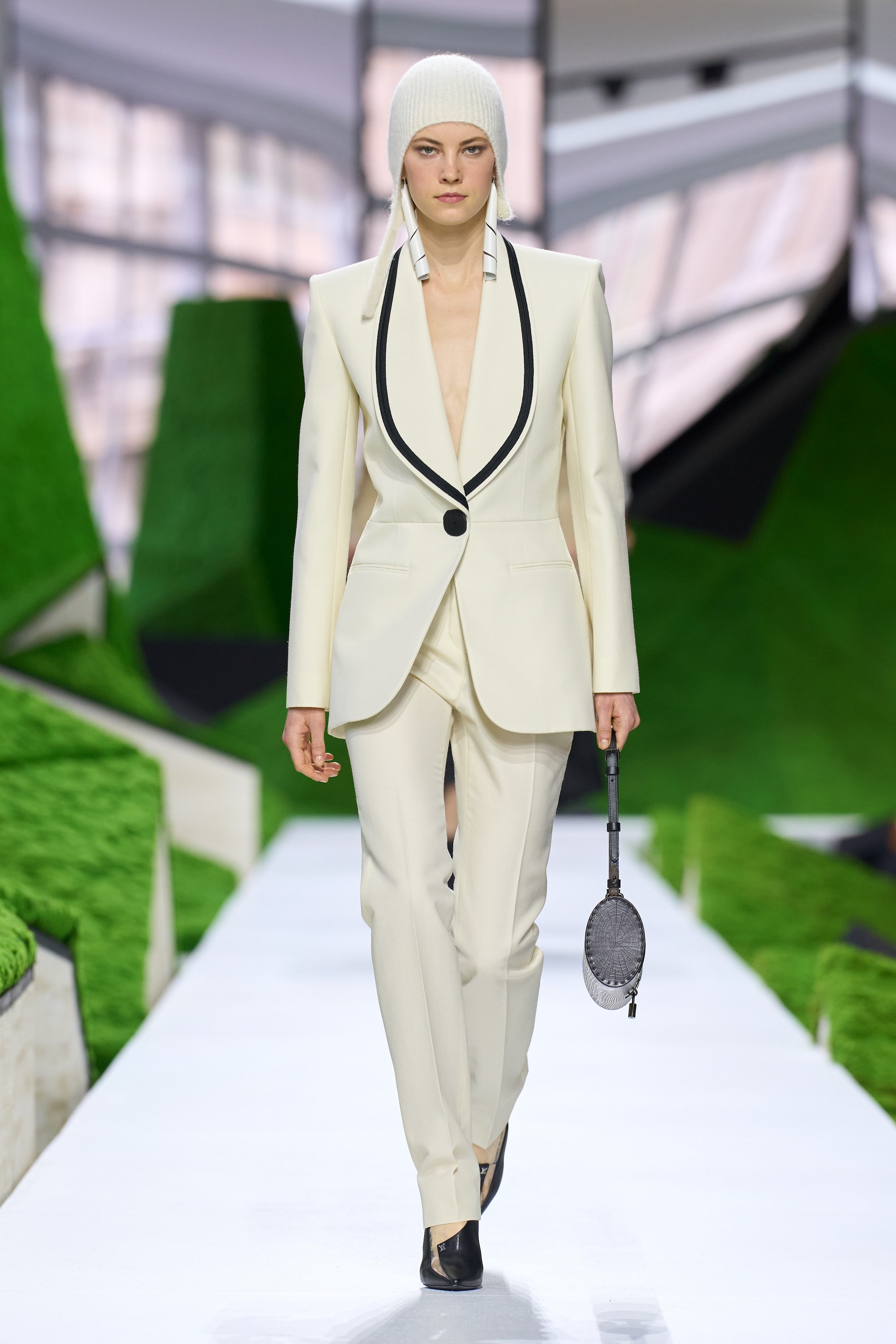
Louis Vuitton Women's Fall/Winter 2026: Looks 41, 42 (Images courtesy of Louis Vuitton)
However, aptly embodying the show’s title “Super Nature,” the uncanny elements in Ghesquière’s design language compel the viewer to take a second look at each detail. Rendering a puzzle-like technique on dresses and cropped suit sets enhanced the individuality of each chosen textile. As observed in the series of fragmented dresses (Looks 5, 6, 7, and 8), adorned with Man Ray–inspired neckpieces studded with LV trunk nails and paired with high-vamp pumps with textured heels, these pieces could very well become the next it-shoe on the market.
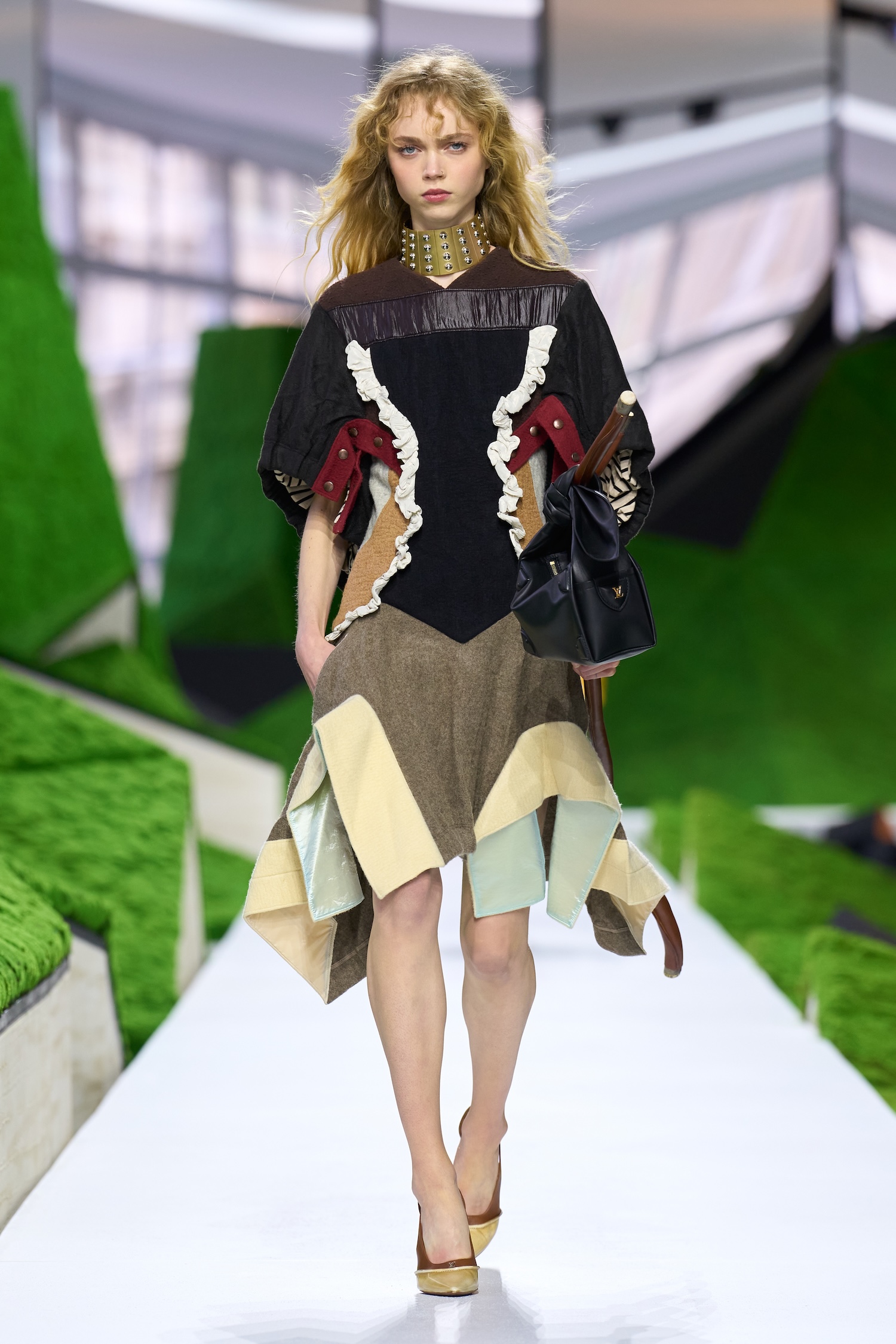
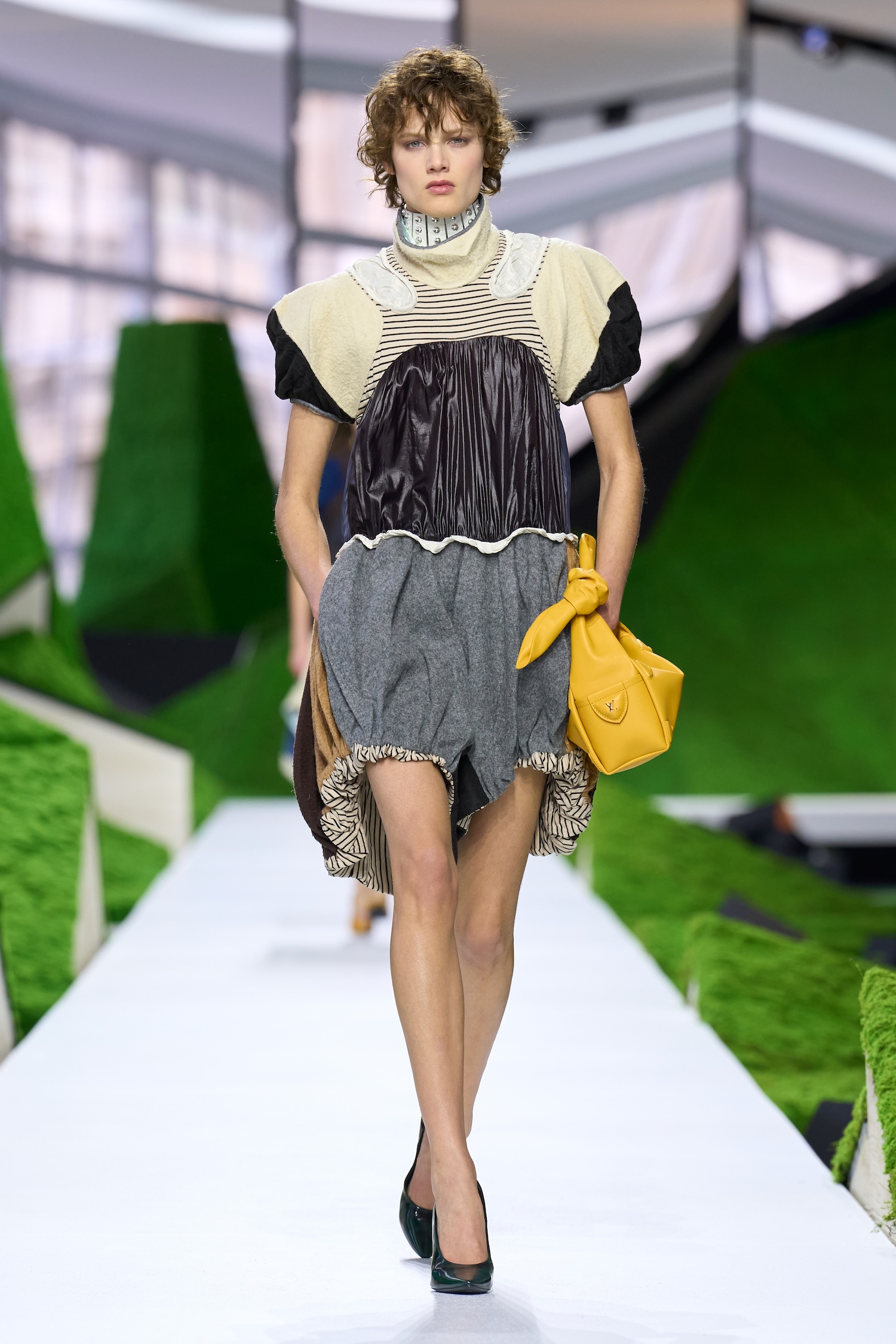
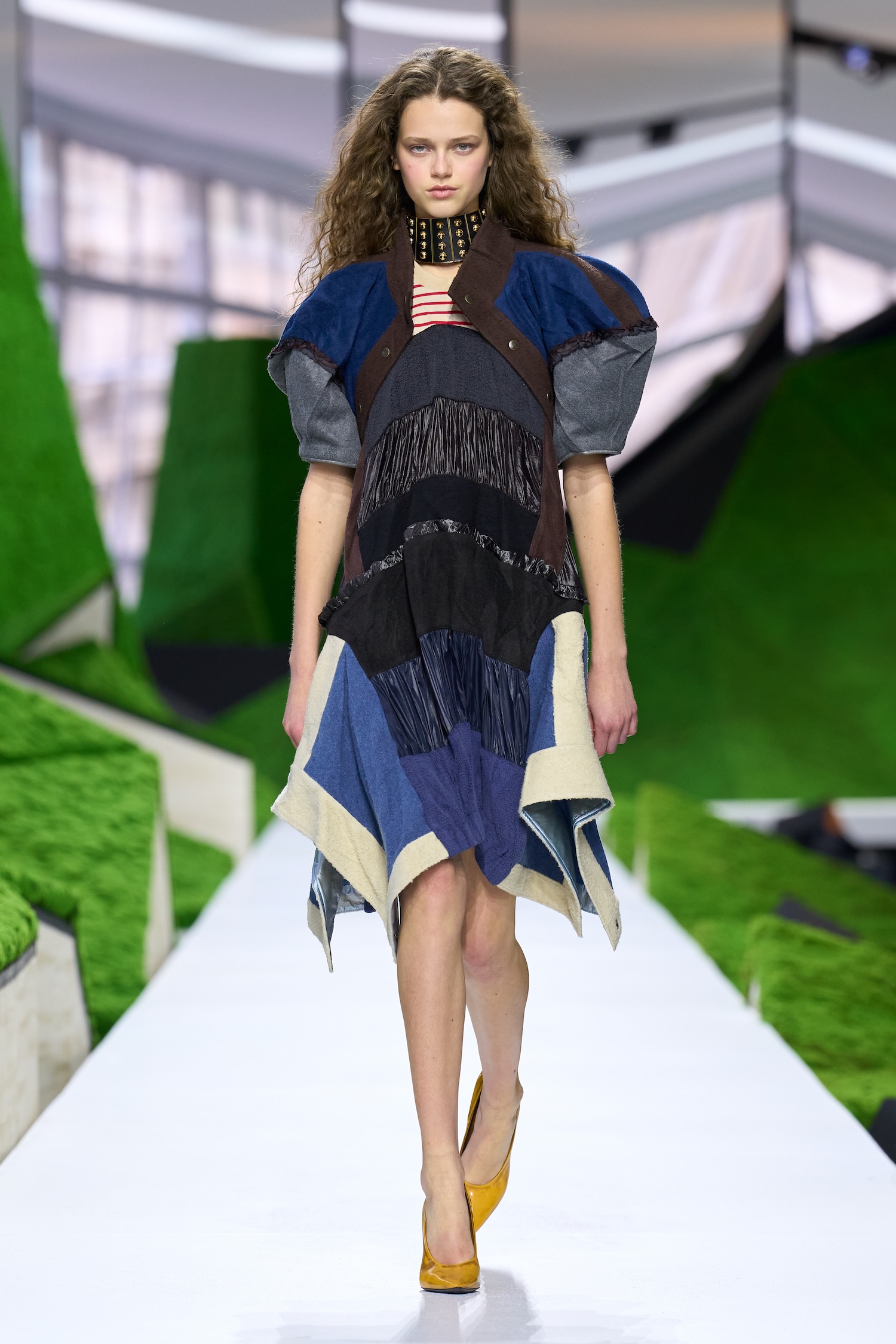
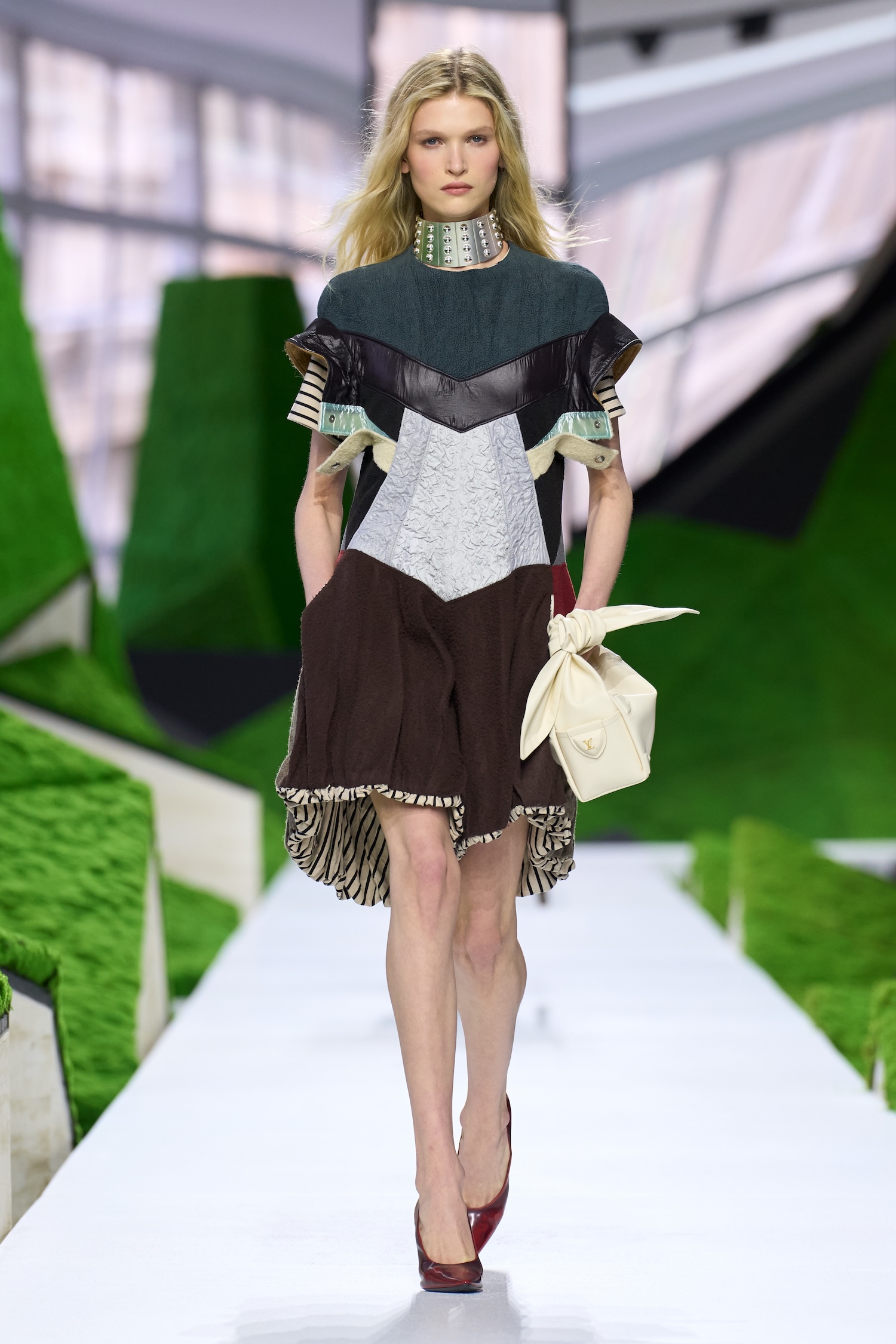
Louis Vuitton Women's Fall/Winter 2026: Looks 5, 6, 7, 8 (Images courtesy of Louis Vuitton)
The silhouettes were a prominent reinvention in this show, recontextualized with a postmodernist twist. They extend outward from the body—overreaching yet balanced by the materiality of their base. The opening looks, almost supernatural in form with triangular shoulders, were a testament to Ghesquière’s future-forward approach to fashion: breaking the glass ceiling by marrying the past with the future. As mentioned in the press kit, it is a new folklore, for the future. Clothing has always been an element of protection that allows us to interact with—and even modify—our surroundings. Ghesquière returns to the primal with deep respect for the stories and craftsmanship humanity has developed over time.
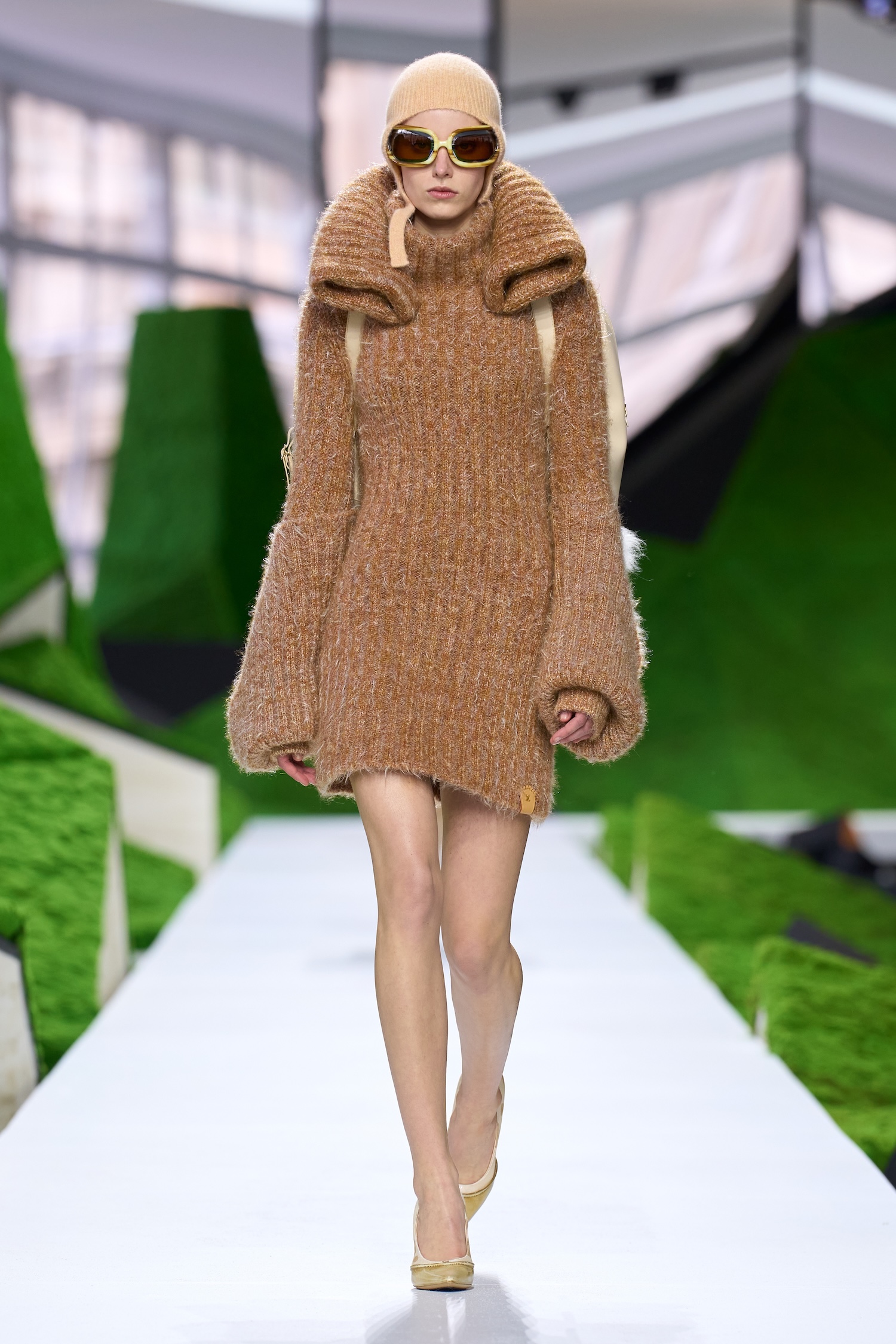
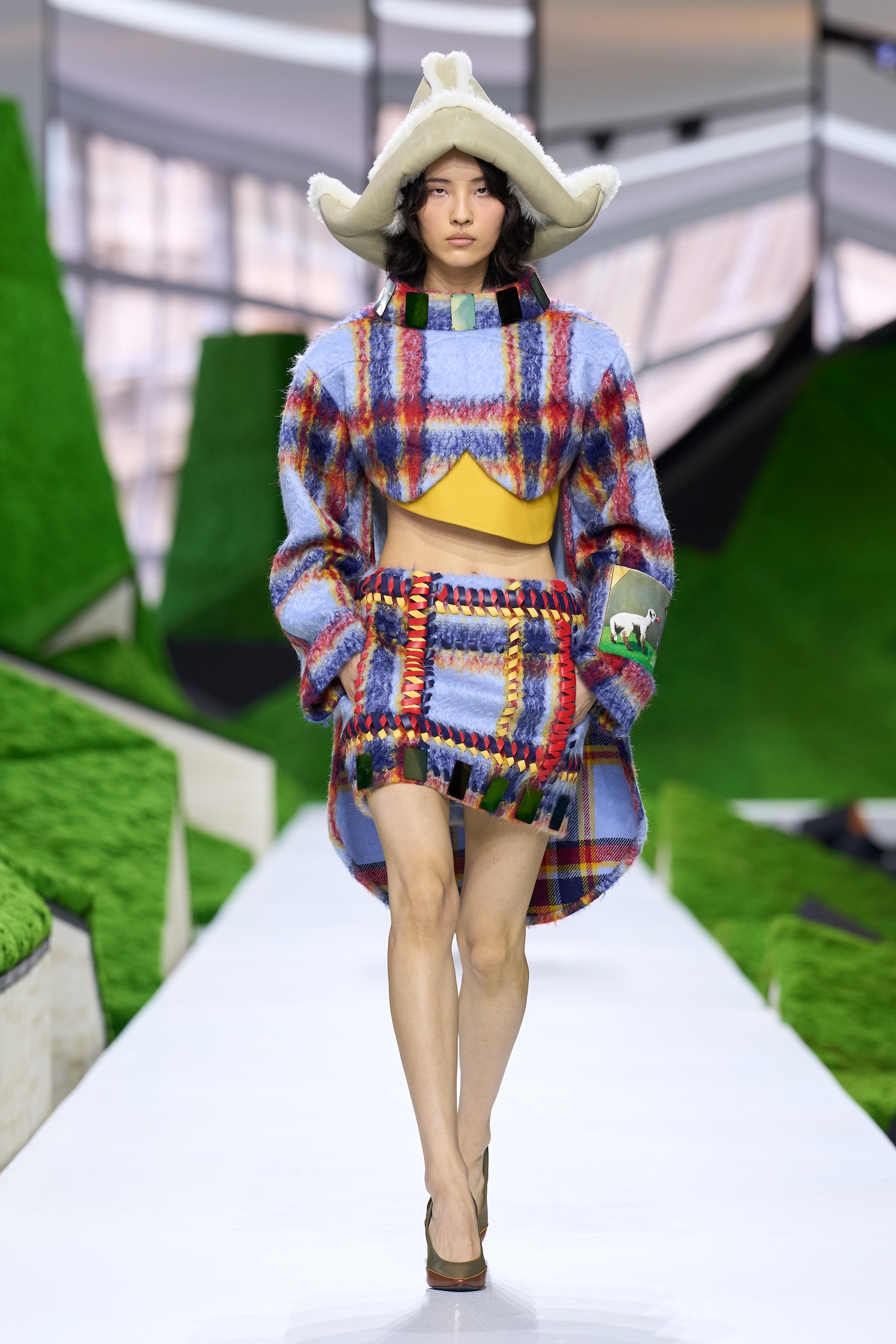
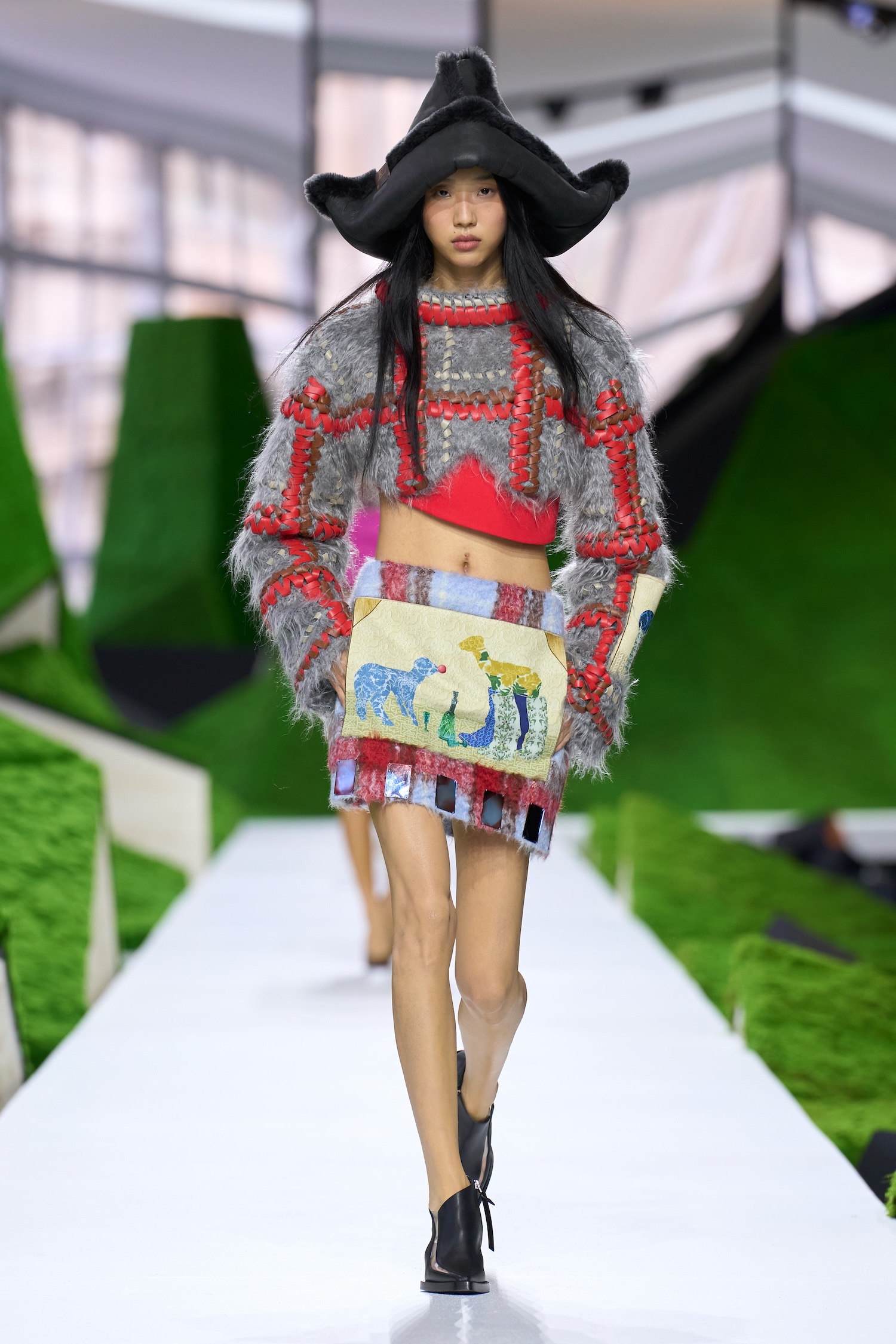
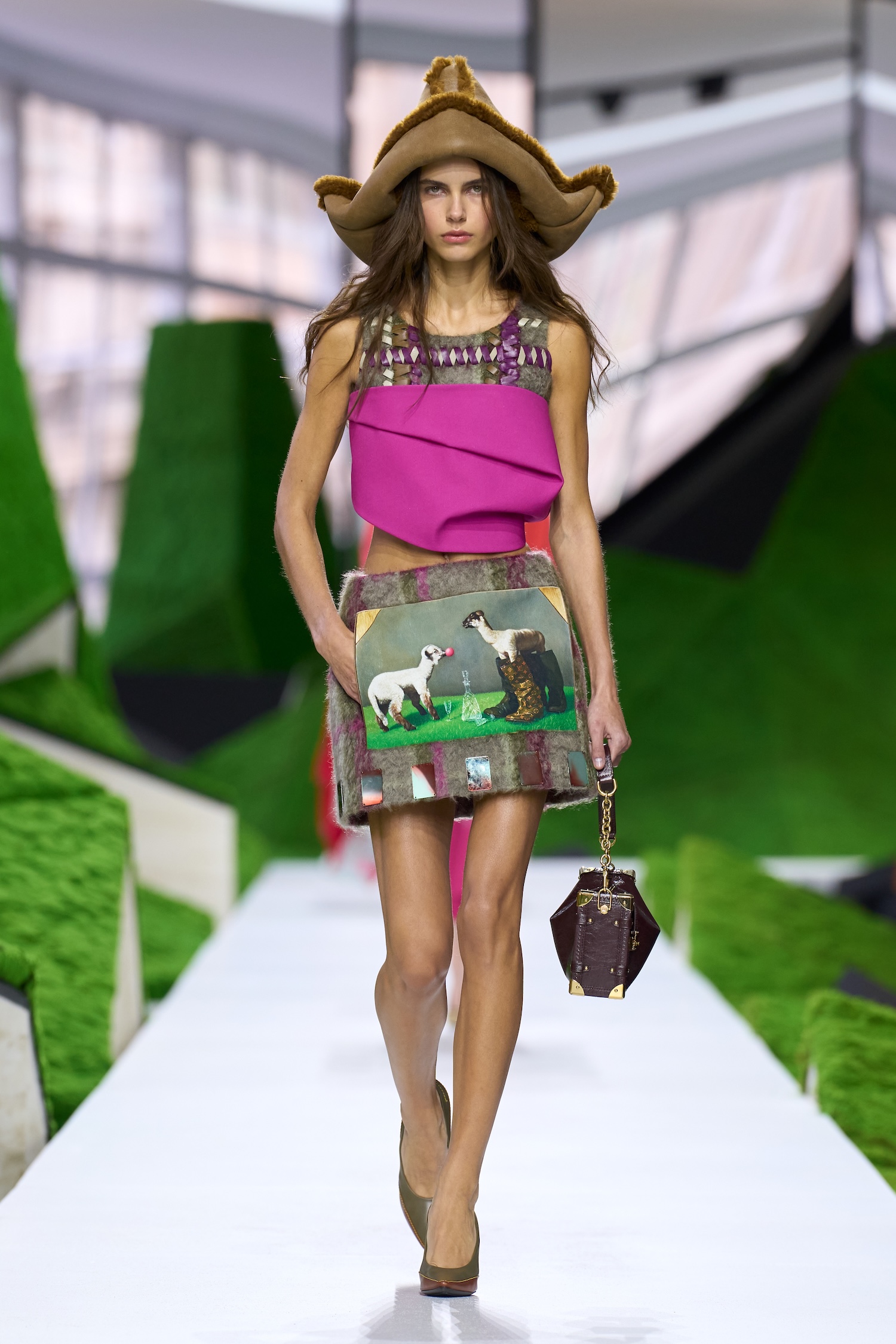
Louis Vuitton Women's Fall/Winter 2026: Looks 35, 36, 37, 38 (Images courtesy of Louis Vuitton)
This collection also feels like a call to respect the balance between man and nature—a balance we so often neglect. Perhaps the future of fashion does not lie in invention alone, but in remembering how to coexist—with nature, with history, and with ourselves.