
By Louise Daniel
After a poetic grand introduction last couture season, Glenn Martens heralded a new era of Margiela—evolving a language passed down from one Margiela generation to the next. For that very reason, fashion insiders and admirers alike awaited his Co-Ed debut with palpable anticipation. It felt as though he was also included in the industry’s list of most-watched designer debuts of the season.
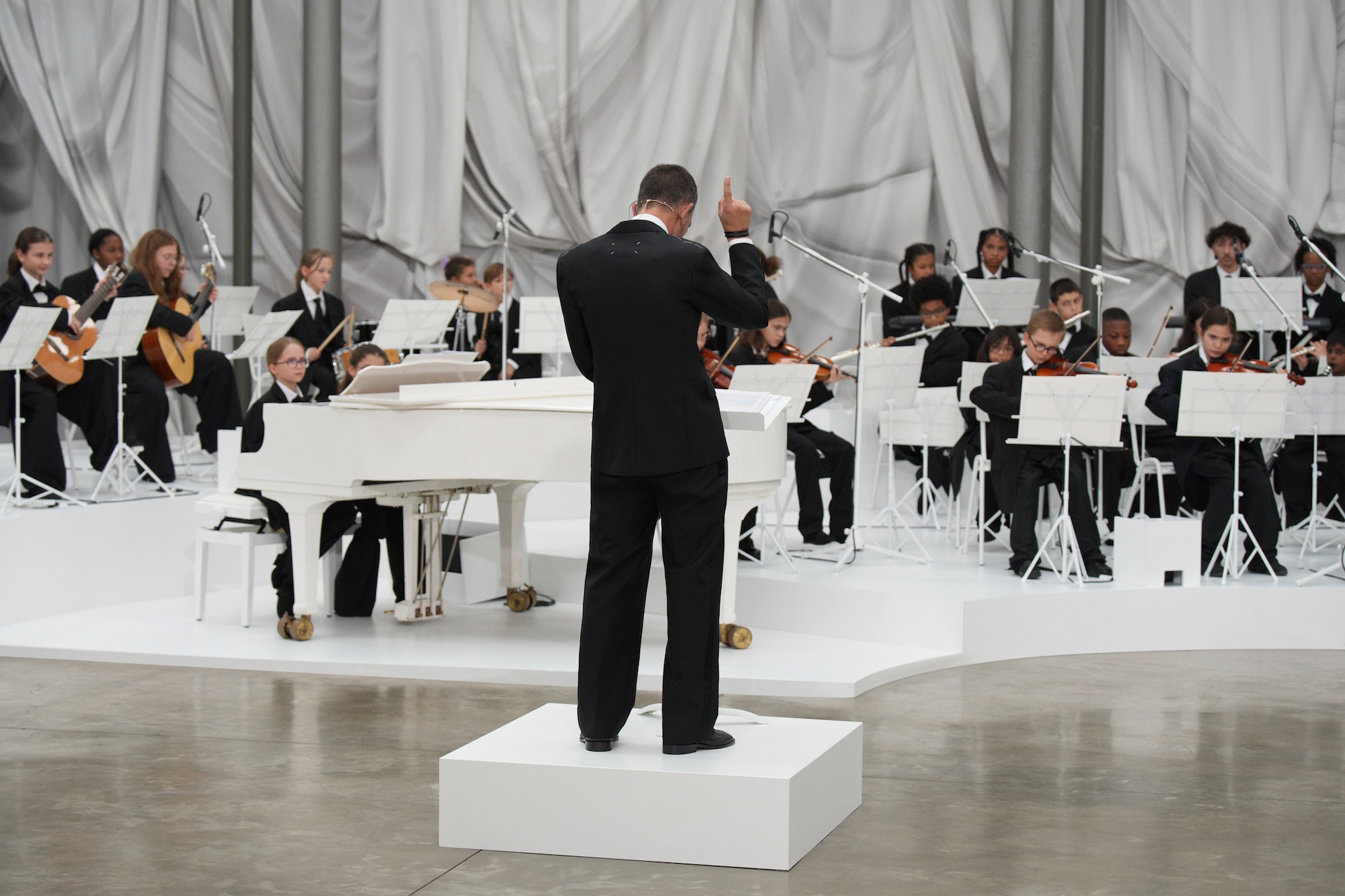
And indeed, we were thrown into the unexpected. An orchestra of sixty-one young musicians from the Orchestre à L’École association performed an imperfect, beautifully human concerto to open the Spring/Summer 2026 show. Some say it echoed Margiela’s Spring/Summer 1989 collection, when local children joined models on the runway with cheeky, disarming smiles. It was a presentation that fully embraced Martin Margiela’s spirit of creative freedom, defying the rigid formulas of the traditional fashion show.
Nowadays, show gimmicks have become part of the fashion equation, often blurring the thin line between fashion and entertainment. But for Glenn, cohesion was never sacrificed at the price of spectacle. His Spring/Summer 2026 Co-Ed collection instead unfolded as a thoughtful composition of precision—gradually revealing a new Margiela archetype. One powered by Martin’s anti-fashion ideals, Galliano’s theatrical oeuvre, and Martens’ own masterful deconstruction.
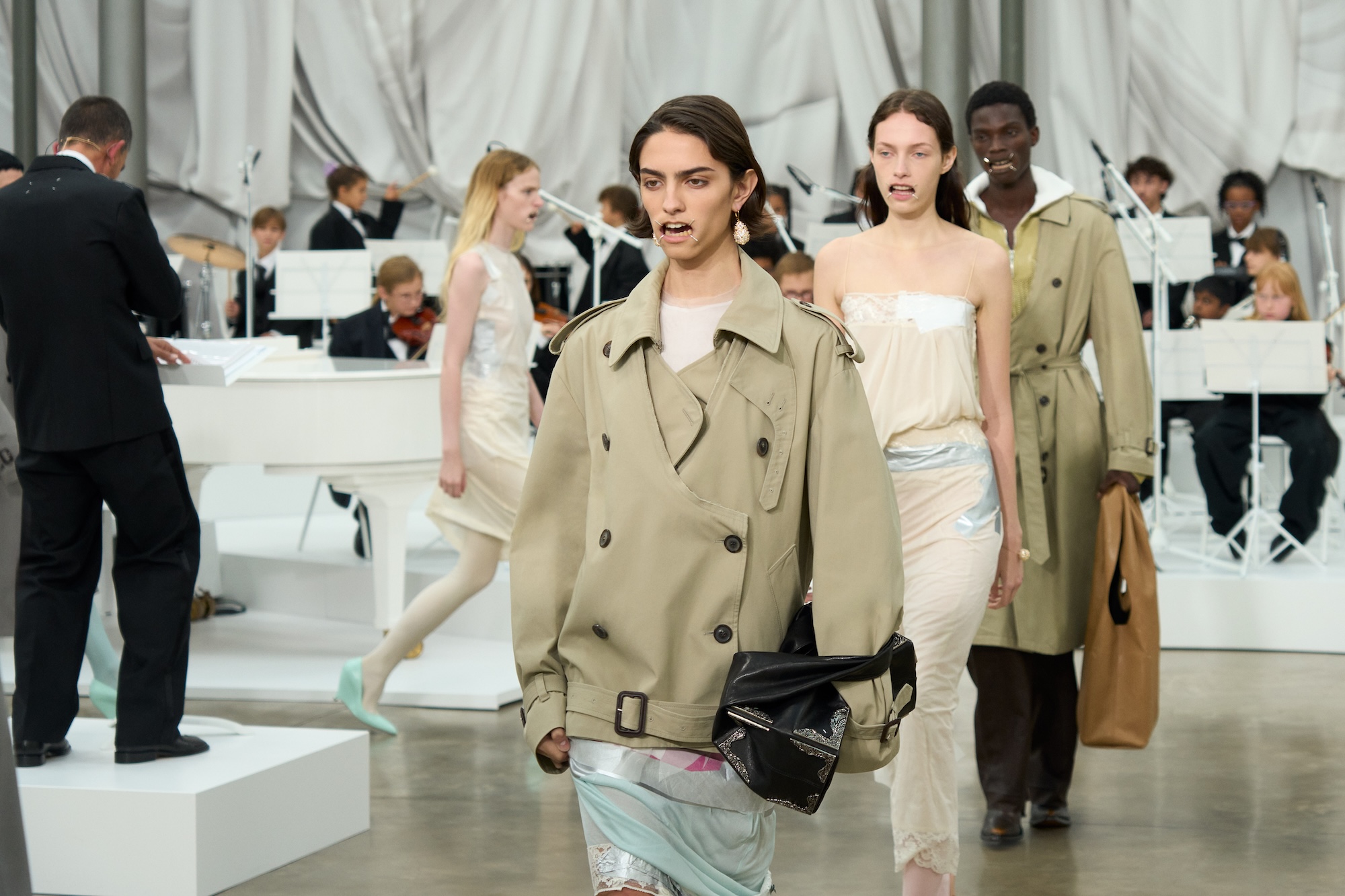
Glenn Martens presented the Maison Margiela Co-Ed Spring/Summer 2026 collection during Paris Fashion Week (Image courtesy of Maison Margiela)
Margiela: As Worn on the Streets
One of the immediate perceptions of this collection was its wearability. While still imbued with the craftsmanship derived from Artisanal 2025; Martens presented an array of options that could effortlessly move from daywear to nightwear—that deliberate ambiguity that remains at the heart of the house. Martens sought to reintroduce new proportions on the runway—ones that feel familiar yet carry a renewed sense of novelty. This was achieved through his precise application of innovative tailoring techniques. Reinventing the fashion wheel was never the point; rather, it was about making calculated, almost obsessive adjustments that create the subtlest yet most impactful shifts.
The opening looks unveiled a new shoulder construction—rounded and structured—diverging from the sharp, pointed shoulders dominating current trends. Following the tuxedo waistcoat silhouette, low necklines and tie enclosures defined suits, jackets, and tops. To elongate the body, trousers were cut deliberately low on the waist.
According to the Margiela team, this “tuxedo waistcoat” cutline was integrated throughout the collection. Notably, Look 13, featuring the bubble wrap trompe-l’œil sweater and worn by model Calum Harper, exemplified how the brand fused its new technical framework with a touch of whimsy. Leather jackets and trenches—wardrobe staples for most of the Maison’s following—were given new life through draped lapels that introduced flexibility, allowing them to conceal or reveal with ease.
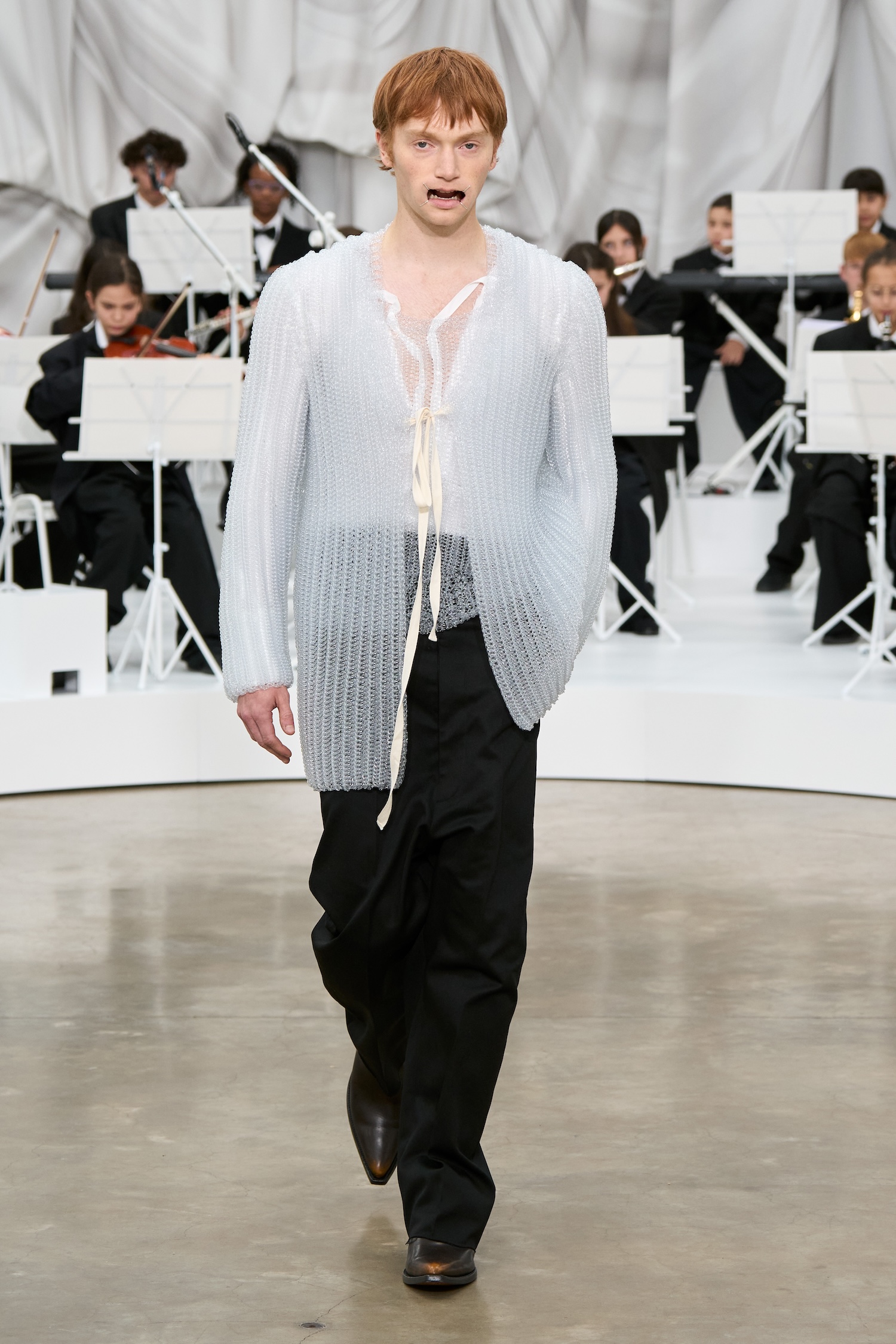
Calum Harper wears Look 13, a trompe-l'oeil bubble wrap sweater from the Maison Margiela Co-Ed Spring/Summer 2026 collection (Image courtesy of Maison Margiela)
The Art of Plasticization
A Margiela show has always been an exploration of materiality. Here, Martens continued that legacy by creating an amalgamation of leather, denim, a crucial fabric for the house, printed paper layered over knitwear, scanned florals, silk, and even materials that mimic the texture of plastic.
In Look 37, this experimentation carried forward the Artisanal spirit into ready-to-wear. The 16th century peeling wallpaper motif introduced in couture, retained its surreal, decaying charm but now appeared in a zip-front sweater paired with a layered floral silk skirt. From there, a series of silk dresses followed, their multi-layered compositions draped and wrapped with striking precision. Patterns that might seem to clash at first glance instead merged into a visual harmony, their movements ethereal as they floated down the runway.
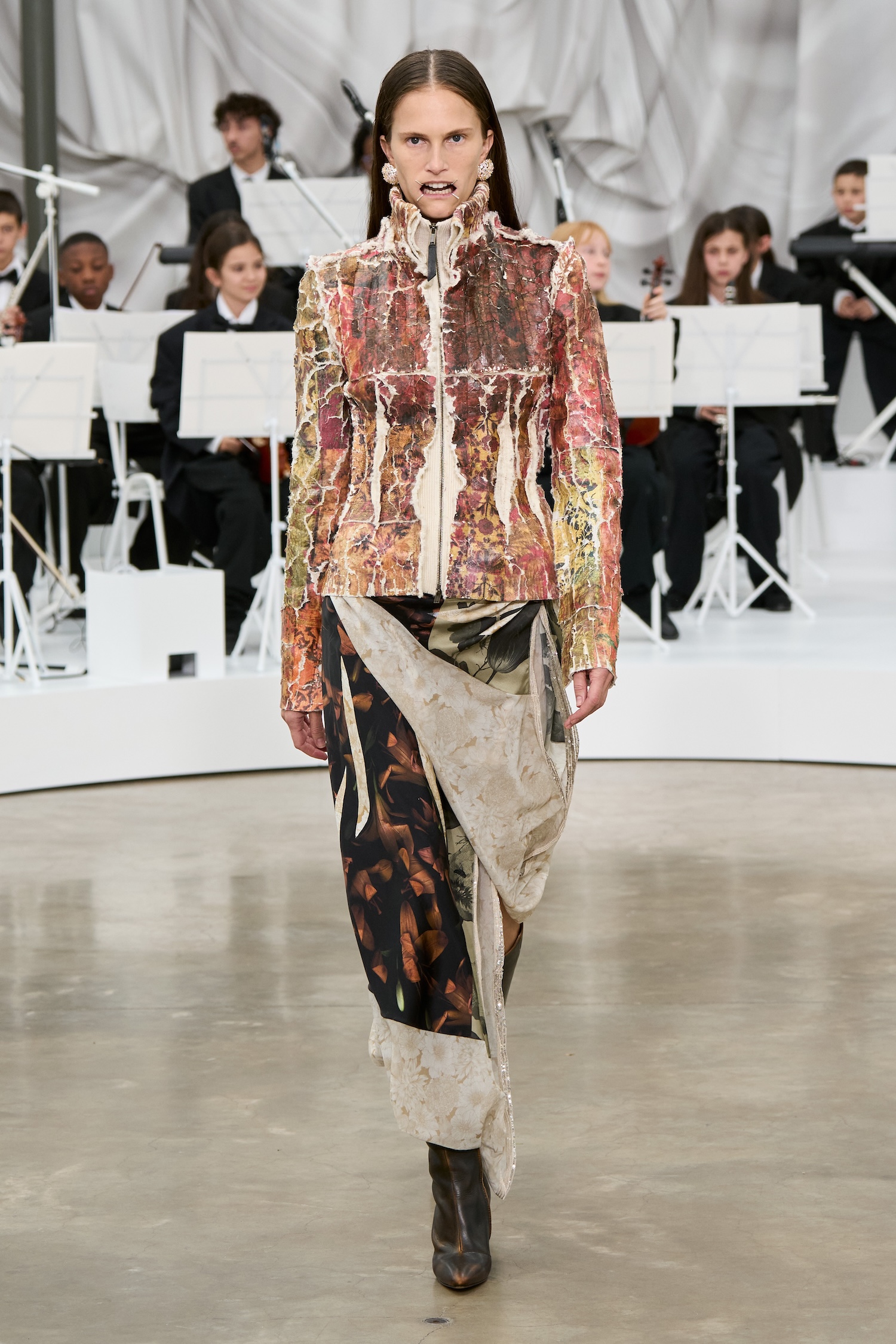
16th century peeling wallpaper becomes a shared motif for the Maision as seen in Martens courture and now ready-to-wear collection (Image courtesy of Maison Margiela)
The Symbol of the Four Stitches
Anonymity, as always, remains a cornerstone of the Maison. But how did Martens cultivate it this season? Through distortion. Mouthpieces resembling the iconic four stitches of Margiela were worn by the models, transforming them into living embodiments of the house’s quiet logotype. This subtle form of logoification, which has been nurtured by the Maison over decades, reinforced the metaphor for collective identity within creative individuality, a Margiela signature recontextualized through body language.
Each model’s expression carried that nonchalance synonymous with the brand: serene, detached, and faintly haunting mirroring, the imperfect orchestra in the background. Even the accessories this season were stripped of excess: minimal, conceptual, purposeful. The Tabi Claw shoe, an Artisanal 2025 favorite, made its ready-to-wear appearance in a range of neutral tones. Sheerness played a key role in tying the narrative together, echoing the translucent qualities of the plasticized garments.
Look 34 featured a double-breasted tailored suit paired with a white veil cascading down to the ankles which served as an intersection of sharp tailoring and ethereal presence. Look 45 introduced an Artisanal top constructed from upcycled jewelry, each cluster meticulously arranged with surgical precision. The same technique extended to the jewelry cuffs seen in Look 56, which also incorporated a plastic tape effect applied on lace tops and trousers. Finally, the collection closed with a bright vision of contrasts: a finale look composed of a red-taped corset and an opulent floral gown in blue. A fitting, climactic end.
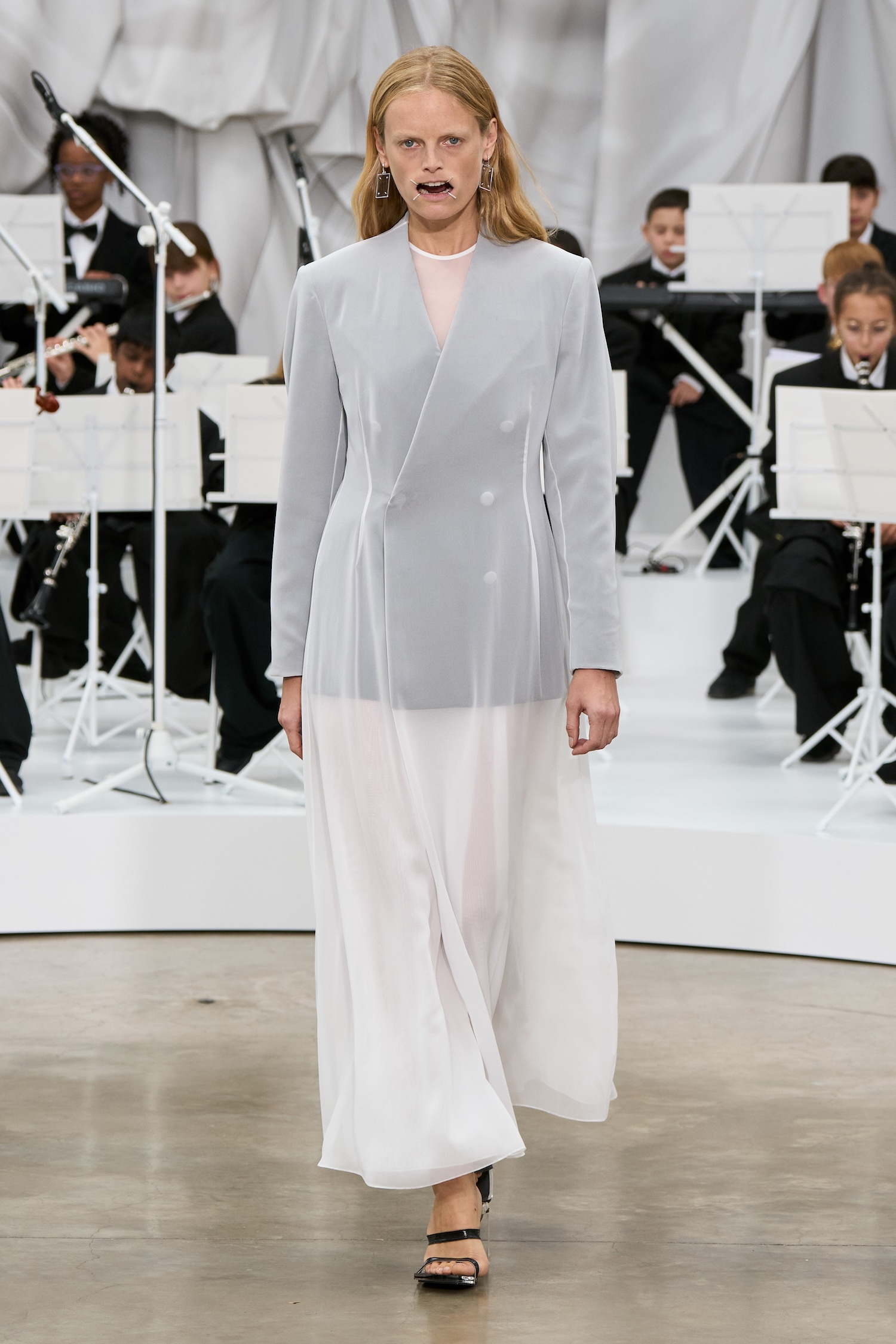
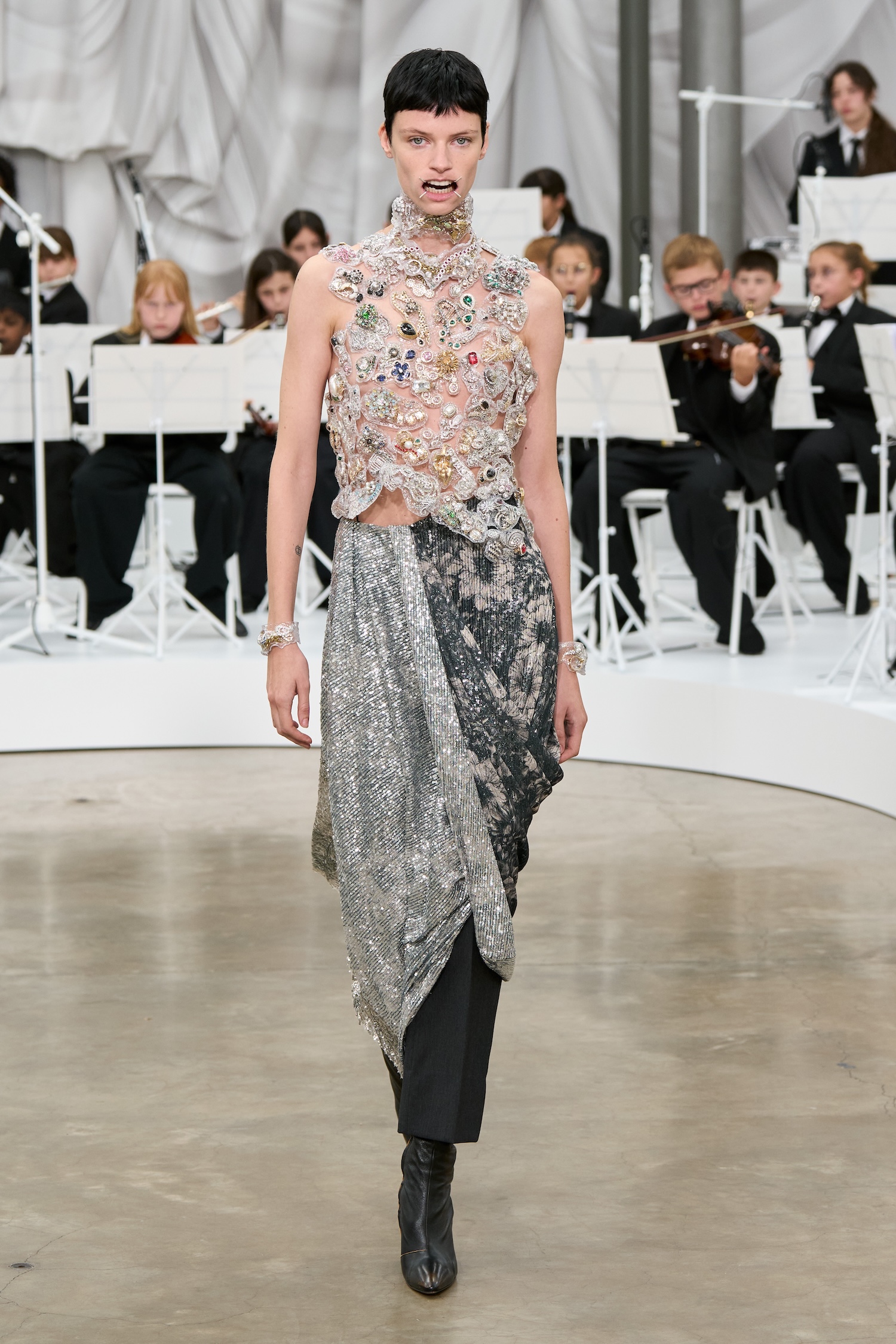
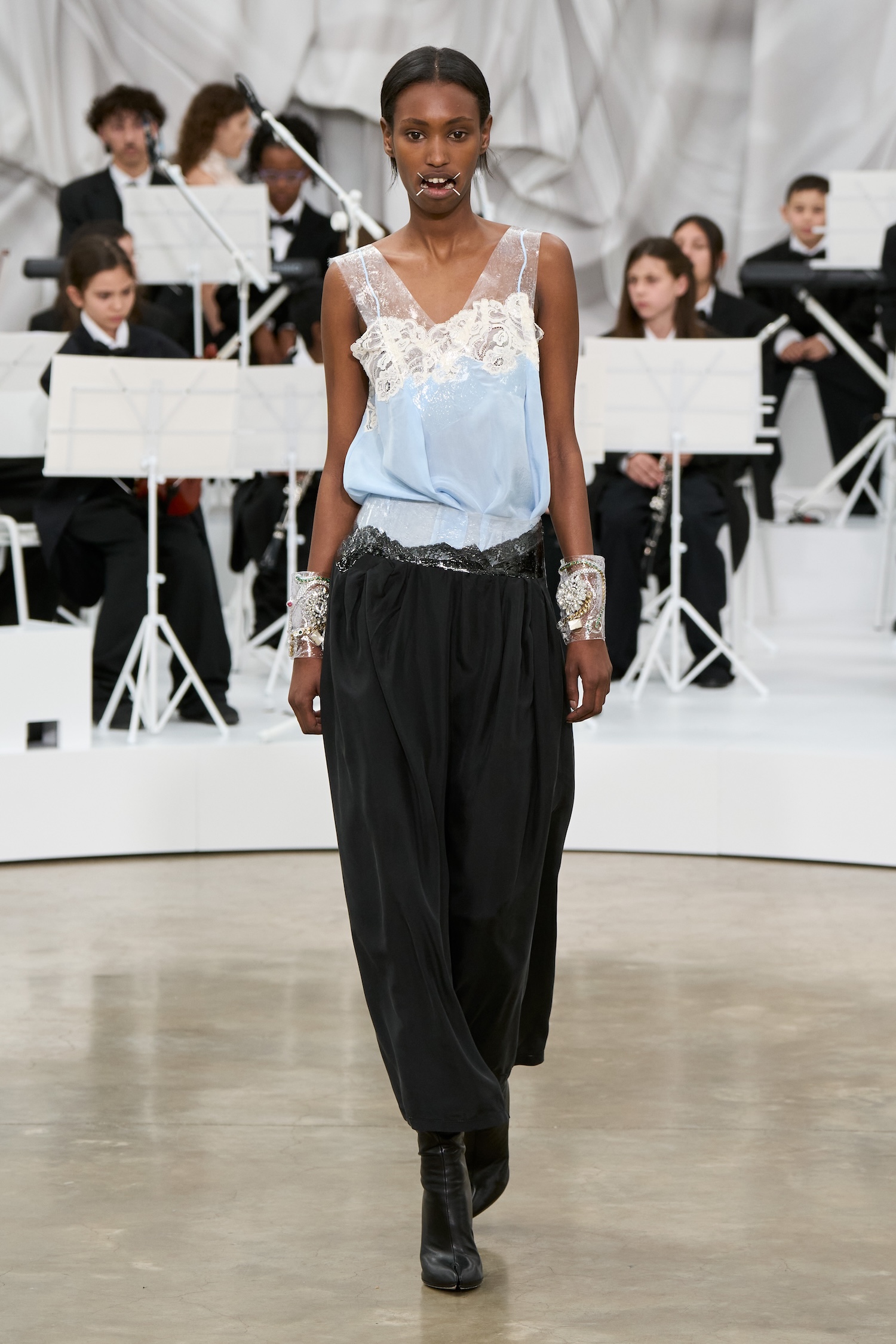
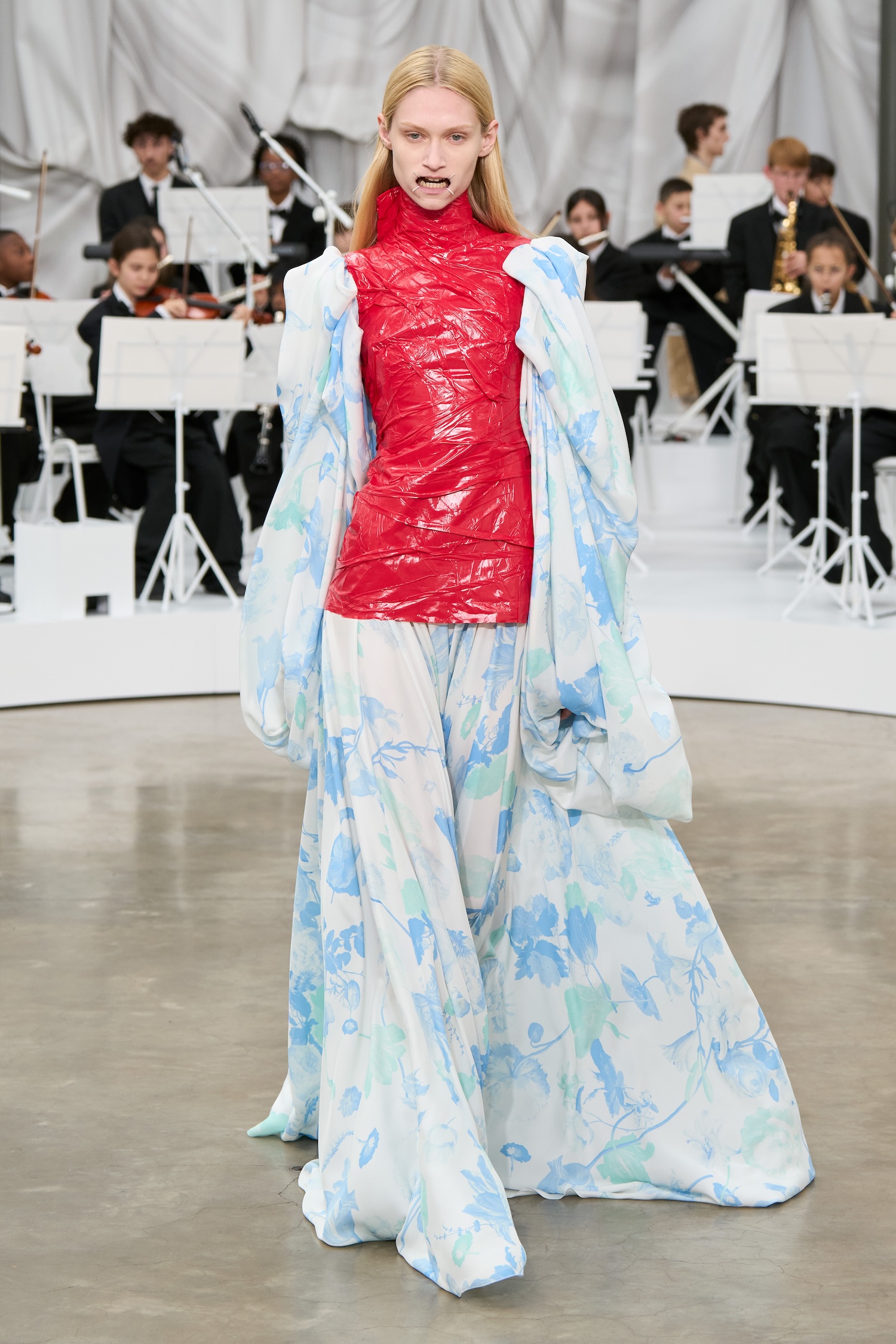
Maison Margiela Spring/Summer 2026: Looks 34, 45, 56, 61 (Images courtesy of Maison Margiela)
Margiela Asks Us to Go Back to the Basics
This collection felt like an edited distillation of Artisanal 2025; pieces reimagined for real life, wearable without compromising the intellectual core of the house. As a creative director, Martens refuses the trope of the isolated auteur; instead, he designs with the Margiela consumer in mind: the thinker, the collector, the one who lives with their clothes. Through this, Glenn reminds us to slow down. In an industry addicted to novelty, where each season demands a new spectacle, he redefines innovation through refinement. Reinvention has become fashion’s latest narcotic, numbing us with constant stimulation, but Martens suggests a different path, patience. He invites us to let the codes breathe; to let creativity age and deepen with time.
With conservatism and restraint returning to fashion’s lexicon, this slimming down of ideas hints at a broader shift. Perhaps this is the new rebellion: less excess but more endurance. For a Maison so deeply intertwined with anonymity and deconstruction, Margiela continues to serve as an enduring institution. It remains fashion’s quietest yet loudest voice; a blank canvas for those who seek to see. Under Martens, it reminds us that Margiela is not just a house that stays but it is also a house that evolves.