
By Louise Daniel
Matthieu Blazy took his time. And now, we finally understand why wonderful things take time—and even greater things in fashion transcend the very idea of time and space. Some say Chanel is fashion—the house’s very existence serves as one of the foundations of the modern fashion system. Gabrielle Chanel, the eternal muse of the brand, remains at its very core: a femme fatale who subverted the constraining codes of early 20th-century society. Yet it was Karl Lagerfeld’s towering 36-year tenure that solidified Chanel’s dual identity, both deeply rooted and outwardly revolutionary, redefining how creative legacies are reinvented within contemporary fashion. He remains the blueprint for creative endurance. This, later continued by Virginie Viard, sustained Chanel’s quiet strength and continuity.
Now, as old fashion paradigms unravel, Blazy steps into a new era. His debut shattered through expectations with a vision as vast as the universe itself—a poetic amalgamation of tweed, jersey, and silk; a reduction of logocentrism; and a reinterpretation of Chanel’s sacred ideologies through craftsmanship, depth, and dare I say, subtle rebellion. It felt as though Blazy was peeling back the very layers of Chanel, using its limitations as creative frameworks rather than boundaries. He simply gazed lovingly at the past, an homage to the legacy that came before him, but his sight was fixed firmly on the future.
The First Chapters of Blazy's CHANEL
Presented at the close of Paris Fashion Week, Blazy’s Spring/Summer 2026 collection reignited the spark of anticipation—dissolving the “fashion fatigue” that often lingers in the industry’s final stretch. It reminded us about the potentiality of fashion, why fashion can still move us, why it can still feel new.
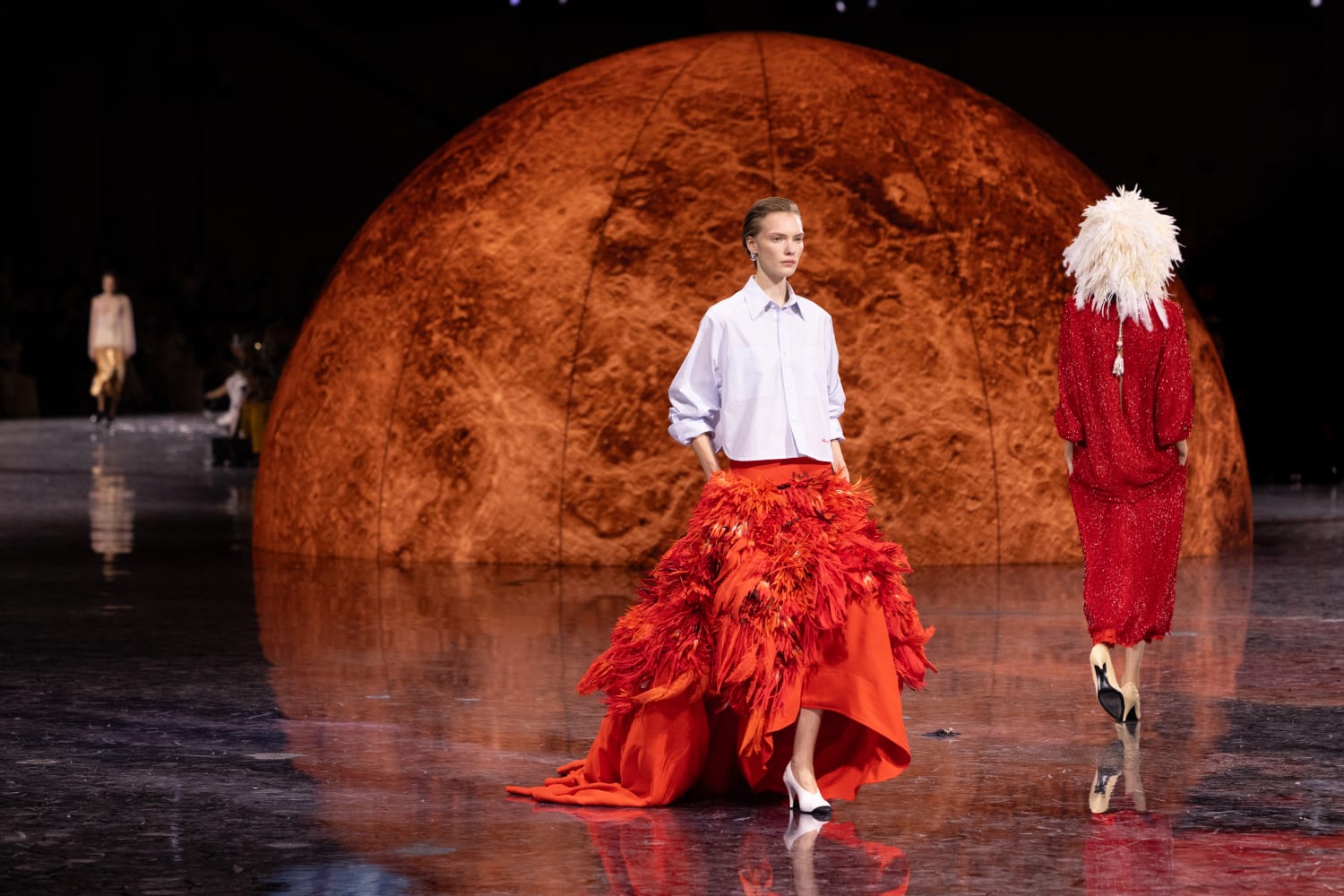
Held at the “Chanel HQ of Paris,” which would be none other than the Grand Palais, the collection promised an experience that was anything but ordinary. In fact, the entire space was transformed into a reflection of the cosmos itself—celestial installations, reflective surfaces, and dark inlays constructed an immersive space that drowned out the noise of a typical Parisian evening. Solem, perhaps the most fitting word. As Gabrielle Chanel once said, “I love everything that is above: the sky, the moon, I believe in the stars."
Blazy understood the gravity of his role, but he also understood that Chanel demanded a unique kind of beauty, one born from dialogue, not eradication. The 77 runway looks were divided into three distinct acts—Un Paradoxe, Le Jour, and L’Universel. Each chapter corresponded to the journey of Chanel—not just as a fashion house, but as a living organism of culture. Un Paradoxe responded to the tenacious spirit of Gabrielle—her ability to use clothes to stand toe to toe with a man during a time of restriction. Le Jour, a reference to the house’s daywear, explored the classics that ground the House of Chanel. Lastly, L’Universel proposed something new: a borderless Chanel, one that belongs to its people. The array of opening looks drew from the menswear codes that Gabrielle Chanel loved to reinterpret. Arthur “Boy” Capel, a known intimate lover of the house’s founder, fueled her creative endeavors—inspired by Gabrielle’s fierce independence. From the Boy bag created by Karl Lagerfeld in 2011 to the bottle of the famous Chanel No. 5 (rumored to be inspired by Capel’s whisky decanter), his Englishman style became the heralding force behind the first looks of Blazy’s collection—cropped, boxy jackets and shirts created together with the historical French shirtmaker Charvet.
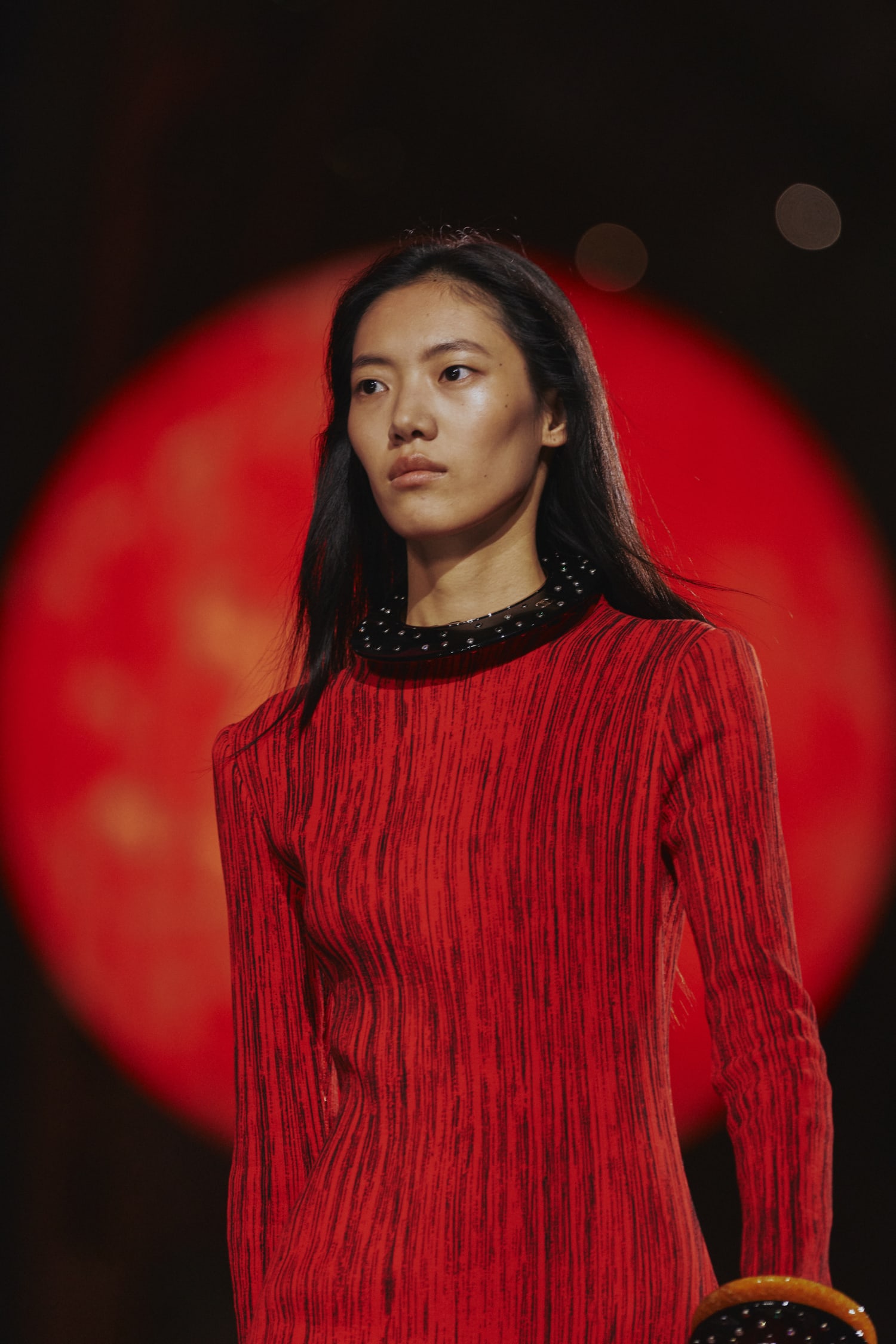
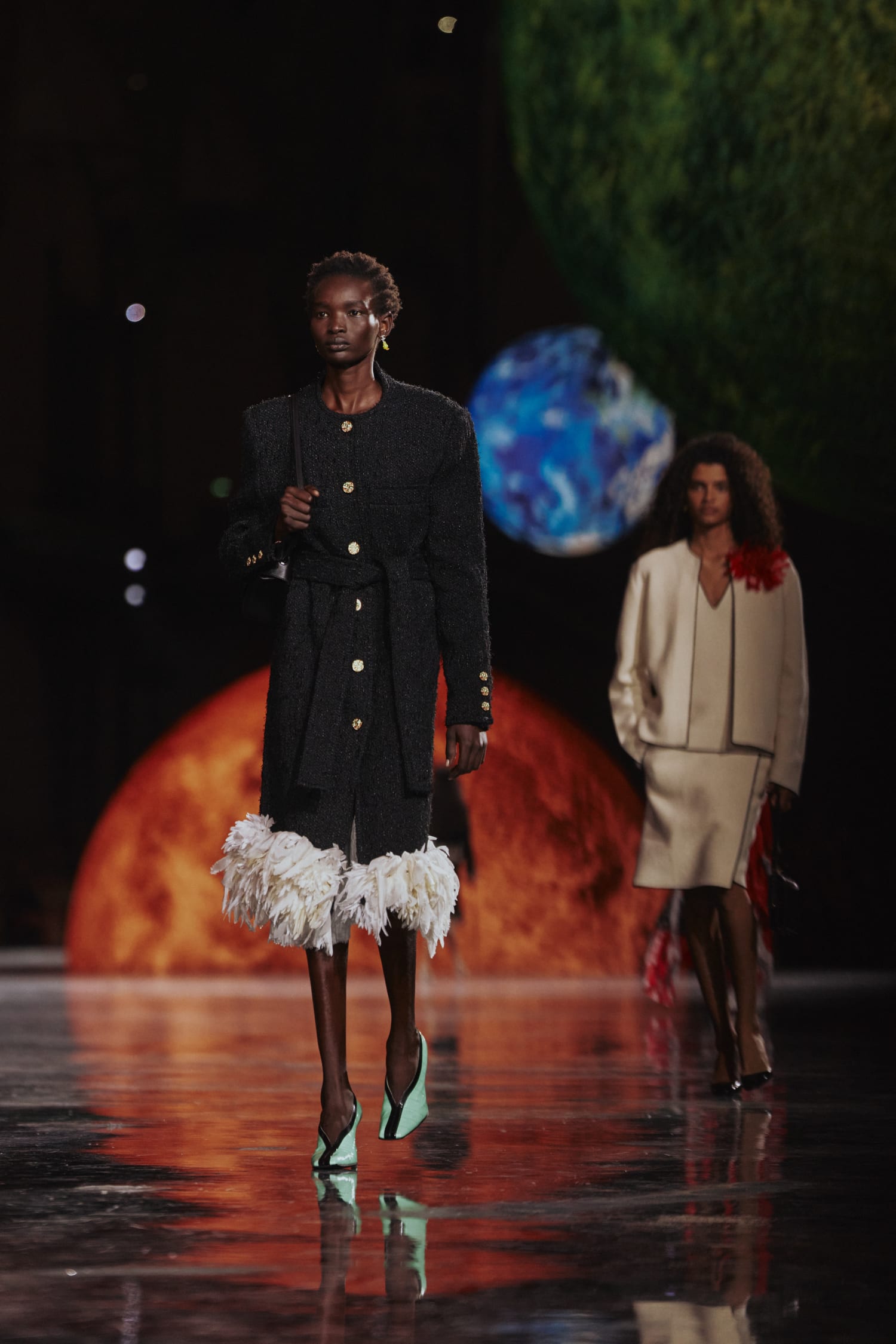
Matheiu Blazy made his debut with the Spring/Summer 2026 collection as artistic director of Chanel (Images courtesy of Chanel)
The Tweed Renaissance
Tweed, a proponent signature of the brand, was explored with intent. As this classic signature went through a liberation under Karl Lagerfeld’s time, it is now going through another Tweed Renaissance under the skillful hands of Blazy. This is something noteworthy about Blazy—he is a good creative director, but an even better designer. As observed in his tenure at Bottega Veneta, Blazy finds innovation within materiality. In a house like Chanel, his creativity will be pushed beyond measure. It is almost as if materials are given new life— from afar, the garments capture a classic, captivating look, but up close, they reveal layers of technique and material experimentation that grow more complex with every season.
As an example, Look 48 consisted of a muted tweed set with frayed hems that seemed ordinary from afar, but when magnified, was fully hand beaded. The same technique was applied to the mid-length coat in Look 49, with an added step: an artful fade from tweed cotton into hand-beaded embellishment, emphasizing the coat’s frayed edges.
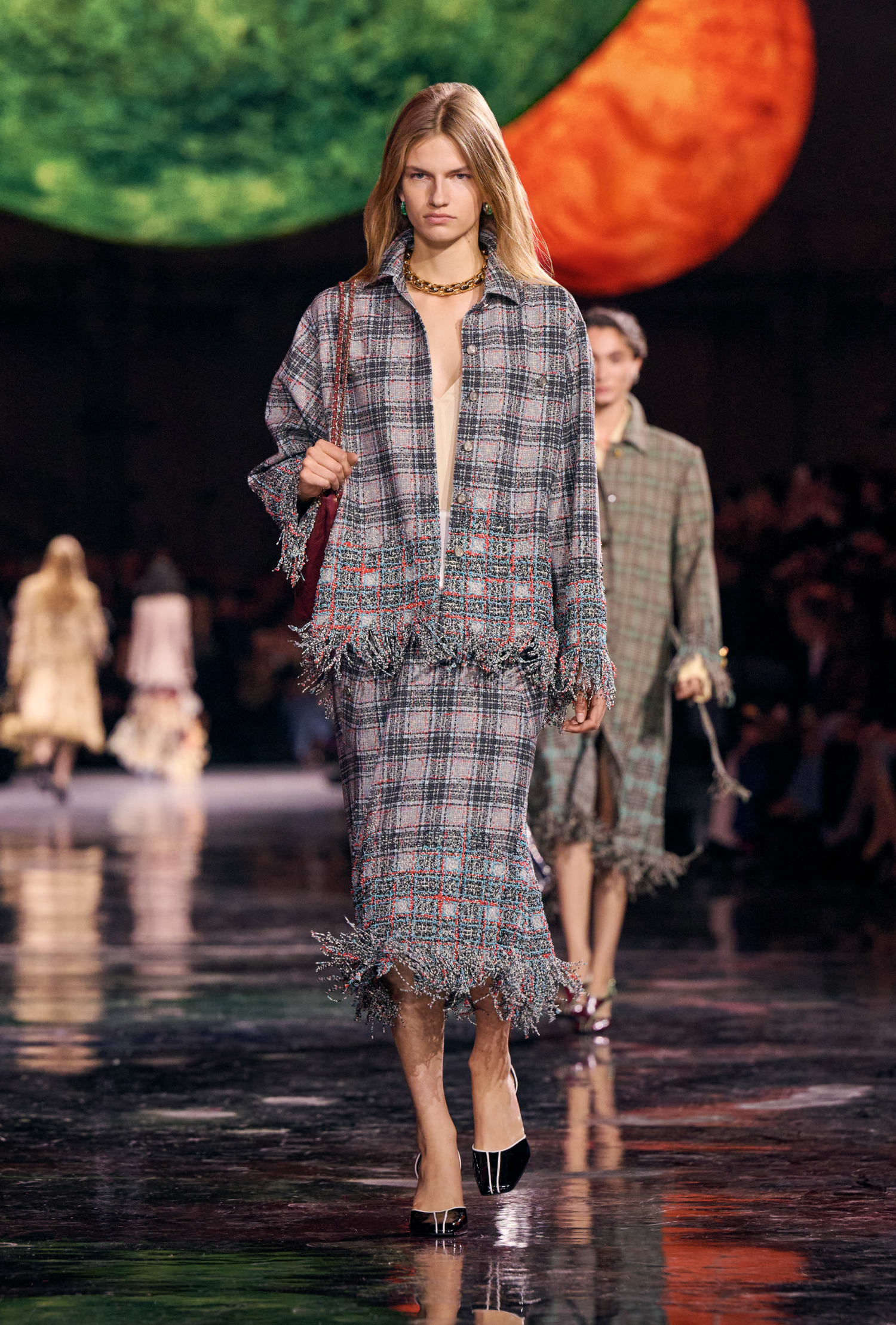
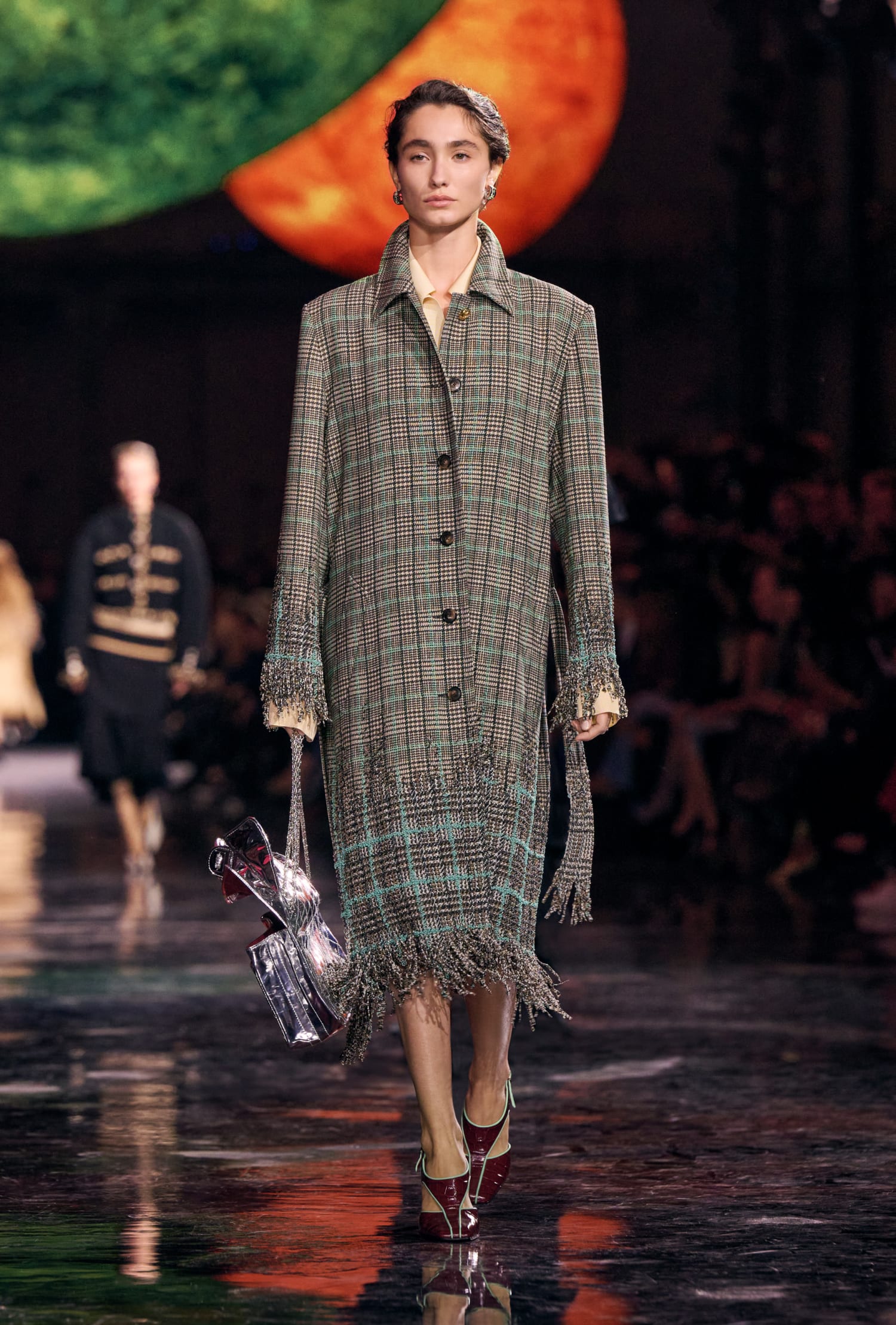
Chanel Spring/Summer 2026: Looks 48, 49 (Images courtesy of Chanel)
There was also a poignant liberation of silhouettes on the runway—subtle yet clever. Extravagant, intricate skirts with exquisite volume were paired down with casual dress shirts (see Look 20). The fine line between evening and daywear did not matter anymore. Modern sophistication emerged through the liberation of the typical Chanel suit. The tweed jacket was also given more volume and width on the shoulders, providing a refreshing contrast to the house’s classic pencil skirt (see Looks 64 and 65). An interesting, playful touch came through the “destruction” of the Chanel 2.55—another house signature that has served as a generational token in most families. Chanel mothers passing down their lived-in treasures to their soon-to-be Chanel daughters.
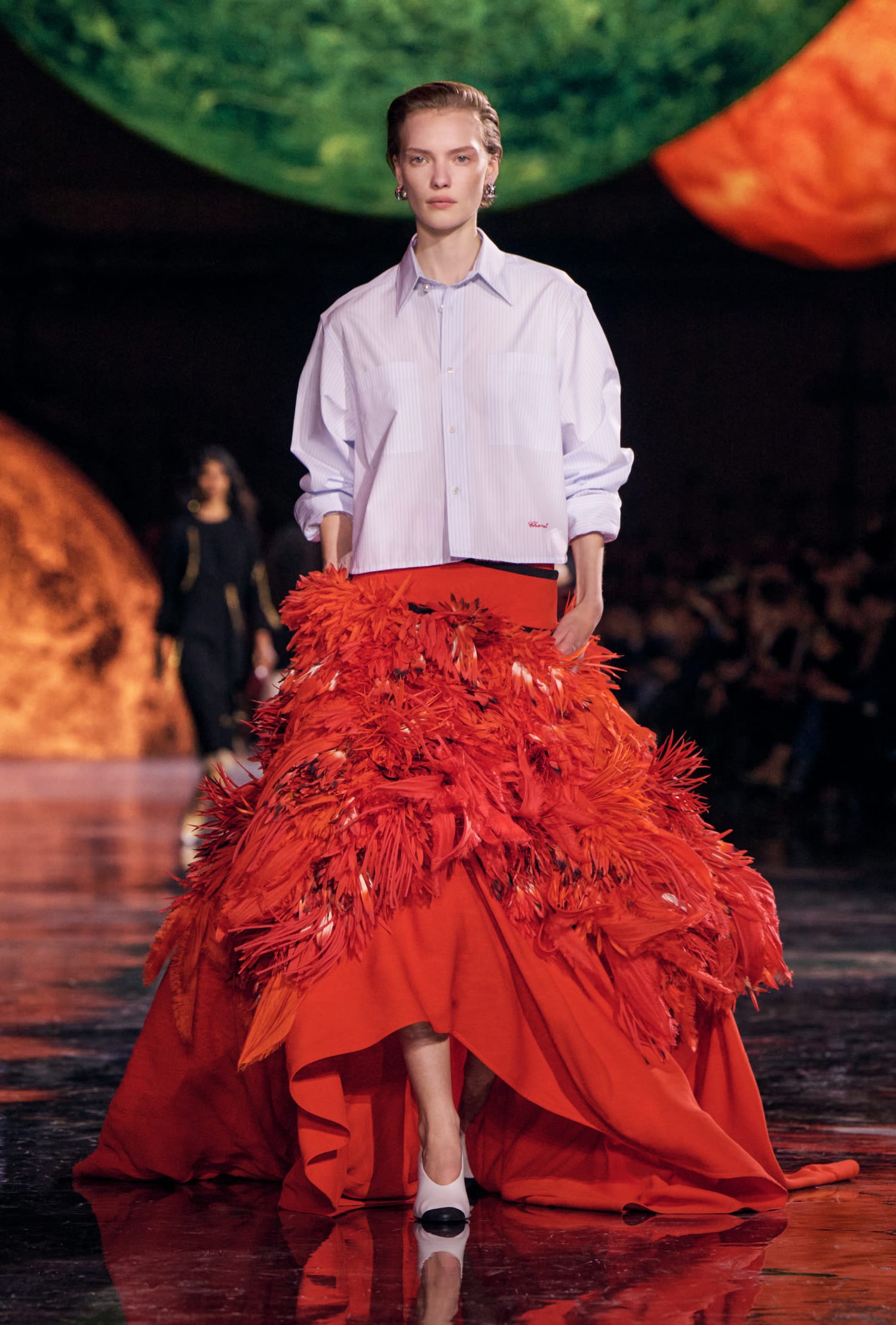
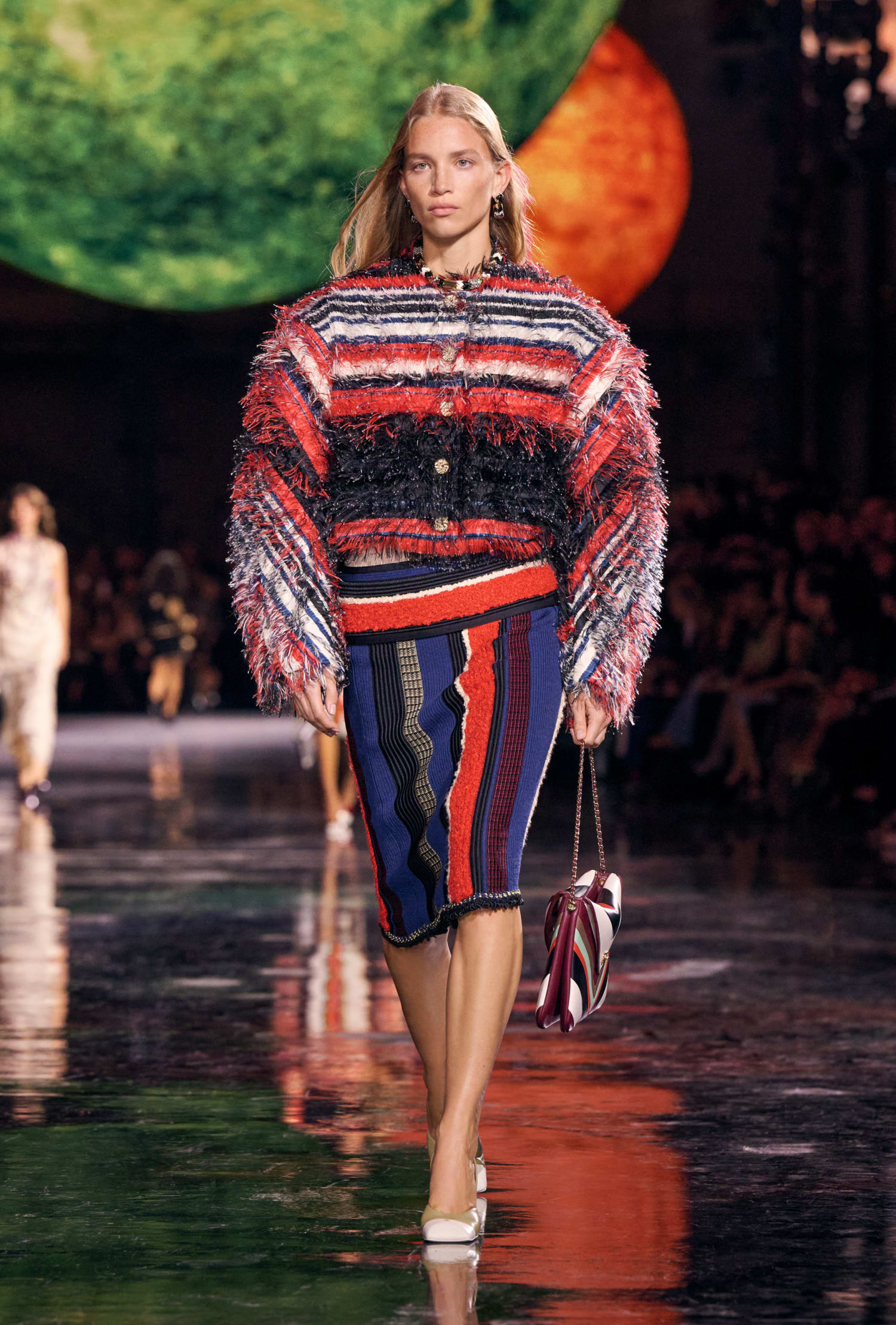
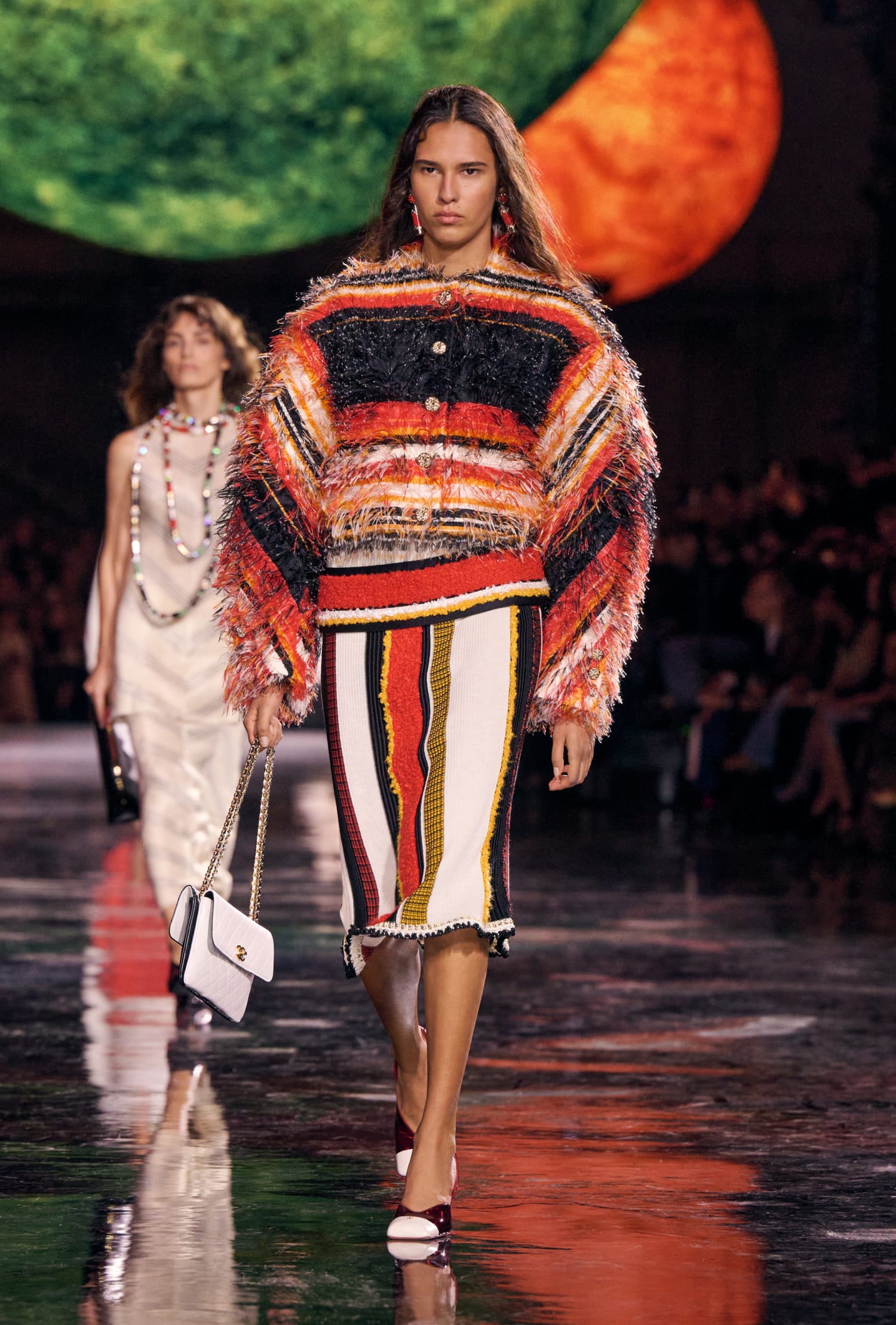
Chanel Spring/Summer 2026: Looks 20, 64, 65 (Images courtesy of Chanel)
A Freedom Worn Is A Freedom Won
The finale, led by Awar Odhiang in a kaleidoscopic vision of color, encapsulated the emotional core of the show. As she smiled and clapped at the end of the runway, Blazy embraced her with warmth—a moment that felt disarmingly human amid the grandeur. Just as Gabrielle Chanel once rebelled against the systems that confined women, Blazy continues that spirit of defiance in his own quiet way. He looks to Gabrielle’s independence, Karl’s innovation, and Viard’s discipline—propelling Chanel into its next orbit. Although debuts are simply the beginning of a creative director’s universe, Blazy is already reaching beyond the cosmos—with love, and so much of it.
“Chanel is about love. The birth of Modernity in fashion comes from a love story. This is what I find most beautiful. It has no time or space; this is an idea of freedom. The freedom worn and won by Gabrielle Chanel.” — Matthieu Blazy
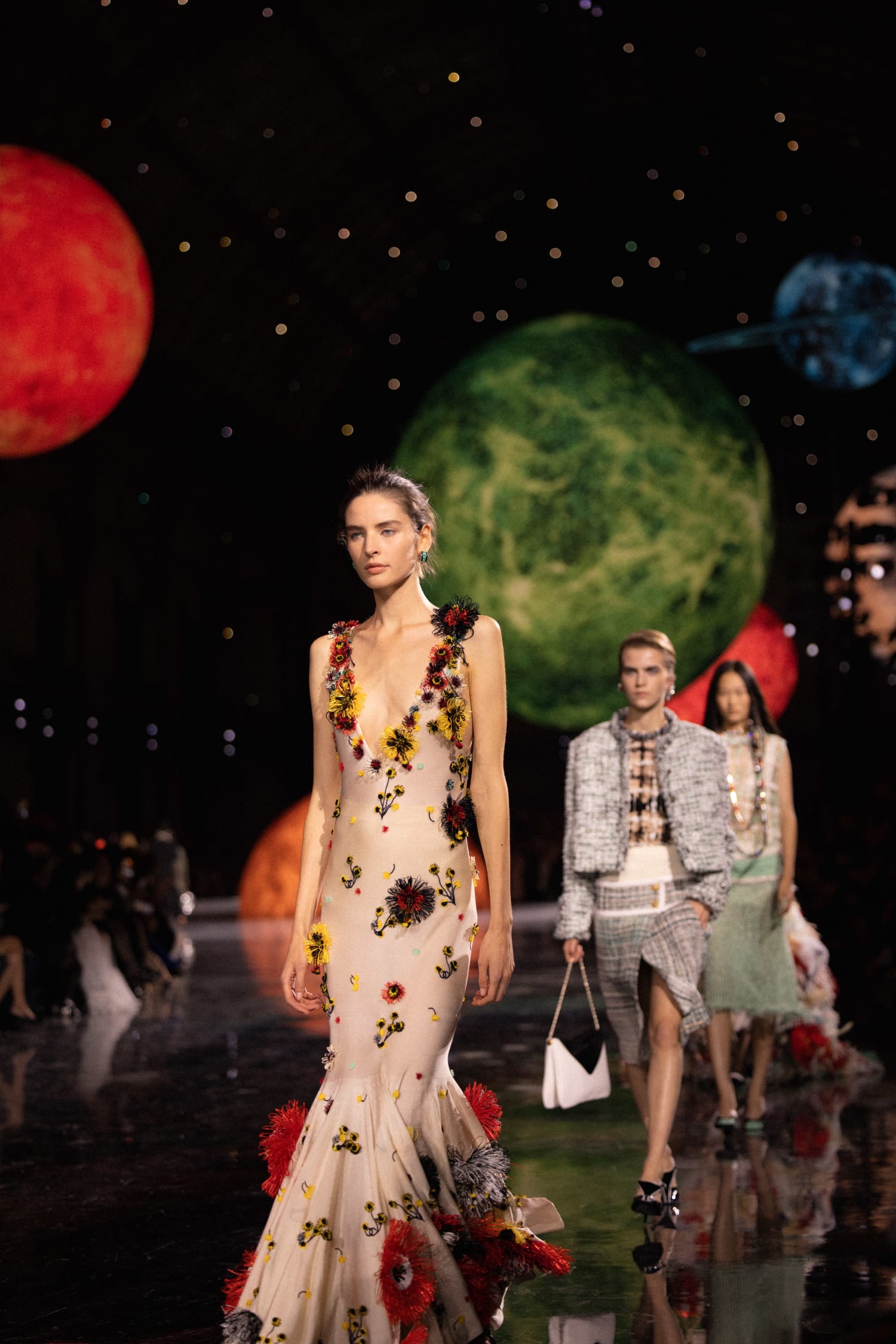
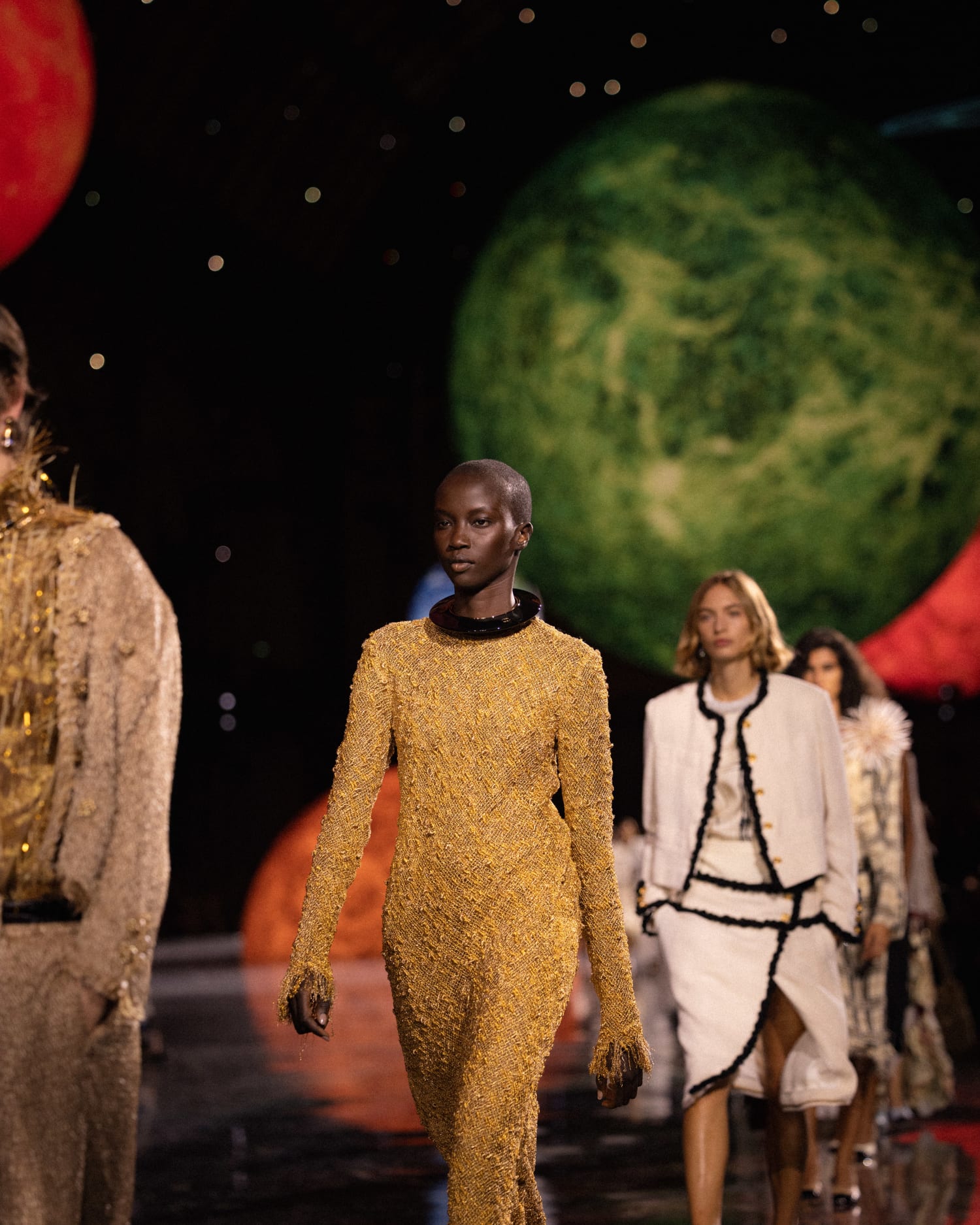
Chanel Spring/Summer 2026 show presented at the close of Paris Fashion Week (Images courtesy of Chanel)