
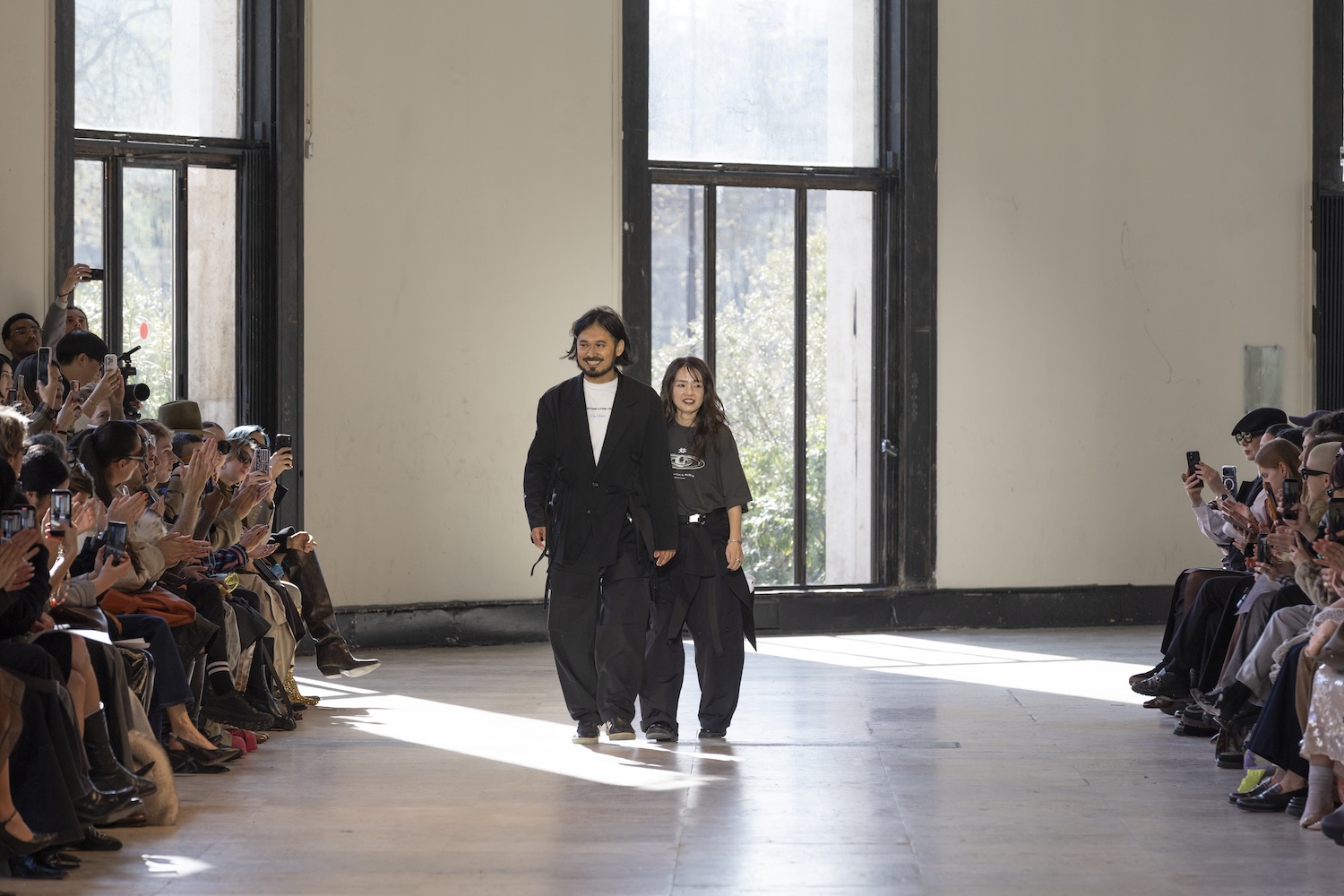
By Jesse Scott
There was something tangibly darker, grittier, more complex about Ujoh Autumn/Winter 2026. Granted the DNA of the brand remained, from effortless draping to asymmetrical details to subtle moments of deconstruction. But the rhythm… the pace… the attitude were different. Gone were the soothing allusions to the Japanese seaside that infused the S/S 2026 collection with a barefoot savoir faire and were inspired by Mitsuru Nishizaki’s fond family memories. In their place was a distinctive grunge edge embodying those ephemeral teenage years when we act with blind if well-intentioned conviction while feeling invincible.
This collection, perhaps, told a coming-of-age narrative in 1990s and early 2000s Japan. If America had Third Eye Blind and Green Day, Japan had the likes of Thee Machine Gun Elephant, who a Tokyo friend of mine refers to as playing a seminal role in his musical education. I could almost hear their angsty chords echoing through the Palais de Tokyo as models stalked the runway with a determination and swagger I have yet to see in an Ujoh show. The collection felt like Mitsuru and Aco Nishizaki fully unleashed. Unexpectedly unveiling an entirely new lens through which to view their narrative, they proved as comfortable with brash rockstar energy as balanced sartorial minimalism. And synthesizing the two adds layers of nuance and intrigue to the sophisticated house.
Chaotic Silhouettes, Presented Deliberately
While the Nishizakis embraced surprising elements of chaos in this season’s aesthetic, they did so while doubling down on the meticulous artisanal craftsmanship that remains the brand’s signature. Many pieces were woven on 1960s Schohërr machine, a process that takes five times longer than using a typical loom. Yes, this collection was defiant…against, as the show notes claimed, “haste and overconsumption.”
As always, attention to detail was outstanding. Almost every look included subtle features that revealed themselves to the most astute observers, for example, a series of asymmetrical pockets and fastenings on Look 11, layers of sleeves and collars on Look 10, and a deconstructed pinstripe blazer with zippers in Look 27. The pinstripe blazer, typically emblematic of formal corporate wear, was sublimated into a subtly subversive statement this season. For example, the aforementioned Look 27 saw it paired with a matching skirt instead of pants. And my personal favorite ensemble, Look 2, saw a double-breasted version with short sleeves worn over a slinky sheer lace dress.
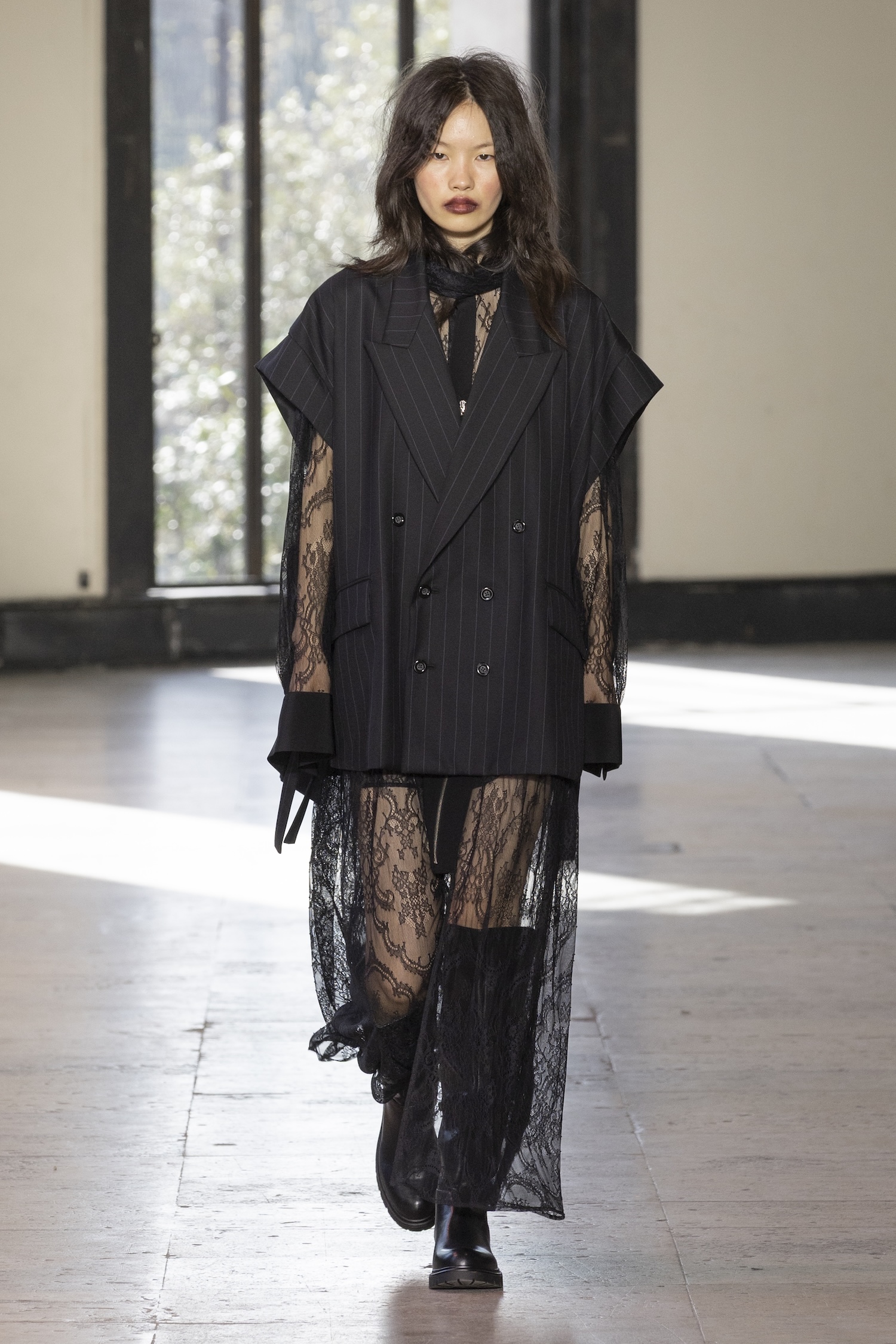
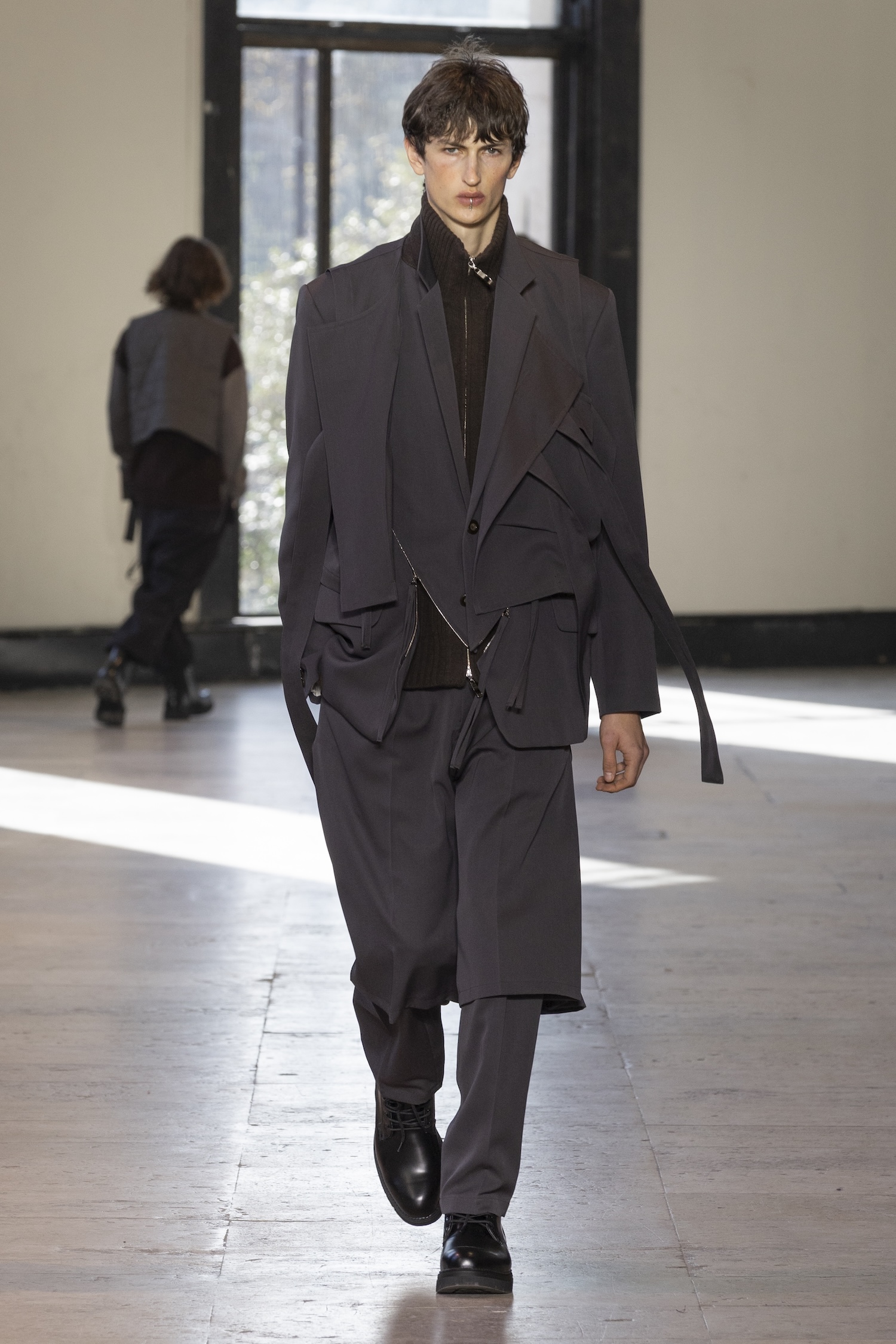
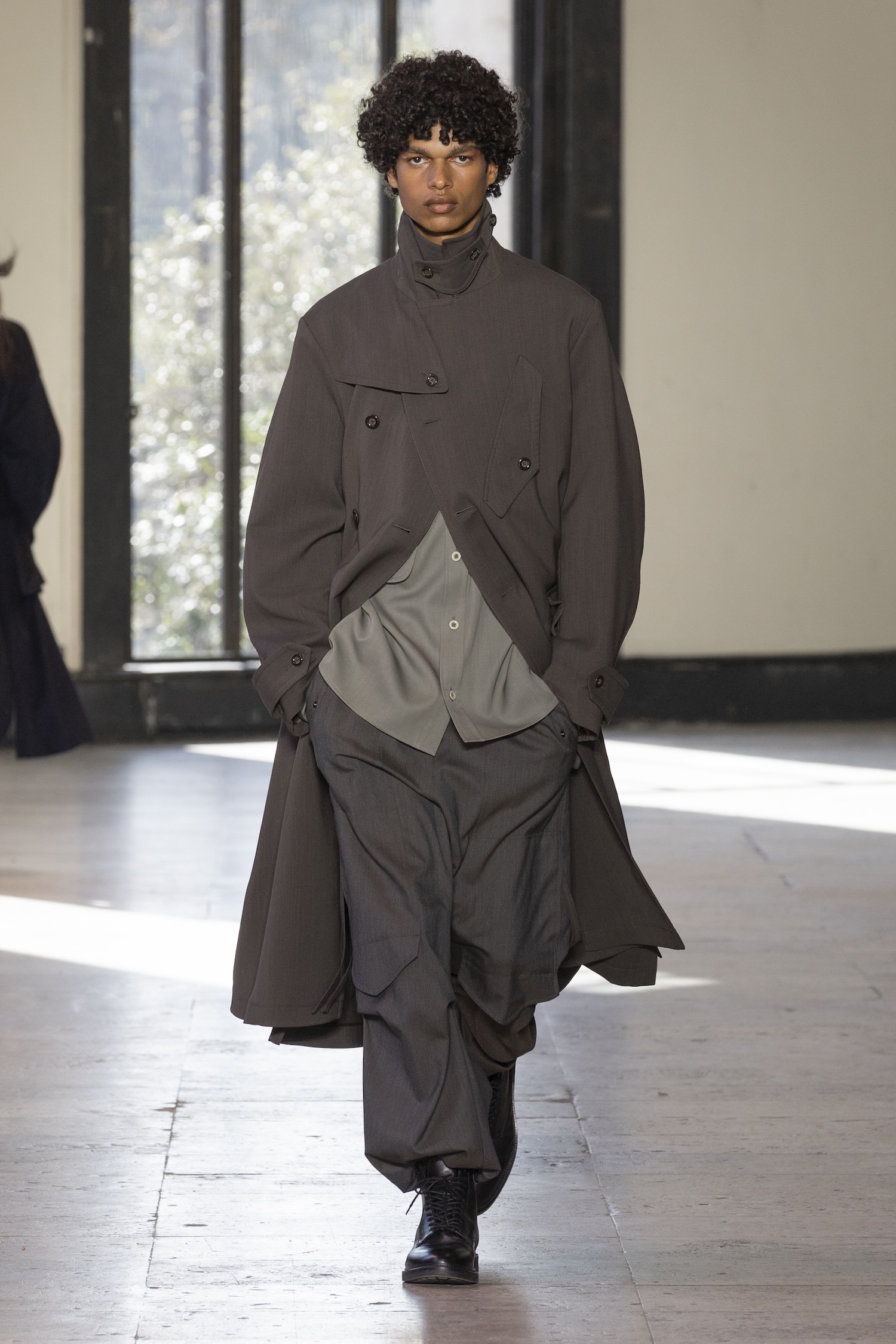
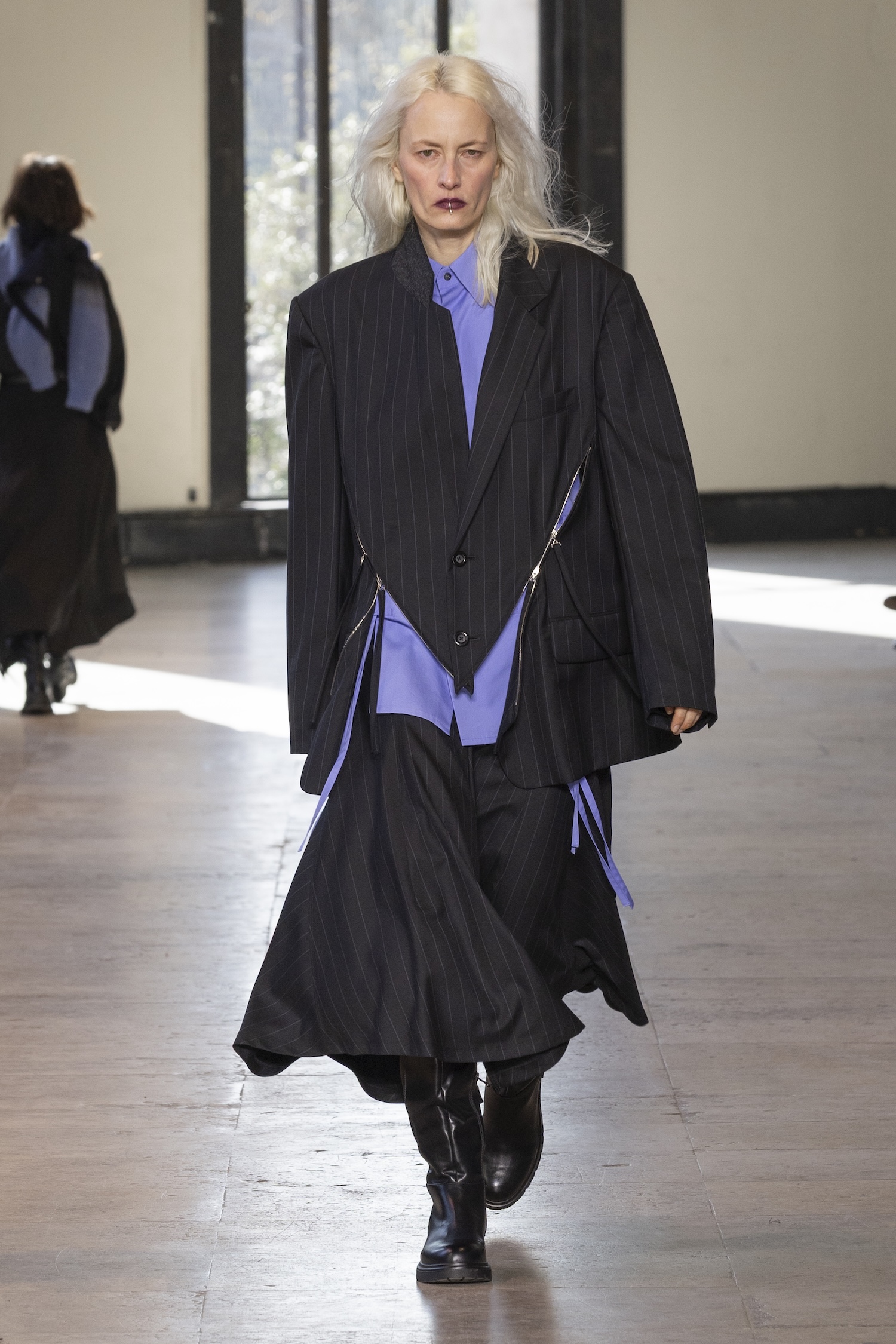
Ujoh Fall/Winter 2026: Looks 2, 10, 11, 27 (Images courtesy of Ujoh)
High-waisted belts, one of the biggest (and best!) trends of AW26, were omnipresent. They appeared most memorably with a one-shouldered purple furry coat in Look 5, a trench of the same color in Look 9, and an asymmetrical coat (inverting the aforementioned one-shouldered structure) in Look 17. These looks, perhaps above any other, felt rockstar, as if they had been DIY-chopped in a 5 a.m. fit of inspiration then thrown on with oversized sunglasses when en route, reluctantly, to a studio session the next morning. Yet their pairing with fully zipped knits and gracefully draped trousers made them still distinctly measured. After all, the Nishizakis are not throwing caution to the wind. As the show notes told us, this collection does not abandon the house’s DNA but rather “asserts it with greater force.” It represents not a “break” but a “questioning.” And it’s a questioning process, brave if still calculated, that more brands would be wise to engage with.
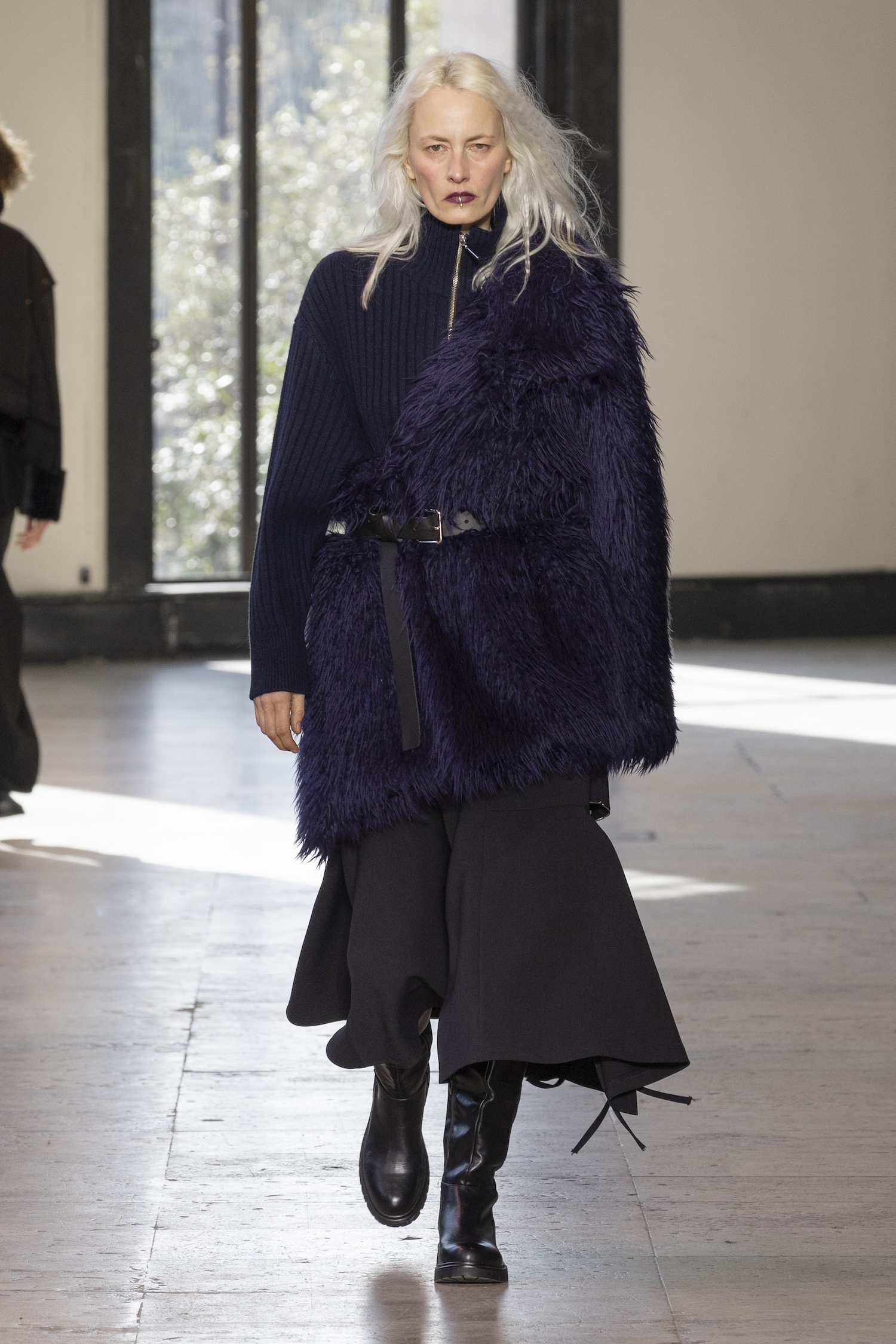
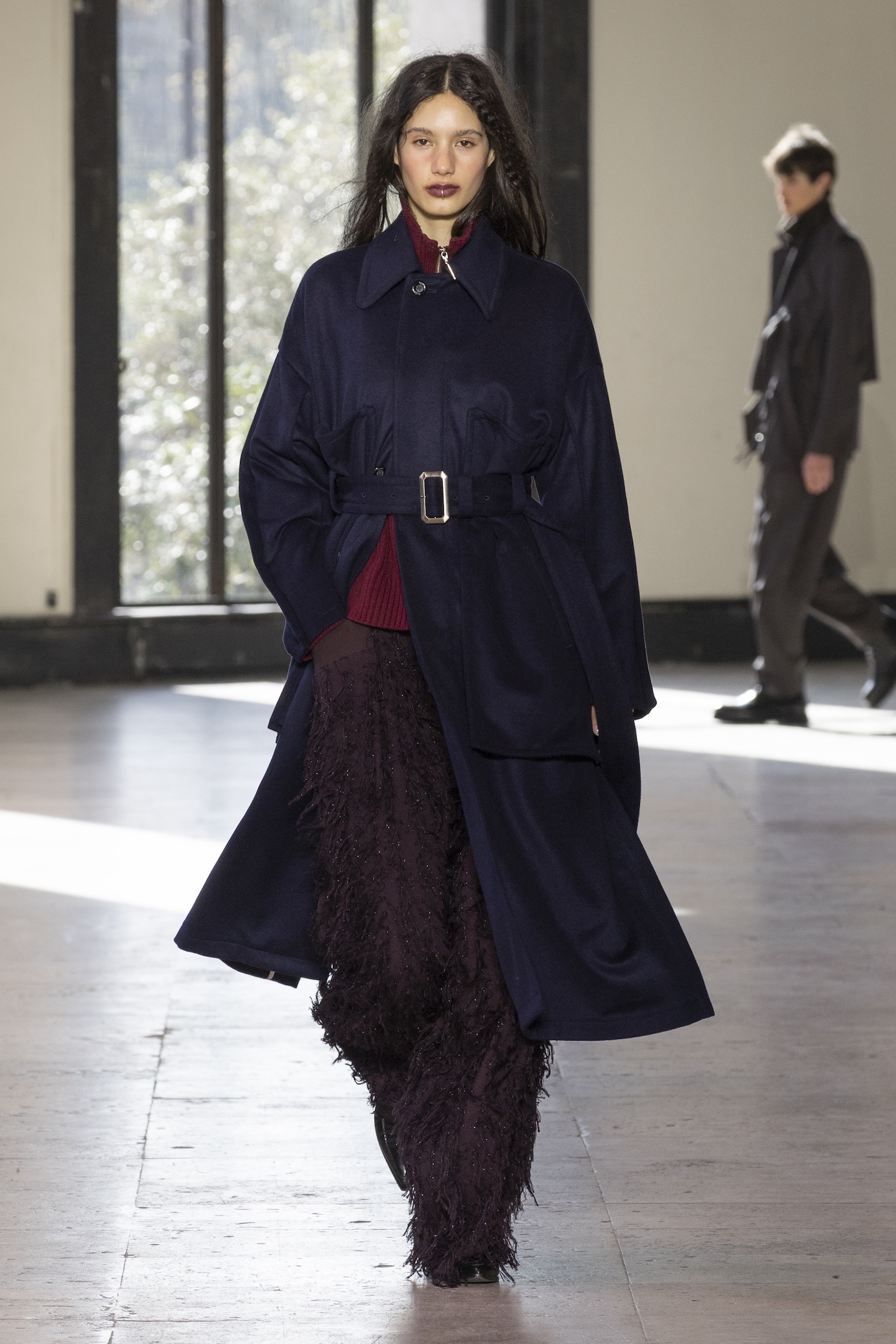
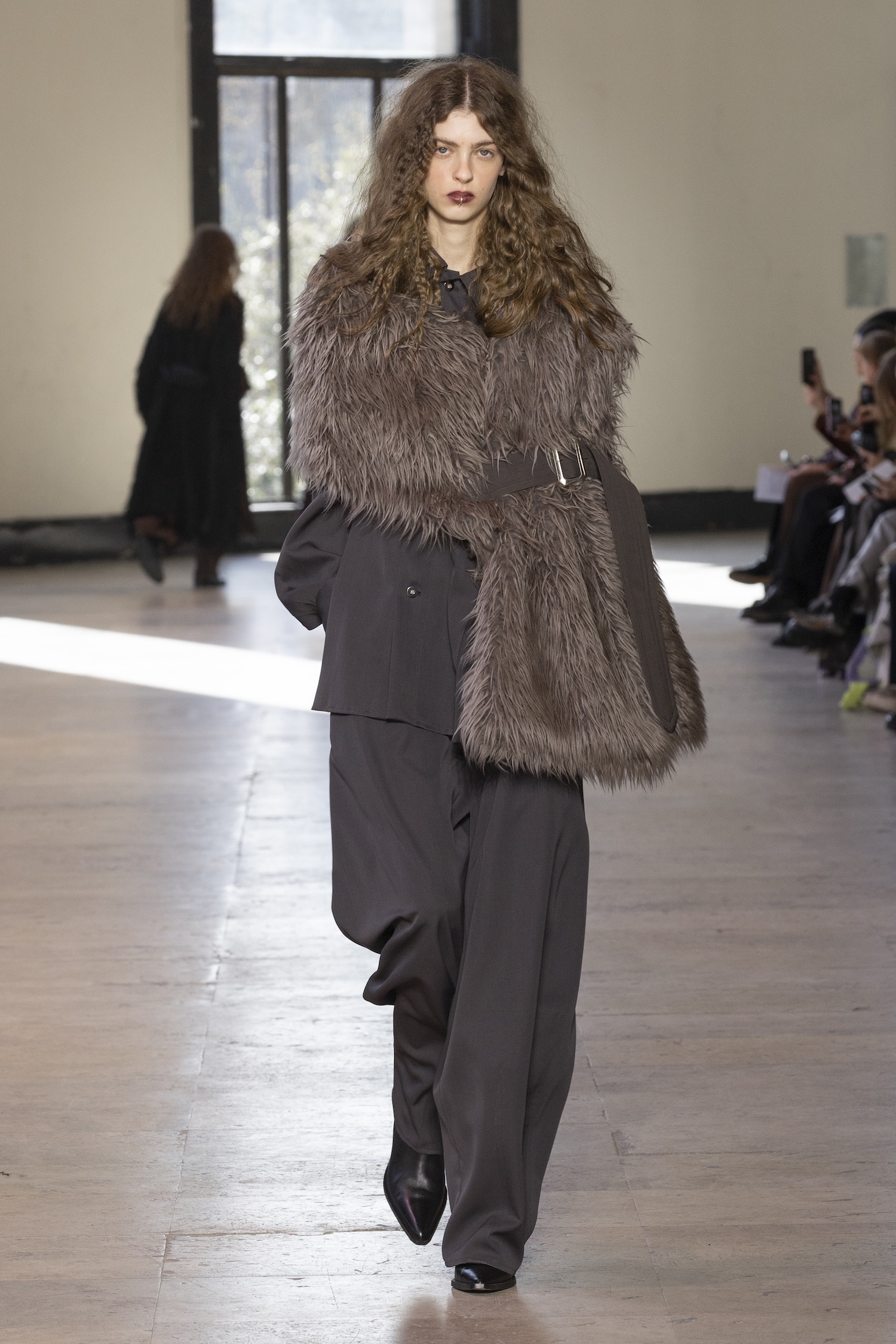
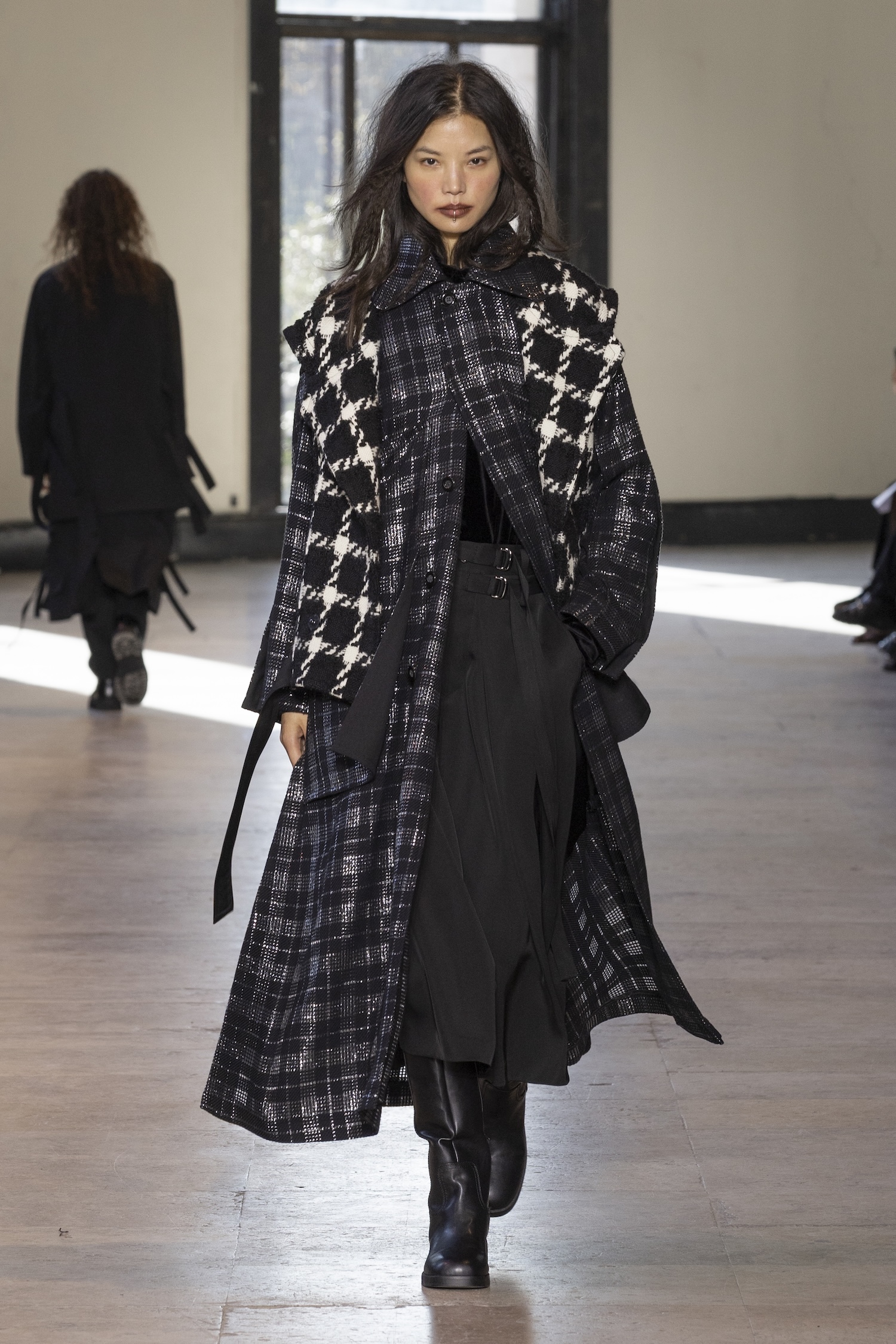
Ujoh Fall/Winter 2026: Looks 5, 9, 17, 44 (Images courtesy of Ujoh)