
By Jesse Scott
It has been a monumental couple of weeks for Maison Valentino. On January 19th, Valentino Garavani, who founded the house in 1960 and served as its creative director for forty-seven years, passed away peacefully in his Rome abode. Fondly known as the “Last Emperor” due to his love of uncompromising luxury and commitment to haute couture in its original form, the Voghera-born designer became the first Italian accepted by the Fédération de la Haute Couture et de la Mode to show on the couture calendar. His is a legacy that transcends generations and continents. Through the rise and fall of empires, and into hazy horizons where history dances with myth, Valentino has endured. From Audrey Hepburn to Princess Diana to Naomi Campbell, if you were in the global jet set these last sixty-five years, you have worn his designs. Farah Diba, the last empress of Persia, escaped the Iranian revolution in a Valentino coat. Jackie Kennedy wore a Valentino dress for her legendary wedding with Aristotle Onassis. And even after the maestro’s 2007 retirement, he continued making custom red-carpet designs for the who’s who of the celebrity world.
Just nine days after Valentino’s death, we were reminded that his legacy is in excellent hands. All eyes were on Alessandro Michele as he presented the Maison’s Spring/Summer 2026 Haute Couture collection in Paris, and he responded by delivering what might be his best collection since taking over as creative director in April 2024. Indulgent, luxurious, and highly dramatic, the sixty look magnum opus distilled core values that would make Michele’s predecessor proud, while poignantly conversing with the present moment. This was a “couturier’s couture,” proving that old-world extravagance, and re-interpretations of it, remain alive and relevant in our current context. And it was presented in a revolutionary format that the A-list guests who attended will not soon forget.
Who Needs Catwalks When We Have Kaiserpanoramas?
It has often been said that fashion moves in thirty-year cycles. Under Michele’s guidance, it may start moving in 130-year cycles, as well. This season saw him resurrect the Kaiserpanorama, a long-forgotten entertainment technology invented by August Fuhrmann in the 1880s and gained popularity throughout Europe at the turn of the century. The Kaiserpanorama is a circular ocular machine around which audiences gathered and observed rotating stereoscopic images through a series of small holes. In Michele’s words, “each spectator watched on his own, though everyone watched at the same time: a public ritual based on the isolation of the gaze.”
This very principle suggests a solution to a core issue in the fashion industry. The spectacle of the modern catwalk intrinsically creates an environment in which “seeing and being seen,” for many guests, takes precedence over the show itself. This is not to mention those following along at home; raise your hand if you’ve scrolled Instagram for front row shots of your favorite celebrities while ignoring the collections they were viewing. Meanwhile, the “simultaneity of gaze” at shows, with opinions disseminated en masse for global consumption within seconds of the final model leaving the runway, is anathema to the measured critiques, among exclusive circles, that defined haute couture in Valentino Garavani’s prime.
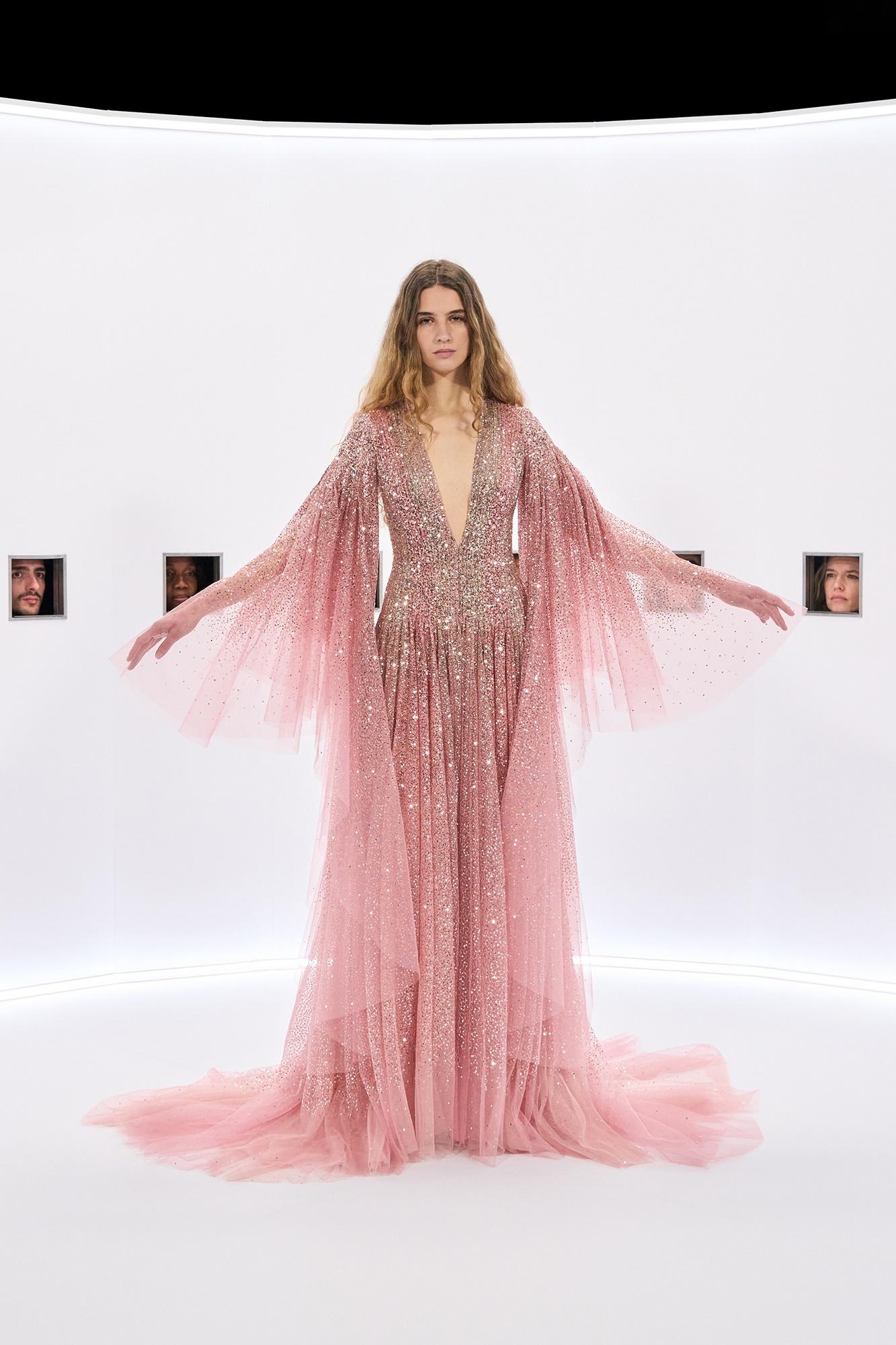
Michele’s solution? “Orient the gaze” and “regulate the access.” Turning a sport of rapid consumption into the “sacred ritual” that it once was, he seated his guests around twelve Kaiserpanoramas that he referred to as contemporary altars. Each person, from Lily Allen to Dakota Johnson to Kirsten Dunst, was effectively invited to an intimate viewing for their eyes only, watching each model appear through a peephole against a pure white background.
Archaic Meets Contemporary: From the Pharaohs to the Sun King to Hollywood
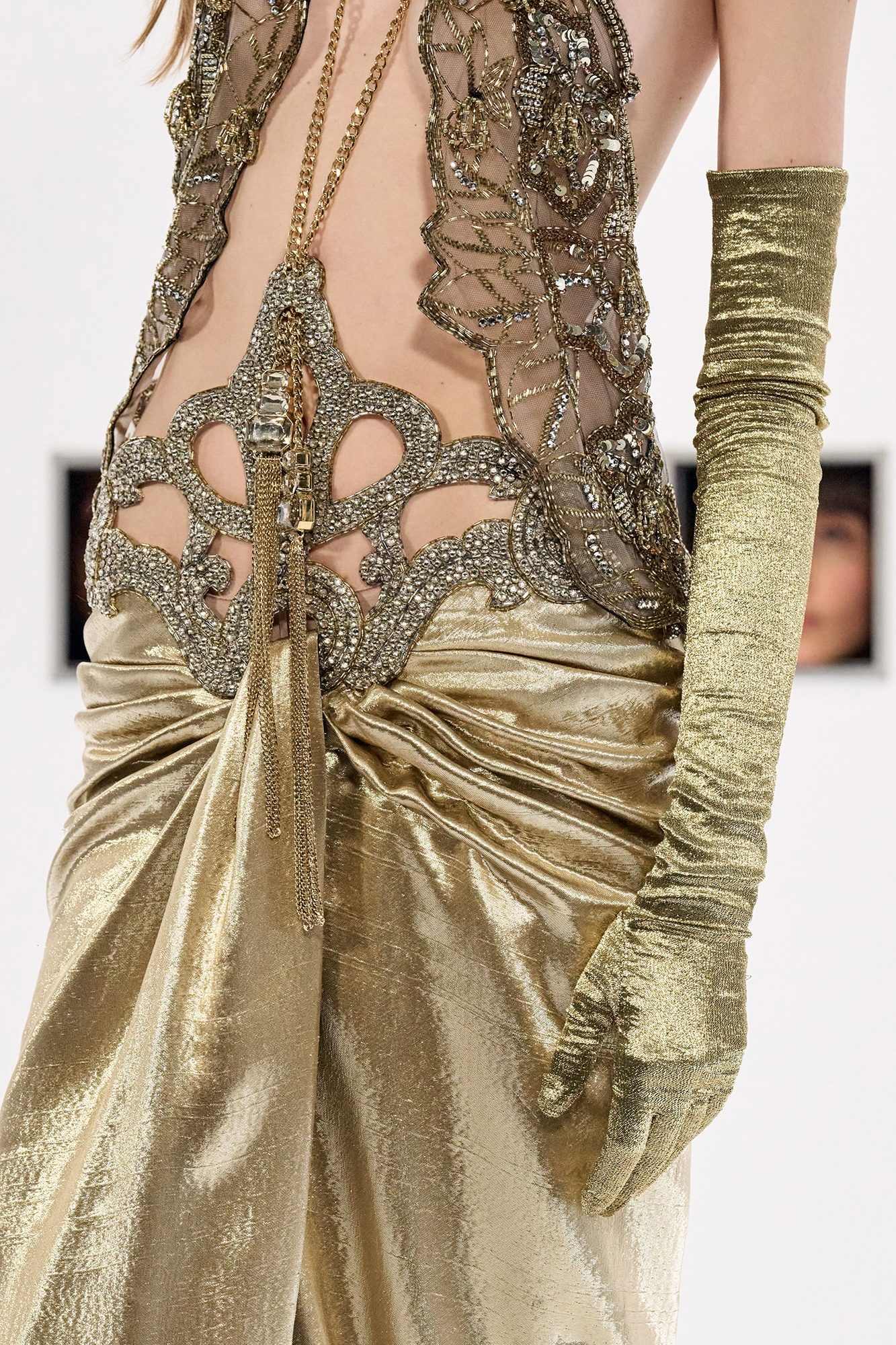
Michele and Hollywood have always gone hand-in-hand, and this collection was no exception. The opening look was a vision in Valentino red that instantly reminded me of one of Margot Robbie’s iconic dresses from “Babylon.” Babylon parallels, whether referring to ancient times or the Damien Chazelle ode to Hollywood hedonism, continued with an iridescent silver dress in Look 3 and a gracefully draped gold caftan in Look 6. Elaborate headwear was omnipresent, from “sun god halos” reminiscent of Ancient Egypt to a golden tiara with cascading chains that partially concealed the model’s eyes in Look 12. So too were fringes and feathers worthy of Cleopatra or The Great Gatsby’s Daisy Buchanan. The model in Look 22, wearing a chandelier of jewels and a sweeping array of pure white plumes, seemed a champagne-induced apparition spirited off a marble staircase in Gatsby’s mansion. Meanwhile, the model in Look 26, which starred the collection’s most spectacular headdress, appeared with hands-on-hips defiance in a sweeping gold robe that left me wondering if the Louvre, particularly the Ancient Egypt galleries, had fallen victim to another heist.
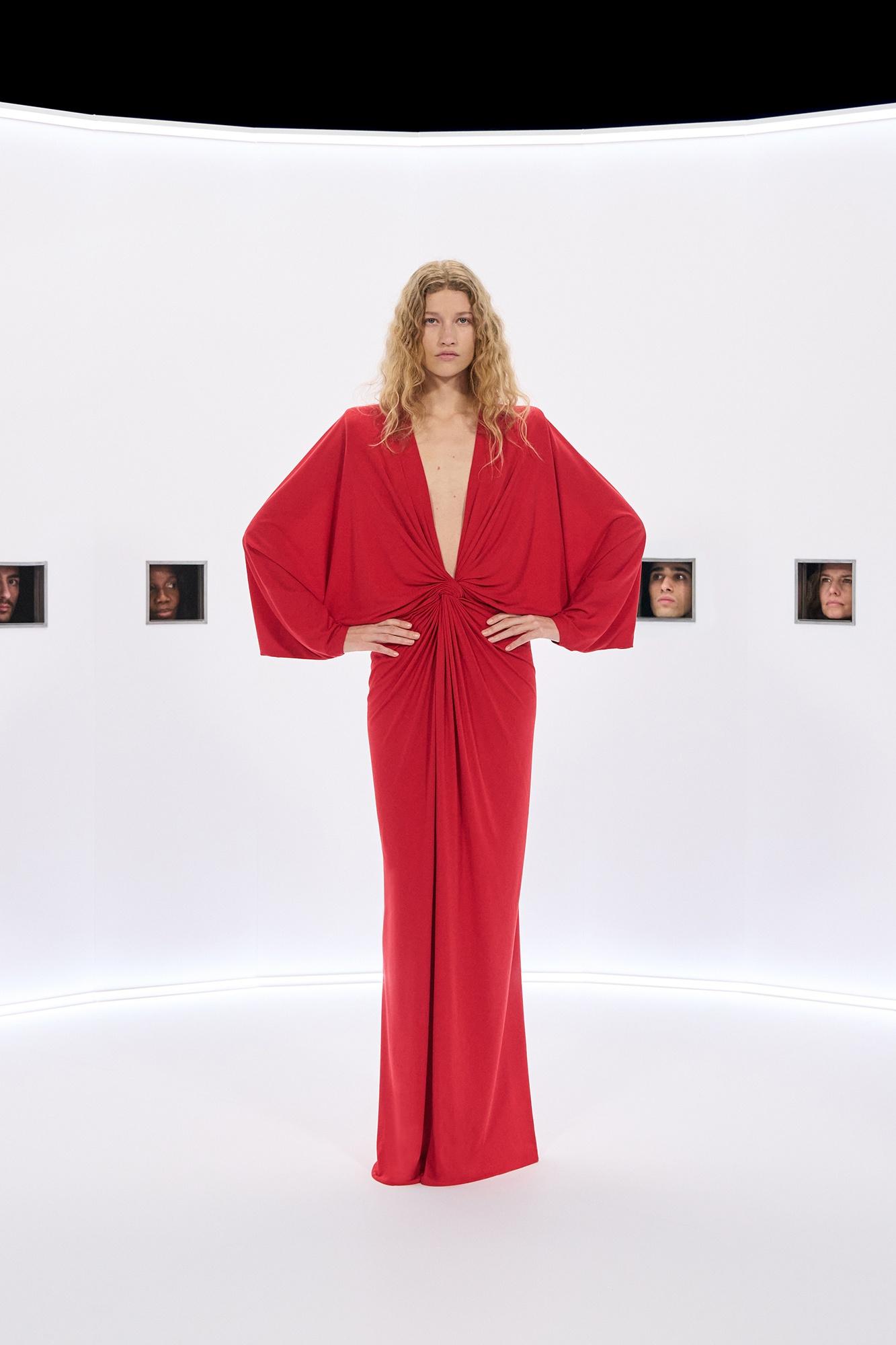
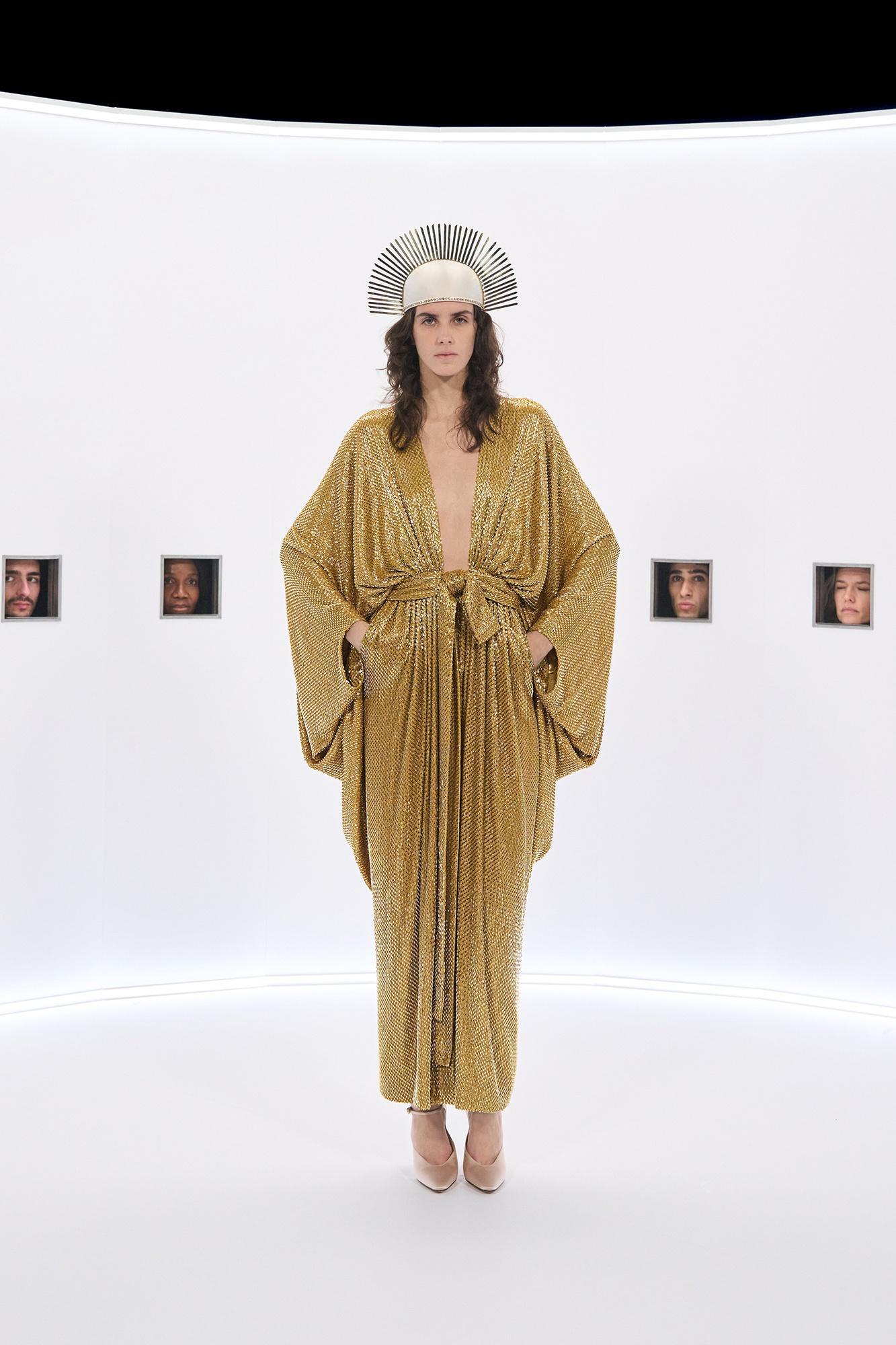
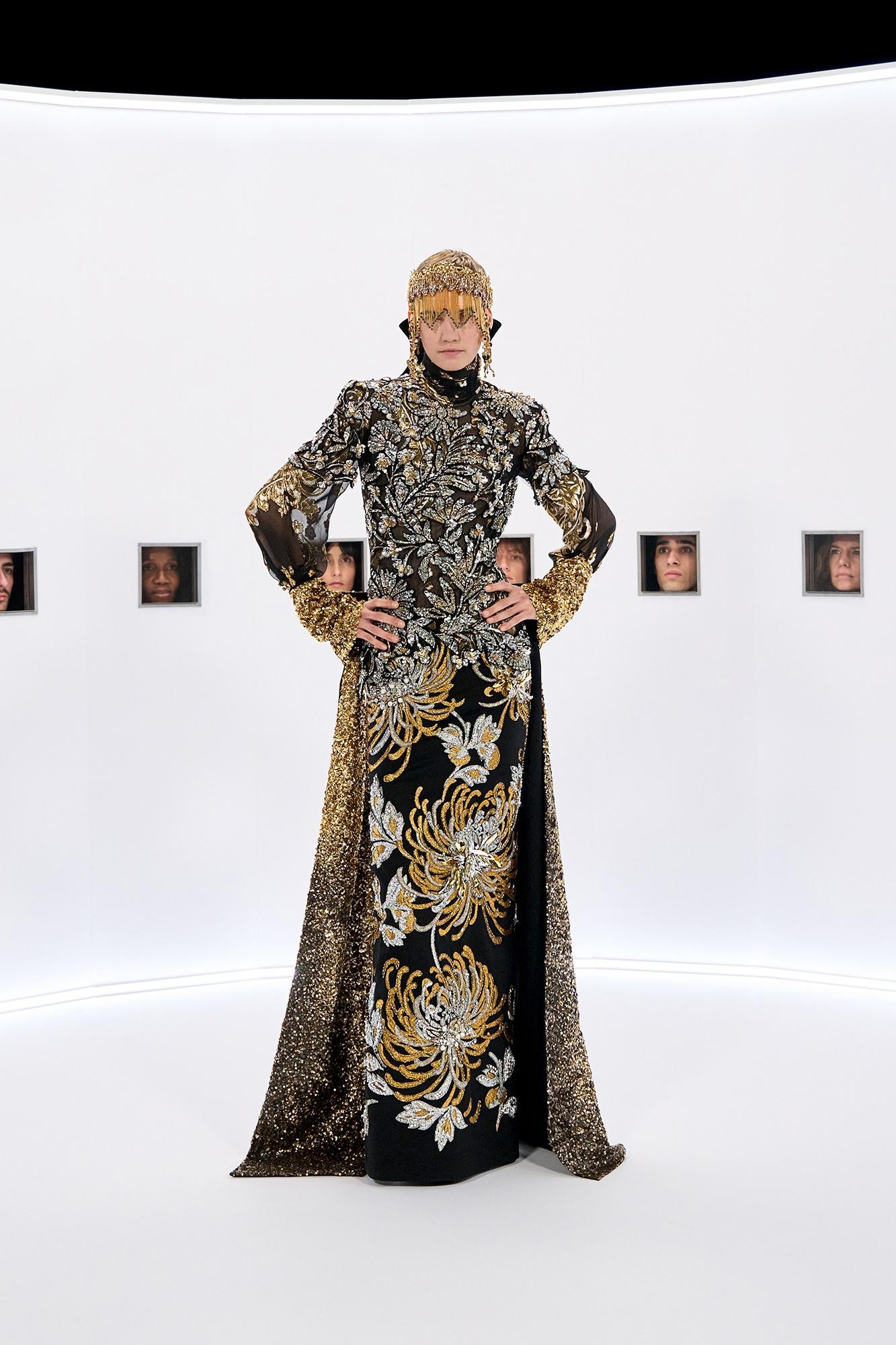
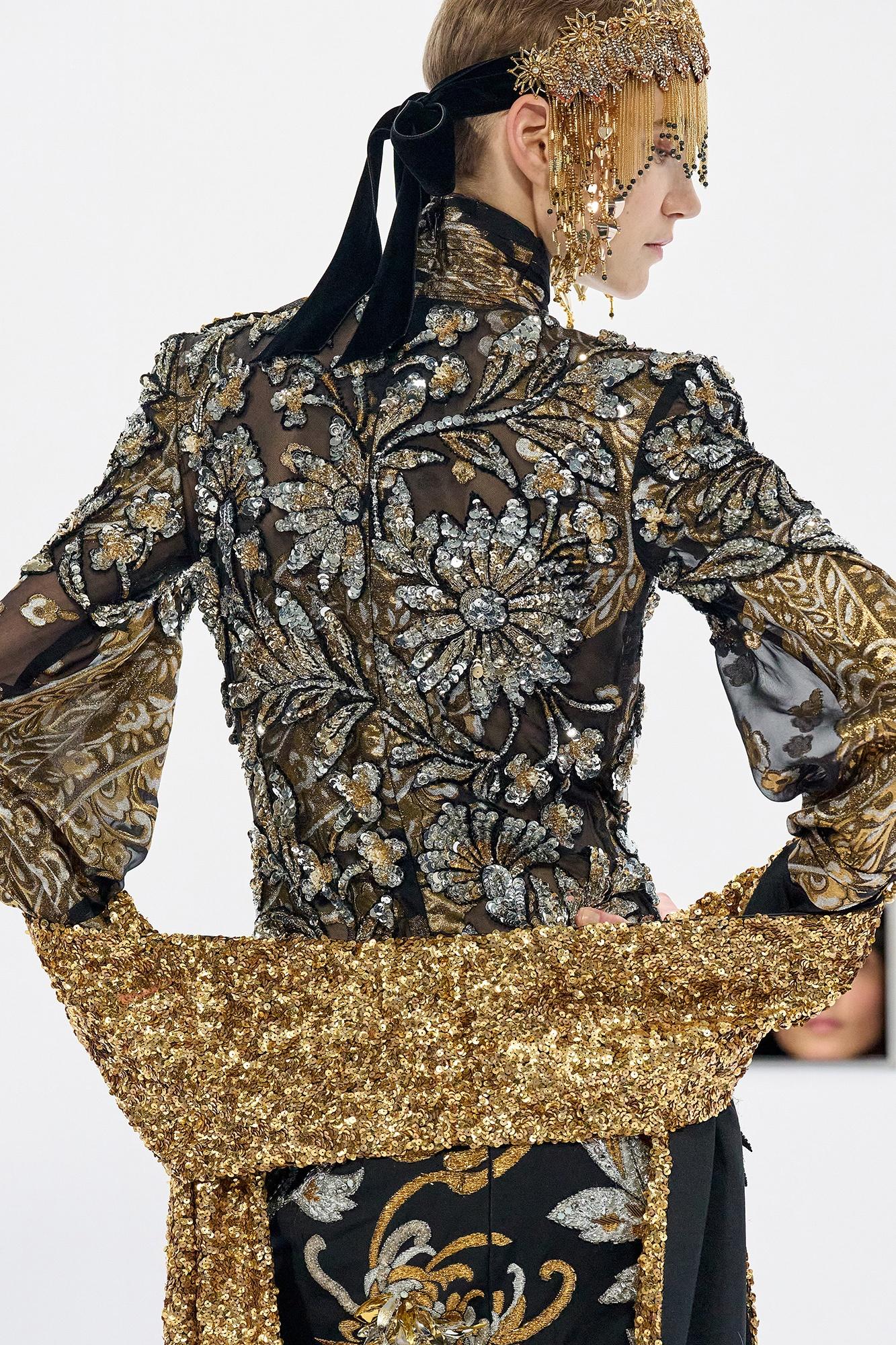
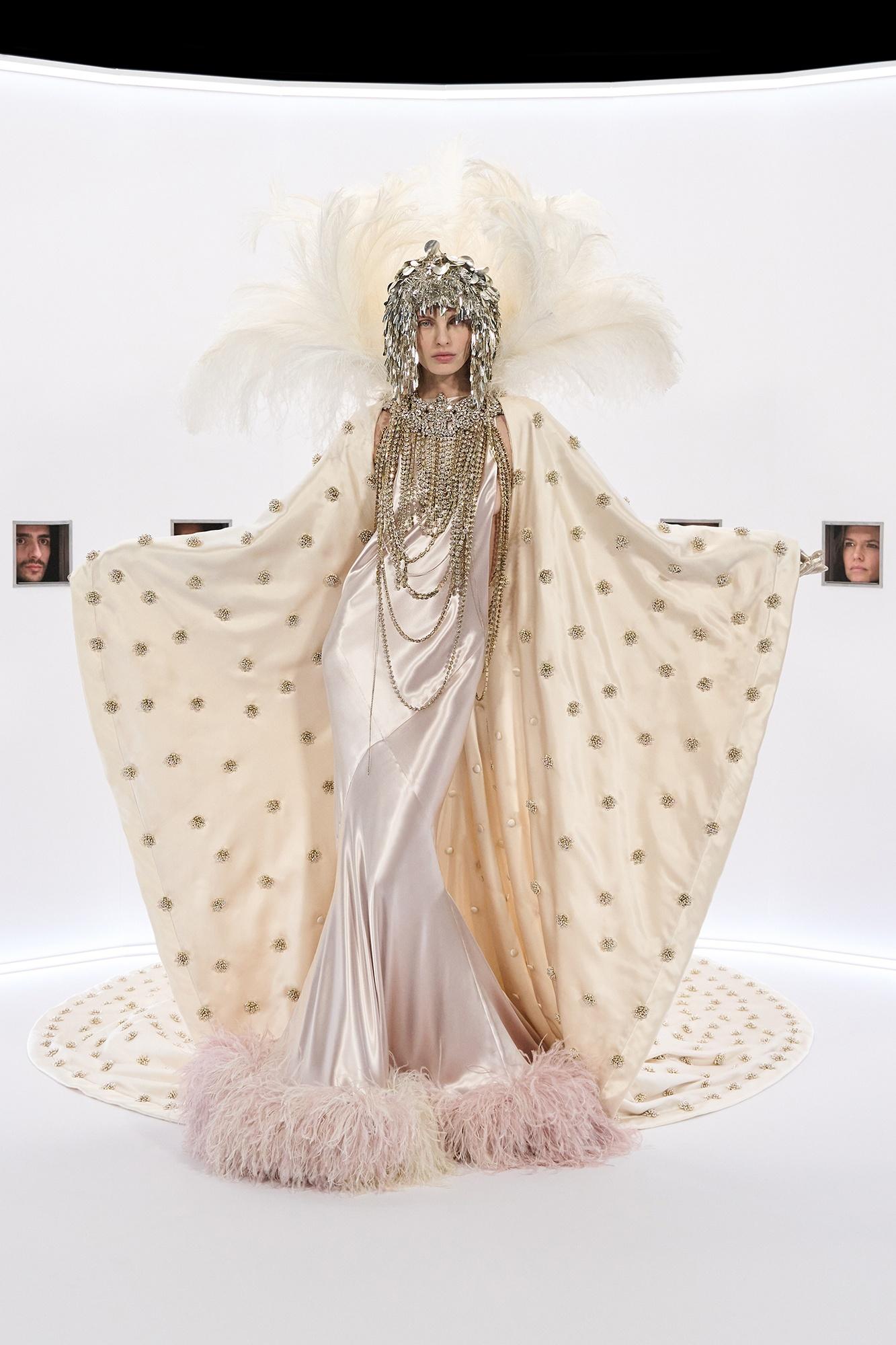
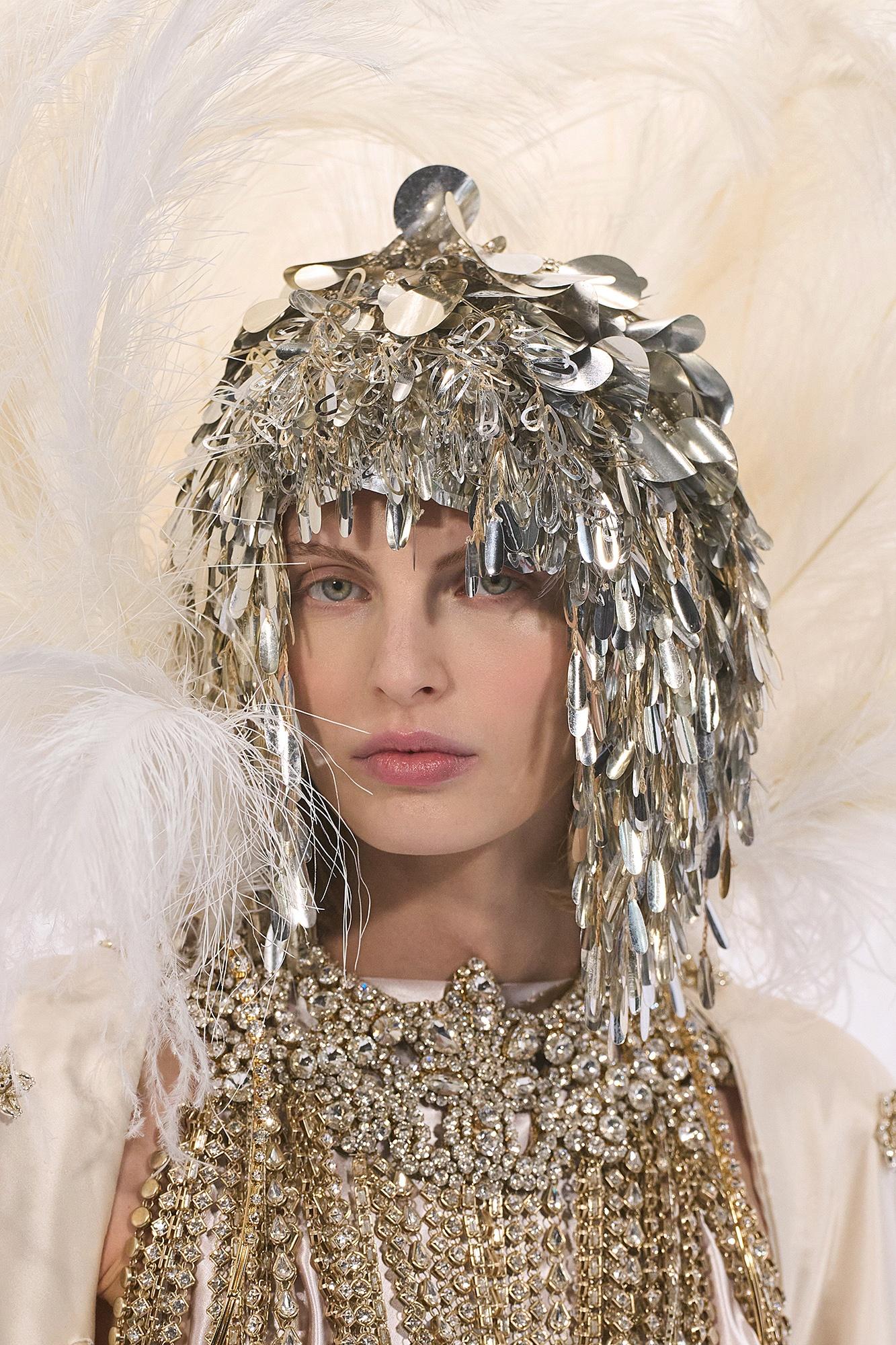
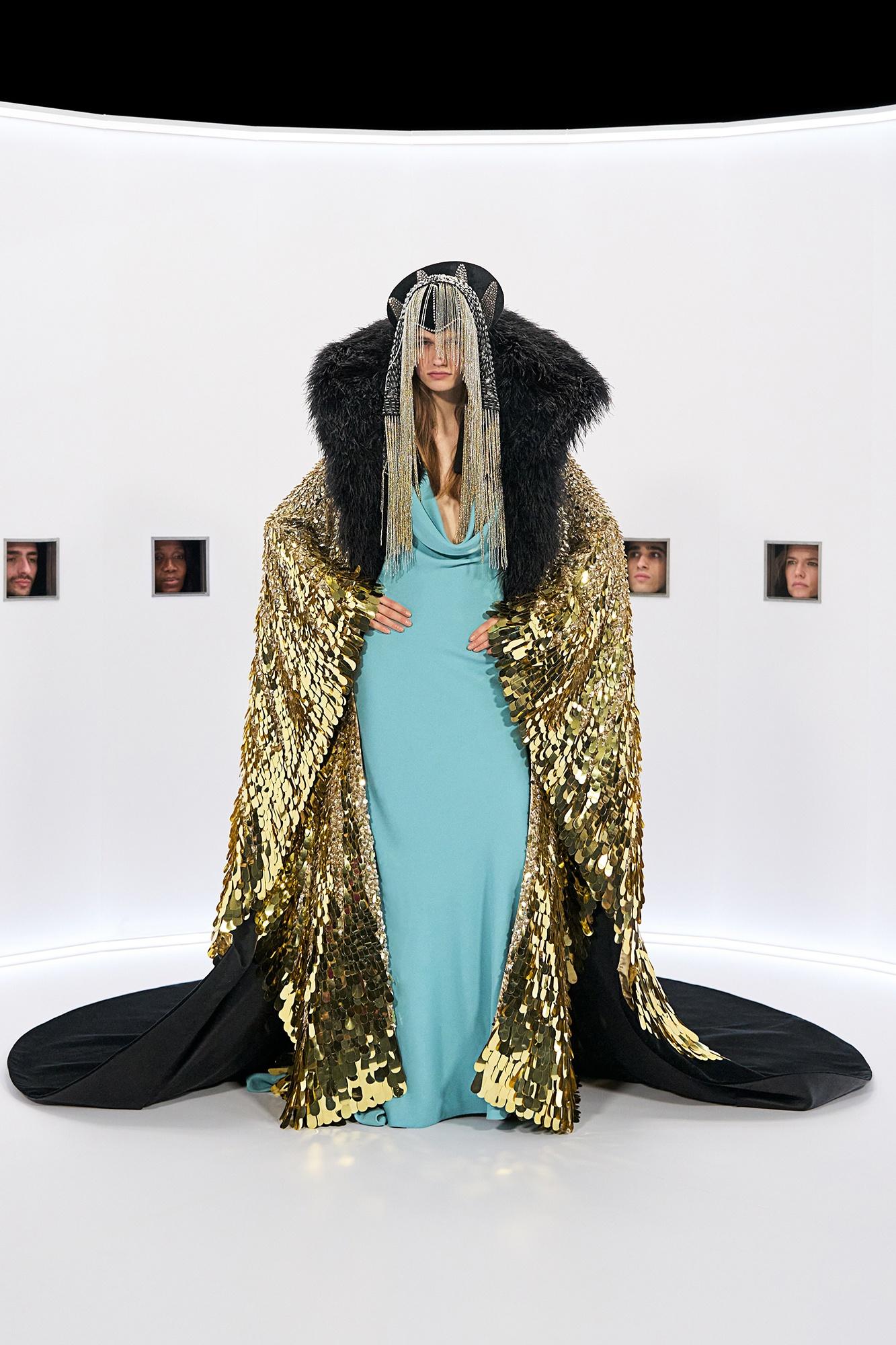
Valentino Haute Couture Spring 2026: Looks 1, 6, 12, 22, 26 (Images courtesy of Valentino)
The collection featured radiant pinks, shimmering ceruleans, and emerald greens, but ultimately, it was black, red, and gold, with all of their regal connotations that defined the collection. In Look 41, a red robe licked with gold flames and a gravity-defying headpiece, encircled by a halo of black feathers, seemed appropriate for the Sun King Louis XIV. Look 40 was one of the simplest looks but also one of the most powerful: a black strapless gown with sharp shoulders worn with sleek black gloves and a golden breastplate, recalling the pharaohs. Meanwhile, Look 51 paired a sumptuous white fur radiating femininity with a gold-trimmed dress and a gold Art Deco inspired headpiece which radiated power.
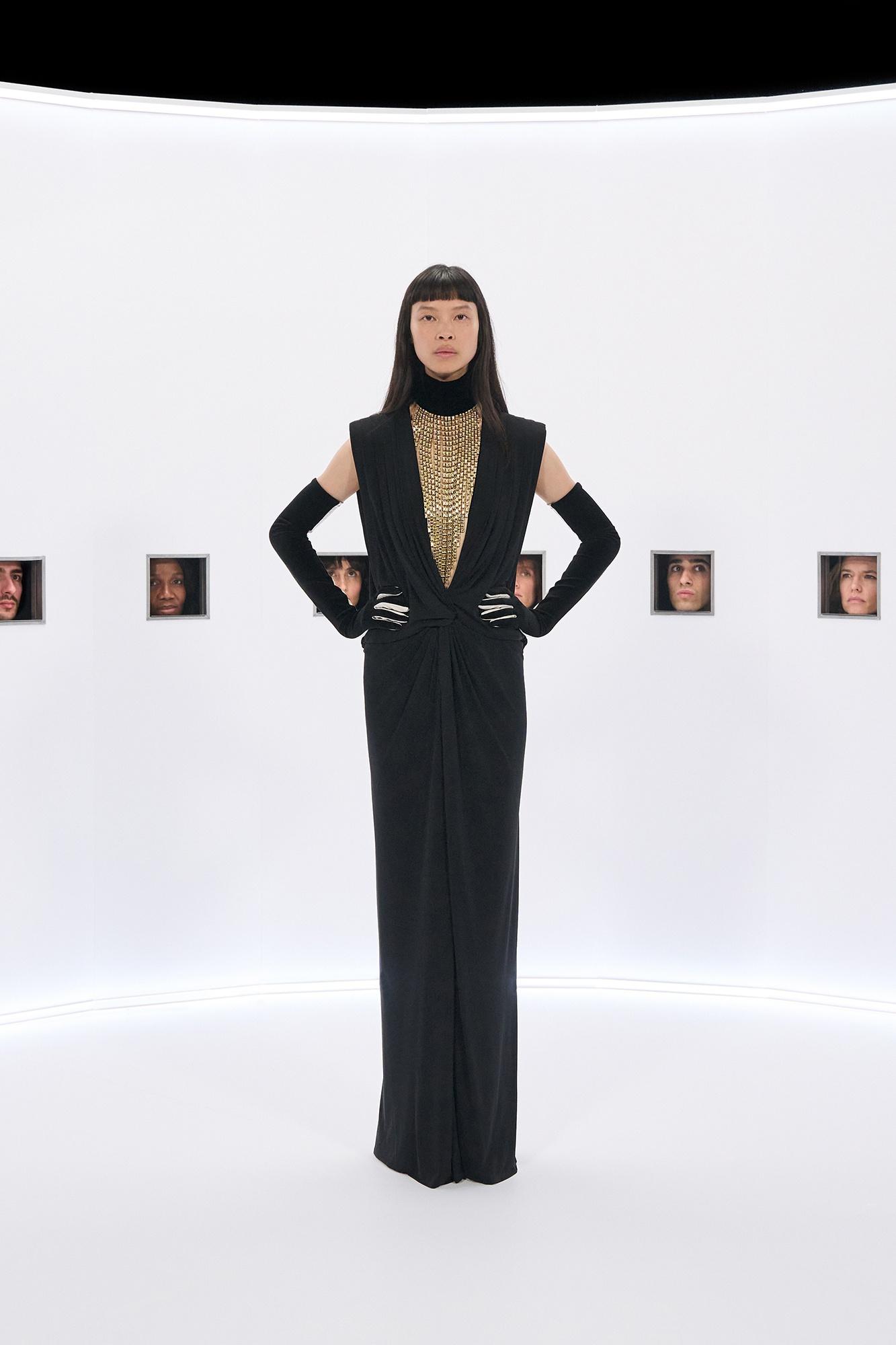
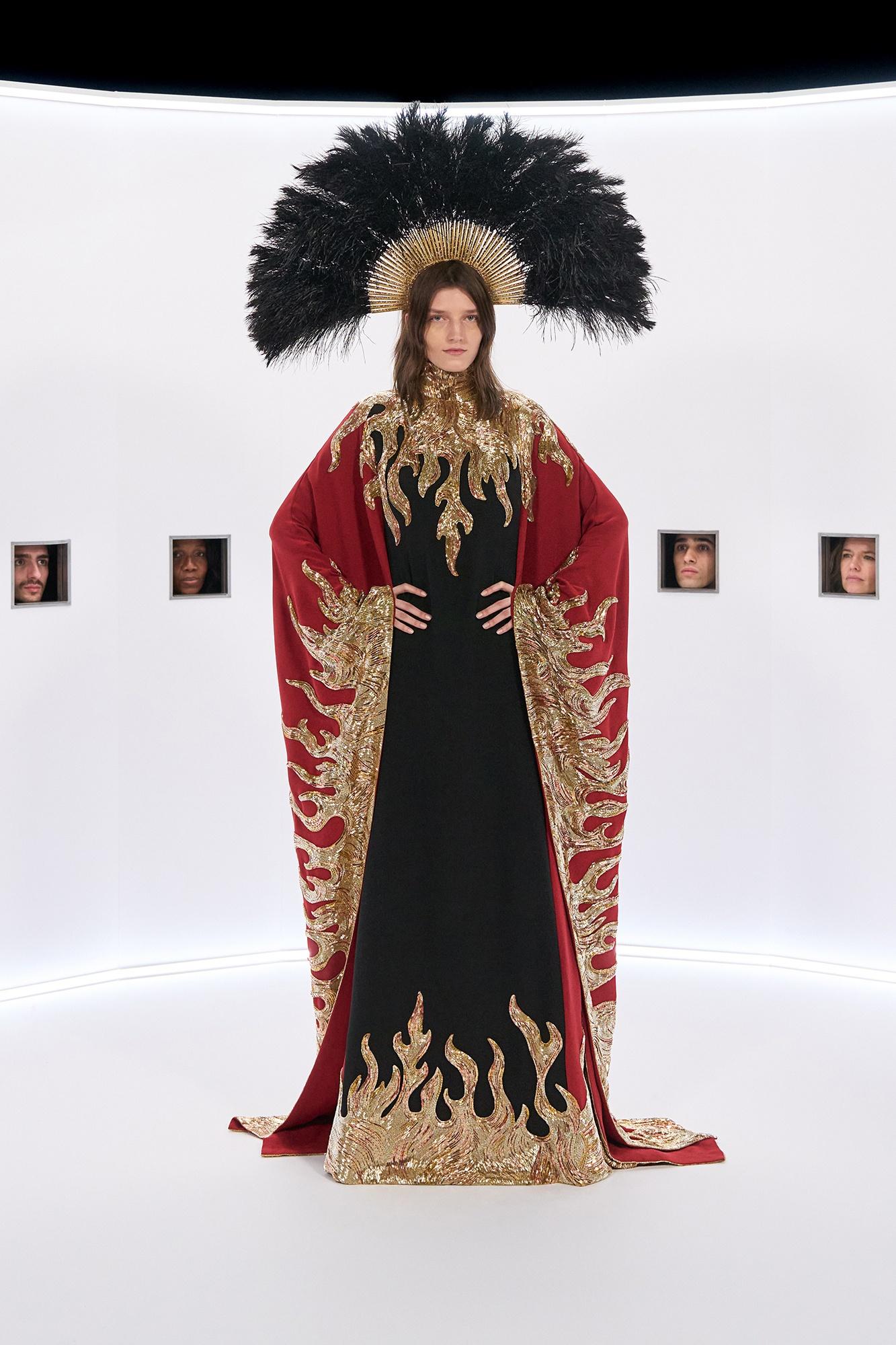
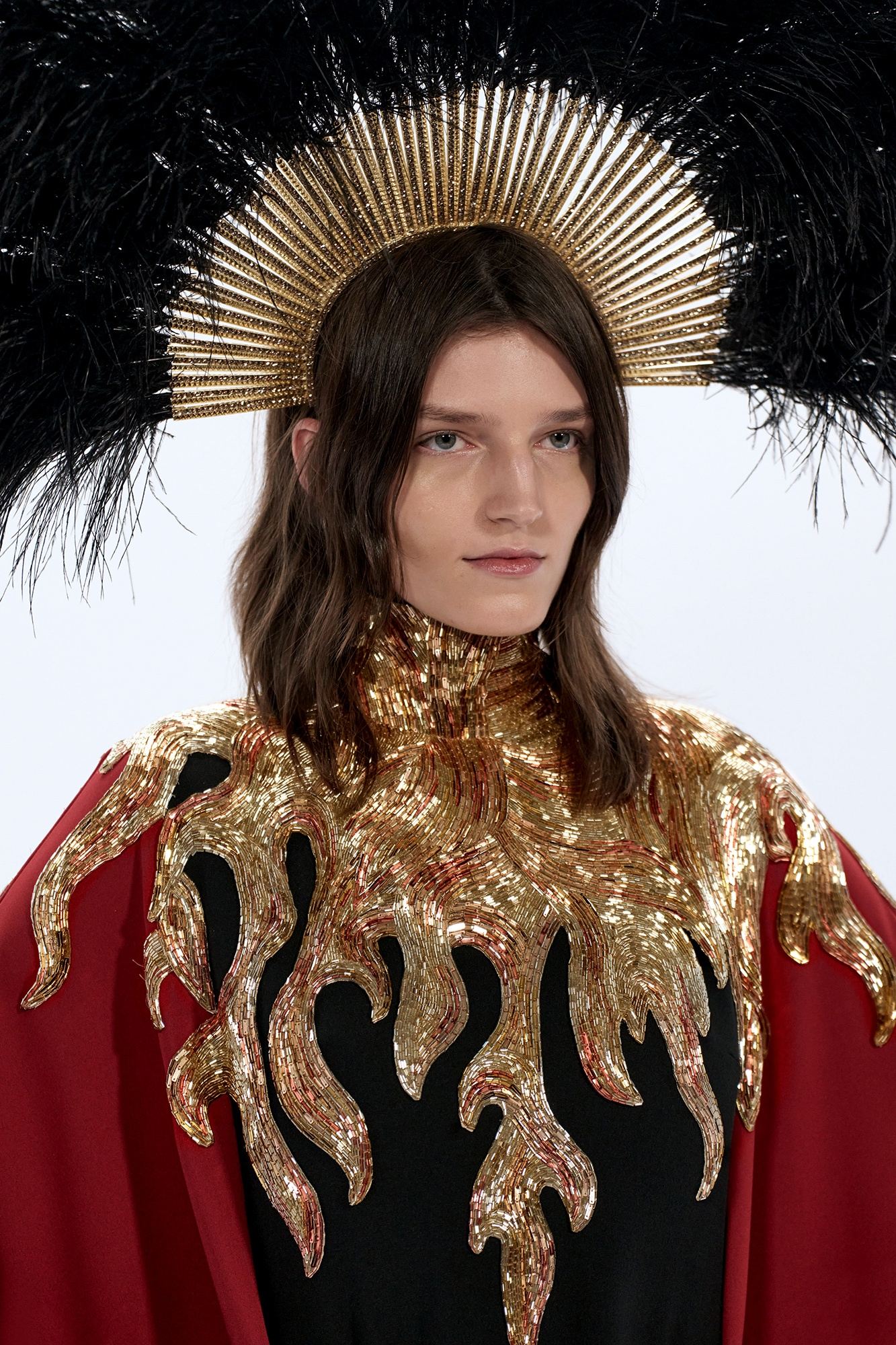
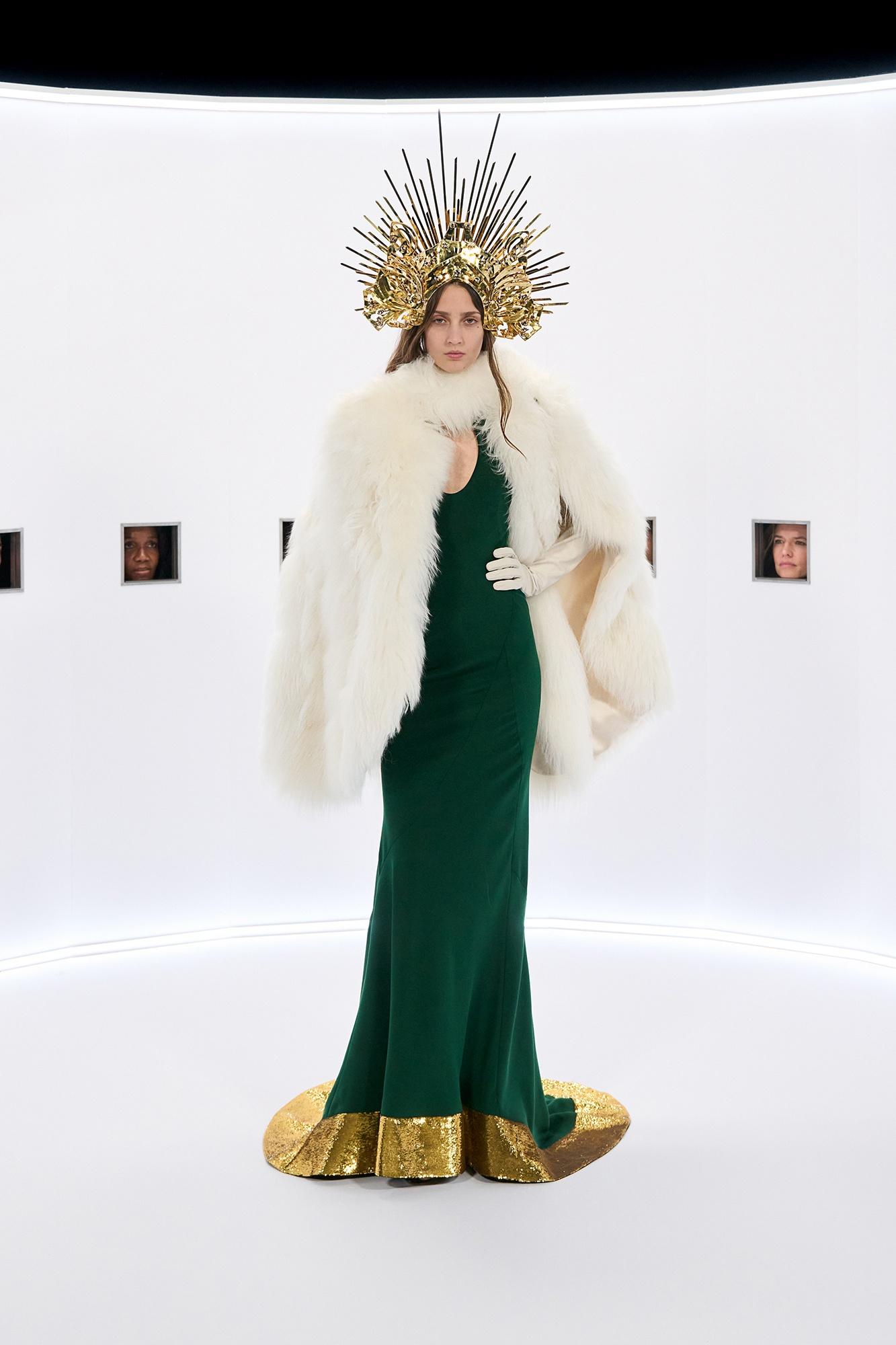
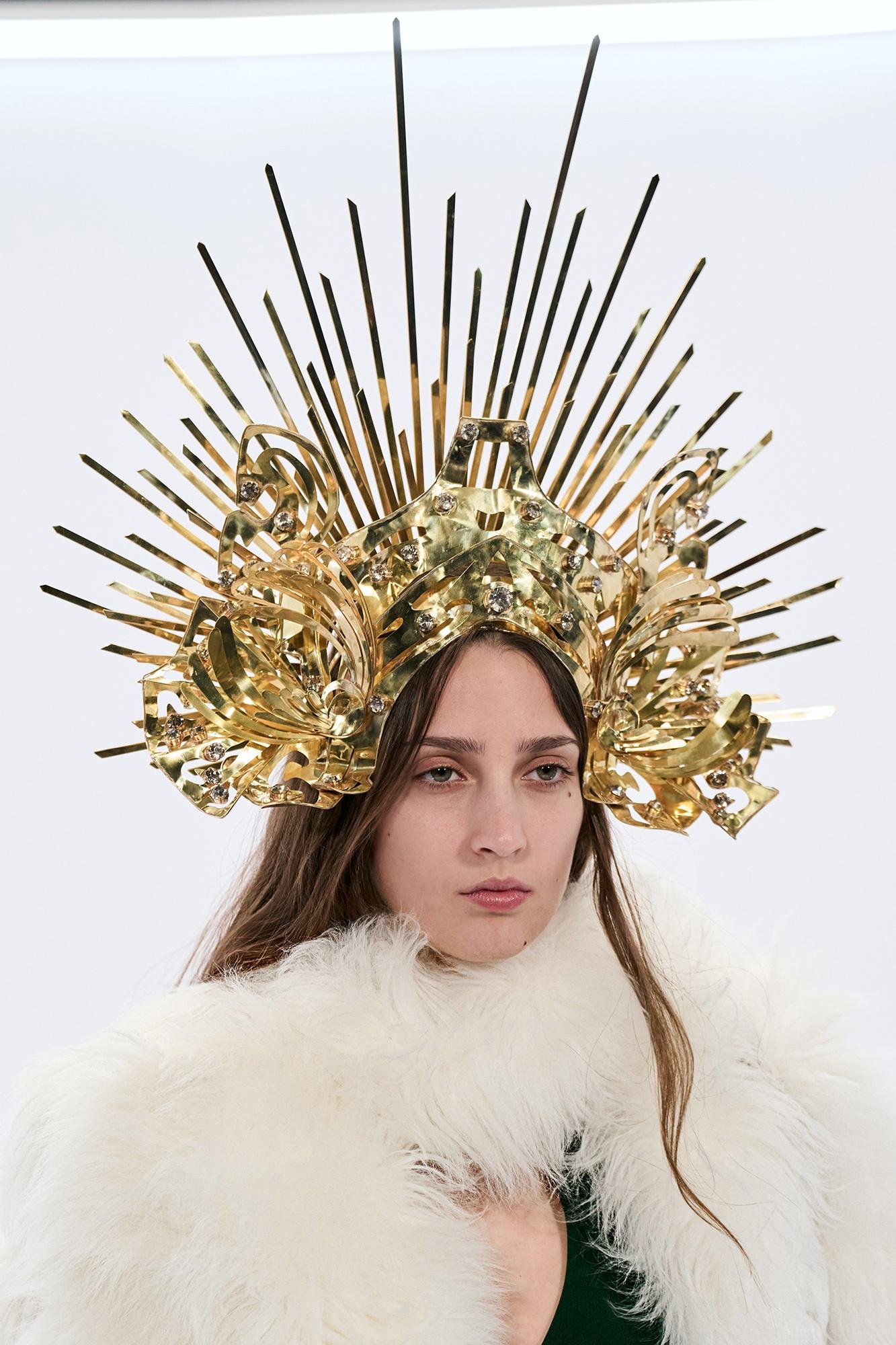
Valentino Haute Couture Spring 2026: Looks 40, 41, 51 (Images courtesy of Valentino)
References danced together in tumultuous bacchanalian euphoria. Look 57, part toga, part armor, part lingerie, was a delightfully indulgent gladiator’s fantasy. Look 49 saw a bejeweled corset paired with a fur-fringed, cuffed, and collared rococo robe which flirted with both femme fatale and princess in an ivory tower. What historical period did these ensembles belong to? The answers are both unclear and entirely irrelevant. Daring, fierce, and fantastical, Michele’s protagonists encapsulated the essence of couture by making us dream.
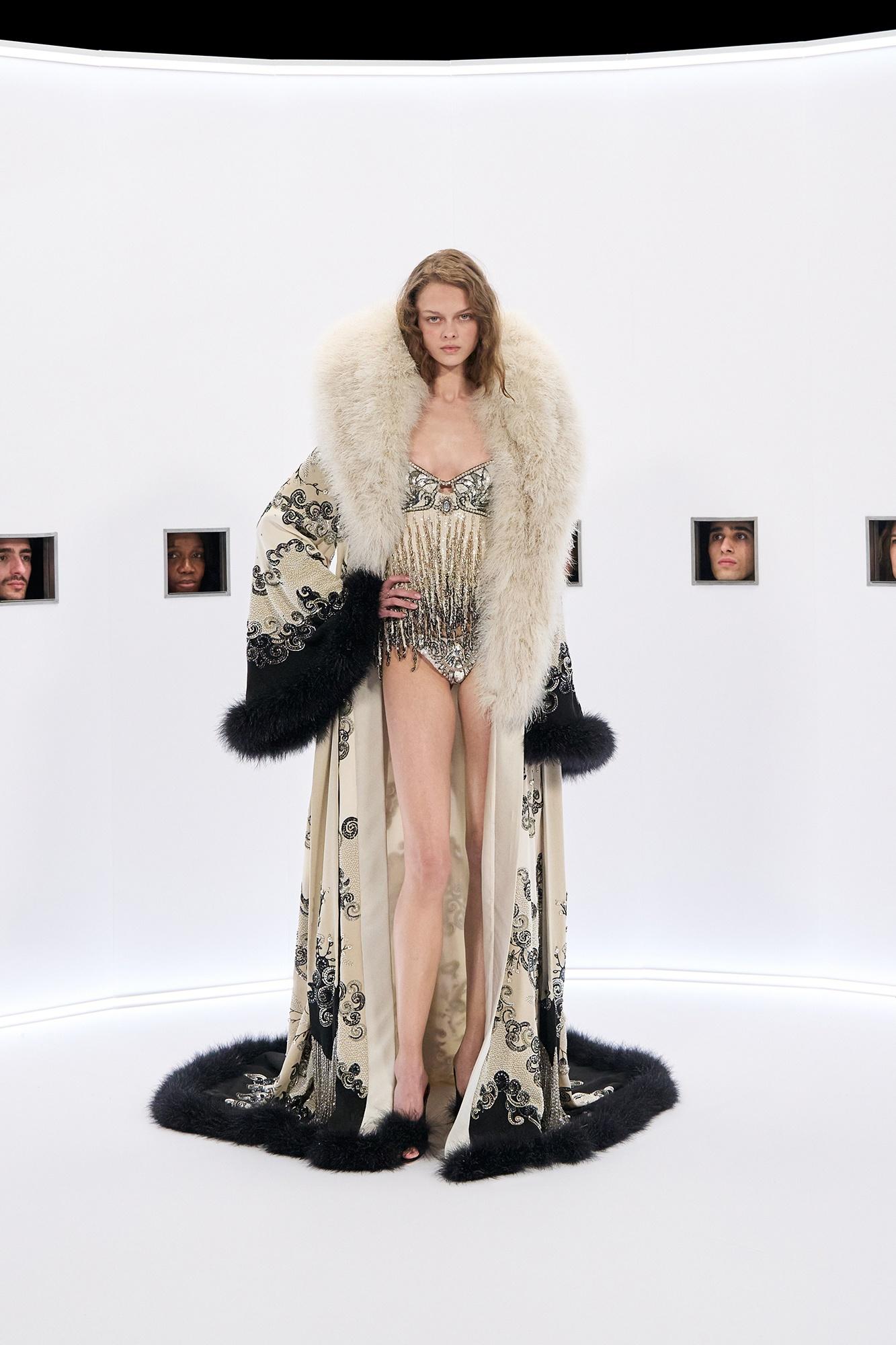
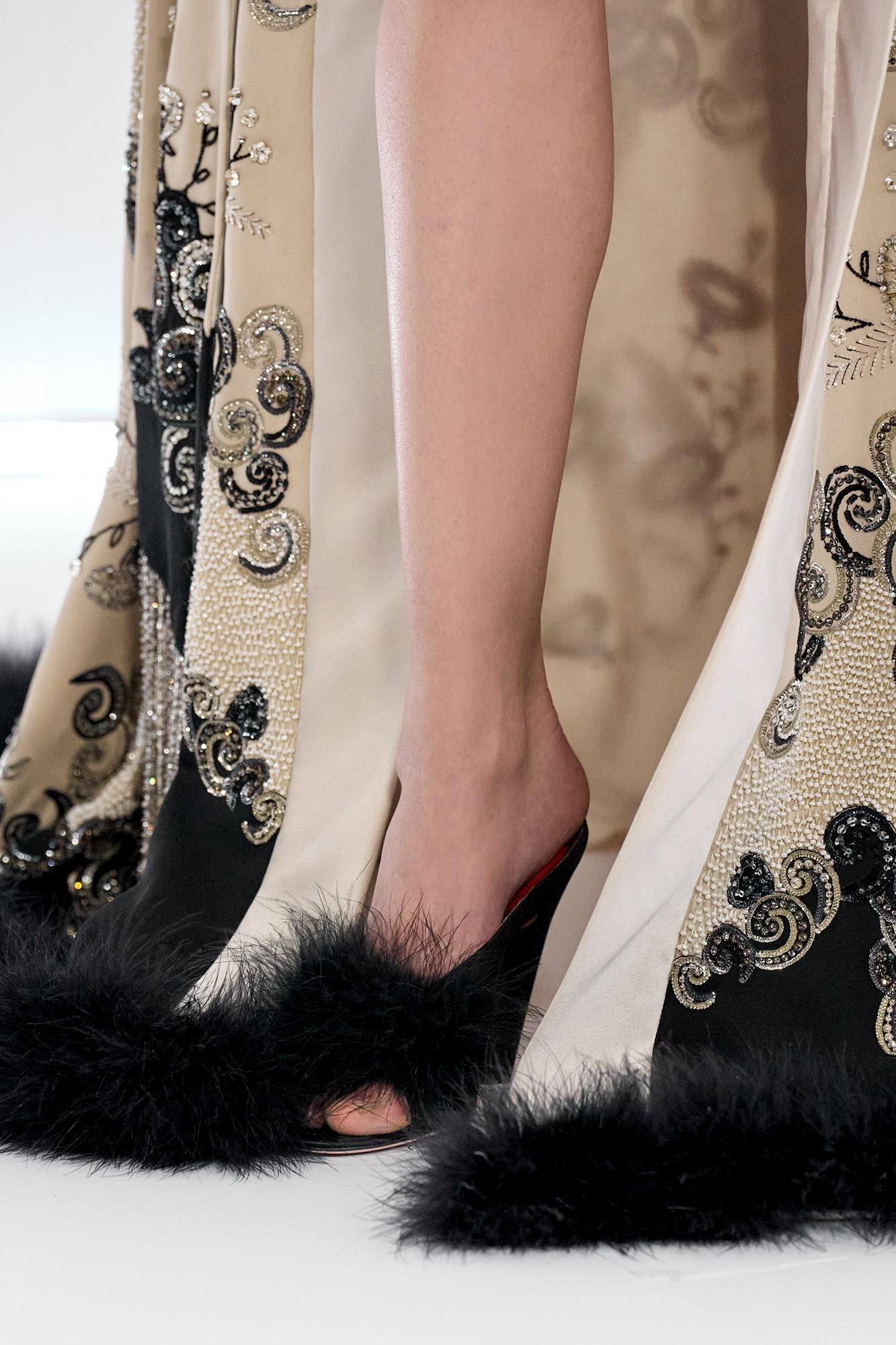
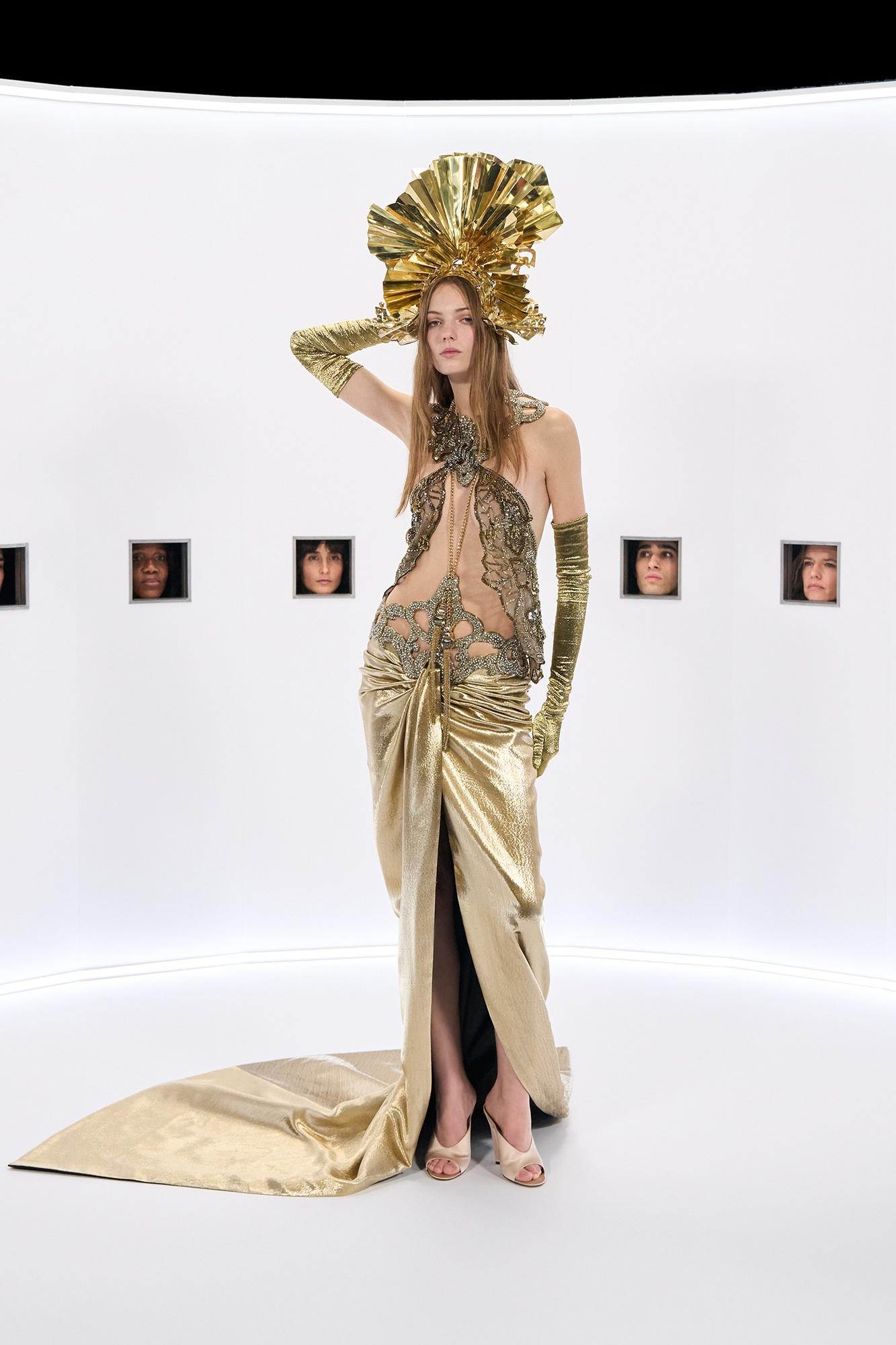
Valentino Haute Couture Spring 2026: Looks 57, 49 (Images courtesy of Valentino)
The Ultimate Collection for Dreamers
The show opened with the words of Valentino Garavani, “You always dream, dream, dream.” It is this guiding mantra that has made us fall in love with his Maison again and again, generation after generation. It’s a mantra that Michele, this collection as evidence, has fully embraced. “To work within this space means both accepting its weight and its grace,” he penned in a tribute to his predecessor. “For me, Valentino has been a mythological figure, a founding reference, an abiding presence that remains both origin and measure. A myth does not belong to the past: it establishes a language, discloses a world, makes habitable a space rich with meaning.”
Under Michele, a caretaker of fashion’s heritage and an architect of its future, the Valentino myth is not only living but evolving in exciting new directions. Using Valentino’s sartorial vocabulary to construct tales wholly contemporary and distinctly his own, Michele’s Spring/Summer 26 couture brought the Maison to new generations while, through the Kaiserpanorama medium, forcing us to temporarily exit our frenetic consumption-based world and appreciate collections the way we once did. In his 2007 retirement letter “Adieu,” Valentino wrote, “I am especially grateful that I have been able to keep my own style over the decades, in spite of the many changes that have taken place in the world of fashion and in its business.” He would doubtless be proud of Michele’s vision. This was the ultimate collection for dreamers.