

A strong and reliable student-teacher relationship is crucial for several reasons. First, it creates a safe and supportive learning environment where students feel comfortable expressing themselves, asking questions, and making mistakes, all of which are essential for growth. When students trust their teachers, they are more likely to stay motivated, take risks, and commit to their learning journey.
Additionally, a positive relationship fosters better communication. Teachers can better understand their students' needs, strengths, and areas for improvement, allowing them to tailor lessons more effectively. This mutual understanding leads to more personalized instruction, resulting in faster progress and deeper skill development.
Building Trust
Building trust is essential in establishing a solid student-teacher relationship in piano lessons. It begins with creating a supportive and open environment where students feel comfortable making mistakes and asking questions. Your first step must be tofind a piano teacherwho is patient and offers constructive feedback fosters confidence in the student, allowing them to take risks and improve without fear of judgment. Trust grows over time as the student sees the teacher’s dedication to their progress and development, ensuring that the learning experience is enjoyable and effective.
Open Communication
Open communication is a key element in strengthening the student-teacher bond. Teachers should actively listen to their students’ concerns, preferences, and goals, while also clearly conveying expectations and feedback. Encouraging students to express themselves helps build a rapport that makes lessons more tailored and effective. By maintaining honest and respectful dialogue, both the teacher and student can address challenges and celebrate successes together, creating a dynamic and collaborative learning environment.
Setting and Achieving Goals Together
In music education, setting and achieving goals collaboratively is a fundamental part of the learning process. Defining clear objectives, whether it’s learning a new piece or improving a specific technique, provides structure and direction for lessons.
When students are involved in setting these goals, they take more responsibility for their own learning, fostering a sense of ownership. Breaking larger goals into smaller, manageable steps helps students see their progress over time, which can be motivating and rewarding. This shared goal-setting also strengthens the teacher-student relationship by creating a mutual commitment to the student’s musical growth.
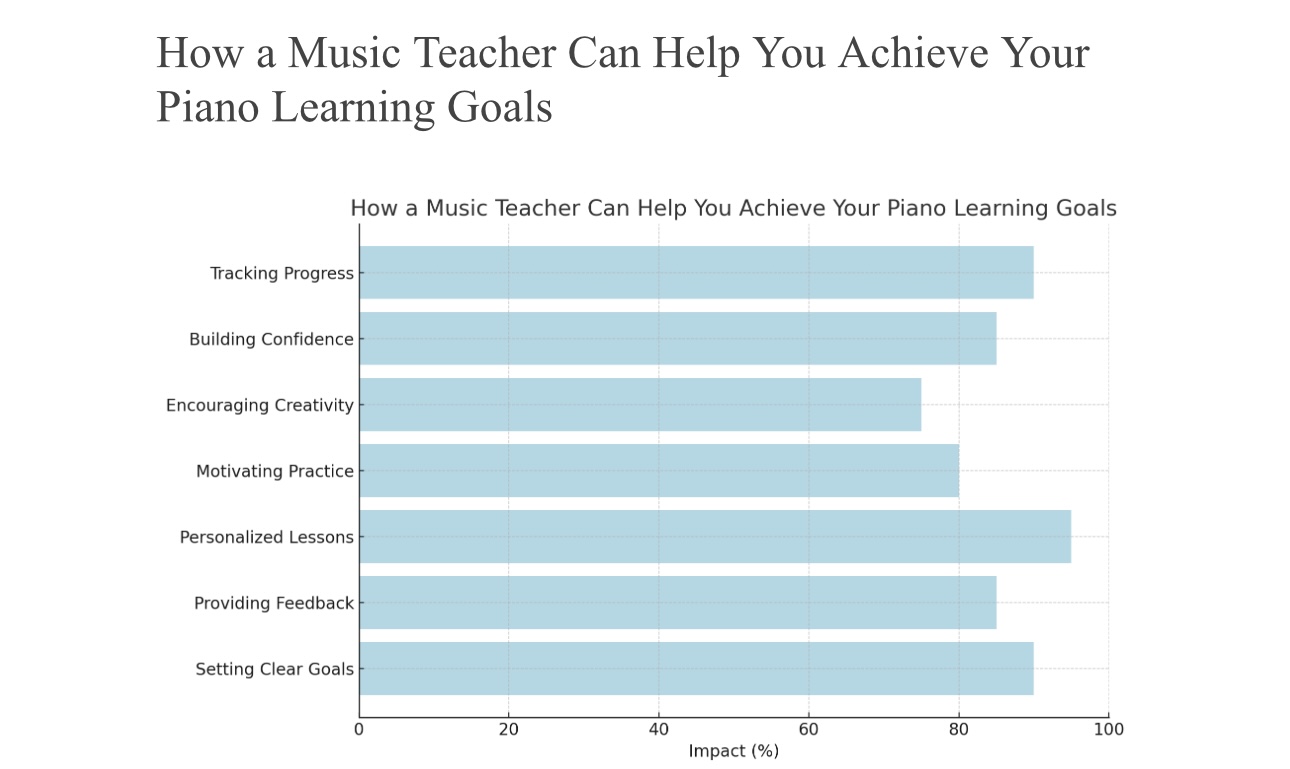
How a Music Teacher Can Help You Achieve Your Piano Learning Goals
Screenshot
Here is a chart that highlights how a music teacher can help you achieve your piano learning goals across various aspects, such as setting clear goals, providing feedback, personalizing lessons, and more. Each area reflects the percentage of impact a teacher can have in that particular domain.
Encouraging Student Engagement
Encouraging student engagement in music education goes beyond technical instruction. It involves tapping into the student’s personal interests and preferences to make lessons more engaging and meaningful.
Teachers can integrate music that aligns with the student’s tastes, keeping them motivated to learn and practice. Hands-on activities, such as playing duets or experimenting with different musical styles, help sustain interest and make the learning experience more dynamic. By fostering curiosity and a deeper connection to the music, students are more likely to stay committed to their musical journey, leading to steady progress and personal enjoyment.
Building a Supportive Community
In piano learning, building a supportive community can enhance the educational experience. Whether it's through group classes, recitals, or online forums, being part of a community encourages students to share their progress, ask questions, and seek advice from peers.
This collective environment provides motivation and helps students stay engaged, especially when they see others facing similar challenges and achieving milestones. Teachers play a key role in fostering this sense of community by creating opportunities for students to collaborate, perform together, and celebrate each other's successes, making the learning process more enjoyable and encouraging long-term commitment.
Adapting to Student Needs
Adapting to the individual needs of piano students is essential for effective teaching. Every student learns differently, and recognizing these differences can make a significant impact on their progress. Here are key ways to adapt:
Learning Pace: Some students may need more time to grasp certain concepts, while others may excel quickly. Adjusting the speed of lessons ensures each student feels comfortable and confident.Teaching Styles: Visual learners might benefit from sheet music and demonstrations, while auditory learners may respond better to listening and repetition exercises. Adapting teaching methods to fit the student’s style can improve retention and understanding.Music Preferences: Incorporating music that resonates with the student's personal tastes can maintain their interest and motivation. Whether it’s classical pieces, contemporary music, or popular songs, aligning the repertoire with the student’s interests makes the learning experience more enjoyable.Flexibility in Goals: Not all students aim for the same outcomes. Some may aspire to play professionally, while others learn for personal enjoyment. Adapting lessons to suit individual goals helps keep students engaged and ensures they are working towards something meaningful to them.
Final Thoughts
Learning the piano is a journey that requires dedication, but the relationship between student and teacher plays a pivotal role in making that journey successful. Building a supportive community, adapting to individual student needs, and fostering open communication all contribute to creating a positive and effective learning environment.
When students feel understood and supported, they are more likely to stay committed, achieve their musical goals, and enjoy the process of learning the piano. The key to a successful piano education is not just technical mastery, but also the nurturing of creativity, motivation, and a genuine love for music.