
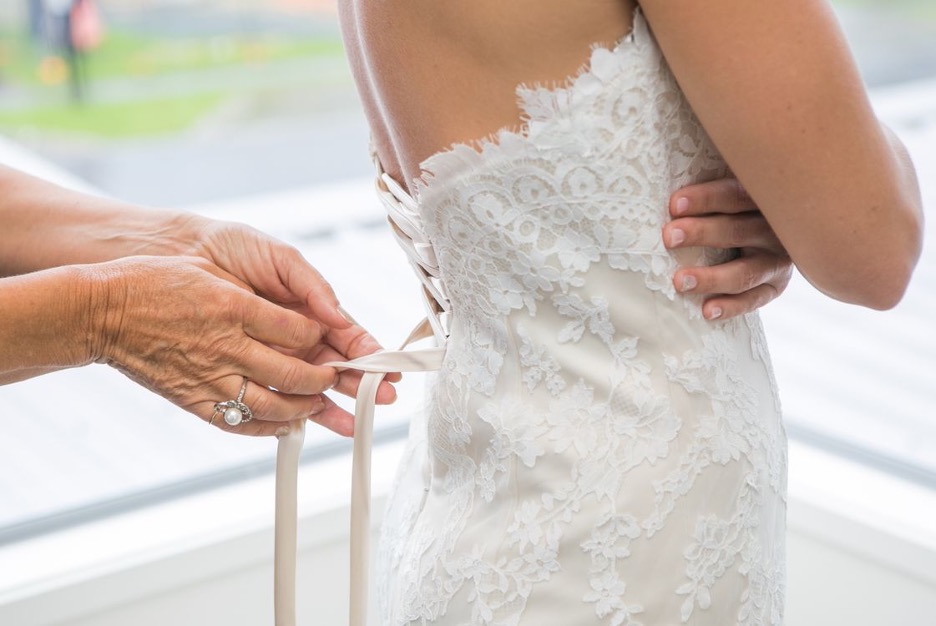
Finding the dress can feel like a style decision, a comfort decision, and a logistics decision. If you’re learning how to find a wedding dress that fits your body, it helps to define “fit” clearly. A gown fits when it stays in place, supports movement, and sits cleanly on your frame. Let’s discuss in more detail!
Start With The Body You Have Today
Shop for the body you will bring to your wedding. Bring the undergarments you plan to wear and shoes at your heel height. A small change in heel height affects hem length and posture. Shapewear can change where a seam wants to land.
Pay attention to what your body does without thinking. Are your shoulders creeping up? Are you holding your breath? A dress that looks great but makes you brace can feel heavy by the end of the night.
The Size Tag Is A Starting Point
Bridal sizing often runs differently from everyday clothing, and many gowns are ordered to fit the largest measurement and then shaped down in other areas.
Even in virtual fitting research, “the ease preferences from subjects were significantly different from the preset values on the software,” which is another reminder that a labeled size can’t predict comfort by itself.
Because of that, most dresses are refined later through professional wedding dress alteration and tailoring, which transforms a standardized pattern into something aligned with your proportions.
Treat the label like a production detail. Fit lives in where the waist lands, how the bodice supports you, and whether the fabric stays smooth when you exhale.
Choose A Silhouette That Matches Your Proportions
Finding a wedding dress silhouette for your body type comes down to proportions. Two people can share the same bust, waist, and hip numbers and still need different vertical adjustments because torso length, shoulder slope, and posture vary.
Start with a silhouette you like, then check how it behaves on your frame.
A-line shapes usually give room through hips and thighs and feel easier when you sit.
Mermaid and trumpet styles need precise hip ease; tight spots create visible pull lines.
Ballgowns distribute weight into the skirt, so the internal bodice structure has to hold steadily.
Fabric plays a role. A smooth satin bridal gown will show wrinkles and tension lines more than textured lace, which can make fit issues easier to spot early.
Do A Movement Test Every Time
A wedding gown is a moving garment. Walking, sitting, lifting your arms, and dancing change your body’s shape in small ways. Fit has to work through those changes.
The Institute for Work & Health notes that higher injury rates are linked to tasks that involve repeated motions, high physical effort, awkward body positioning, and exposure to vibration. This is exactly why the dress has to be tested in motion, not only while standing still.
Quick Movement Checks
Sit fully in a chair, then stand without bracing on the armrests.
Lift both arms as if hugging someone and see if the bodice shifts.
Take several natural steps, then a careful step backward.
Twist at the waist like you’re turning to talk at a table.
How Wedding Dress Fittings Work
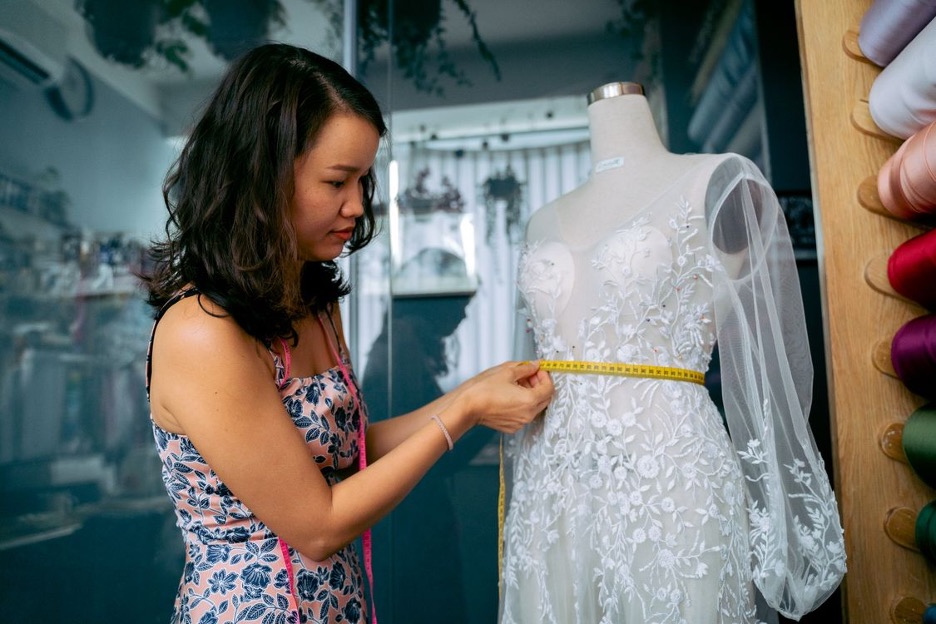
A wedding dress fitting guide cannot replace the real rhythm of fittings. Fittings are usually a cycle: pin, adjust, let the gown rest, then reassess. Many tailoring schedules run at least six weeks with two to four fittings for complex gowns.
Bring the same shoes and undergarments each time. Take photos from the front, side, and back so you can compare progress between appointments.
Bridal Gown Alterations That Make The Dress Yours
Alterations are standard, even for brand-new gowns. Common work includes taking in the bodice, lifting shoulders, shortening layered hems, and building a bustle that manages the train after the ceremony.
Fit Checkpoints By Stage
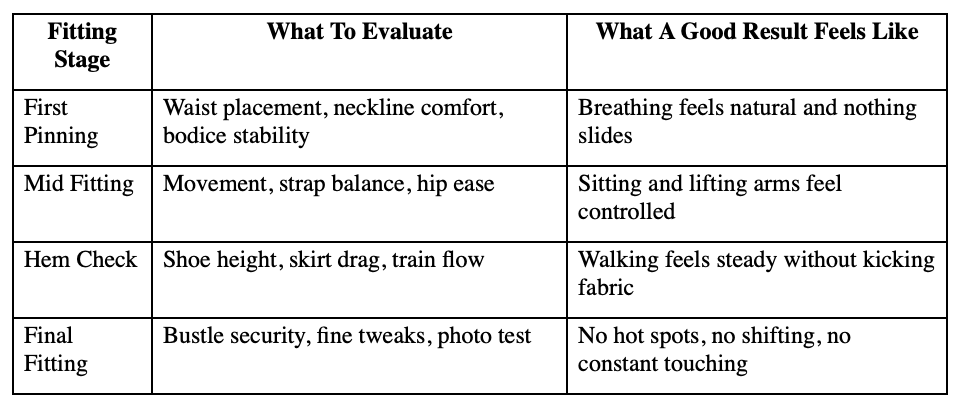
Keep a list of questions for your seamstress. Ask where the gown is carrying its weight. Ask how the bustle will affect the hem. Ask what changes if your shoes change.
Comfort Shows Up In Your Posture
Comfort changes how you carry yourself. When a gown digs in, pulls, or slips, your attention goes straight to your body. Research on clothing comfort and cognition links physical comfort with confidence and presence.
Style alignment counts too. Clothing communicates identity, and a gown can feel wrong even when measurements look right if it does not match your taste. If you lean modern, minimal, or editorial, current wedding fashion makes room for that.
Plan For Venue And Climate
Fabric weight interacts with heat, humidity, and how long you will be wearing the dress. Structured textiles hold shape but can feel warmer. Lighter fabrics breathe and move more easily outdoors.
Terrain changes the way a train behaves. A train that glides on a smooth aisle can snag on grass or gravel. Hem weights, discreet loops, and a practical bustle can reduce drag.
Two Practical Notes From Public Research Hubs
PubMed Central provides public access to peer-reviewed biomedical and life sciences articles, including research related to garment fitting and sizing. The Institute for Work & Health publishes an “Ergonomic Handbook for the Clothing Industry” that focuses on movement, load, and physical demands, which supports doing real motion tests during fittings.
Final Thoughts
A dress fits when it stays anchored, moves with you, and feels like you in photos and in real time. Keep the process practical. Speak plainly during fittings. Give alterations enough calendar space. For more updates and perspectives, explore the latest news.
Sponsored Post